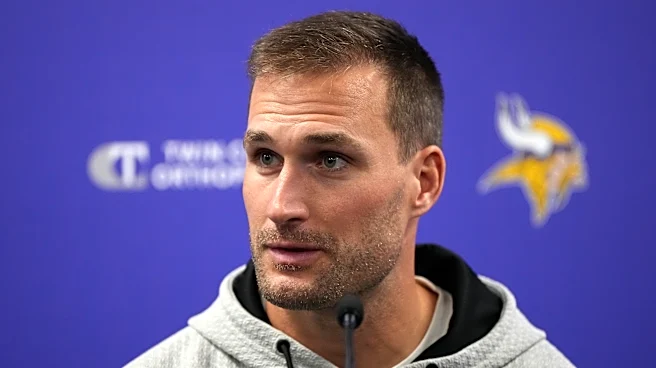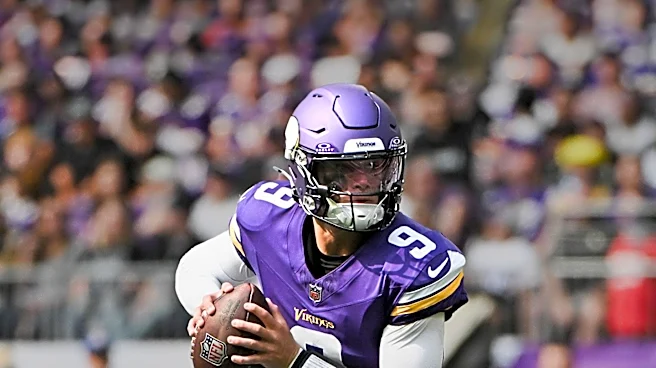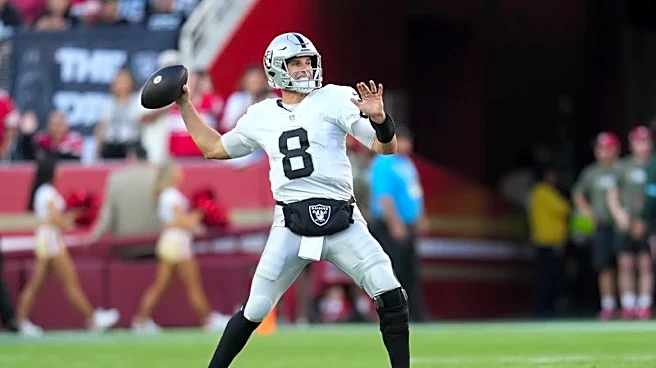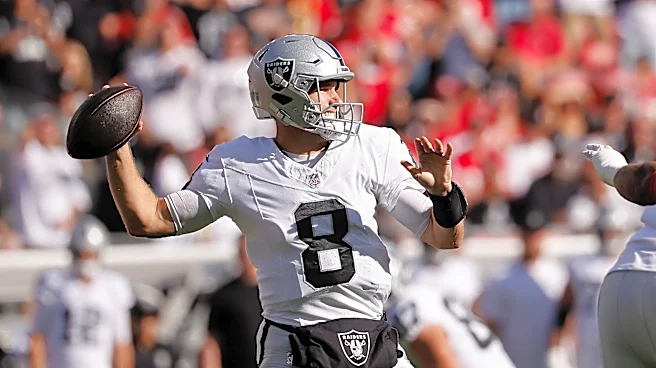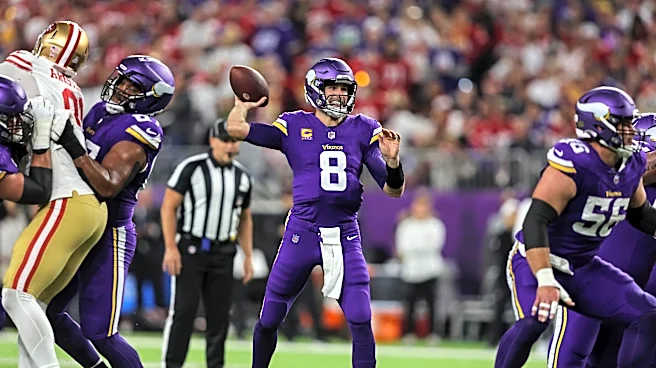



The Minnesota Vikings made the move they had to make after a half-season of underwhelming quarterback performance in trading for Kirk Cousins. He will be the starter as soon as possible, which is likely to be this Sunday against the Packers. His arrival has come with much fanfare as the savior of the Vikings offense who, combined with the Vikings dominant defense and good special teams, could position the Vikings for a deep run in the post-season.
But a quarterback switching teams in mid-season is
not without its difficulties, even with Cousins’ familiarity with Kevin O’Connell’s scheme and some of the key players around him from Justin Jefferson, Jordan Addison, and T.J. Hockenson to Brian O’Neill, Blake Brandel, and Christian Darrisaw. It’s also an advantage that Cousins has been playing the entire season, so he doesn’t have to get acclimated to playing again, as a backup quarterback who hasn’t played would need to do.
Command of the Offense
If Cousins plays on Sunday (as expected at this point), there could be some hiccups as he works out timing and other rapport issues in his first game back after three years. But Cousins has been playing in the same type of offense under Klint Kubiak in Las Vegas, and is probably the most well-versed quarterback in Kevin O’Connell’s scheme in the league- and one of the most well-suited to execute it.


The first graphic compares Cousins’ rate and EPA efficiency in the play-action passing game, which is central to KOC’s offense. He’s been one of the more effective quarterbacks out of play-action for most of his career, and has run it at a relatively high rate for most of his 15-year career. He’s also played at a relatively high rate from under center, which KOC also likes to do to make the play-action game more effective. Cousins’ career passer rating from under center is 107.2, and in play-action it is 110.0. This season, Cousins’ passer rating with play-action is 123.4.
The Vikings have used play-action more than the Raiders have so far this season. Part of that is game situation- both down-and-distance and score/time remaining. You would think that with the Vikings dominant defense, they would continue to be able to run play action at a high rate to maximize Cousins’ strength in that area.
The second graphic represents Cousins’ passing metrics to each part of the field. The big takeaway is that the lion’s share of Cousins’ passing yards and attempts are between the numbers. He’s also had good success throwing at intermediate depth (10-19 yards) this season. That’s another important element of KOC’s scheme-targeting the middle of the field. Both Kyler Murray and Carson Wentz have been reluctant to target the middle of the field, which compromises the effectiveness of O’Connell’s scheme. One of the staples of O’Connell’s scheme is the dagger route combination, which has largely disappeared from run or targeted routes this season. It’s also one of the most effective route combinations for Justin Jefferson and Jordan Addison.
Bottom line, having Kirk Cousins at quarterback should open up the entirety of KOC’s playbook, but it may take some time for Cousins to re-familiarize himself with the playbook and get on the same page again with receivers. Still, I don’t anticipate Cousins hesitating to get the ball out to open receivers as Murray and Wentz have done this season.
Differences Between Kirk 1.0 and Kirk 2.0 and Murray and Wentz
Since the last time Cousins played for the Vikings- three years ago- he had his Achilles tendon repaired and spent most of his time in Atlanta recovering from that. At that point it looked like he was done. His passes lacked velocity and his movement was slower than it had been. Apparently, he couldn’t really push off of his foot with the repaired Achilles and that was negatively affecting his game. But after signing with the Raiders, it appears that Cousins has fully recovered from the Achilles injury and no longer has the issues that plagued him in Atlanta. The velocity is back and while Cousins has never been particularly mobile, he is able to move like he used to before the Achilles injury. According to Albert Breer, when the Vikings were looking into trading for Cousins, after, “meshing the scouts’ and coaches’ analysis, they saw Cousins as still possessing a live arm and deadly accuracy and having returned to the baseline of athleticism he set before tearing his Achilles in 2024, evidenced on tape in the keeper game that’s essential to Kubiak’s scheme.”
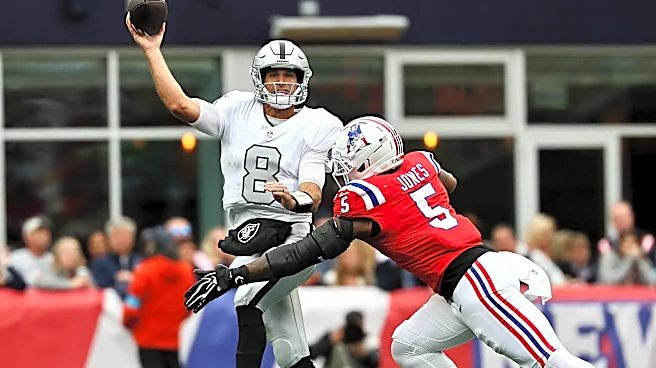
I’ve watched all of Cousins’ throws with the Raiders this year, and it is reminiscent of his previous stint with the Vikings. I don’t know that his arm strength has declined much- it doesn’t look like it- but there is a caveat. He can make all the throws, as you would expect from a starting NFL quarterback, but he needs to step-in to deeper throws for them to have the needed velocity. That may have been the case before as well but it is something that stood out when watching his tape this season. He can’t launch balls down field with velocity off his back foot like Jordan Love or Caleb Williams. This is the impact of being his being 38 years old. Additionally, he has not become any more mobile over the last three years, and the scampering of Kyler Murray to pick up first downs here and there is definitely not in Cousins’ bag, if that wasn’t obvious. He has run for five-yard gains on a couple occasions this season, but that’s about it. He is able to maneuver within the pocket effectively and does fine on bootlegs, but he’s not going to outrun many pass rushers for very long. He’s also not afraid to deliver the ball downfield in the face of oncoming pressure- and pay the price for it. He’s also not afraid of throwing into tight windows and does so with regularity.
Cousins has 8 interceptions so far this season, three of which came last weekend against the 49ers. A few of them came on throws left a bit short, a few in tight window throws where ball placement and/or route were not ideal. One his receiver fell down. And the last one came with 4 minutes left in the 49ers game and he was just trying make something happen down multiple scores. But for the most part Cousins’ interceptions came while being aggressive and playing on time making throws that Murray and Wentz have generally avoided this season.
Cousins hasn’t been sacked much so far this season- just 11 times in 9 games. He’s also the only quarterback who has not been sacked on a blitz so far this season. So, he’s generally done an excellent job of avoiding the rush and getting the ball out- maybe only one of sacks can be blamed on him. And whereas Murray or Wentz may look to scramble to buy time, Cousins is mainly focused on getting the ball out. He’s very much a pocket passer in that respect, with his only move typically being to step up in the pocket to avoid the edge rush.
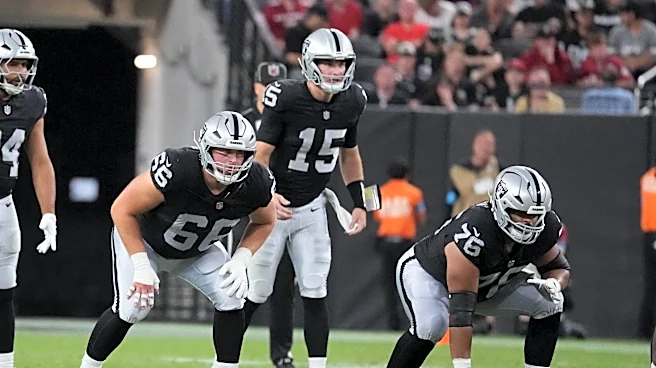
The Raiders offense has different strengths than the Vikings, and that has influenced Cousins’ play. Their offensive line is similar strength as the Vikings, anchored by All-Pro center Tyler Linderbaum. But the strength of their receiver group is their tight ends- Brock Bowers and Michael Mayer- and they run double tight-end sets at the highest rate in the league. Their receivers are Tre Tucker and former Viking Jalen Nailor. The Raiders running game is terrible- last in the league- averaging just 2.9 yards per carry. Ashton Jeanty hasn’t done much as a running back, but he is a good receiving back. So, roughly 60% of Cousins’ targets with the Raiders were to tight ends or running backs- mainly Jeanty.
Cousins has the third highest PFF passing grade (91.6) when targeting intermediate (10-19 yard) routes this season among starting quarterbacks and has done so at the fifth-highest rate (24.8%). Most of those targets were to tight ends between the numbers. Cousins is likely to target wide receivers more with the Vikings- as he did in 2022-23- as that is the strength of the Vikings receiver group. But the route concepts the Vikings employ will likely have him continue to target intermediate routes over the middle at a fairly high clip, complemented by outside zone runs that can spread the defense out and make linebackers bite on play action.
In addition to having a poor running game, the Raiders also have the last ranked defense in both points and yards allowed. They’ve allowed at least 30 points in each of their last six games, which has put Cousins under pressure to keep pace. That has affected the game situation and play calling for the Raiders, which pass just over 60% of the time- one of the higher rates in the league.
Still, despite a poor supporting cast when it comes to the running game and defense, Cousins has managed a top ten ranking (7th) across a composite of key quarterback metrics this season. That’s leaps and bounds higher than anything the Vikings have had so far this season.

Can Cousins’ Performance This Season Translate to the Vikings?
By most metrics, Cousins’ performance this season has been pretty close to his season average across five and a half seasons with the Vikings previously, so from an age standpoint there doesn’t seem to be an impediment there to his achieving similar results with the Vikings this season compared to what he did with the Raiders and compared to what he did previously in Minnesota. The schemes in Las Vegas and Minnesota are similar- both from the Shanahan tree- and Cousins’ spent a year and a half in O’Connell’s system already and three and a half seasons with Justin Jefferson, a half season with Jordan Addison and a year and a half with T.J. Hockenson. It’s really a question of how fast everything comes back to him. It wouldn’t be surprising if there is a ramp up period, but from all accounts he’s hit the ground running since he arrived on Tuesday. My guess is there will be hiccups on Sunday as he gets back into the swing of the Vikings offense- and maybe here and there for a few games- but I also expect him to make more throws than we’ve been seeing from Murray and Wentz this season. Whether that’s enough to beat the Packers and 49ers remains to be seen, and once again the Vikings’ defense will need to show up and be dominant, but Cousins should be able to allow the Vikings offense to possess the ball and put them in position to score more points than they have so far this season- even with a more limited playbook and kind of re-learning on the field as far as rapport with receivers.
How Good is Good Enough?
How quickly Cousins can get up to speed with the Vikings offense could mean the difference between a division championship and potential first seed in the playoffs and a wild card spot, assuming the Vikings beat the weaker teams remaining on their schedule. But the next two games are crucial- the Packers and 49ers- in terms of keeping pace within the division and competing for the top seed in the postseason. If the Vikings can win them both, they move to 8-2 and have a much easier schedule the rest of the season and would hold a key tie-breaker against the 49ers. If they lose both games, they fall to 6-4 and if they can regroup from there to gain a wild card spot they will play on the road throughout the playoffs in all likelihood. That’s a tough road to make a deep run. But if the Vikings and Cousins ramp up to play their best football in December- and beyond- they will be as formidable a team as there is in the league and not a team any division winner is looking forward to playing.
But a premium is on winning in November- beginning on Sunday- to best position the team for a deep run. Hopefully Cousins- and the rest of the team- is up to the task.
Follow me on X/Bluesky @wludford