
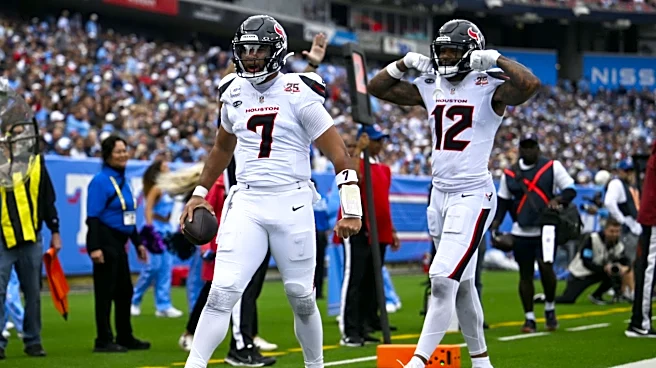

Last Saturday morning, rampant speculation surrounding Arizona Cardinals and their embattled wide receiver, Marvin Harrison Jr., reached a peak following ESPN’s Adam Schefter cryptic Saturday morning tweet announcing that Harrison was being traded, but with no mention as to where he was going. Rumors connecting Harrison and the Cardinals to the Houston Texans flooded the internet and social media immediately after the announcement. Then, following the Texans’ 26-3 victory over the Tennessee Titans,
head coach DeMeco Ryans took some time in the post-game press conference to address the rumors – Marvin Harrison Jr. was, in fact, coming in Houston:
After it was all said and done, the full trade terms included the Cardinals packaging Harrison and a 2027 sixth-round pick in exchange for Houston’s 2027 second and seventh-round picks.
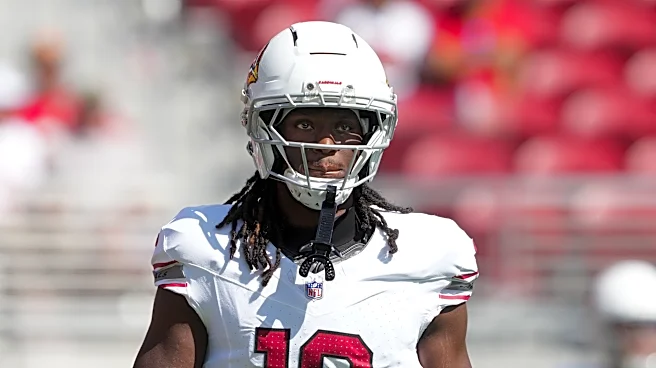
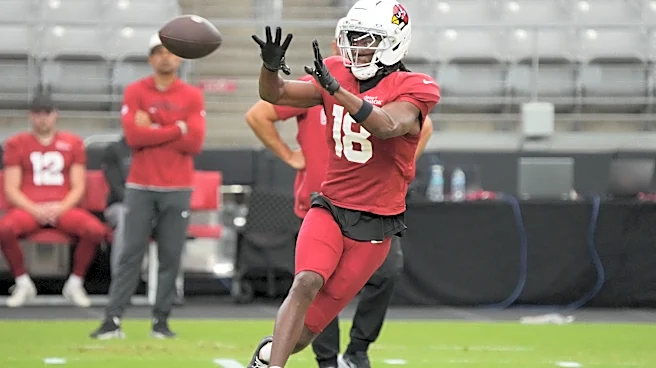
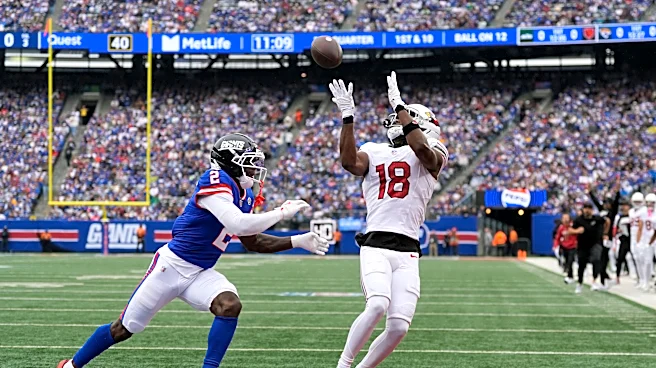
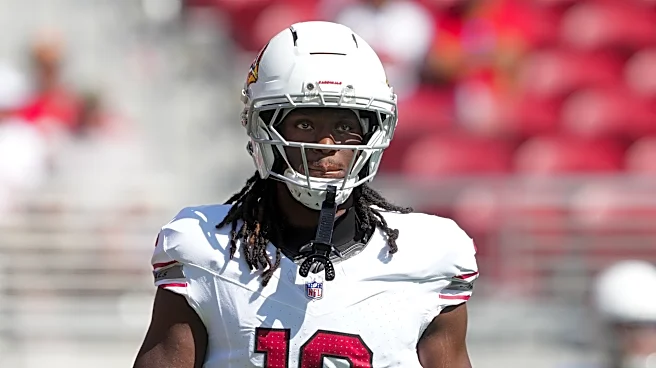
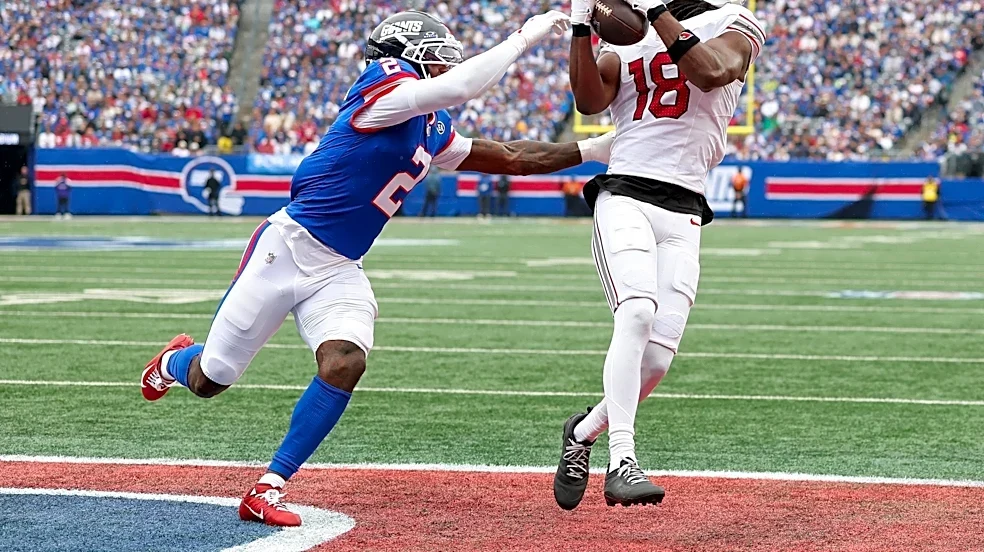
I can’t think of a trade announcement quite as peculiar or as…staggered, as this one, but no matter! Marvin Harrison Jr., seen as one of college football’s premier wideouts just a few short years ago and the fourth-overall pick in the 2024 NFL Draft, is now a Houston Texan! Harrison’s career statistics in Arizona were:
- 2024: 17 Games (16 Starts), 62 Recs on 116 Tgts (53.4 Ctch%), 885 Yards, 8 TDs, 77.7 PFF Grade (77.2 RECV, 78.8 DROP, 45.4 FUM, 64.0 RBLK)
- 2025: 12 Games (10 Starts), 41 Recs on 73 Tgts (56.2 Ctch%), 608 Yards, 4 TDs, 68.4 PFF Grade (67.6 RECV, 47.7 DROP, 78.3 FUN, 59.9 RBLK)
- 2026: 4 Games (4 Starts), 5 Recs on 13 Tgts (38.5 Ctch%), 85 Yards, 1 TD, 52.4 PFF Grade (51.9 RECV, 29.2 DROP, 68.0 FUM, 60.7 RBLK)
Marvin Harrison Jr., son of hall-of-fame wide receiver Marvin Harrison, was drafted fourth overall by the Cardinals because they saw him as a player they could sculpt their entire offense around. Coming out of Ohio State, Harrison appeared to be the next in a long line of athletic, dominant NFL receivers that cut their teeth in Columbus. His wingspan and exceptional route-running abilities made Harrison a favorite target of former Ohio State QBs Kyle McCord and current Texans signal-caller CJ Stroud. who is no doubt a bit cheesed by this development:
In short, Marvin Harrison Jr. was nearly impossible to cover in college. But, part of the reason we’re even talking about him joining the Texans is because of his continued struggles in translating that collegiate dominance to the NFL level. Even though Harrison had over 800 receiving yards and eight touchdowns as a rookie, his lack of breakaway speed was something that opposing defenders could adjust to and eventually take advantage of, which is exactly what they did. In several of his games in 2025 and in 2026, Harrison can be seen losing to opposing cornerbacks and failing to use his frame to box out defenders who are more than willing to park themselves directly on top of him. Still, he matched Cardinals WRs Larry Fitzgerald and Anquan Boldin’s rookie touchdown receptions record, so he’s clearly not a complete bust. Following that year, Harrison tallied 608 yards and four touchdowns in an injury-plagued 2025 season, where his yards per receptions went up dramatically, but both his targets and time spent fully healthy dropped in comparable fashion. When healthy, Harrison failed use his big body to enforce his will upon opposing defenders, and in time, the controversy surrounding his drops began to grow. Finally, in 2026, Harrison’s usage in Arizona has fallen off of a cliff. First-year head coach Mike LaFleur, offensive coordinator Nathaniel Hackett, and QB Jacoby Brissett had all but given up on the Harrison connection before ever delivering on its potential.
But, how will he fit into Houston’s offense? Well, this is where a very interesting discussion has kickstarted on Texans Twitter:
There’s disagreement afoot about what position Harrison will primarily play with the Texans: As the big, outside-the-Numbers “X” receiver, or the more motion heavy, off-ball “Z” receiver. Harrison has the prototypical X receiver size, strength, and route acumen, but he lacks the speed and hands that Nico Collins possesses. That being said, Collins’ speed and acceleration make him a more ideal receiver for the Z spot, but making Harrison the X receiver in his first action as a Texan – who are in very dire straits themselves – may be a little too much to ask, even of a former fourth-overall pick. If I were to throw my two cents in, I’d say that we’re going to get a little bit of both from each receiver, meaning that Harrison and Collins will trade spots on the field, sub in and out for each other, and will be treated as a sort of 1A and 1B for this passing offense as a whole. Texans offensive coordinator Nick Caley, a fruit of the Josh McDaniels/Patriots offensive tree, has already shown interest in moving receivers around and placing them into different positions on the field. I believe that he and Stroud are salivating at the concept of using both receivers on the field at the same time, and will experiment with pre-snap motion with both receivers to further confuse opposing defenses.
Having Harrison Jr. on the team also grants Caley the opportunity to use two bona fide outside receivers on the field at the same time. You could argue the Texans already had something like that with Collins and Xavier Hutchinson, but Hutchinson does not possess the footwork and outside-the-numbers acumen that Harrison has. Harrison is a threat at all three levels of the passing game, and he and Stroud had an exceptional connection on mid-range in-breaking routes while in college. On top of that, one of Harrison’s strengths is chasing the deep-ball, which just so happens to be one of CJ Stroud’s best traits in his NFL career. If Stroud, Caley, and the Texans offensive staff can work together to get Harrison and Collins banging on all cylinders at the same time, they’ll be a very, very hard offense to stop.
Although, all of these hypotheticals are predicated on the idea of the trade for Marvin Harrison Jr. working out in favor of the Texans, and there is no guarantee that this trade will work. Ask any Cardinals fan, and they’ll tell you of a big-time drop by Harrison, or a game where he needed to show up and just…didn’t. Revenge of the Bird’s Barry Shuck summed it up well in his analysis of the trade:
“Harrison just couldn’t get himself open. That is the bottom line. Yes, he had 10 drops in the 30 games he started, but while playing for Arizona, Harrison ranked dead last in the league among all receivers (with 50 targets or more over the past three years) in separation, averaging just 2.1 yards of separation when targeted, per NFL Next Gen Stats.
That is a huge stat, and very telling. Brissett just couldn’t count on Harrison getting open, so he threw the ball to the ones who were getting more than a step on their defender. And does anyone consider Harrison explosive enough? Explosive at all? Does his speed scare anyone?” – Barry Shuck, Deep dive into the Cardinals’ trade of Marv Harrison
Here lies the dilemma of Marvin Harrison Jr. A player that dominated at the highest level of college football thanks to his knack for getting open, now struggling in the pros because he can no longer consistently get open. Shuck goes on to posit in his article of the possibility that maybe Harrison was never this “can’t miss” prospect at receiver, and his statistics were inflated by the lack of comparable talent lining up opposite of him in college. Harrison faced very few defensive backs while at Ohio State that would go on to have NFL careers, and Shuck believes that playing against better athletes in the pros has brought a spotlight to Harrison’s weaknesses and lack of speed. Although, I think Harrison and his NFL career thus far is more than just a story of his disappointing speed and big drops. While I agree that he benefited from lesser competition at the collegiate level, I’d argue that Harrison’s rookie season made it clear that his play style could succeed even against the professionals. I mean, 62 catches for 885 yards and eight touchdowns in 2024? We’d be thrilled with Texans WR Jayden Higgins if he had numbers like that in his rookie season! Maybe Marvin Harrison Jr. isn’t the next Julio Jones, but he’s at least a starting caliber receiver in the NFL with upside to become the north star of a high-flying offense.
Still, the truth of the matter is the Cardinals offense and Jacoby Brissett leaned away from Marvin Harrison Jr. and towards WR Michael Wilson, who finished 2025 with 1,006 receiving yards and seven touchdowns. Whether it was injuries, fewer explosive plays, the drops, or just failing to develop a connection with Brissett, Harrison Jr. ended up playing second fiddle to Wilson and TE Trey McBride for most of the 2025 season. As a result, Wilson received a three-year, $75 million extension in September, and, by contrast, Harrison never even sniffed an extension and saw his role in the offense dwindle even further in 2026. He’s simply too talented of a wide receiver to be such a ghost on Sunday, which isn’t at all what Cardinals first-year head coach Mike LaFleur had in mind. Formerly the offensive coordinator for the Los Angeles Rams, LaFleur envisioned an offense in Arizona that gave Harrison the Davante Adams role and Wilson the Puka Nucua role on the team. This plan went up in flames very quickly, but I don’t think it should discourage Nick Caley – a former Rams coach himself – from trying to replicate an Adams/Nacua duo with Harrison and Nico Collins. An offense with both of those players on the field at the same time can certainly work, especially with a QB performing like CJ Stroud.
So, what does this mean for Houston’s upcoming Sunday morning game against the Jacksonville Jaguars that will be played in London? Well, if Nick Caley does try to get both Harrison and Collins on the field at the same time, I expect Collins to line up more on the inside that Harrison, and I expect that Collins will eat the Jaguars defense alive from this position on the field. Harrison will also probably end up lining up at multiple spots on the field, but I expect him to do most of his damage on the outside and in the red zone, where his connection with Stroud should shine the brightest. I don’t know if I believe in Nick Caley’s ability to develop a perfect plan for both Collins and Harrison, but I do believe in CJ Stroud and his exceptional quarterbacking to find the right throw nearly every down. These two receivers will demand a lot of attention from the opposing defense, so even when Stroud isn’t targeting Collins and Harrison, he and fellow WRs Jaylin Noel and Kayshon Boutte will benefit from the star receivers absorbing the attention.
So, are the Texans a playoff team with Marvin Harrison Jr. on the team? Probably not, but the upside of Houston’s gamble here is astronomical. This could be the move that pushes CJ Stroud into the MVP conversation, and may be enough to instigate an improbable comeback in the AFC playoff race. However, gambles like these – especially ones made in the middle of the season – are rarely won. Harrison has not done much recently to inspire confidence, and there’s no guarantee reuniting with his college quarterback will be enough to”revive” his young career. Still, I remain cautiously optimistic about Harrison’s role on the team, as his athleticism is still absolutely stunning and a weapon not unlike Jayden Higgins in the red zone. He’s another big and tall wide receiver that can get open nearly anywhere on the field, how bad can that be?
What do you think, though? Does this blockbuster trade for Marvin Harrison Jr. mean the Texans may still make the playoffs, or has their 0-4 start doomed them? Do you think Harrison can find a big role on this offense this Sunday, or will it take more time for him the get acclimated? Let us know your thoughts on this trade down in the comments below!
Go Texans!