


Each year, in addition to its standard Baseball Writers Association of America voting, the National Baseball Hall of Fame extends an olive branch to those either passed over by or ineligible for that process. The Hall gathers what it calls an Era Committee to evaluate these cases through a separate, more limited voting system. Notable Yankees to gain enshrinement through the committee system include everyone from Joe Torre and Casey Stengel to Phil Rizzuto and Lefty Gomez.
The Era Committee rotates
between three groups: players whose primary contributions came before 1980; players whose primary contributions were made from 1980 onwards; and managers, executives, pioneers, and umpires from any era. This year, the non-players are up. If that seems like the least exciting of the three options, wait until you hear all the household names and legendary contributors among the eight nominated Monday.
I’m going to break down the worthy cases for each as well as their likelihood for selection, concluding with the three hopefuls that have deep Yankees connections. Before we dive in, some quick housekeeping. Like everything in baseball, the Era Committee process boils down to some crucial math:
- The committee gets eight names to review. These names are selected in advance by a separate Historical Overview Committee comprised of 10-12 baseball historians.
- The voting block consists of 16 baseball luminaries. While this year’s committee has yet to be announced, as a point of reference, last year’s group contained seven Hall of Fame players, six MLB executives, and three veteran journalists.
- Nominees must receive votes from at least 12 of the 16 voters to gain enshrinement.
- Voters can only vote for up to three of the eight nominees.
- This effectively caps the number of inductees through this process at three, though it is often fewer. Last cycle, Jeff Kent was the only selection of the Contemporary Baseball Era Committee.
- If a nominee receives four votes or fewer, they will be ineligible for the next cycle, meaning they’ll have to wait another six years for consideration.
- If a nominee receives four votes or fewer on a second ballot, they will be permanently ineligible for Hall consideration. (Of note here: the “permanent” comes with the major caveat that the Hall has changed its committee process before and certainly could — nay, likely will — change it again at some point in the future.)
One other important, more qualitative, point of order lies in the Era Committee’s rules for election. While the individuals lumped into this group are here because their primary influence on the game was determined to come as a manager or executive, their entire career in baseball is in play. As the rules state:
Those whose careers entailed involvement in multiple categories will be considered for their overall contribution to the game of Baseball.
During Torre’s 15 years on the BBWAA ballot, the voters, required to consider only his playing career, never put him on more than 22.2 percent of ballots. But when he came up for consideration on an Era Committee ballot in 2013, the voters were expected to weigh not only his four championships as manager but his nine All-Star appearances as a player in making their decision (he was ultimately selected on all 16 ballots). This provision could prove impactful for some names on this list.
Dusty Baker
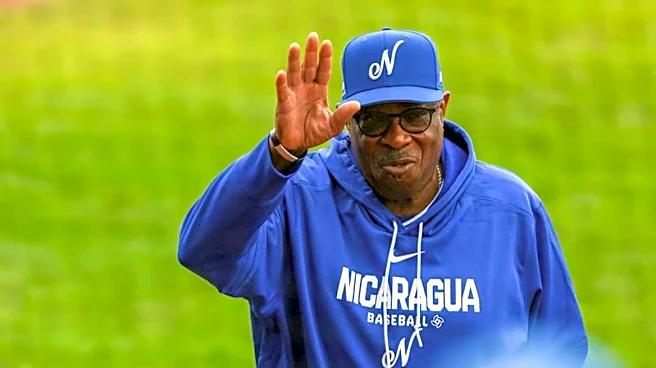
Let’s start with one of the big guns on the ballot. Baker recorded 1,981 hits, 242 home runs, and 1,013 RBI — alongside a championship and a pair of Silver Sluggers — in an exemplary, 19-year playing career that fell just a bit short of the Hall’s standard. He then went into coaching, where he made an even bigger mark. Baker is the only man to lead five different clubs to the postseason, picking up three Manager of the Year Awards along the way. The eighth-winningest skipper in MLB history finally clinched his first managerial title with the Astros in 2022, putting the cherry on top of what was likely already a Hall of Fame career. He was among the first Black men to accomplish many of his achievements, staking him to a legacy as a trailblazer as well. For goodness’ sake, the man co-invented the high five; you could make a quirky Hall case out of that alone. Despite the intricacies of the Era Committee process, Baker’s candidacy seems to be as slam dunk as they come.
Bruce Bochy
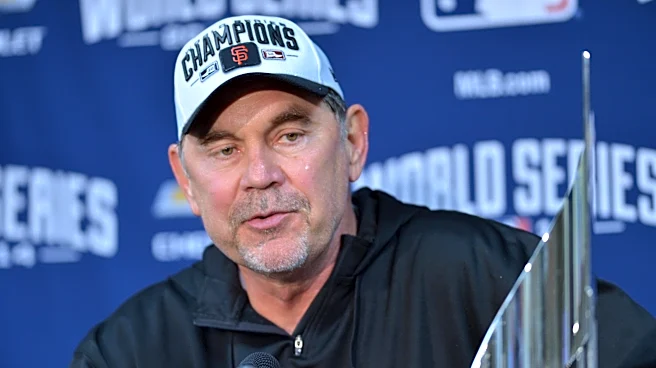
Next up is another manager with an unimpeachable CV. After a nine-year playing career as a backup catcher, Bochy helmed the Padres for 12 years, leading them to what is still one of only two pennants in franchise history in 1998. He then moved to the Giants, where his 13-year tenure included three championships, the closest the game has seen to a true dynasty since the Yankees of the late ‘90s and early ‘00s. In 2023, he came out of semi-retirement to join a Rangers team in transition and was richly rewarded, leading Texas to their first title in franchise history. The only other two managers to win a title in both leagues: Sparky Anderson and Tony La Russa, who both have plaques in Cooperstown.
Only five other managers have four rings and only five other managers have 2,200 wins; everyone ahead of him on both lists is in the Hall. This year’s field is crowded, and the fact that Bochy is the second-youngest on the ballot might lead some to weigh whether he’ll have more opportunities for enshrinement in the future if he’s passed over this cycle. Still, it’s difficult to imaging leaving Bochy off your ballot.
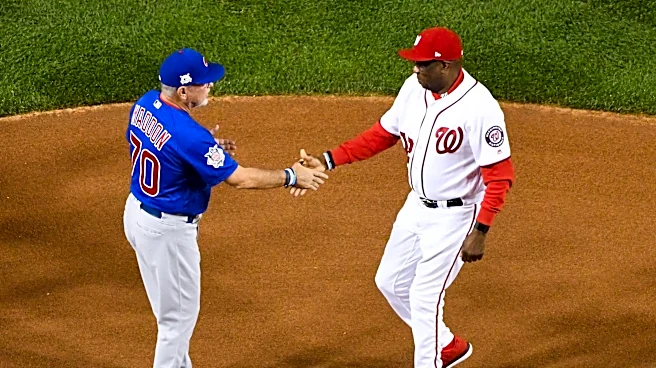
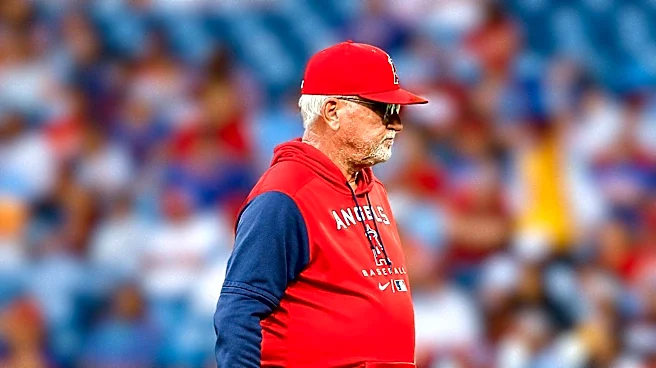
Joe Maddon
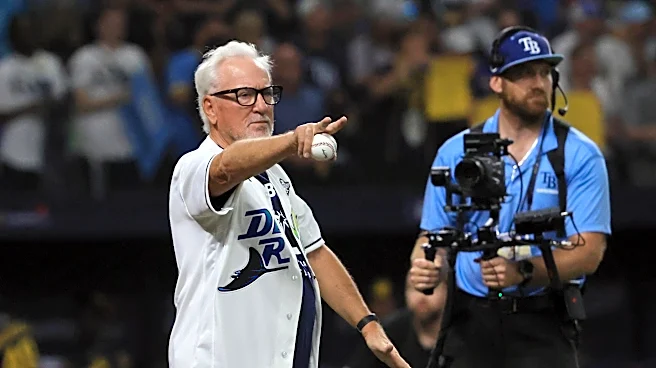
The third championship manager on the list, the biggest feather in Maddon’s cap is leading the interminably moribund Cubs to their first championship in 2016. He was also the progenitor of Rays ball, leading that nascent franchise to its first pennant in 2008 and helping establish the small-market ethos that Kevin Cash has turned into a cottage industry since succeeding Maddon in 2015. Over the course of his career, he won three Manager of the Year Awards, one of nine managers to do so (alongside Baker). He had a painful third act at The Big A, though, leading the Angels to a 130-148 record during parts of three seasons at the helm before he was shown the door, which might leave a bad taste in voters’ mouths. Maddon certainly had a distinguished and impactful career, but his résumé falls a bit short of the Hall standard—especially among this group—and I don’t expect him to get serious traction here.
Sandy Alderson
Moving from managers to executives, Alderson presents a strong case for consideration. As GM of the A’s from 1983 through 1997, he led the team to three straight pennants and one championship. He also became one of the pioneers of “Moneyball” philosophies during his mentorship of future A’s executive Billy Beane. Alderson then moved to the league office, serving as executive vice president for baseball operations during the heart of the steroid era and into its fallout. Following a seven-year stint in the commissioner’s office, Alderson joined the Padres as CEO in 2005, helping the team to consecutive division titles before jumping to the Mets, who developed a horde of arms and won the 2015 NL pennant under his watch. It will be interesting to see how his multi-generational case plays among this group — as remarkable as his career was, a single championship for an executive might hold him back on such a decorated ballot.
Ted Turner
A maverick businessman who bought the Braves in 1976, Turner helped usher in the team’s run of excellence in the ‘90s and ’00s, a period in which Atlanta won 14 straight division titles, five pennants, and one championship. But his largest contribution to the game of baseball writ large was his vision for media.
Turner’s TBS station broadcast Braves games around the country on cable TV, creating not only a legion of fans far from Atlanta but a new model for growing the game. It is completely fair to argue that MLB would not be the same behemoth it is today had it not been for Turner’s efforts. Turner was a controversial figure whose self-promotion and outsized personality rankled some within the game, a factor that could complicate his case. He also passed away on May 6th, which could either garner momentum to memorialize his contributions to the game in this manner or lead to less urgency for his induction compared to living nominees (I suspect the latter).
Brian Sabean
Sabean has a long history with the Yankees, dating back to his tenure as director of scouting for the club from 1986-90 and vice president of player development and scouting from 1990-92. He rejoined the team in 2023, serving as executive advisor to Brian Cashman until he was shown the door last month. In between, he spent 29 years in San Francisco, serving as GM during both the Baker and Bochy eras and twice earning Baseball America Executive of the Year honors. In a twist of fate, the two managers who served under Sabean almost certainly doom his chances on this ballot; while he would have a strong case most other years, it would be a surprise to see him gain momentum over either.
Lou Piniella
Piniella had a long and distinguished playing career, winning Rookie of the Year honors with Kansas City in 1969 and earning two rings during 11 years with the Yankees.
He was the team’s hitting coach while still on New York’s active roster in 1985 and eventually served as manager for two brief stints in George Steinbrenner’s tumultuous heyday — first from 1986-87 and then again to finish out 1988 following Billy Martin’s last stand.
Piniella then embarked on something of a managerial odyssey. He won his only managerial title during his first year in Cincinnati, 1990, but was out after three seasons. His longest tenure was in Seattle, where he won two of his three Manager of the Year Awards during 10 years in charge of a ridiculously talented club and oversaw both the 1995 squad that saved baseball in Seattle and the 116-win 2001 team. Wanting to manage closer to home in Tampa, Piniella moved to the Devil Rays before finally wrapping up his career with the Cubs, where he won a couple more division titles and took home his third Manager of the Year for a 97-win 2008 campaign. “Sweet Lou” ranks 17th all time with 1,835 managerial wins and is in both the Mariners’ and Reds’ Halls of Fame.
Piniella has had a heartbreaking run with the committee system. Each of his last two times on the ballot (in the 2018-19 and 2023-24 cycles), he fell just one vote short. The famously cantankerous former skipper was magnanimous last time around, thanking the Hall of their consideration in a statement. At 83, despite a crowded ballot, there may be growing momentum to get Piniella over the top. Which leads us to our final nominee.
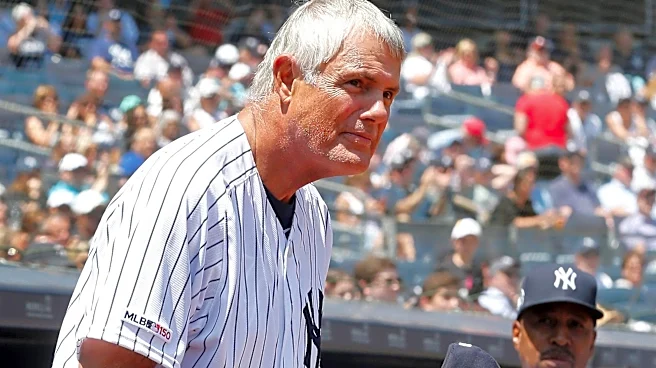
Bill White
I’d like to redirect our attention to Clause B of the Era Committee’s rules for election. If ever there was a candidate whose “overall contribution to the game of Baseball” need be considered, it’s White. He began his baseball life as a ballplayer, earning eight All-Star berths and seven Gold Gloves at first base during an exceptional career that was too brief to warrant enshrinement on its own. He then embarked on a trailblazing broadcasting career that led him to New York, where he became the first Black play-by-play man for an MLB team. Alongside Rizzuto, White helped form one of the most iconic broadcast duos in Yankees history for 18 seasons. He then served as National League president, the first Black person to hold a comparable title in the major North American sports.
One of White’s final acts in baseball was serving on Veterans Committees (an earlier iteration of Era Committees), working alongside Yogi Berra and Pee Wee Reese to get his old friend, Rizzuto, enshrined. White received the Hall’s Buck O’Neil Award for Lifetime Achievement in 2026 — a worthy honor, but one that could ironically stunt his momentum for full enshrinement.
White fell two votes short of induction on the 2023 ballot and, at 92, must be considered a priority case. While he’s not as much of a household name as several others on the ballot, when evaluating his baseball life in totality — player, broadcaster, executive, and elder statesman — and his remarkable legacy as a trailblazer, you could make the case that he’s at least as deserving as any of his fellow nominees.
Still, if Baker and Bochy are locks, the math for either Piniella or White to show up on 12 ballots gets narrow, especially with other strong candidates like Alderson, Turner, and Sabean potentially in play to siphon votes away. While it’s a reaffirmation of the need for Era Committees that this year’s group of nominees is so deep, at least one of these two legendary Yankees figures will likely be left out in the cold yet again.