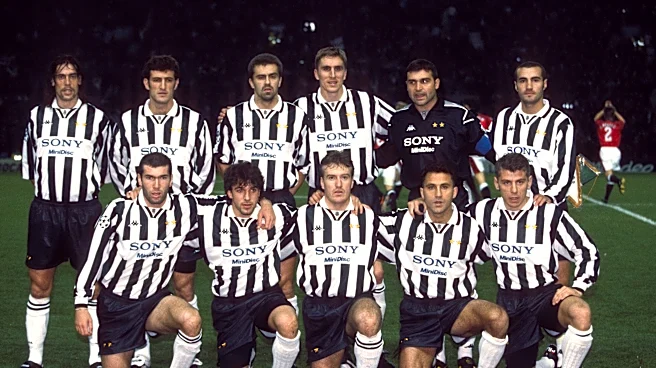



On November 20, 1996, Juventus walked into the Theatre of Dreams carrying something far more valuable than confidence: the aura of European champions. Just six months removed from conquering the continent in Rome, Marcello Lippi’s Bianconeri had established themselves as the standard against which every European heavyweight was measured. Arriving in Manchester for Matchday 5 of the 1996–97 UEFA Champions League group stage, they needed just a point against Manchester United to secure their passage
into the knockout rounds. But this was Juventus. Playing simply to survive was never part of the club’s identity.
There was something particularly special about this Juventus side. It was a team built around experience, character, and emerging brilliance, with players who would go on to define different chapters of the club’s modern history. Angelo Peruzzi stood between the posts, a goalkeeper whose reliability would become synonymous with Juventus’ success during the decade. Ahead of him was a defensive unit featuring the uncompromising Paolo Montero, the ever-dependable Ciro Ferrara, and Moreno Torricelli, whose remarkable journey from carpenter to European champion embodied everything romantic about football. They were joined by Gianluca Porrini, another of the understated professionals who helped make Lippi’s side so difficult to break down.

In midfield, the balance was just as remarkable. Vladimir Jugović brought steel and composure, while Didier Deschamps offered the intelligence and leadership of a player who understood exactly what winning at the highest level required. Angelo Di Livio, affectionately known as Soldatino, provided the tireless running and selflessness that made him such a beloved figure in Turin. Further forward, however, was a glimpse of the future. Zinedine Zidane was beginning to announce himself as one of the most extraordinary talents in world football, while Alessandro Del Piero was already becoming the face of a new Juventus generation.
And then there was Alen Bokšić, a powerful and technically gifted forward who offered another dimension to an already formidable attack.
Facing Alex Ferguson’s Manchester United, a side featuring the emerging talents of the famous Class of ’92 alongside the mercurial Eric Cantona, Lippi had little interest in approaching the evening with caution. He sent out a team full of personality and pedigree, a collection of footballers who understood that Juventus didn’t travel across Europe to simply make up the numbers.
For those wishing to revisit the occasion in its entirety, the full match is available to watch here.
From the opening whistle, the Bianconeri played with the confidence of a reigning European champion. They pressed, moved the ball with purpose, and imposed their rhythm on a stadium that had become accustomed to seeing visiting sides overwhelmed by its atmosphere. Old Trafford was supposed to be a fortress, but Juventus looked entirely at home.
Their breakthrough arrived in the 35th minute. Del Piero, still a young man but already carrying the unmistakable air of a future club icon, drove into the penalty area from the right. Nicky Butt attempted to halt his progress with a desperate challenge, bringing the Italian down and giving the referee little choice but to point to the spot.
Under the Old Trafford floodlights, Del Piero approached the penalty with the composure that would become one of his defining characteristics. His strike flew high into the top-left corner, leaving Peter Schmeichel with no chance and sending the travelling Juventus supporters into celebration.
It was another memorable European moment for a player who would go on to give the club so many more.

The second half was a reminder of what made this Juventus team so formidable. As United searched for an equaliser, they were met by a defensive structure that seemed almost impossible to penetrate. Ferrara’s experience, Montero’s aggression, Torricelli’s determination and Peruzzi’s assurance combined to frustrate the English champions at every turn. In front of them, Deschamps and Jugović ensured that Juventus never lost their grip on the contest.
There was no panic, no desperation, and certainly no sense that the occasion was becoming too much for them. This was a side that knew how to win football matches, and it showed in every challenge, every interception and every moment of possession.
When the final whistle arrived, Juventus had secured a historic 1–0 victory. The result confirmed their place in the Champions League knockout stages with a game to spare, but its significance stretched beyond qualification. They had become the first Italian side to win at Old Trafford, adding another memorable chapter to a European campaign that would ultimately take them all the way to the final.
Looking back, that November evening feels like a wonderful time capsule of Juventus at the height of their European powers. It was a team that brought together the old guard and the new generation, the unsung heroes and the future superstars. Peruzzi, Ferrara, Deschamps and Di Livio represented the experience and character of a winning institution, while Zidane and Del Piero offered a glimpse of the extraordinary footballing legacy still to come.
Some would remain beloved figures in Turin long after their playing days had ended. Others would go on to become immortal names in the history of the club. Together, they formed a side that seemed to understand exactly what the black and white shirt demanded.
Nearly three decades on, that night at Old Trafford remains more than a famous group-stage victory. It was a snapshot of Juventus at the height of its European powers, a team that brought together the experience of established champions and the brilliance of a new generation. In many ways, it was a reflection of everything that would define the Bianconeri in the years that followed: resilience, personality, star power and an almost unshakeable belief that no stage was too big.
On November 20, 1996, Juventus didn’t just conquer Old Trafford. They offered a glimpse of an era in which conquering Europe had become an expectation.