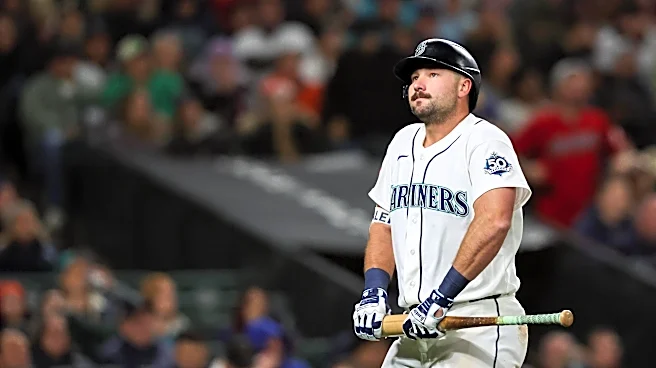


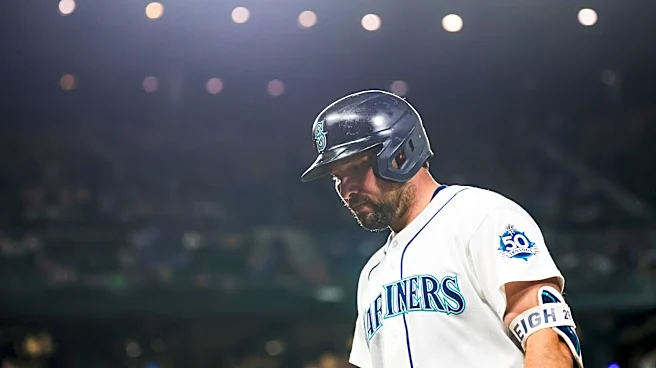
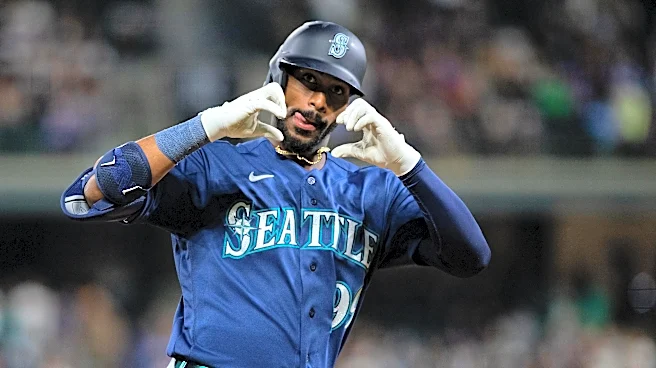
Anyone who watched the 2026 Mariners could easily point to areas where the team failed, but Cal Raleigh, meeting with the media on Thursday, was unflinching in his assessment of what went wrong this season.
“I think there’s a lot of areas you can point to. I think ultimately, I think it was a lack of focus, a lack of execution, a lack energy at times. Defense was not good all year, controlling the running game was not good all year. Playing bad on the road all year, hitting with runners in scoring
position was definitely not good. I’d say those were some key points that I kind of look at.”
Other than that, Mrs. Lincoln, how was the baseball season?
One thing Raleigh is steadfast in is not blaming injuries for the team’s poor performance, shutting down that line of questioning immediately.
“Every team deals with that. Guys are going to go through aches, pains, injuries. So it’s silly to use that as an excuse. 29 other different ball clubs are dealing with the same thing that we are, and you can’t use that as an excuse. And we’re definitely not going to. It came down to play on the field, and it was not executed.”
But fans were there. They saw the lack of execution. They are less interested in the why, and more in how it’s going to get better. Unfortunately, in order to get to the second part – knowing how to fix it – it is necessary to first understand what went wrong, and why. But that’s a more complex discussion that first involves figuring out where to assign blame, and how much of it goes where. It’s not a one-size-fits-all answer, notes Raleigh.
“I don’t think it was one thing,” said Raleigh. “I think we could point to a lot of things that that went wrong, but I
don’t think it was one thing. I don’t think it was one person. I don’t think it was one department that
failed this year. I think it was a collective failure, unfortunately.“
“Ultimately, yeah, the players are the ones playing every single day, 162. I think if you ask everybody, typically it’s going to fall on the players. But like I said, I think there’s not one person or one group that it falls under. I think it’s a collective effort. I think it’s all the way from the top, to all the way to the bottom, and that’s a tough pill to swallow.”
While the players are, as Cal points out, ultimately the ones on the field, it’s clear from his comments they aren’t the only ones in charge of turning around this miserable season next year. Deficiencies that showed up early in the season as far as the roster went were only exacerbated by injuries and ineffectiveness, especially in the pitching staff, which suffered the biggest drop in WAR from the first to the second half as starters stuttered and bullpens imploded.
“We need more depth in the bullpen,” said Raleigh. “I mean, we honestly do. We need to get some more whiff. We need to get some more guys that can punch some tickets here and there.”
But beyond adding pieces, Raleigh says the core of pitchers who make up the rotation need to return to form or maybe change tactics. He seems to feel other teams have figured out the Mariners pitchers plan of attack, and the focus now needs to be on counter-attacking aggressive hitters rather than allowing them to ambush first pitches.
“The starters, they got to continue to get better. They’ve been one of the best rotations in all of baseball for the last few years, and and like I said, you can talk to all of them, and they’re probably disappointed with how they did. When I when I’m watching the game back there, I’m seeing a lot of very aggressive teams, very aggressive teams, even teams that aren’t [usually] aggressive. And when I look at that, it’s going to come down to execution. It’s not not necessarily all the time about winning your 0-0s, your 1-1s. It’s about executing a pitch and how can we get this guy out.”
“I saw a lot of very aggressive hitters and guys that were were ready to go from you know pitch one because that’s kind of in our DNA. We’ve got to continue finding ways to combat that. I think we’ve done a great job of that, and creating pitchers [who attack the zone] and having guys that are really good at doing that. But at the end of the day, it’s about wins, it’s about execution. It’s not about chasing a stat or, or doing anything like that. So it’s just about getting better, and I don’t know if maybe we were complacent in that fact. Maybe we were. Maybe we
weren’t. Maybe it was just unlucky. Maybe it wasn’t. But it’s finding a way to, ‘how can we get better? How can we combat those things that other teams are doing to us?’”
Beyond just the core of pitchers, Raleigh said the core of players as a whole has to do better. Yes, injuries decimated the bullpen and that depth has to be rebuilt, and every team always wants to get better, but the core members of the team as a whole have to play better.
“I said it right at the right at the deadline. The core is here. The core is here, and this core got us where we were last year. But ultimately, that core has to get better as well. It’s not always bringing in extra pieces that are gonna help. Do we need to bring in more people in certain areas of the game? Yes, 100%/ We need to get better, and that’s always gonna help. But at the same time, when you look at the core guys, I think you can look at most of the guys, and they will tell you that they did not have the season they wanted, and team-wise, we didn’t have the season we wanted. Ultimately we failed. That’s the easiest way to put it.”
What caused this team-wide failure across the core? Raleigh noted there might have been times where the team stagnated when they needed to take a step forward, failing to make adjustments and finding the kind of edges that great teams do.
“Every facet can be better,” he said bluntly. “I think we—myself included—we could have done a better job of of preparing and continuing to get better throughout the year. I think sometimes in the game you can get a little stagnant at times, like, ‘I got to rest my body’ or ‘I got to you got to make sure I’m ready for the game at 7 o’clock,’ which is ultimately, what you want to do.”
“But you also have to continue to get better and continue to get stronger as the year goes on, and we just never did. We never made those adjustments we had to make. We didn’t get better in the areas that we were deficient in, and we just kind of stayed stagnant the whole time. We were relying more on catching a lucky streak rather than to keep preparing better, to keep getting better, keep finding those those edges to to find ways to to win ball games, whether it was defensively holding runners, hitting with runners in scoring position, finding a way to get through six innings instead of five from the starters…there’s lots of different things. Taking an extra bag here and here, things like that. And and it just never got there. Never got there.”
Raleigh is an admirer of Seahawks coach Mike McDonald, and has clearly absorbed McDonald’s message of “chasing edges”, or finding small ways to edge out an opponent. Again, his comments reflect some frustration with the status quo and a lack of innovation, as well as a lack of execution.
“You can’t rely on the bullpen or you can’t rely on the big home run every single time. We have to be able to win in different fashions, win in different ways. Find a way to sneak out those one-run ball games. I don’t think we were very good in one-run ball games this year. I think it was right around .500. Like I said before, the road record was poor, we got swept too many times. It’s finding a way to edge out those games. It’s—I heard this phrase the other day, ‘chasing edges.’ How can we win one game here and there, one extra game a month? That’s six, seven extra wins. Now we’re tied for first, or we’re we’re in first place. It’s cliche to say it’s the little things, but those are what win you ball games, and those are things we did not do this year.”
Raleigh’s biggest takeaway is not letting this become a habit, pointing out that it if happens once, it’s an unfortunate event; if it happens twice, it’s a habit.
“We’ve got to figure out why why that happened, and and there’s going to be lots of talks, lots of discussions throughout the off season to make sure that doesn’t come back next season…Every single aspect needs to be geared towards how can we win this ball game today. Not taking days off, not letting one thing slip through the cracks. Because once that happens, it’s a domino effect, right? Like you let one thing slide, then you let another thing slide. The next thing you know, you don’t know what’s going on. There’s no standards. There’s no accountability. There’s no dynamic of who we are and what we do, and and I think that’s what’s going to be looked at this off-season.”
The 2026 season was certainly a slide for the Mariners. Now Cal Raleigh, his teammates, and the rest of the organization – top to bottom – have to reset those dominoes and figure out how to not let them fall again. Raleigh seems to have a vision – chasing edges every day, stopping slides before they start, being less predictable as a pitching staff, cleaning up sloppy play on the field – now he has an off-season to implement it.