

Today’s entry into our daily birthday series brings us away from the playing field, and up to top of the front office. Baseball, the entertainment product, is driven primarily by the players, but there is much more at play to make the sport come together. Umpires, coaches, broadcasters, vendors, countless staff members, players, and even owners work together (sometimes), to present us with the game we know. In the case of today’s look back on Yankees history, we’ll take a look at one of the more significant
owners in team history.
While it can be difficult to find much sympathy for owners in today’s game, it would be impossible to deny the mark that Jacob Ruppert had on the history of New York Yankees baseball — one that earned him a spot in both Monument Park and the National Baseball Hall of Fame.
Jacob Ruppert Jr.
Born: August 5, 1867 (New York, NY)
Died: January 13, 1939 (New York, NY)
Yankees Tenure: 1915-39 (Owner)
Born in New York City in 1867, Jacob Ruppert was the son of a German brewer, and by the time he came to own the Yankees, he was already a well-known public figure. The lifelong New Yorker served in the National Guard, reaching the rank of colonel before diving into the world of politics. Indeed, throughout his career, he would retain that title and was simply often referred to as “The Colonel” (or “Col. Ruppert”).
After working as a staffer for the governor’s office in New York, Ruppert himself ran for election in 1898, and won a spot in the U.S. House of Representatives. He served in Congress from his initial victory until 1907. His tenure in the legislative branch aside, Ruppert’s significance to Yankees history would begin not too long after.

Ruppert took an interest in baseball since his childhood, and began his path toward ownership in the early 1910s. After attempts and offers to buy other Major League clubs, Jacob Ruppert landed on a purchase and part-ownership of the Yankees in January of 1915, joining former Army captain and engineer Tillinghast L’Hommedieu Huston in the $460,000 endeavor. At the time, the Yankees were small players in the American League, in need of some newfound invigoration. From that point onward, Ruppert would bear witness to some of the greatest success in the history of professional sports, owning a team that was, in his time, synonymous with championships and star players.
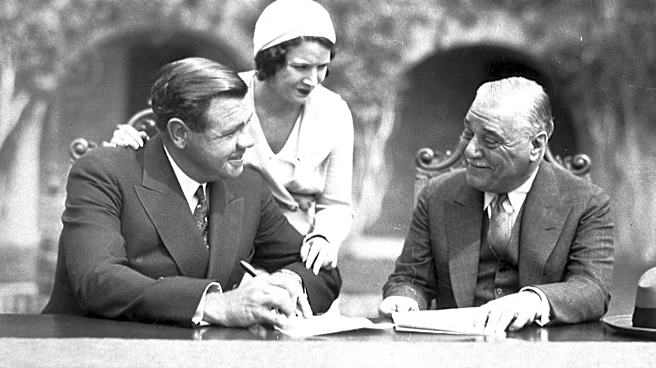
The Yankees franchise had done little of note upon his purchase, and the turnaround was not sudden. Ruppert exercised shrewd judgment, eventually landing on former St. Louis Cardinals player/manager Miller Huggins, “The Mighty Mite” to run his club on the field. The true turning point, unsurprisingly, was the nearly-mythical acquisition of Babe Ruth from the Boston Red Sox in December 1919. Although, there were reports of Ruppert’s distaste for the Babe’s off-field habits, Ruth was likely among the best things to ever happen to the former Yankees owner.
With the biblical Ruth now in the fold—not to mention the man who skippered those Red Sox teams, Ed Barrow, who became a Hall of Fame general manager in the Bronx—the Yankees had their best year yet in 1920, with a record of 95-59, a marked improvement over his first few years of ownership. Following that campaign, the Yankees went on to win three consecutive pennants in the Junior Circuit, the last of which saw them win their first ever World Series in 1923. That coincided with the Yankees’ first year the ballpark that Ruppert and Huston worked hard to get built: Yankee Stadium. (Huston sold the majority of his stake to Ruppert shortly after its opening, as he disagreed with Ruppert and Barrow on Huggins.)

With some of baseball history’s greatest names in the lineup, Ruppert oversaw three more appearances from 1926-28, including a pair of wins, as well as another championship claimed in 1932. That came under manager Joe McCarthy, another smart pick a couple years after Huggins’ unexpected early death. Around this time, the Yankees began a more formal minor-league partnership with the Newark Bears after the Colonel acquired them, and their ballpark, Ruppert Stadium, was named for him.
The end of Ruppert’s tenure as owner, and the end of his life, saw the Yankees win four consecutive World Series, from 1936-39, as captain Lou Gehrig and an ascendant Joe DiMaggio engineered a remarkable dynasty. It was a historic run of dominance, and was only the beginning of the Yankees’ torrid stretch in the middle of the 20th century. Ruppert and Barrow could be tough negotiators, but players respected his willingness to open his wallet to not only bring in young stars like DiMaggio, but keep them around, too.
Ruppert’s tenure of the Yankees saw Ruth, Gehrig, and DiMaggio post numbers so good they are difficult to conceptualize, while the team as a whole went to 11 World Series, winning eight of them. His time as the owner oversaw the changing of the tides for the franchise, and the establishment of the Yankees success that baseball fans are so familiar with. His health took a turn during the championship 1938 season and after missing that year’s Fall Classic, he fell in and out of comas during the offseason. Ruppert never saw the Yankees win their fourth title in a row, as he died on January 13, 1939. His estate continued to own the team through World War II until selling to a group led by Dan Topping, Del Webb, and Larry MacPhail in 1945.
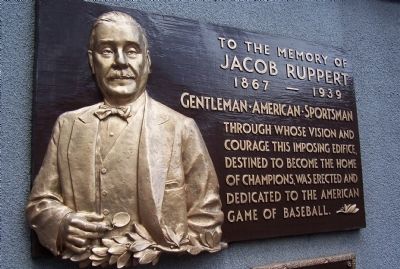
In April 1940, the Yankees honored their late owner with a plaque in Monument Park. Ruppert was just the third person so honored, following Huggins’ monument in 1932 and Gehrig’s number retirement the previous year. He was considered by the Hall of Fame but didn’t actually gain induction until a Veterans Committee vote in December 2012, garnering 15 of 16 votes. Ruppert never married or had children, but his great-grandniece, Anne Vernon, spoke in his memory at the following summer’s induction ceremony.
Born 159 years ago today, Jacob Ruppert’s impact on the Yankees would be difficult to overstate, and he makes for one of the oldest entries into this birthday series. Let’s put those 1, 5, and 9 candles in the cake and celebrate.
See more of the “Yankees Birthday of the Day” series here.