



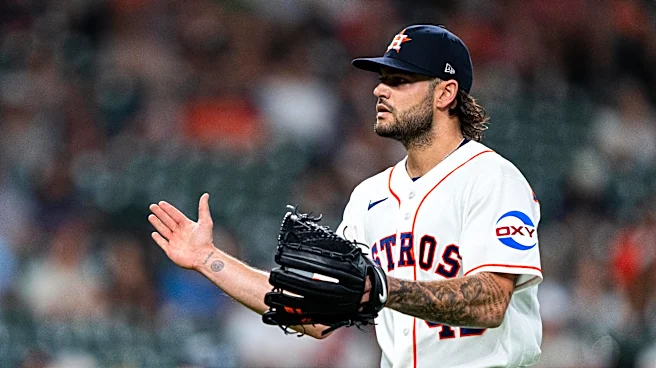
The travels of the de facto Traveling Correspondent have begun, and we are now sorting through the highlights and lowlights of the experiences while providing in-person coverage for True Blue LA during the 2026 season.
As the Dodgers have mucked about in the mud with their actual rivals and dispatched their de facto rivals, on the eve of the rematch between last year’s laugher of a National League Championship Series, before Adric and I return to the road, let us reflect on what invariably came before…
The first road trip of 2026 was inevitably, ultimately, always going to be a spectacular letdown. To be fair, when the last act was the two most hallowed words in sport, followed by arguably the greatest game ever played, virtually nothing but perfection could possibly follow up as the next act.
So once I psyched myself out by lowering my expectations, I told myself that I was going to enjoy this outing no matter what. Acknowledging that fact was a lot easier said than done, which gives me some insight into what the Dodgers themselves must be thinking and feeling these days. Yes, they ride at the pinnacle of the sport, but one would be remiss not to notice that victory has at times defeated them.
After all, it’s hard to gin oneself up to go to St. Louis and Houston in early May, but I survived. The addition of going to St. Louis was the final addition to my 2026 itinerary, as it was cheaper and less hassle to get to Houston from St. Louis than from my home base in San Francisco.
In retrospect, considering my slightly bum leg that I have been nursing for about a month, I probably should have just paid the extra amount and just done the three-game set in Houston. That said, I did get some nice footage of budget seating at Busch Stadium while the Dodgers ground into eight double plays over two games.

Seeing Dodgers baseball in St. Louis is like being in sweaty pajamas around the house: folks might judge you a little, but it’s comfy, and sometimes that is enough. What I found amusing was both the near-constant applicability of my Japanese skills in both St. Louis and Houston and the sheer shock my conversational Japanese would elicit from the unsuspecting.
More often than once in St. Louis and Houston, I had to play de facto translator, which made me smile and call my mother afterward, which goes to show the ongoing Japanese language work is still paying dividends.
Unapologetic
The main draw of this trip was my first visit to Houston, which I honestly had mixed feelings about beforehand for obvious reasons. I had a feeling this portion of the trip would be my hair shirt, and sadly, I was right. For those who do not know, a hair shirt is generally any self-imposed punishment used to show contrition.
I have gorged at the buffet of plenty. To complete the MLB circuit, I have to take my medicine.
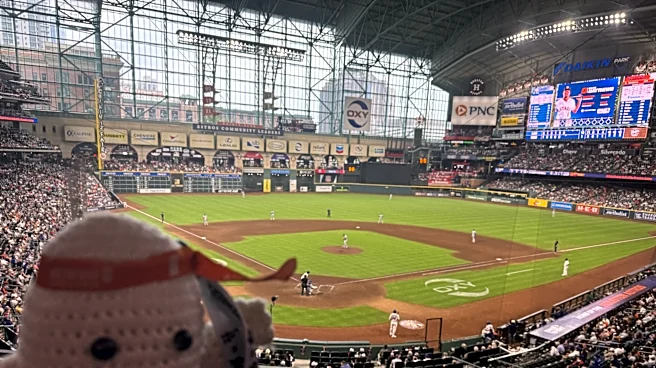
I previously wrote that I was largely over 2017 before visiting Daikin Park. Saying that you’re over something is a much bigger challenge when you are having the thing you are allegedly over being thrust in your face at seemingly every opportunity over three generally forgettable days in Houston.
Imagine the sprawl and majesty of Tokyo, then remove anything interesting, and then remove the ease of transit, and what is left is a logistical nightmare without a vehicle. Apparently, there is a system of pedestrian tunnels in Houston for getting around downtown, which are currently entirely unhelpful for navigating the immediate area around Daikin Park.
While I did meet some lovely people in Houston, the main things that stood out were both the spectacular failures of Daikin Park as a baseball venue and the sheer unapologetic nature of the Houston faithful. What I did not anticipate was just the sheer audacity of the Astros’ cheating in 2017 being thrown in my face. I took a tour of the facility, which I knew would anger me. It did, but my ultimate victory came in not showing it.


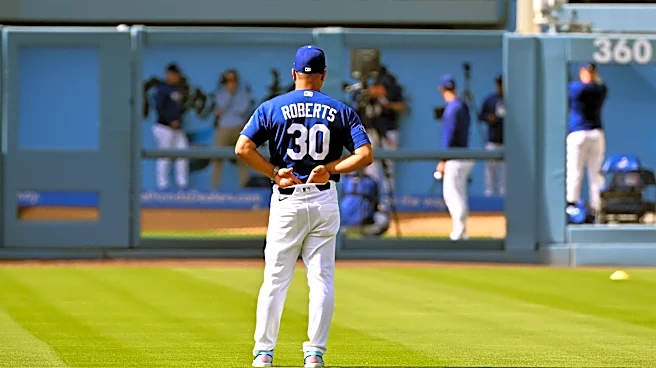
During the three-game series, Manager Dave Roberts said that he had largely gotten over the scandal. He’s a better man than most.
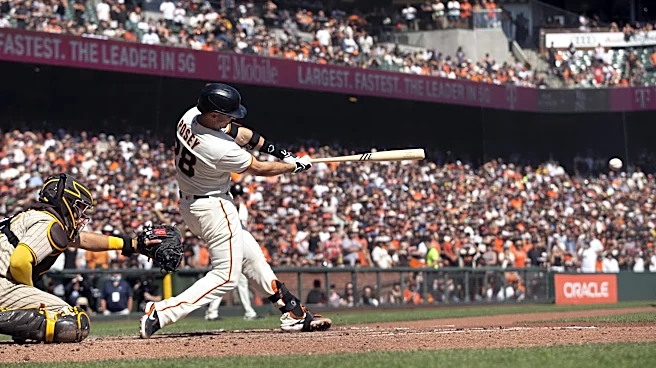
While Padres fans and Blue Jays fans can be annoying (entitlement without many accomplishments to back it up), and Giants fans can be downright frustrating (especially when besting the Dodgers is the lone bright spot in an otherwise dismal campaign), the majority of Astros fans I encountered seemed to take glee from their obstinacy.
Here’s the hard truth, people: there is no getting through to these people. Normally, these field reports do not turn into history lessons on dead horses, but when an opposing fanbase tries to spend three days gaslighting, my patience only goes so far.
Any poor soul that goes to Daikin Park has to steel themselves to this fact. The locals know the Astros cheated in 2017; they either do not care or attempt to deflect blame by arguing that every team was cheating back then, citing a Sports Illustrated article by Tom Verducci that came out in 2018.
Here’s how quickly things have changed, according to a Dodgers source. Three years ago, if you walked into the Dodgers’ video room behind their Dodger Stadium dugout you would likely have found Zack Greinke pouring over video of opposing hitters, looking for any edge he could find to match up his stuff against their weakness. This year, if you walked into the same room you would have found a small army of 20-something analysts in polo shirts and slacks pouring over video from the in-house cameras, like the security room at a Vegas casino. Most teams train their cameras on the catcher, the pitcher (from several angles), the third base coach and the dugout.
These cameras are not used for training purposes. They are used expressly for stealing signs and deciphering “tells” from pitchers.
“We’ve reached a point,” said one club executive, “where the attractiveness of the sport as an entertainment option has been lost in the quest to find every incremental edge. And video has changed things rapidly. I’m increasingly thinking something has to be done.”
Yes, it’s far cry from a surveillance system to learn more about what the pitcher will do, versus creating a real-time system, in part, to cement the legacy of playoff failure for Clayton Kershaw. During the trip, my mind kept going back to the relevant passage in his biography, The Last of His Kind: Clayton Kershaw and the Burden of Greatness by Andy McCullough (excerpts from pages 249-251):
The rumors prompted Rick Honeycutt to gather his pitchers before the series. Honeycutt encouraged the group to protect their grips, monitor the placement of their gloves, and change their signs frequently, as if there was a runner at second base at all times, especially when playing in Houston, where the Astros had not lost all postseason. The message resonated with some more than others. Not every player was as paranoid as Utley, who had helped decipher the Dodgers’ signs with Philadelphia in the previous decade. “I was like, ‘Why is this a fucking thing?’” Brandon McCarthy recalled. “I thought that was being weird and overly protective.” But McCarthy followed the instructions.
When he pitched in a Game 2 loss at Dodger Stadium, he used an elaborate sequence with no runners on base. George Springer still launched the game-winning home run off him. Darvish declined to take the same precautions for Game 3 at Minute Maid Park and could not finish the second inning. For Game 4, Wood decided to change signs every ten pitches. “We’d heard whispers of some of the shady stuff they’d been doing,” he later said. Out in the visitors’ bullpen, tucked beyond the fence in left-center field, Dodgers relievers peered toward the Astros bullpen and attempted to discern a pattern. Several pitchers tracked someone in an Astros uniform whom they believed was relaying signs: The Dodgers thought if the Astro stood up straight, he was signaling an incoming fastball. For an off-speed pitch, the Astro leaned on his elbows. “You could see some shady shit going on in their bullpen,” Stripling recalled…
Before Game 4 in Houston, Kershaw sat inside the video room, running through his scouting sheets to prepare for Game 5. Pratt vocalized his concern. “I think something weird’s going on,” he said. Pratt suggested Kershaw protect his signs more carefully, as Honeycutt had advised. Kershaw dismissed the idea. He was willing to switch his signs every two pitches with a runner at second base. But to alter his entire approach felt foolish. He thought it would clutter his mind and disrupt his timing. He did not want the distraction, not when the threat felt so remote…
…What doomed Kershaw was less hubris than failure of imagination. He understood that when a runner stood at second base there was extra risk of technologically aided thievery. But the concept of teams using illegal cameras to relay signs in real time felt impossible. “You just don’t fathom that that’s happening,” Honeycutt recalled.
(Emphasis added.)
For all of my mild teasing of the Toronto faithful, I understand both the pain of losing a close World Series and the pain of losing a not particularly competitive World Series (there was a moment, then Ryan Madson…). Then that pain occurred all over again when it turned out Houston was cheating, I felt guilt for every unkind thing I said about Clayton Kershaw and others, and that pain turned to resentment when the Commissioner declined to vacate the 2017 title:
“I’m more than prepared to tolerate and listen to the debate and criticism about whether or not the punishments that have been levied in this case were sufficient,” Manfred said. “The one thing that I do take an issue with is the notion that anyone in the Houston organization escaped without punishment. I think if you look at the faces of the Houston players as they went out there publicly addressing this issue, they have been hurt by this. They will live with questions about what went on in 2017 and 2018 for the rest of their lives. And frankly it’s rare that for any offense, to have a punishment that you have to live with for the rest of your life.”
Then, after calling the trophy a “piece of metal,” for which he should and has been lustily booed ever since, he again shielded the Astros from responsibility by issuing an edict against beanballs in the hopes that everyone would move on. Baseball did. Large parts of the Dodgers fandom did too.
I rehash this history because I was subjected to the “Lost Cause” version of these events while in Houston, from people trying to get a rise out of me. It was like wrestling with a pig in the muck; the thing to remember is that the pig enjoys it, so the best way out is not to play. And my outward stocism worked, even though I was privately fuming.
I could spend hundreds, if not thousands of words, on substandard food, facilities, and lighting, while railing on how underwhelming the experience of attending a Dodger game at Daikin Park was, and how spectacularly underwhelming Houston barbecue is (see below), but then, I wouldn’t have a Guide entry to write the next time the Dodgers visit.

If you, dear reader, wish to still be angry and/or gloat over the end of the current Astros’ window, have at it.
While the experience of going to Oracle Park, Petco Park, or Rogers Centre may not be for everyone, at least in the first two instances, you would be at an otherwise respectable ballpark. Daikin Park can claim none of those characteristics. One would not generally need to wrestle with a pig to know what a bad idea it is, but in order to complete the circuit of 30 MLB parks, sometimes you just have to wade through the muck.
Anyway, ballpark 28 is down. Next up, a social holiday in Milwaukee, where I will attempt to both fight ghosts and tread on ground that David Vassegh once dared to tread.