


White Sox general manager Chris Getz recently said, “As a whole, we felt like we’ve been playing with house money. What an opportunity for these guys to go out and compete [in meaningful late-season games].”
Yes, that’s the wrong color Sox, but I’ve been thinking this exact same thing as a Red Sox fan. After the way the 2026 season kicked off, I can hardly believe we’re here, primed to clinch the second Wild Card. The months of April through June almost feel like a bad dream I once had, but no, they
really happened: the team played bad baseball right out of the gate, Alex Cora was fired, Chad Tracy took over as an interim manager, and players who were seen as massively important to the Red Sox chances—Garrett Crochet, Roman Anthony, Trevor Story, and more—were quickly lost to long-term injuries.
Fans were calling this one of the worst Sox teams they had ever seen. I was one of them. I had written off the Red Sox completely by the time my birthday rolled around in mid-April. I publicly wrote how painful it was for me to recap my assigned games. It looked like it was going to be a loooong season.
Now, with a shrinking magic number, they can comfortably count on the second Wild Card spot. Given what the team has been through, to be here feels incredible. This is gravy, as they say. It feels like we—I’m collectively speaking of the fans, the players, the interim coaches—are playing with nothing to lose.
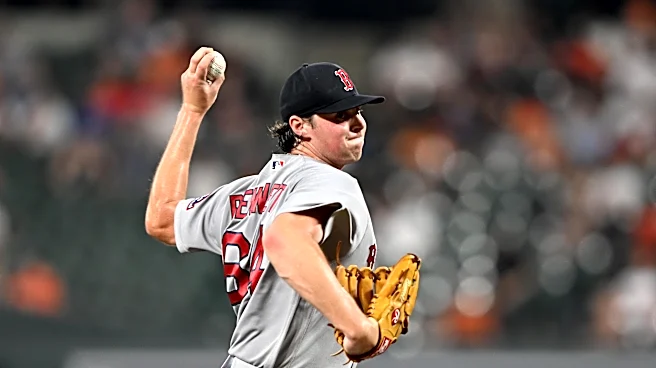
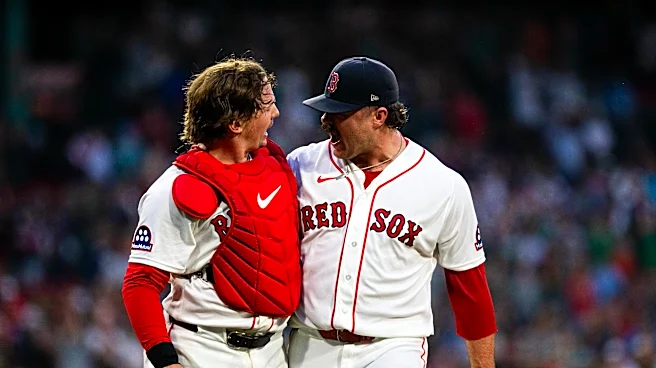
The early-season chaos elevated Chad Tracy and his interim staff unexpectedly from posts across the minor league system. If things had gone according to plan, they wouldn’t have even been in the majors. There was clearly pressure, of course, with all eyes on them. But there was no immediate turnaround. The team was still bad, almost all the way through June. There’s a kind of freedom in that. Screw it, right, because what else can you say? Well, the team rose up from the ashes of poor play and IL casualties. Big contributions from unexpected heroes like Caleb Durbin, Jake Bennett, Anthony Seigler, Andruw Monasterio, Tsung-Che Cheng, Nick Sogard, and Mickey Gasper helped make this summer magical. This is the embodiment of house money, like Getz said.
House Money Vs. Real Money
The paradox here is that it may feel like house money for the fans, the players, and the interim coaching staff. Meanwhile, success is absolutely a high-stakes corporate mandate for John Henry and FSG.
The truth is, John Henry paid the toll, in real money. The 2026 season was not some accidental, low-budget miracle. FSG spent historic amounts of money and other currency (prospects!) to construct the core of this team.
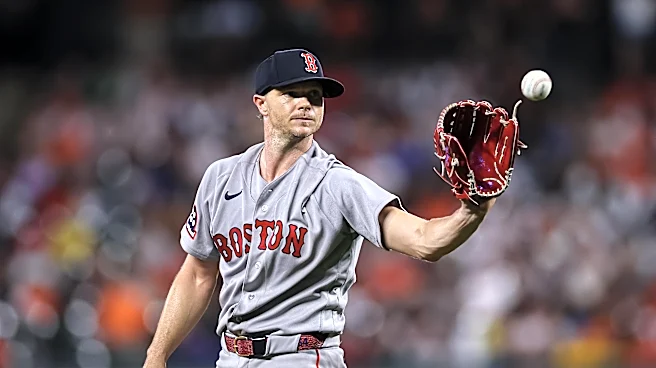
First there were the starting rotation upgrades. They traded for Garrett Crochet in December 2024 and then extended him the following March to a six-year, $170 million blockbuster deal (only for him to spend most of 2026 on the Injured List, unfortunately). The Red Sox traded three players for Sonny Gray in November 2025. Craig Breslow recovered from the seeming embarrassment of missing out on free agent Alex Bregman by handing Ranger Suárez a massive 5-year, $130 million contract.
In the search for improved defense, the Red Sox mostly used their prospects capital. The trade that brought Durbin, Seigler, and Monasterio (and a draft pick) to Boston was facilitated by sending out three other players.
Don’t forget the big bats. To secure a premier, middle-of-the-order, right-handed hitter, they traded three more prospects for Willson Contreras. Then the Sox shocked everyone at the trade deadline by trading four prospects and a current major leaguer for All-Star catcher Adley Rutschman.
For the front office, this season’s success isn’t house money—it’s an expected return on investment. From the luxury tax perspective, the Red Sox should be here. Henry has paid handsomely for them to be here. He didn’t authorize roughly a quarter-billion dollars in new commitments over the last year for nothing.
So if we’re talking house money, well, it’s John Henry’s house. He bought the house—built the whole casino, in fact—and financed the chips we’re all playing with. But the irony remains: the team living inside Henry’s casino played most of the summer with the kind of scrappy abandon that comes from having snuck in through a back entrance.
They’re a different team now, of course, since players like Story and Anthony have returned from the IL, and there may be more additions too, with Crochet and Tanner Houck possibly assuming roles as relievers. Those returns have changed the roster, and so has Tracy’s strategy of resting players and reserving energy for the playoffs.
But let’s see where this house money can take us. It’s still burning a hole in my pocket and I know I’m not the only one.