
For the first time since I started writing film reviews for Card Chronicle, I was able to use the SkyCam broadcast of the game to produce clips. This provided a much better view of the things that went right for the Cards as well as the things that went wrong. As always, I did my best to provide some context to the key plays in the game.

Louisville had issues all day getting the defensive play calls in on time, and on this play it led to confusion, which led to them being at a numbers disadvantage.
They end up with three defenders on the left side of the formation, including the nose tackle. Josh Donald actually does a pretty good job of battling the double team to not be walled off. This forces the run up the field, where Blake Ruffin comes downhill to get a hat on the ball.
I think the defense still has a chance to be solid this year because they can fix the coverage issues. But the misalignments and missed assignments point to a larger issue. Throw in the times when they play isn’t getting in on time, and it points to Mark Ivey learning on the job, to an extent.

I liked this defensive call to slant the line to open up a path for the linebackers to get downhill. In a short-yardage situation, the offensive line will take you where you want to go, because their job is to clear out enough space for the back to get just what is needed. With the defensive line slanting inside, Stanquan Clark has a clear path to the runner, and he makes the play.

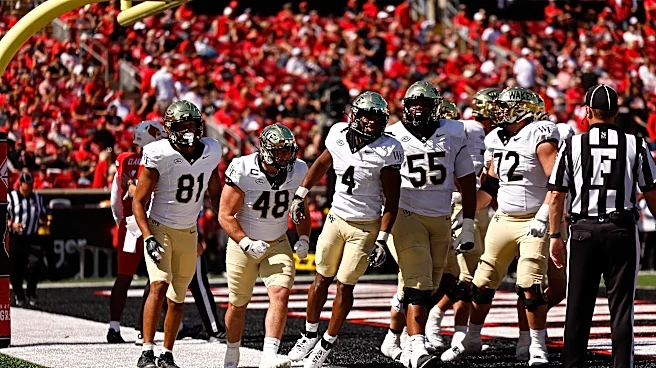
Wake Forest was better prepared, gave better effort, and was unbelievably more disciplined than Louisville, which is why they won the game. UofL has been victimized by receiver screens this year in part because the defensive line has not recognized the play. Watch how Wake’s defensive linemen identify the screen quickly before they put their full effort into chasing the play down. This is disciplined football.
As I watched this play, I also couldn’t help but notice that the Louisville offensive line isn’t out in front of this play. I’m not sure if this is a broken play or not, but Lance Robinson and Johnnie Brown do not get out to the left side on this play to block for the screen. It may be that this is to give the look of a screen to the opposite side of the play, however.

A theme that has shown up a lot this season is the linebackers not playing downhill against the run. This is the clearest view of what I mean in this game. The four players on the second level of the defense do not move at the snap of the ball. They’re feeling out the play and looking to ensure the ball is handed off before they commit to the play. It has not worked at all because blockers are able to climb up to them to make clean blocks. There is no effort to disrupt blockers or to shoot gaps to create a negative play. They let the play come to them, and too often, the ball is 7-9 yards down the field before they react.

This was the best blocked play of the day by the offensive line. The Wake edge player to the right crashes down right into the double team from Cason Henry and Johnnie Brown, while the two tight ends do a good job of taking on their blocks. Isaas Brown still has to work hard to find a path because Wake’s second- and third-level players are flying up the field to make a play. Brown avoids a safety but takes a huge hit from a defensive tackle tracking back on the play.
Wake did a great job all day to make it hard to run the ball. They gave better effort than Louisville’s blockers, and they tackled about as well as they could in the open field and in tight spaces. Kudos to them because they were able to maintain this type of energy for the full game.

Louisville was able to work the intermediate passing game all day, including on play action rollouts. Wake was extremely disciplined against just about everything the Cards ran, but you can see on this play that even a little hesitation from the linebackers created space for Lincoln Keinholz to find open receivers.
As the game went on, Jeff Brohm probably should have worked to find a way to exploit the edges of this defense with the passing game. They also had success with throws in the middle of the field, so getting a little pass-happy could have worked out well with the quick passing game replacing some of the run calls as the running game wasn’t working. Also, the play-action passes would still likely work, because of Wake’s naturally aggressive style of play.

This is a near-complete failure by the offensive line, but one specific thing stood out to me. Anwar O’neal is responsible for the defensive end lined up between himself and Eryx Daughtery. Because of the alignment of the defensive end, Daughtery absolutely has to help before he climbs to his assignment on the play. What he should do on this play is use his left arm to help push the end to O’neal to help him get his head across the block so that he doesn’t do exactly what he ends up doing by chasing down the play to make the tackle for loss.
Helping on this block also helps Daughtery, as he would be propelled towards his block, which is hard to get to. He ends up not blocking anyone on this play when he could have at least helped right off the snap. To me, this is an example of a larger issue with the offensive line. They don’t work as a group very well, as we see here. The line should move as one unit, but we rarely see the entire group of five land their blocks on the same play. It’s something they have to fix.