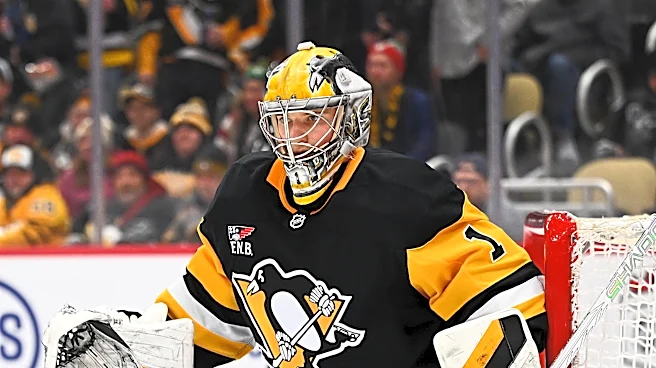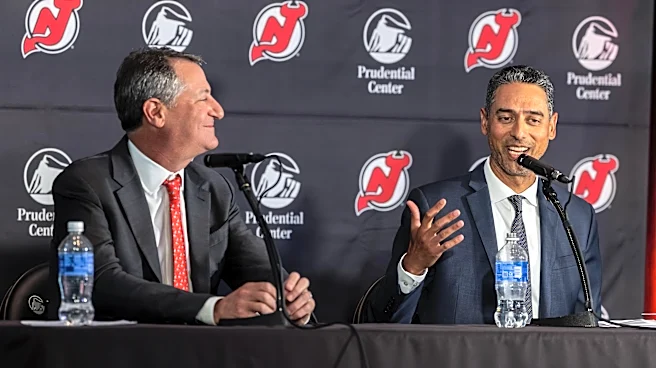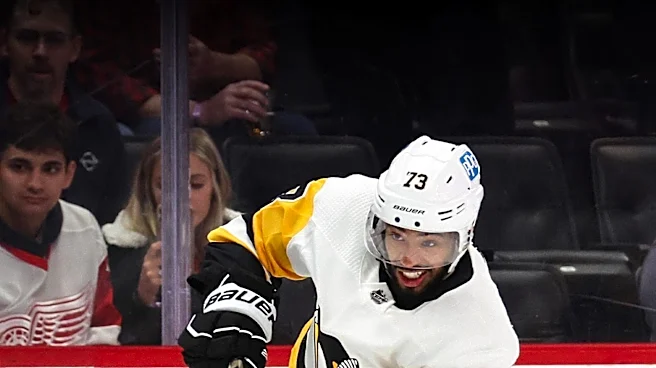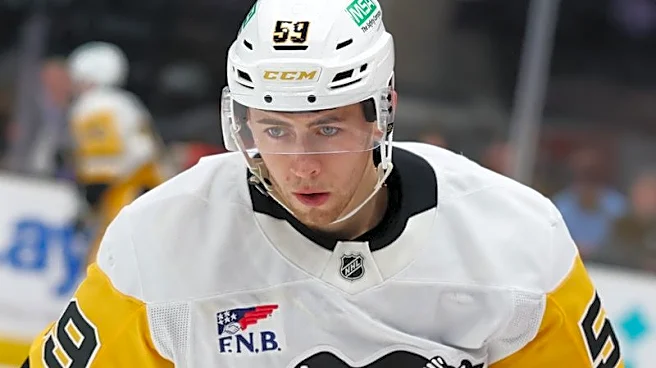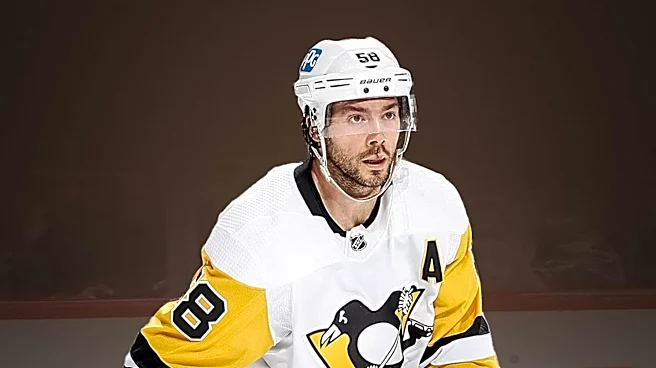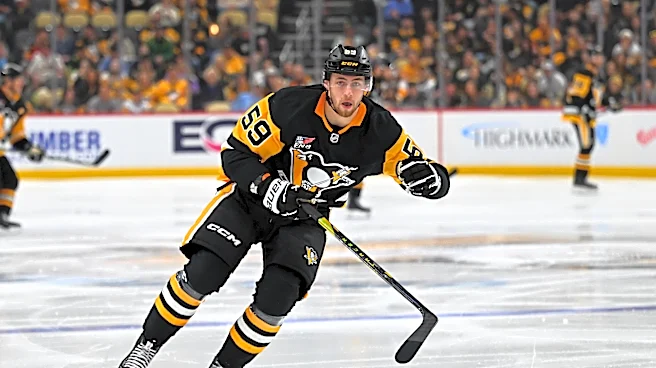

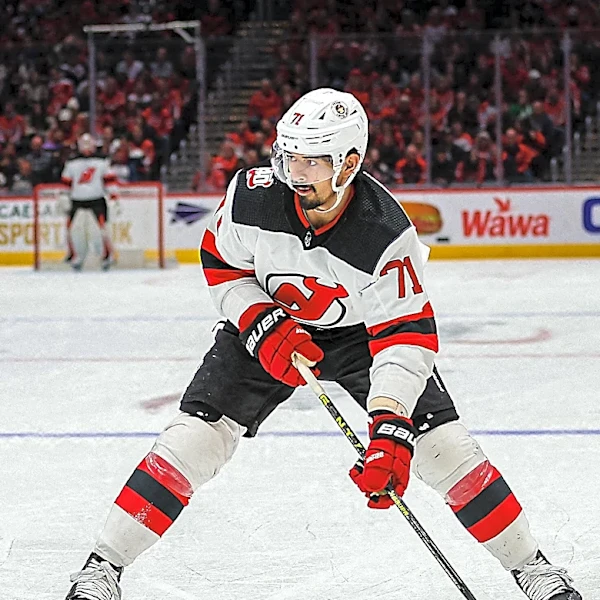


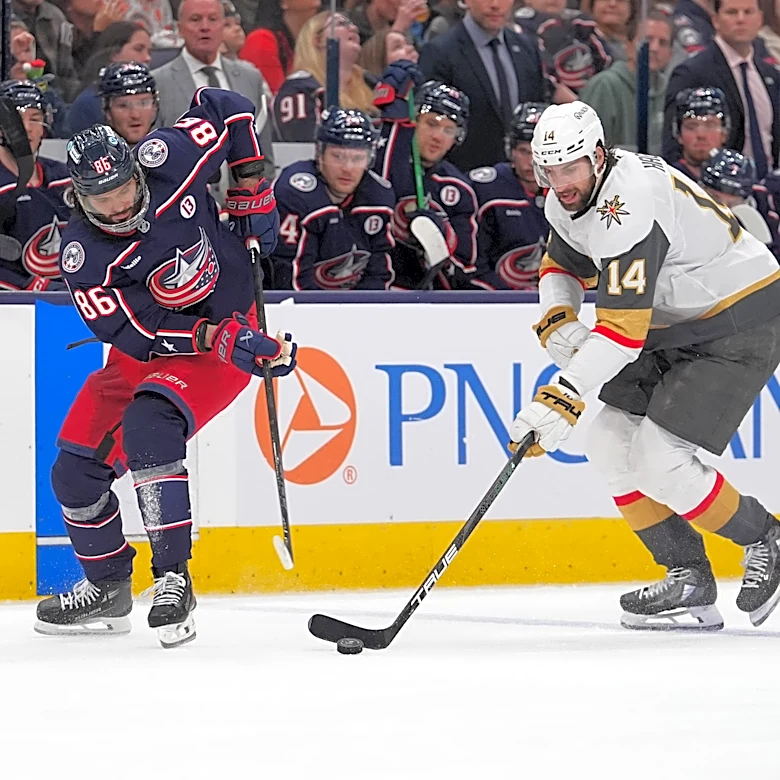





The Pittsburgh Penguins took care of most of their restricted free agent business over the weekend, getting Egor Chinakhov, Arturs Silovs, Hendrix Lapierre, David Gustafsson and Joel Blomqvist all signed to new deals. They were all pretty much as expected: short-term bridge deals that are basically “prove it” contracts, with Chinakhov getting a little more security with a three-year deal (which also came in close to what was expected for what he has done so far in the NHL).
The only restricted free
agent situation they have remaining is the newly acquired Nicholas Robertson, who filed for salary arbitration and is now no longer eligible to be potentially offer-sheeted.
So where do all of these contracts leave the Penguins from a salary cap perspective for both this season and beyond?
Still with a wildly clean slate.
They still have more than $16.9 million in salary cap space for this season, and that is before any other potential moves get made.
Robertson figures to take up a few million of that, whether he goes to arbitration or gets something settled before then.
Even with that it still gives the Penguins more than enough salary cap space for whatever else it is they might have planned.
Elias Pettersson? His contract fits, even before any retention was taken into account.
Jason Robertson could fit, assuming a veteran contract went back the other way. It is, however, starting to look more and more likely he is going to remain in Dallas at least for this season before becoming an unrestricted free agent next offseason.
There are still a few months between now and puck drop for something else to happen involving the Penguins, whether it is major or minor.
But beyond this season the Penguins’ salary cap situation is as wide open and clean as any other team in the league.
They only have 12 players under contract for next season, accounting for just $42 million in cap hits. That leaves them with over $70 million in cap space.
They have just four players under contract two years from now, accounting for just $16.2 million in salary cap space and leaving $106 million in cap space.
They have just one player under contract three years from now, accounting for just $3.25 million in salary cap space and leaving a projected $119.7 million in salary cap space.
There is not a single team in the league that has less long-term cap commitments than the Penguins. And it’s honestly not even close.
For example: Every other team in the NHL has at least $47 million in commitments for next season. The Penguins are $5 million below that.
Every team has at least $29 million in commitments for the year after. The Penguins are nearly $14 million below that.
Every team has at least $22 million in commitments for the year after that. The Penguins are $19 million under that.
This is one of the things I mentioned the other day when looking at the direction the Penguins are taking. They are not investing any long-term contracts in pretty much anybody, leaving them with all of the possible flexibility imaginable. A team that was in a win-now mode wouldn’t really care about that and would overpay in the short-term and take the long-term risk if meant finding a difference-maker right now.
It gives them options, for one.
And it also gives them some security.
With that much cap flexibility you’re not going to have to stress about a new contract for somebody like Ben Kindel, who theoretically could be next in line in the organization for a big contract.
If Chinakhov shows he is a legit top-line player and builds on his second-half performance, there’s room to pay him.
I don’t know what the budget of the Hoffman family is going to be long-term, and it still remains to be seen what the roster looks like in the coming years. But the Penguins are going to have to spend a lot of money on SOMEBODY in the coming years just to reach the floor, let alone get close to the cap.
Are they playing the long, patient game with Robertson and preparing a UFA run if it gets there?
Would they roll the dice on Pettersson regaining his elite offense?
Could they take a page out of the increasing restricted free agency playbook and pursue a major offer sheet? They have all of their first-round picks in the coming seasons, as well as all of their second-round picks (with a surplus of second-round picks beyond their own). They do not have their own 2027 third-round pick, but have all of their third-round picks beyond that.
Pretty much everything is on the table. At least it should be with that much cap space to work with.