

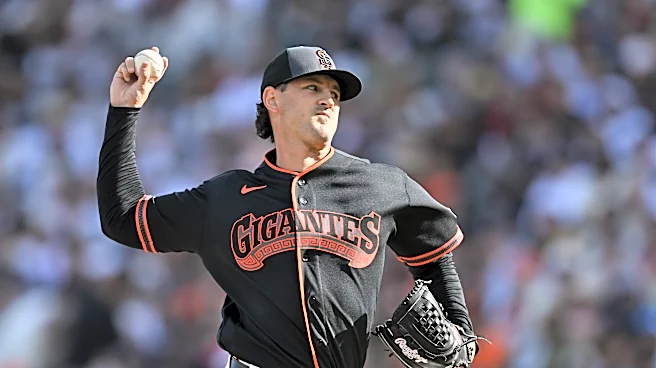
It’s only 10 games, people! That’s just 6.2% of the season! The San Francisco Giants’ 3-7 start, then, shouldn’t be cause for a complete fandom meltdown. Seriously! Okay… honestly. Okay… maybe. Look, it’s not great. It’s reflective of all the downside risks that were apparent when the team was cobbled together in the offseason. But let’s take a look at the other times the franchise has started a season 3-7 and see if we can find solace in history.
The 2026 Giants are the 21st team in franchise history
to start a season 3-7 or worse. The worse starts were the 1916 squad’s 1-9 and in 1983, 1950 & 1951 when those teams started 2-8. Let’s take a look at The 3-7 club:

Is it accurate to say the Giants are off to their worst start ever? The Giants have had 21 seasons of 3 or fewer wins in their first 10 games out of 144 seasons, so it depends on how you feel about 21 out of 144 (14.5%) being reflective of rarity. I think it is. It’s as bad as their sole 100-loss season. It’s worse than the execrable 2017 team, which started the season 4-6. With a rookie manager and questionable bullpen to go with a brutal schedule to start the year, sometimes it’s fine to just go with the obvious.
Does that mean a turnaround is impossible? Not necessarily.
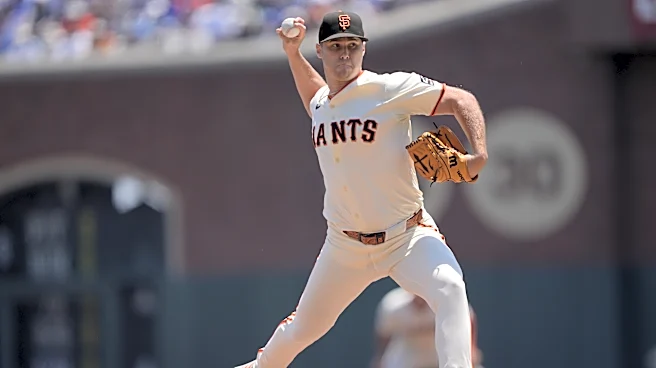
Now, I’m just looking at this from the pitching side for the moment just to get this post up and running. As you can see, this isn’t the worst of the worst starts in team history. Their 4.65 ERA certainly isn’t all that great. Not seen on this chart are the 90 strikeouts through 89 IP — that’s the third-most strikeouts a Giants pitching staff has had through the team’s first 10 games in franchise history. Only the 2022 (95) and 2023 (91) teams have had more. Those squads got off to 7-3 and 4-6 starts, respectively. That 98-loss 2017 team struck out 87 through those first 10 games.
That 90 strikeout total is in a three-way tie with Texas and Miami for 10th in MLB. So, there are some positives. It’s when you get to the hitting side that the situation feels inescapably dire.

That’s right. The Giants’ 26 runs through their first 10 games of a season is a top 10-worst total in franchise history, tied with that 100-loss 1985 team, but also the 2015 team, which we’ll be talking about momentarily. Only four times have the Giants scored so few runs to start a season and wound up with a winning record, and two of those times were before prior to World War I and World War II.
That’s the bad news. The good news is that we don’t have to focus on the lineup’s fecklessness to find some tangible hope. Yes, it’s only 10 games. There’s a long way to go, and in recent memory (as in the 21st century), these Giants teams proved that. Let’s quickly go through them to see if we can find examples that make us feel better about the 2026 team.
2015 (84-78, 2nd in NL West)
Fresh off their third title in five seasons, the champs stumbled out of the gate to a 9-13 April with a -28 run differential (66 scored / 94 allowed). It was largely a run it back squad save two notable exceptions: outfielder Nori Aoki and Casey McGehee, one of the worst acquisitions in team history. The Giants had traded for the 2014 NL Comeback Player of the Year in the offseason to replace Pablo Sandoval, and he proceeded to ground into 8 double plays in April. According to Baseball Reference, he was a -1.684 Win Probably Added. Which means he cost the team probably two wins in one month. It prompted former FanGraphs writer and baseball exec Dave Cameron to propose he be moved to the leadoff hitter just to limit his damage.
After their 9-13 start, though, they went 21-9 in May but then hovered around .500 the rest of the season (54-56). Remarkably, after April, the team had a +97 run differential (630-533). They ended the season with the fifth-most runs in the NL and were the second best defense, too. Their Pythagorean record of 89-73 should point to how this team should’ve continued the dynasty in a more meaningful way than the 2016 team that wound up slamming that window of contention shut.
Matt Duffy emerged, Brandon Belt and Joe Panik hit like All-Stars, and Buster Posey and Brandon Crawford gave MVP-worthy performances. That helped makeup for what was a sort of ramshackle pitching staff. Madison Bumgarner was an ace-ace (he even hit 5 home runs), but outside of Chris Heston’s no hitter, it was replacement-level pitching from Ryan Vogelsong, Tim Hudson, Tim Lincecum, and Yusmeiro Petit and the end of the line for Matt Cain. The bullpen was pretty stellar, though, with the third-best ERA in the NL (3.33).
If the 2026 Giants got to 84-78, they’d be in a great position for a Wild Card spot. All they need is a couple of MVP-type performances and a couple of All-Star caliber performances from the lineup, absent stellar pitching.
2009 (88-74, 3rd in NL West)
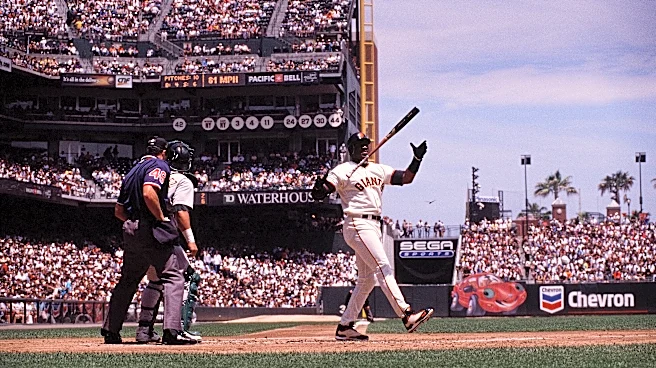
All you need to know about this season is that it marked the end of the only time the current Giants ownership group allowed a rebuild to happen. From 2005-2008, the Giants were trying to ride out the end of Barry Bonds’ marquee status while figuring out how to retool for their ballpark. Brian Sabean saw the Padres’ pitching and defense style as the key to unlocking success since replacing Barry Bonds in the aggregate is impossible.
The 2009 team was a pitching force. The two-headed monster of Tim Lincecum and Matt Cain picked up where it had left off. The bullpen was fantastic, too, with Jeremy Affeldt in particular a real standout.
They just couldn’t hit. They were so, so bad at hitting.
Such a bad hitting team.
A nightmare.
Their biggest offseason acquisition was Edgar Renteria, who won back a terrible line (.635 OPS in 510 PA) by grabbing the World Series for the Giants the following year. They also added Juan Uribe, which worked out great in part because Renteria struggled so much. The biggest trade deadline acquisitions where Freddy Sanchez and… Ryan Garko. Sanchez would, of course, pay off in 2010.
Their 657 runs scored is 106th of the 143 completed Giants seasons. So, not the worst, but among the worst. The 2011 team was actually worse at scoring runs (570), but most fans chalk that up to losing Buster Posey in May.
But this year’s team was proof of concept for 2010. Even after the gut punch of Ryan Spilborghs’ walk-off grand slam in August at Coors Field, the team was still in the playoff hunt come September. No Buster Posey yet, but Pablo Sandoval got some MVP votes and Uribe and Andres Torres emerged as great depth pieces.
So, all the 2026 Giants would have to do to compare to this team is get two MVP-level pitching performances from the rotation and be backed up by a stellar bullpen — oh, and at least one amazing performance from a hitter. In the past 10 years, only one Giant has matched or exceeded Pablo Sandoval’s 146 wRC+ performance from 2009: Mike Yastrzemski, who hit 58% better than the league average (158 wRC+) in… 2020. Rafael Devers has never had a season that good.
2000 (97-65 NL West champs)
Okay, this one ought to be pretty obvious. The Giants got off to a bad start because they struggled with the move from Candlestick to Pacific Bell Park. But at the end of the day, they had Barry Bonds, Jeff Kent, and Ellis Burks and just enough pitching to muddle through until they ran into the Marlins’ postseason buzzsaw. Any comparisons with this team would be inadequate and unfair to both eras. There is no Barry Bonds for so many reasons. The pitching and fielding environment is not comparable.
The other two times this century where the Giants got off to such a bad start it worked out about as bad as you would’ve expected. 2019’s 77-85 was the planned demolition of Farhan Zaidi’s first season, and it was only from the genius use of sound sabermetrics principles that the team won those 77 games. The 2007 team was the first year of Bochyball and a year of transition for the franchise as Barry Bonds would play his final games.
Do these Giants have any of the talent and management reflected in the instances where the team was able to shrug off a bad start? Comparing eras is never based in wisdom, but neither is fandom. We have to hope that things turn around for the team. We have to hope that the “small sample size” thing holds true in this case and that the Giants become competitive this season and go on a sustained run. They’re certainly not competitive now, and the only evidence to suggest that conditions might change is history.