
We watched Bowling for Columbine in high school, 16 or 17 years ago now, and there’s a scene in the documentary that’s stuck with me since. Michael Moore visits a Lockheed Martin facility not far from the titular high school, where once a month a ballistic missile leaves the factory for U.S. military installations in Colorado Springs, or for delivery to the Navy on the California coast. That alone is the mere business of war, what’s striking is how many residents gather on highway overpasses to watch the journey
of the missile, almost fangirl behavior in reverence to the threat of mass death and destruction.
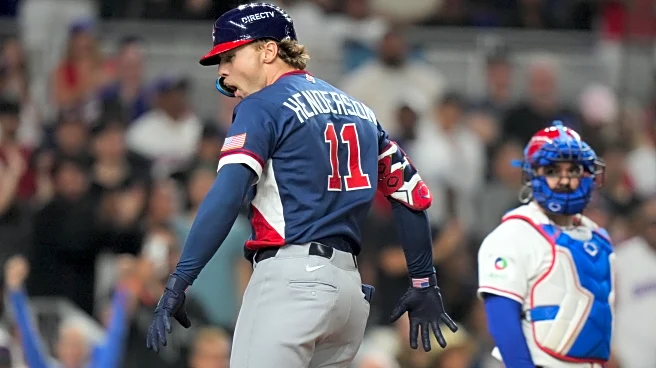
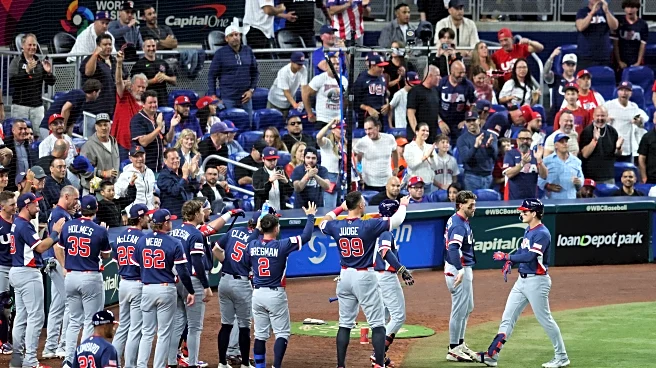
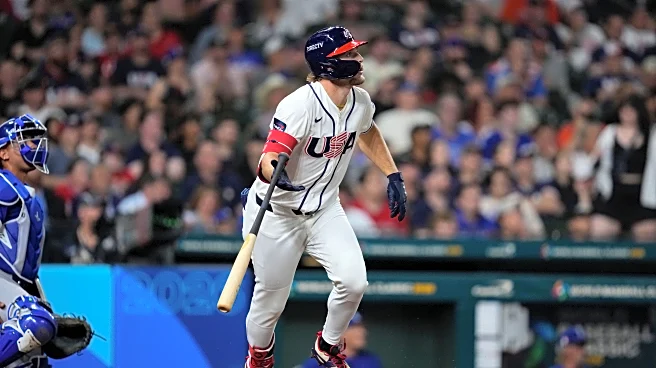
I bring this up, this mouthwatering desire for chaos, catastrophe and manmade horror, because of how Team USA has behaved at the World Baseball Classic. The military-industrial complex’s relationship to North American pro sports has always made me feel queasy, but the doubling and tripling down of it all in an international tournament, one where the Dominican dugout felt like an outright party and Italian-Americans kissed each other among rounds of espresso, makes me recoil.
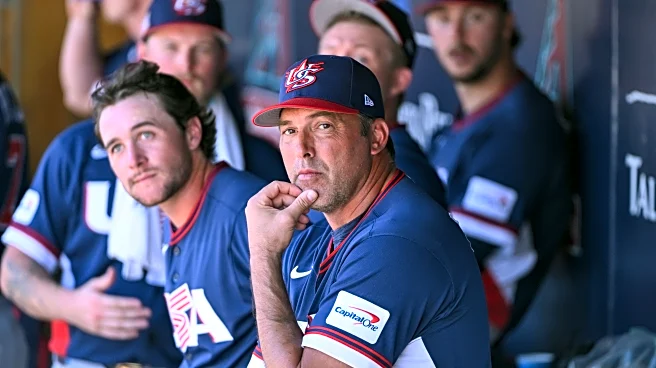
Cal Raleigh’s t-shirt was emblazoned “FRONT TOWARD ENEMY,” the same printing found on M18A1 Claymore mines that America keeps in its arsenal specifically because it circumvents the Ottawa Treaty, something the country hasn’t even signed but pretends to adhere to. Before a quarterfinal game against Canada, Team USA manager Mark DeRosa decided that his boys needed inspiration not from a legendary American ballplayer — many of whom are still alive — but rather from a former Navy SEAL, one who both broke the standard SEAL code of silence and who apparently has rather unusual ideas about how to spend time with younger men.

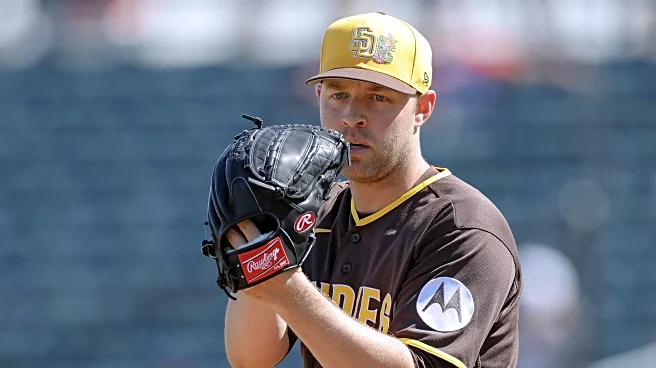
Every time Paul Skenes picked up a baseball, we were reminded he spent two seasons pitching for the Air Force Academy, with very little attention paid to how quickly he transferred to LSU once it became clear how much more financially lucrative that path would be. This team was set on making its entire identity a continuation of the American military machine, the same machine that has overseen the murder of 160 schoolgirls and the death of at least 13 of its own servicemembers at the same time this silly baseball tournament took place!
And to what end? What is all this in service for?
There are many that will chide me for bringing politics into sports, that the WBC is a vehicle to get away from all the rest of the world, but your own team refused to allow that to happen. Thirty grown men—more than that, but I’ll complain about the silliness of moving players on and off your roster later—openly played army guy for two weeks, throwing themselves prostrate before missile launches and drone strikes. Team USA took a side. They brought politics into sports.
I think it says something about the American mind that this is how a collection of players from across the country would choose to market themselves. I’m writing this during the Oscars, where Sinners was widely recognized, a celebration of a very specific piece of American culture; blues music that became jazz that influenced nearly everything we hear today. The great musical history of the United States, the diversity of thought and ethnicity and language that creates some of the greatest cultural spaces in the world, goddamn Saturday morning cartoons. There are so many quintessential Americanisms, even Americanisms that Americans have made up to comfort themselves, and 30 ballplayers refused to wrap themselves in any of that. Instead, they wanted to align themselves with men whose sole concerns are whether they’ve purchased enough Tomahawks to replace the one they just slammed into the roof of a school.
Where does this bloodlust come from? What in the American mind, the sports fan’s mind, the athlete’s mind, says we must fall down before the tanks and the planes and the bullets and the bombs? This didn’t feel nearly as present during Team USA’s previous runs to the Championship Game in 2023 and to its only title in 2017, where the lasting image—aside from Adam Jones’ robbery of Manny Machado—was just of the U.S. players partying with a goofy eagle statue that happened to belong to some father-in-law. I’m not naïve to the political affiliation of most of the players I like to watch, but at no point did someone put their hand up and say it’s odd that we’re taking inspiration from a man who allegedly helped assassinate Osama bin Laden? Roger Clemens was in the building throwing out the first pitch; couldn’t we like, talk to him?
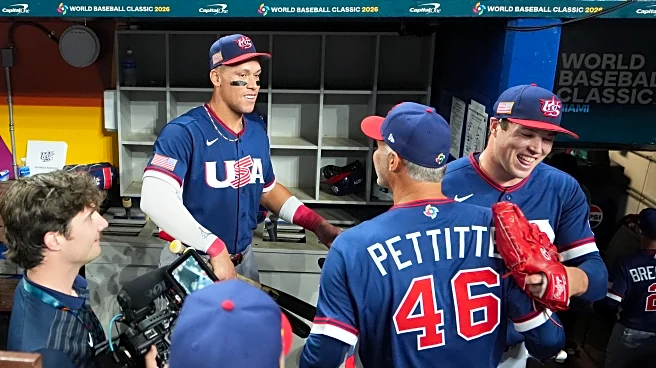
To cap it all off, this is edifice, and a cheap one at that. David Bednar is not a Navy SEAL and for all the admiration I have for Aaron Judge he is not a field general. The moment this team disbands, whether they win in the final tonight, Judge will come back to the Yankees and be the same boring, extraordinary offensive force.
Captain Vinnie Pasquantino has talked about how being on Team Italy—for all its funny little tics—made him more appreciative of his own heritage. What heritage does pretending to be an army guy reach for? The joy the Venezuelan team took in itself, even as its directly threatened by the very same entity Team USA pretends to be, runs so much deeper into what it means to represent a country.
It shouldn’t be a coincidence then that this hollowness bleeds into why the American team is just so staid and boring. They were out-vibbed by every team they played despite their success in the tournament. You can’t hero-worship an ICBM, and there’s nothing real in pretending to wear fatigues. For all the goodwill this tournament brought the game of baseball, Team USA sure got none of it on ’em.