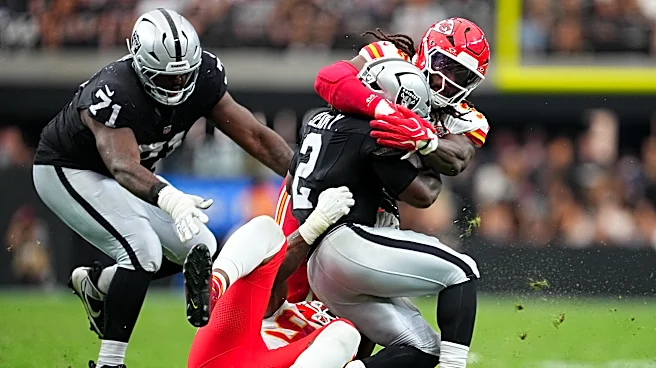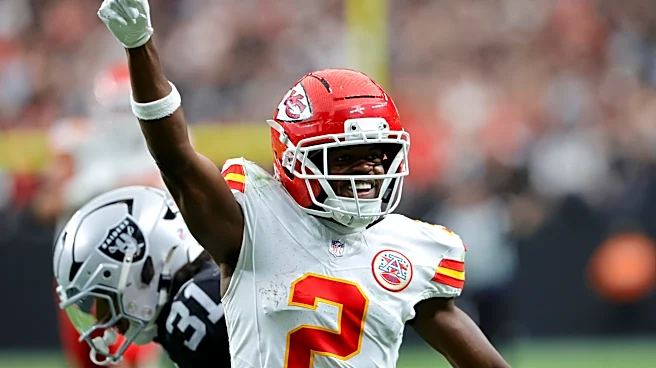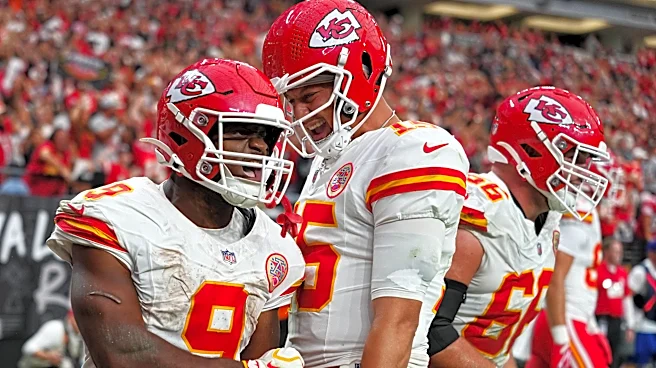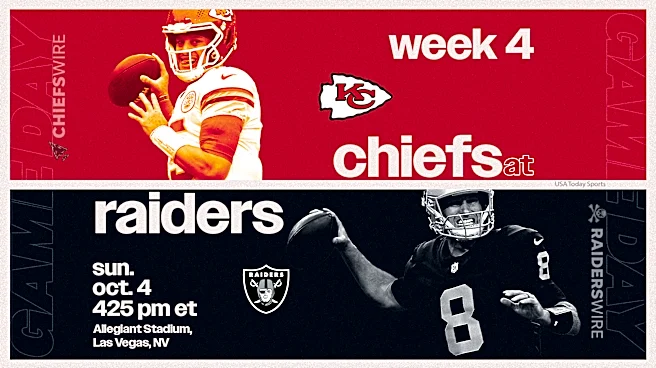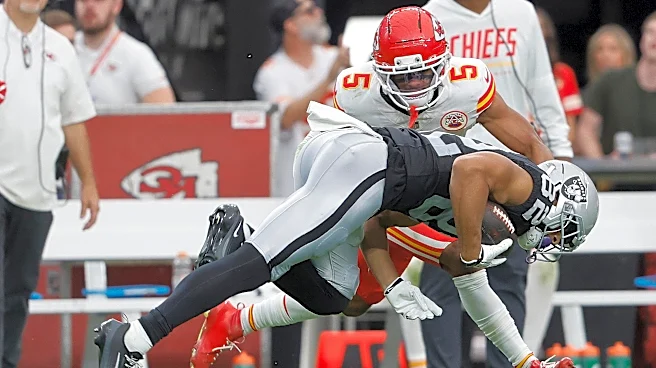


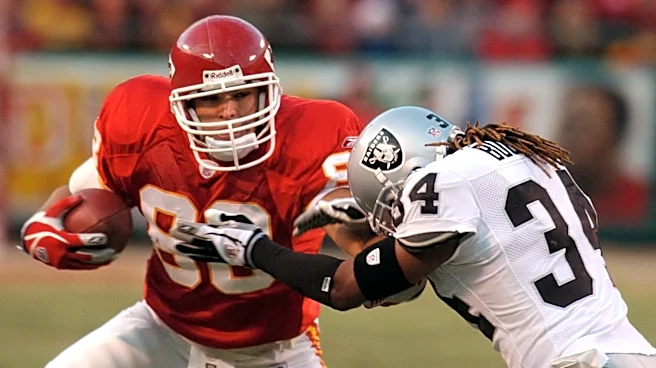
That was a great football game. The Kansas City Chiefs and the Las Vegas Raiders have often been a lopsided rivalry for the Chiefs, but the Raiders came into this game 3-0 and wanted to prove themselves. And to their credit, they showed up and competed. This game was a haymaker, with both sides having impressive moments, and the Chiefs ultimately made the timely plays to close it out.
There’s a lot to be impressed with in this game, but let’s focus on two players that set the tone defensively:
George Karlaftis’s impressive performance
Kirk
Cousins wasn’t sacked in this game, which might lead you to think the Chiefs’ defensive line didn’t get much pressure. However, the Chiefs did get pressure on Cousins in this game 34.6% of his dropbacks, which was 16th in the NFL for Week 4. Without blitzes, the Chiefs were 12th at 34.2%.
Two players led the charge in getting pressure in this game: defensive ends R Mason Thomas and George Karlaftis. Thomas finished the day with eight pressures, including five in the fourth quarter. Thomas took time to get into this game, but his speed and explosiveness off the edge showed up when it mattered.
But for me, the most impressive performance for the Chiefs defense was Karlaftis. Karlaftis brought it all four quarters and did it on a higher snap count against the Raiders’ better tackle, left tackle Kolton Miller.

Karlaftis isn’t always the most reliable pass rusher turning the corner, but he did it in this game. Here, he uses his hands to swipe down the tackle’s outside arm, then uses his speed to turn the corner and nearly get to the quarterback before he checks it down.

Karlaftis establishing himself as a cornering threat opened up other pass rush moves, including this speed-to-power bull rush. Karlaftis flies off the ball and flashes that he’s trying to get upfield, which gets the tackle to subtly open his hip upfield. Karlaftis then turns toward the quarterback and attacks the tackle’s inside foot, which isn’t planted. Without that anchor foot established, it’s an easy run through for Karlaftis to get the pressure.


Karlaftis did a very good job in this game, continuing to work late into the down to get off tackles, particularly going inside. His balance and torque were impressive. He got Miller to lean his upper body forward, which put him in a bad position to recover. Karlaftis could then work inside, using his inside hand to attack Miller’s inside shoulder and create separation. He did this 3-4 times this game, and it worked.
Mansoor Delane’s impact as a run defender
Mansoor Delane has been impressive as a rookie in many departments. He’s looked good in man coverage for the most part, sticking to receivers. When the Chiefs play zone coverage, Delane shows off impressive click-and-close and route recognition.
However, what’s impressed me most about Delane so far is his play as a run defender. Delane has racked up 10 tackles in two straight games, and a lot of those plays are run stops. For a sub-190-pound player, that is impressive.

The Raiders often ran condensed formations, which force corners into the run fit. They run a short-side toss here with the WR responsible to crack Delane. Delane sees this and gets outside the block, forces Ashton Jeanty back inside, and makes an impressive one-on-one tackle.

Another short-side toss here, but Delane is now the furthest player to the edge, responsible for setting it. Delane strings out the run and keeps the running back from getting the angle on the sideline. If he can’t set an edge there, the running back beats Nick Bolton to the edge and that turns into a chunk run.

This was a massive run stop by Delane that saved at least an explosive run, if not a house call. The Raiders call a counter play, shifting their third tight end and pulling their right guard. Tranquill flies too far upfield, Bolton gets caught, and Chamarri Conner gets pinned and falls over. Delane is the only free defender near the line of scrimmage. If he misses this tackle, the only guy left is Alohi Gilman one-on-one with a two-way go. Delane makes an incredibly clutch tackle that prevents an explosive run.
The third-and-eight play call to end the game
For the most part, I thought the Chiefs played and executed a fairly clean game, but what bothered me most was Andy Reid’s decision to pass on third and eight on the Chiefs’ last offensive drive. The Raiders had no timeouts with around ninety seconds left. If the Chiefs had run the ball, they would’ve been able to get the clock down to around 35-40 seconds. Instead, by throwing the ball and having it go incomplete, the Chiefs gave the Raiders a free forty seconds.
To be fair to Reid, Matt Araiza had a great punt to get the Raiders downed at the 1, and Araiza had a great game punting even before that. Realistically, your defense should be able to get a stop there, which they did. However, the Raiders were knocking on field goal range with no timeouts.
The Raiders offense played decently throughout the game, but they struggled to push the ball downfield, especially when forced to do it in obvious passing situations. If they had 40 fewer seconds to run their last drive, I just don’t think they could’ve picked up enough yards in time to get close.
If this was a big playoff game against an elite quarterback, I totally understand giving Mahomes the ball to close the game, but in that specific context, you have to keep the clock running. Credit Araiza for the punt and the defense for coming through.