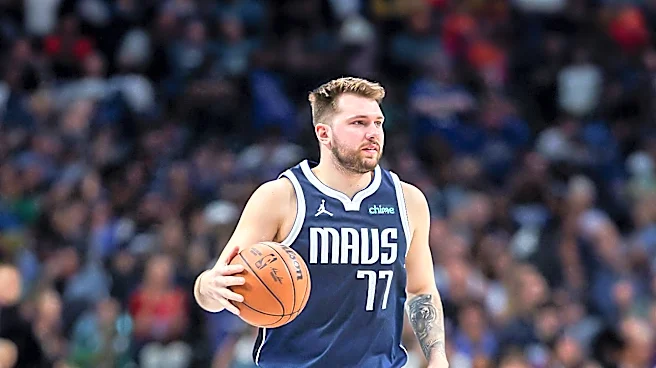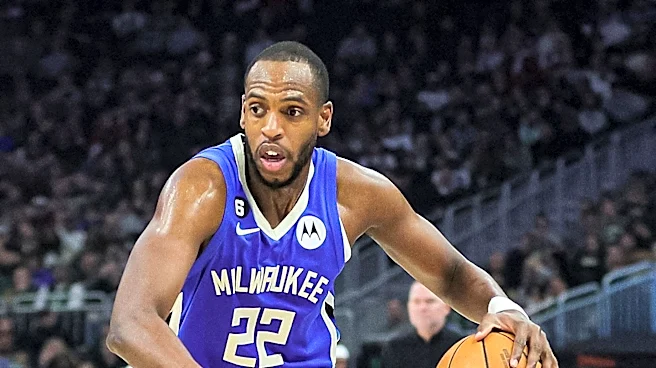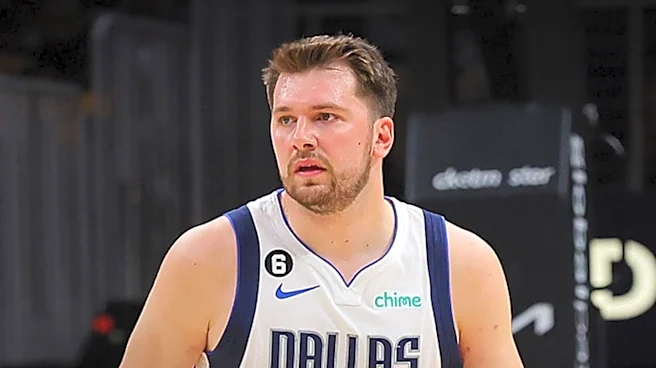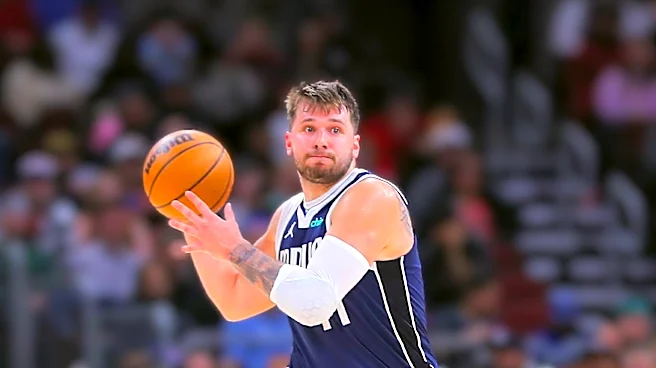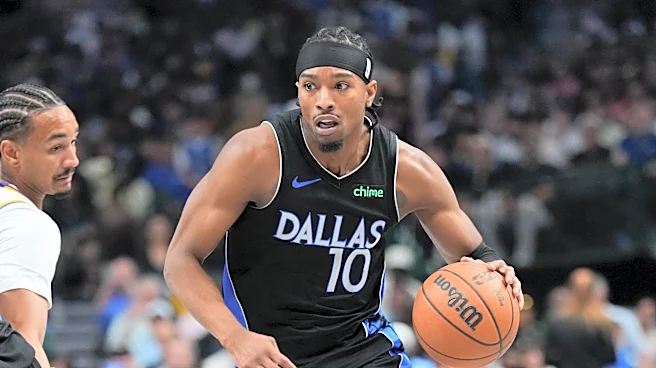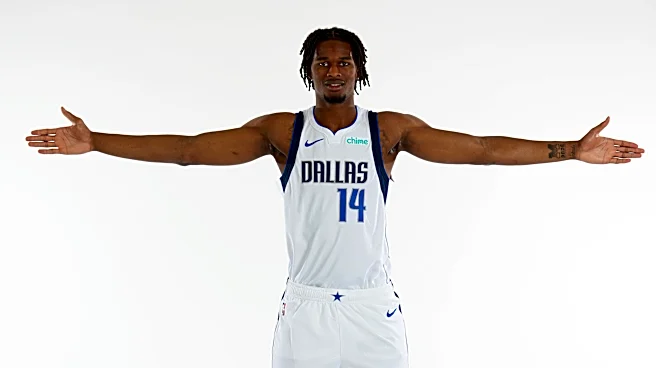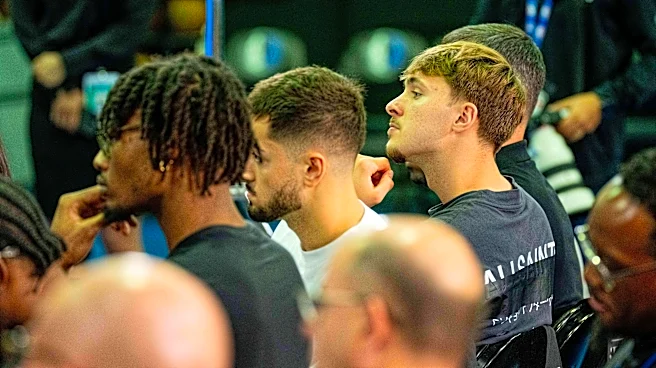

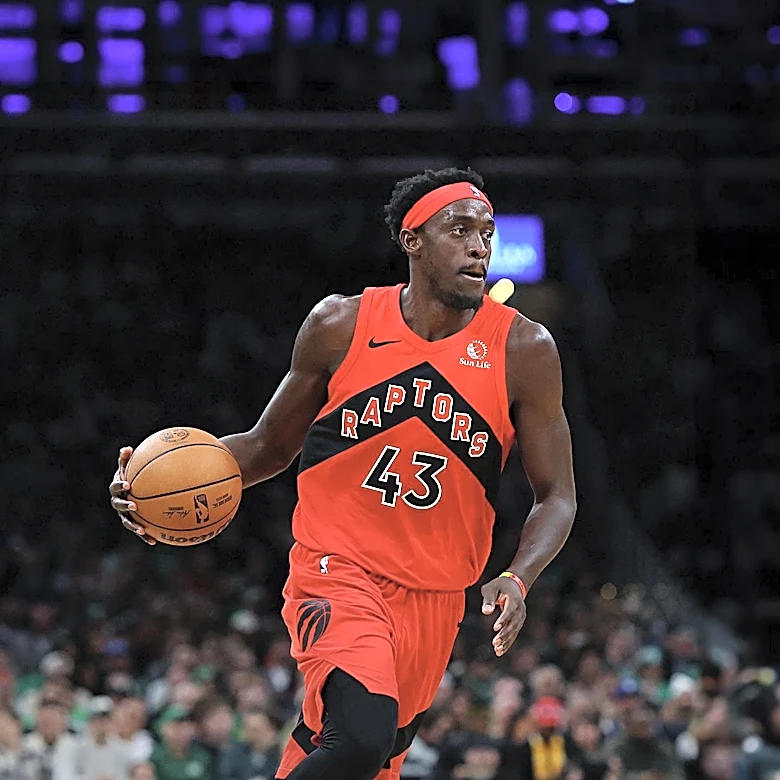




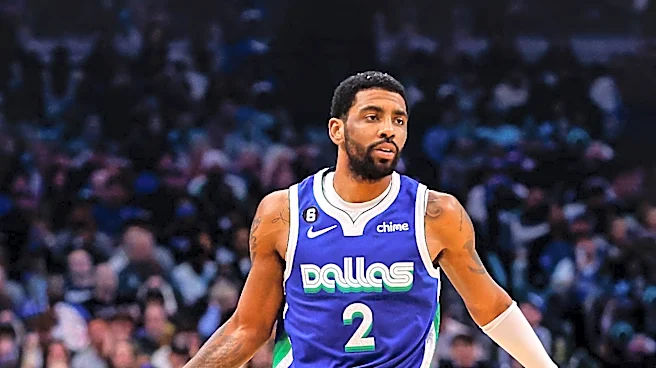
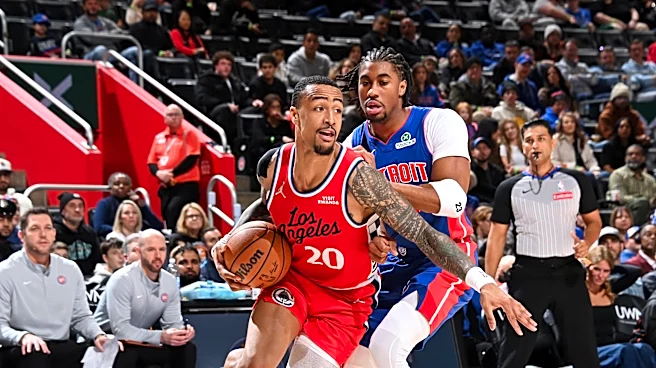



The six-team trade is official, and Dallas quietly attacked its biggest weakness without touching its young core or its largest trade exception.
Santi Aldama is a Maverick. Marcus Sasser is a Maverick. Tarik Biberovic, the Turkish league sharpshooter whose draft rights sat in a Memphis drawer for three years, is signing a two-year deal to finally cross the ocean. Ten players and a small mountain of picks changed hands across six franchises, and Dallas walked away from the table with exactly what it came
for.
I understand if you didn’t feel the dopamine hit. That’s kind of the point.
A few days ago, I wrote that the relief of this offseason was in what Dallas had not done. Fans carrying decades of scar tissue, from the DeAndre Jordan saga to the worst trade in franchise history, watched the Sasser and Aldama reports sit unfinalized for days and started bracing for the other shoe. It never dropped. The deal didn’t fall apart. It got better. Now that the full architecture is public, we can see what the front office was doing instead of chasing splashes.
What Dallas Actually Got
Start with the problem. Last season’s Mavericks were one of the worst three-point shooting teams in the league. When defenses know they can sag off your role players, the lane clogs, rotations cheat, and your star wears multiple defenders for 40 minutes a night.
Max Christie was the best catch-and-shoot option on the roster early, and he started the year scorching. Then he faded, the way young players sometimes do. Strong starts, strong middles, strong finishes; most young careers only get one of the three in a given season. As Christie’s shooting slid and the injuries piled up, the offense tilted more and more toward the Cooper Flagg Show. Some of that was Flagg’s maturation, and the box scores down the stretch were spectacular. But some of it was that the Mavericks simply didn’t have anything else. That’s not a sustainable formula, and this front office clearly knew it.
Now look at the bets they placed. Brandon Williams remains unsigned, and Dallas may yet bring him back. But Sasser represents a different offensive wager: less paint pressure, more willingness to fire. In an injury-shortened season he shot 41.5 percent from three, and 60 percent of his field goal attempts came from behind the line. It’s a small sample, but it’s a clear signal of the shot profile Dallas is buying. “Willing shooter” is not a vibe in his case. It’s a shot chart. He spent his Detroit years buried in a crowded backcourt behind Cade Cunningham and a surging Daniss Jenkins, on a team that never quite figured out how to use him. Dallas has a role and a green light waiting.
In comes Aldama, a 25-year-old combo forward who shot 35 percent from three on real volume last season and can play the four or the five.
And in comes Biberovic, who might be the jewel of the entire offseason alongside Morez Johnson Jr.
The Biberovic Bet
Let me paint you a picture. A 6’7″ wing, 25 years old, coming off a EuroLeague season where he shot 41.9 percent from three on more than five attempts a game and 95.2 percent from the free throw line. That free throw number is not a typo. He shot nearly 49 percent from deep in Turkish league play. And this is not a one-season heater: across eight professional seasons in Europe, his career EuroLeague three-point mark is 42.3 percent. He won a EuroLeague title with Fenerbahce in 2025 and starred on the Turkish stage for years. Memphis drafted him 56th overall in 2023 and let his rights gather dust for three seasons.
His stroke is a thing of beauty. He leans away into the release like a man settling into a recliner, creating separation without ever speeding up the mechanics.
Now imagine that exact player as a 27-year-old NBA free agent with two seasons of elite shooting on an NBA roster. What does that contract look like? Go find the comparable shooters from the last few free agency cycles and check the price tags. It’s a bidding war, and it ends in eight figures a year.
Dallas is getting him for two years and $6 million with a team option.
Is there translation risk? Of course. The NBA is faster and longer than the EuroLeague, and not every great European shooter survives the jump. But when you don’t control your own first-round picks and you’re rebuilding without a net, these are precisely the asymmetrical bets you have to find. The downside is a modest flyer you can walk away from in a year. The upside is a starting-caliber floor spacer at a fraction of his potential open-market cost.
And here’s the question that hangs over the whole acquisition: would the previous front office have even known who Memphis held draft rights to? A regime that shed its European connective tissue and never once went looking for more, that treated the international scouting trail like it was optional? Biberovic would have retired in Istanbul before that front office learned to spell his name.
Adding a Class, Not a Player
Zoom out and count. Four draft picks in June: Morez Johnson Jr., Sergio de Larrea, Tobi Lawal, Vsevolod Ishchenko. Three more players 25 or younger inbound on this trade: Aldama, Sasser, Biberovic. That’s seven new additions to the under-26 talent pool in a span of three weeks, stacked on top of Flagg, Lively, Christie, and Nembhard.
They didn’t add a player. They added a class.
A word on Lively, because it matters here. He’s roughly seven months removed from foot surgery, out of the boot, walking and lifting, but as of his late-June update not yet cleared to run or jump. He says the foot will decide the timeline, not the calendar, and he’s taking more time than he needs to make sure he never deals with this again. That’s the right approach and I’m rooting for him. He’s also apparently a serious Lego guy, and so is Morez Johnson Jr., which means the Mavericks frontcourt room may soon feature two large men comparing Millennium Falcon builds. The vibes, at least, are structurally sound.
But this is why the Morez pick made sense at nine, whatever the draft-night grumbling said. Lively has not yet reached 100 regular-season games through three seasons. You cannot pencil him in. You plan for the roster you might actually have.
Building for the Star You Have, Not the One You Had
Here’s the part of this offseason I find most encouraging, and it’s about theory, not transactions.
When this franchise built around Luka, the blueprint was 3-and-D wings and rim-runners. PJ Washington and Derrick Jones Jr. spacing the corners, Lively and Gafford protecting the paint and catching lobs. That construction fit that star: a supernova distributor who drew doubles no matter what, needed vertical finishers, and needed defensive cover behind him.
My colleagues David and Tyler have written a whole series about the dream of number 77 coming home someday, and I understand the pull. But whoever the star is, the roster has to be built for him, and right now the star is Cooper Flagg.
Flagg is not a lead guard, whatever the “he’ll start at point” crowd projects. He’s a dynamic three-four who operates in the post, on the wing, and off the drive, and he’s a gifted secondary distributor. What a player like that needs is not lob targets. It’s space. Clean driving lanes. A floor where defenses can’t load up and send two bodies at him on every touch, because there’s a shooter in every direction who will make them pay.
Sasser. Aldama. Biberovic. De Larrea. That’s a spacing package assembled for a specific superstar’s specific needs. Last year, defenses could say “all we have to do is stop Cooper.” The front office spent this trade making that sentence much harder to say.
The Under the Radar Cap Move
Now for the piece of this deal that elevates it from good to better than it first appeared.
The assumption when the Aldama trade was first reported was that Dallas would absorb his salary into the traded player exception left over from the Anthony Davis deal. Simple, clean, obvious. And an ordinary front office would have done exactly that. A bad one might have sat on the TPE all the way to the deadline and let it quietly expire unused, which the rules fully allow and which incompetent front offices have done plenty of times before. Nothing forces you to capitalize on your tools. They just sit there, available, waiting for someone smart enough to use them.
Instead, the final six-team construction did something that made cap watchers sit up. By routing Khris Middleton to Washington via sign-and-trade and aggregating his outgoing money with AJ Johnson’s, Dallas met the salary-matching requirement for Aldama without spending the Davis exception at all. Sasser was absorbed through a separate bi-annual exception created just for him. Marc Stein laid it out plainly: the Mavericks brought in both Aldama and Sasser without touching either the roughly $20 million Davis trade exception or their mid-level exception, then signed Biberovic once the deal was official.
Read that again. They attacked the shooting problem, added three young players who can compete for rotation minutes, and their two biggest tools for adding another contributor are still on the shelf. The Davis exception is good deep into the season. If a Peyton Watson-type restricted free agent shakes loose, or the next player whose market unexpectedly shifts becomes available in February, Dallas has a lever most of the league has already spent.
The deal was structured better than anyone initially understood. That is craft, and it showed up in the fine print where nobody was looking.
The Crevice
This front office does not conduct its business through public courtship. The individual pieces surfaced in reports, but the full six-team architecture was not apparent until the work was done, and none of it arrived through trial balloons or self-serving narration. After years of a franchise that felt like it was run in public, through leaks and vibes and loyalty networks, the quiet is its own kind of statement.
And the quiet competence matters more here than it would almost anywhere else, because of the degree of difficulty. Dallas doesn’t control its own first-round picks. The cupboard was left nearly bare. Anyone can run a rebuild from a loaded treasure chest. This front office signed up to do it the hard way, and there’s a physical difference between the two jobs. One is waltzing down a wide hallway. The other is turning your body sideways and pushing through a crevice at its narrowest point.
Masai Ujiri knew that when he took the job. His answer was to hire up: Mike Schmitz, a talent evaluator by trade, as his right hand, and a coaching staff built around development. At his introductory press conference, Ujiri promised that every decision would be future-based, that the job was finding nuance in every avenue available, whether free agency, the draft, or elsewhere. Two months of evidence later, he’s doing what he said. If you were waiting on free agency to deliver the big splash, it was likely never coming, because that’s not the philosophy. The philosophy is nooks and crannies. It’s Memphis’s forgotten draft rights and Detroit’s buried guard and a twenty-million-dollar exception and a full mid-level, both preserved for the right moment.
The perfect long-term lead guard next to Flagg may not materialize this offseason. That’s fine. This front office is almost certainly not done, but it also will not force a move in July that serves the team better in January. The trade market in-season is a different animal: teams fall out of races, contracts become expendable, and front offices holding a twenty-million-dollar exception get very popular phone numbers. Don’t be shocked if Klay Thompson, Daniel Gafford, or others are moved somewhere down the line. And if they all open the season in Dallas, that isn’t inaction either. It’s patience, which is just inaction that knows what it’s waiting for.
The rebuild isn’t a weekend project, and anyone declaring the summer a failure because the roster is not finished may be grading a construction site as a completed house.
Optimism justified. Dopamine delayed.
I’ll take that trade every time.