


It was Boss Alan Brown’s birthday, and his team presented him with a very good 45 minutes at the Goldstone Ground, as well as a fine brace from young forward John Lathan.
Sunderland had finished the previous season in fifth position in the second tier, showing in the second half of that campaign that there just might be room for optimism. With a raft of good young players coming through and some quality ‘older’ heads, could 1972/73 be our year?
We started the season with a decent performance but no
points at Middlesbrough. Then came a home victory against a hard-working Orient team that contained future Sunderland player Ian Bowyer. Dennis Tueart’s 80th-minute goal was just reward for the team and the young flying winger.
The game at the Goldstone Ground was not a particularly anticipated trip. Brighton had been relegated from the Second Division in 1961/62 and had only just clawed their way back in 1971/72, finishing second behind Aston Villa, with a reputation for being a hard-working team unit with some good finishers.
It was a difficult journey for the fans and, as it turned out on this day, the team as well. With a bus malfunction delaying Sunderland’s arrival, Alan Brown had jogged into the ground and the referee’s room with the team sheet, just making the stipulated 30-minute deadline before kick-off.

Keith Coleman made his return from injury at left-back, taking over from another youngster, Joe Bolton. Yet another young player with potential, Jimmy ‘Chico’ Hamilton, continued on the bench after some encouraging displays.
If Brighton were hoping their opponents’ very late arrival would unsettle them, they were to be disappointed. Sunderland started this game at a rate of knots and never looked back until half-time.
Bobby Kerr was magnificent, closely followed by Dave Watson at centre-forward. Ian Porterfield was irresistible, caressing and moving the ball all over the park, whilst his midfield partner Mick McGiven defended and attacked with impunity. He also spent 45 minutes winning the ball and passing to his team-mates with an assurance that belied his years.
Sunderland had already served notice that they were not here to park the bus when David Watson collected a pass on the right wing. He directed an accurate cross to Dennis Tueart, who sublimely crossed to an onrushing Lathan, who nodded home from close range.
Five minutes later, Lathan scored again from close range with his left foot, finishing off a move marvellously created by Bobby Kerr. Two goals in 13 minutes and it looked like they weren’t finished yet.
Watson was then an inch or two away with a powerful header and, minutes later, followed up with a raking shot from 20 yards out that hit the crossbar. Sunderland were dominating the ball and the game in this first half.
Jimmy Montgomery had hardly been troubled as the whistle went for half-time.
There is a football cliché that talks about a ‘game of two halves’. Unfortunately for Sunderland fans, this was what was witnessed in the second half.
In fairness to the home team, the tag of being hard-working was deserved. They did well to keep the score down to two in the first half and delivered a much better attacking performance in the second. It would be hard to say whether Sunderland deliberately sat back – only Alan Brown could have told us that – or whether they were simply forced back and put under a lot of pressure in the second half.
Montgomery had already made a cracking save from Brighton winger Peter O’Sullivan when Bert Murray hammered an unstoppable shot from 18 yards out on 62 minutes. Twenty minutes later, Albion’s onslaught paid dividends as one of Brighton’s star performers on the day, centre-forward Willie Irvine, shot goalwards. Montgomery looked like he had it covered, but it deflected off Richie Pitt’s foot and into the net. In reality, it was no more than the home team deserved.

The bustling Irvine had been a real handful in the second half, which should have been no surprise as this lad had pedigree – 23 caps for Northern Ireland and top scorer for Burnley in 1965/66 with 29 goals as Burnley finished third in the First Division. He would eventually go on to score 97 goals for the Clarets in 148 games, during one of their most consistent periods in the top tier.
Irvine’s equaliser did prompt a response from Sunderland, as Bobby Kerr scorched a shot from 20 yards that Powney held at the second attempt.
A good, end-to-end game was not helped by some fussy, inconsistent refereeing from John Hunting. He had booked Mick McGiven earlier in the game for what looked to most reporters and fans like a very fair tackle. He then ignored wild lunges on John Lathan and Dick Malone, before booking Dennis Tueart for tripping over the ball after the award of a Brighton free-kick.
The ball had hardly rolled its circumference before the animated referee was writing in his little black book. Tueart looked furious. He had been the recipient of some particularly brutal tackling and had just got on with playing his game. On 83 minutes, the two-goal hero was substituted for young Chico Hamilton.
With the game coming into its last knockings, both teams were trying to win it. Montgomery made another very good save from Irvine, releasing the ball quickly for it to be worked up the park to Ian Porterfield, approximately 20 yards out.
The schemer had been one of our best performers on the day and, in that distinctively easy way that he had, he collected the ball and fired a left-foot shot that looked like a goal from the moment it left his foot. Powney, though, pulled off what was arguably the save of the match to turn the ball around the post.
The game finished shortly afterwards, a 2-2 draw probably a fair result on the balance of play.
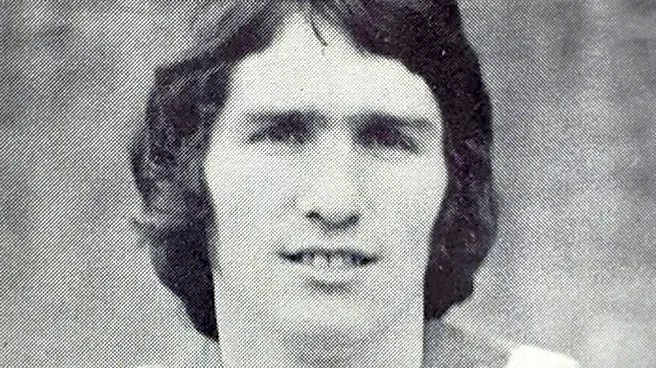
Manager Brown’s birthday present of a brace from John Lathan meant he had scored three goals in the first three games of the season. The youngster had made a goalscoring debut in the 1969/70 season. He had also starred for the 1969 Youth Cup-winning side.
Despite looking the part at times, he had not kicked on for a variety of reasons, including injury and a dirge of a season in 1970/71, where he played only one game but scored another brace with Sunderland as a team struggling to adjust to the Second Division.
He had netted a hat-trick in a home game against Portsmouth that I witnessed at Roker Park, played midweek in the afternoon during the miners’ strike. It was worth bunking off school that day… though I most certainly do not encourage that kind of thing!
Hopes were high that he, along with a number of promising young players, could find their feet in this season.
Nobody could have guessed how this season would turn out. Whilst the team were not in the relegation places in late October, crowds had not responded to the brand of football Alan Brown’s team was producing, though unemployment and levels of poverty would undoubtedly have played a part in this.
At the end of October, Brown resigned and left his post. At the start of December, Bob Stokoe took up the reins from caretaker manager Billy Elliott.
John Lathan started 48 games for Sunderland, coming off the bench 14 times and scoring 18 goals in all competitions between November 1969 and February 1974.
He played a part in our run to Wembley in 1973 in the two ties against Notts County in the third round, coming off the bench at Meadow Lane and playing the whole game in the replay at Roker Park three days later.
He played 24 times that season in all competitions, scoring seven goals. However, it never really looked like Sunderland’s new manager, Bob Stokoe, saw him as the answer to our goalscoring conundrum.
In February 1974, he was transferred to Mansfield Town in part-exchange for midfielder Dennis Longhorn. By all accounts, he did not want to go, but his two goals in three games that season (1973/74) were evidence that Stokoe was not going to play him regularly.
It would be remiss of me not to mention that these goals were scored in another fine brace against one of the best teams in the country at the time, Brian Clough’s Derby County. He scored with two instinctive strikes late on in the game to bring Derby back to Roker Park for a League Cup replay that would take a third game to decide.
He scored 14 goals for Mansfield and helped them to win the Fourth Division title in the 1974/75 season. He enjoyed a good career in the lower leagues at Carlisle and Portsmouth and even returned to Mansfield for a season in 1979/80.
In 1981, he played in Australia and the following season moved to South Africa, where he eventually finished playing and moved into coaching. He was qualified in sports injuries and combined this with a very highly regarded coaching career in South Africa.
To the present day, John is one of many ex-footballers struggling with cognitive impairment consistent with dementia (CTE). All at Roker Report wish him well.
A point at Brighton on this day was not a bad result and could easily have been two. Unfortunately, it was a long, cold journey home for the Lads, as the blight of hooliganism saw one of their bus windows smashed.
Division Two
Date – 26.08.1972
Venue – Goldstone Ground
Attendance – 15,906
Brighton 2 – 2 Sunderland
Goalscorers – Lathan 8 & 13 mins; Murray 62 mins; Irvine 82 mins.Brighton – Powney; Howell; Spearitt; Templeman (Lutton 76 mins); Gall; Goodwin; Murray; Napier; Beamish; Irvine; O’Sullivan.
Sunderland – Montgomery; Malone; Coleman; Horswill; Pitt; Kerr; McGiven; Porterfield; Tueart; Lathan (Hamilton 82 mins); Watson.