


It’s another Monday night here at BCB After Dark: the coolest nightclub for night owls, early risers, new parents and Cubs fans abroad. Come on in and join us. We still have a couple tables available. We’re waiving the cover charge. The hostess will seat you now. Bring your own beverage.
BCB After Dark is the place for you to talk baseball, music, movies, or anything else you need to get off your chest, as long as it is within the rules of the site. The late-nighters are encouraged to get the party
started, but everyone else is invited to join in as you wake up the next morning and into the afternoon.
Last week I asked you which current Cubs players should get a contract extension. I let you vote for more than one option, but 22 percent of you thought that Cade Horton should get locked up long term. Another 18 percent (rounded down) said Ian Happ and another 18 percent (rounded up) voted for Michael Busch.
Here’s the part with the music and the movies. You’re free to skip that if you want.
April is Jazz Appreciation Month and we’re doing what we can here to celebrate. I’ve always maintained that the best gateway drug into appreciating jazz is for musicians to do jazz versions of popular songs that audiences already know. In fact, that’s what the giants of an earlier age did. It’s just that the songs of the “Great American Songbook,” which were the popular music of the twenties through the fifties, have mostly faded from the public consciousness, even as they continue to serve as the backbone of jazz.
But today we have the Molly Miller Trio playing the Jimmy Webb song “Wichita Lineman,” which, of course, was made famous by Glen Campbell. Joining Molly and her guitar are JP Maramba on bass and Tamir Barzilay on drums.
A rare bit of jazz/country crossover.
You definitely would not expect a film about Jesus made by a gay, communist atheist who had been convicted of offending Catholicism (overturned on appeal) to end up on the Vatican’s list of recommended films. But director Pier Paolo Pasolini’s The Gospel According to St. Matthew (1964) is a beautiful and faithful retelling of the Greatest Story Ever Told.
Pasolini made the film after accepting Pope John XXIII’s invitation to a dialog between the Church and secular non-believers. As a part of that, he read the Gospels straight through and decided that Matthew was the best suited for adaptation for the screen. (He also dedicated the film to the late John XXIII.)
The Gospel According to St. Matthew is shot in the best Italian neorealist tradition. It’s a low-budget film with a documentary look to it all. None of the actors on screen were professionals. Jesus is played by Enrique Irazoqui, who was just a Spanish college student who had come to ask Pasolini about his previous films. He never acted on film again. Most of the rest of the cast were just locals from the impoverished areas of southern Italy where the film was shot. Mary at the time of the crucifixion was played by Pasolini’s own mother.
Pasolini gave himself writing credit, but every word in the film actually comes from Matthew. As such, it sticks faithfully to the Gospel, omitting only that which is necessary to keep the film just over two hours long. But despite not adding any dialog of his own, Pasolini certainly puts his own spin to the tale. Unlike the biblical epics coming out of Hollywood at this time, this is a small film that underplays the miracles. The miracles of the loaves and fishes, healing the lame and lepers, and the walking on the water are all here, but the film very much underplays them. There aren’t hosannahs and trumpets in this film announcing these Miracles of Jesus, rather just the humble actions of a humble Messiah.
In fact, Pasolini shifts the primary focus of story from Jesus to effect that he has on his followers. Yes, there’s plenty of Jesus here, but nearly every word is punctuated by a reaction shot of someone listening to his words. Many of the scenes are shot at a great distance while Jesus speaks. In these scenes, Jesus looks small and the crowd surrounding him looks huge. The crucifixion is here, of course, but Pasolini mostly focuses on the crowd watching it happen than the sufferings of Jesus. In any case, Pasolini gets through it and on to the resurrection quickly.Pasolini especially likes to highlight the children, who smile and laugh when Jesus defies those in power. I would argue that Pasolini isn’t really all that interested in Jesus Himself. His message interests him and the way that message changed the lives of those who heard it.
This casting of non-actors has some weird and effective results. When an angel speaks to Joseph about the Holy Spirit impregnating Mary, the camera cuts to a close-up of Joseph’s face with a look of “What am I doing here?” on his face. Now that may just be the actor not knowing what to do, but that’s actually a very appropriate response by Joseph to the situation! When Jesus rejects the Devil’s temptations, most would expect a look of anger on the reaction shot. Instead, we get a “Huh. Wasn’t expecting that,” look. Who knows if that was acting or some poor southern Italian farmer wondering why he was in a movie?
Irazoqui’s Jesus, on the other hand, is an angry revolutionary. There are times Jesus behaves in a calm and comforting manner, especially in his interactions with children or the infirmed, but most of the time he’s angry at the way those in power do not follow the way of the Lord. This is not a Jesus that questions his own divinity. Every line is read with a firm conviction.
His unibrow notwithstanding, Irazoqui was an attractive young man, but he’s also hardly the long-haired, muscular action-hero hippie Jesus that was common in religious films of the era. Most of the apostles look like they could knock Jesus out in a fistfight. But Irazoqui, with the help of some camera tricks by Pasolini and cinematographer Tonino Delli Colli, give Jesus just a tiny bit of glow that no one else on the screen has. It’s a Jesus that looks like a poor peasant, yet somehow stands out from the other poor peasants. (More makeup, I’d guess. Or maybe just some makeup.)
Despite the slight budget and the documentary feel of The Gospel According to St. Matthew, Pasolini and Delli Colli give the film a stark, quiet beauty. The camera will linger on the branches of a tree, the Italian countryside, a mountain or the sky. The black-and-white cinematography (and cheap costumes, honestly) emphasize the humble origins of Jesus.
This film was protested by both those on the far-left and the far-right, but the Vatican praised it, despite the notoriety of the director. It was awarded first prize from the International Catholic Office of Cinema and got a special screening inside Notre Dame in Paris. There are certainly things to criticize. The non-professional actors are definitely non-professional, although often that works. There are times the scenes look like a Passion Play from your local church on Easter. The laying the blame for the crucifixion on the Jewish council remains unchanged from Matthew, although you get the sense that Pasolini blames anyone with any authority rather than the Jewish leaders in particular. But no film really strips away the pageant and miracles of the Passion and emphasized the message of Jesus any better than The Gospel According to St. Matthew.
Beyond the religious message of the picture, however, is just a solid piece of Italian neorealism filmmaking. Even with the Greatest Story Ever Told, it’s how the story is told that makes a difference.
Here’s the trailer for the restoration of The Gospel According to Matthew. It gives a good sense of the feel of the film.
The Gospel According to Matthew is available in a lot of places. There appears to be a complete copy on YouTube. You can watch it for free without ads on Kanopy if you have a library card. It’s on the Criterion Channel. Tubi, Prime and some other services have it with ads.
Welcome back to everyone who skips the music and movies.
The Cubs aren’t off to a great start to the season at 4-6. That’s not a catastrophic start and it’s not a reason to start panicking or selling off yet. But let’s admit that it’s not nearly as good of a start as we were expecting.
It’s easy to overreact to a bad start. After all, if the Cubs were 6-4 instead of 4-6 at this point, I think the majority of us would be saying “Yeah, that’s a decent start.” So the Cubs are just two wins behind where they maybe should be.
But while panicking at this point is unwarranted, it’s OK to be concerned. And tonight I’m asking what concerns you most about the start to the season?
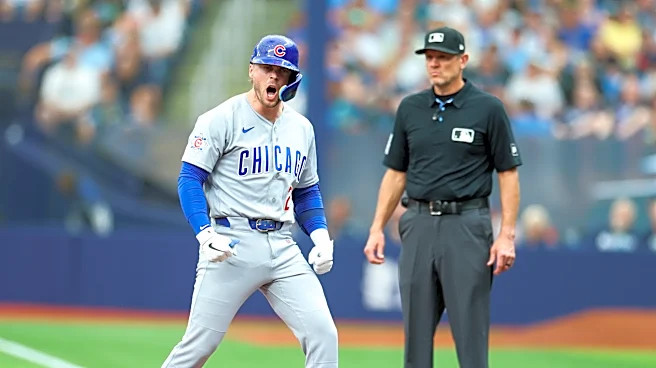
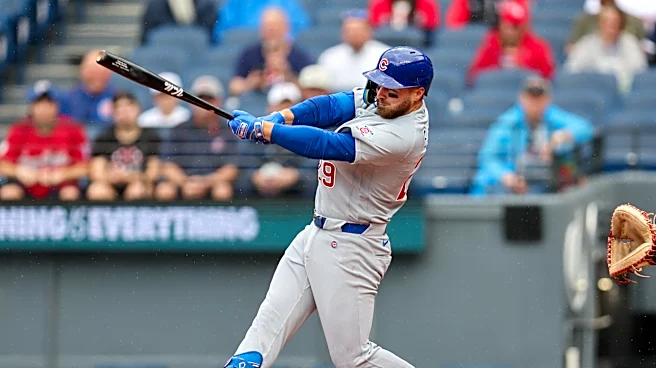
Let’s be clear, other than Edward Cabrera and Nico Hoerner, not much has gone right for the Cubs so far. The team isn’t hitting. Or rather they are hitting, they just aren’t getting any hits. What do I mean by that? If you look at the Statcast leaderboards, only the Rangers have a higher team hard-hit rate than the Cubs. They’re fourth in the league in walk percentage. The strikeouts are a bit above-average (the Cubs have the 12th-highest strikeout rate in the majors) but that’s hardly a big red flag. But they’re 27th in batting average in balls in play and that’s not leading to a lot of runs.
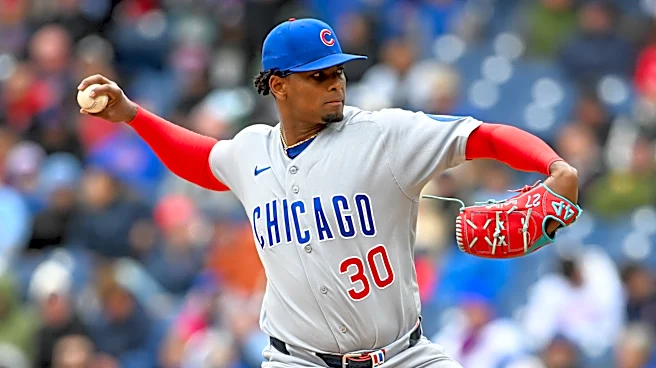
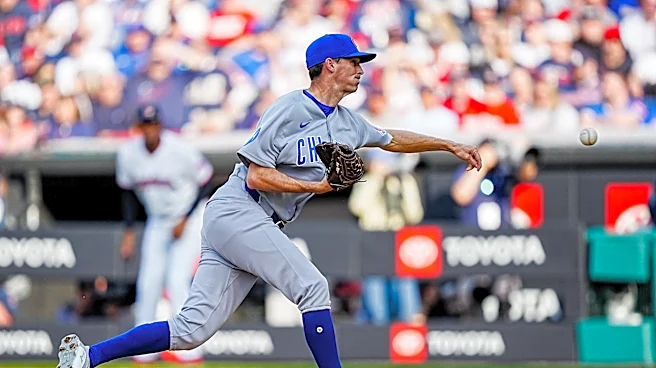
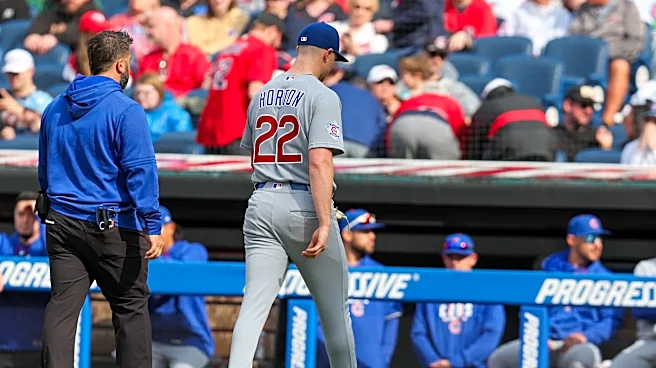
Then there is the starting pitching, which has already run arguably the two best pitchers off the road. Matthew Boyd hit the injured list today, although the Cubs are saying it should be for the 15-day minimum. Cade Horton is also on the injured list and that’s going to be more than 15 days, although we still don’t have a time estimate on that. Sure, Cabrera’s been great, but even he’s walking more than he should be.
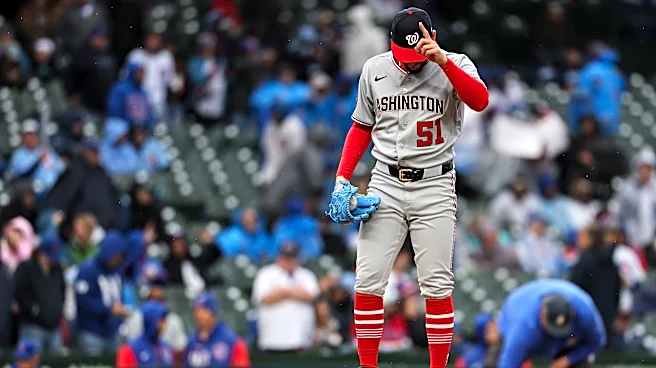
Finally there’s the bullpen. Daniel Palencia’s been great, but he’s also only had one save opportunity. Most of the rest of the re-built bullpen has struggled. Jacob Webb, Hunter Harvey and Phil Maton all have ERAs over seven. I guess Caleb Thielbar has been good and Hoby Milner has been fine. But the Cubs are struggling to keep the game close between when the starter exits and it’s Gasolina time.
So what is worrying you the most this young season?
Thanks for stopping by. We need to stick together at times like this. Please get home safely. Don’t forget any of your personal belongings. Recycle any cans and bottles. Tip your waitstaff. And join us again tomorrow evening for more BCB After Dark.