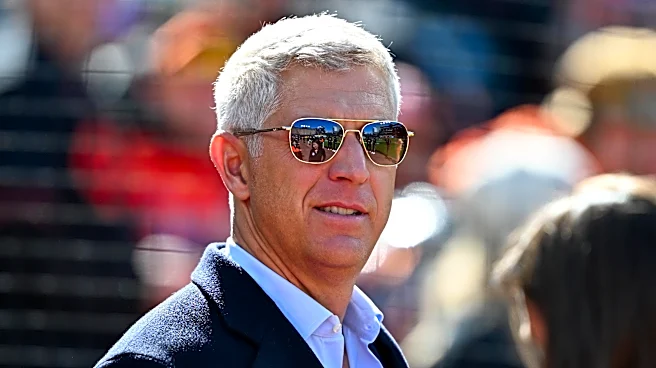

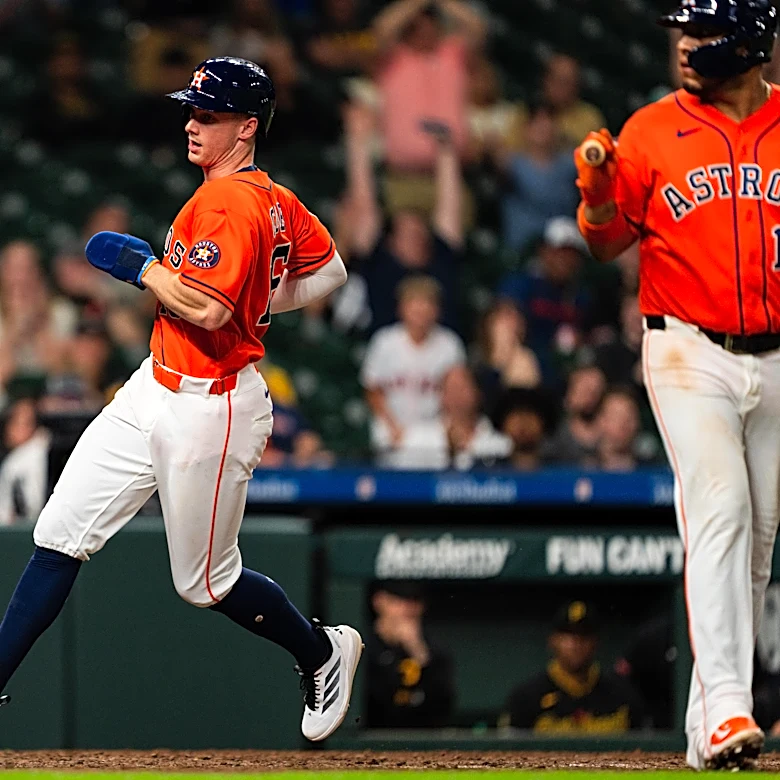

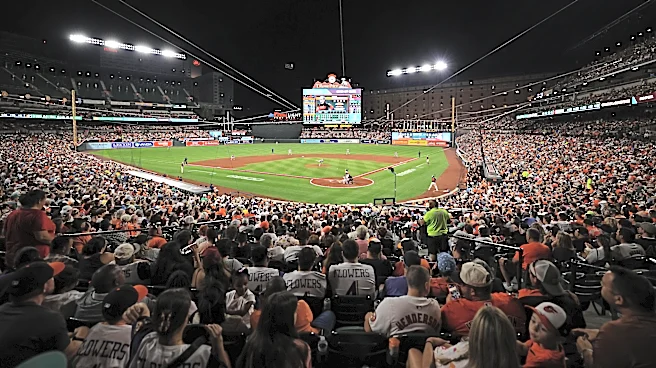
Mathematically, the Orioles’ playoff chances will remain alive for another couple of days, at least. Realistically, the 2026 season will soon be ending in supreme disappointment. If Mike Elias is to be believed, the planning for 2027 has already started.
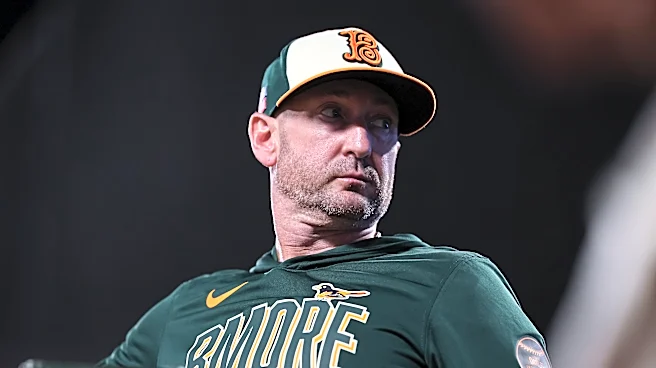
Elias addressed the media over the weekend. Among the topics were his expectations for leadership moving forward. He explained that it is his “assumption” that he will return despite consecutive underwhelming seasons. He also said that the team will “continue
to build around Craig [Albernaz]” as the manager. And finally, that the organization may again seek to grow the front office, including the potential hiring of a “general manager” beneath Elias in the organization, though they said the same thing last offseason, and it never happened.
While this is not the same as the Orioles ownership group announcing that Elias will return in 2027, it seems unlikely that they would have let him go in front of reporters this late in the season without some clarity on his future. Remember, Elias was secretly given a promotion to president of baseball operations prior to the 2025 season. That likely came with a pay increase and contract extension. And the club has seemed in lockstep with many of his big decisions, including extensions for Samuel Basallo, Shane Baz, and Kyle Bradish, as well as a big free agent deal for Pete Alonso. So while the on-field results have clearly failed to live up to expectations recently, that doesn’t mean ownership views it as an Elias-specific problem to be solved.
The decision to stick with Elias going into 2027 will certainly rankle some in the fan base, and for good reason. But what it also does is set up next summer as a decisive one. Falling short of the relatively modest goal of making the playoffs for three consecutive seasons should be enough for some significant turnover in the warehouse, Elias included.
So, let’s step into the well-worn loafers of Elias and examine the landscape heading into 2027. The offseason ahead is going to be a tumultuous one for every executive given the ongoing negotiations between the league and MLBPA. But you still have to do the work of building a competitive baseball team. Here are what some of his top priorities should be:
Bring fresh voices into the front office
This may be the easiest aspect to control, and it seems like the Orioles are already headed in an encouraging direction. It was announced late last week that Sig Mejdal would be shifting roles within the front office, moving out of the analytics department and into a research role. This came just days after it was reported that Matt Blood, the team’s vice president of player and staff development, had left the organization entirely.
There is plenty of evidence to suggest that Mejdal and Blood did great work for the Orioles. After all, the team did return to the playoffs and win an AL East crown not so long ago. And just like the team’s struggles do not fall at Elias’ feet alone, the same is true for any member of the organization. But clearly, something has grown stale.
Changes are needed in the front office. If Elias is going to stay—and again, that is not 100% confirmed, but things seem to be headed in that direction, then that means the voices feeding him information need to be refreshed. That doesn’t guarantee progress, but at least it is an effort to make that happen.
The next step will be to see who Elias eyes as replacements for Mejdal and Blood, as well as who they may appoint in that aforementioned GM role. The fact that there could be uncertainty about the Orioles front office beyond 2027 could keep some prospects away, but there is also the flip side where a return to relevancy would be jet fuel for the careers of anyone associated with the process.
Conduct some internal reflection about the lineup’s struggles
The plan for the 2026 season was for the offense to carry the club while the pitching and defense was good enough to support. That has simply not happened this year. Instead, the Orioles offense has largely been average and prone to extended dry spells.
It’s impossible for the organization to blow up the lineup in one offseason and expect to compete in 2027 like they need to. What’s more doable is an in-depth analysis of in-house talent, potentially followed by some hard decisions.
We know Pete Alonso will be back. He has been great in his first season with the Orioles, playing every day, leading the AL in RBI and potentially eclipsing 40 home runs on the season.
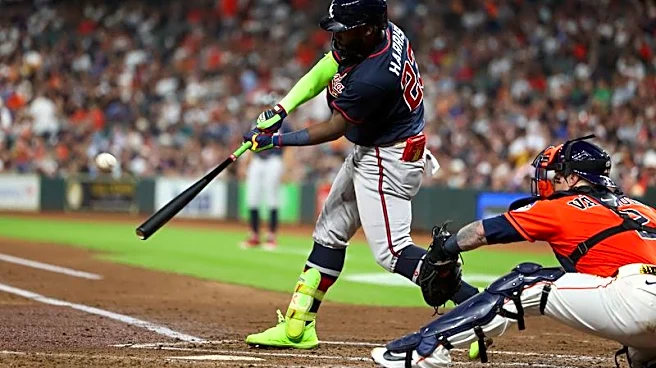
We can also safely assume that Gunnar Henderson and Samuel Basallo will return. Solving their offensive issues will have to be at the top of the Orioles to-do list this offseason. Maybe they are hurt. Maybe there is a mechanical issue. Clearly, they both have the talent to be a middle-of-the-order big league bat, but they haven’t shown it enough this season.
Others that have cemented their place one the 2027 roster are Coby Mayo, Blaze Alexander, and probably Colton Cowser. Mayo has shown real growth throughout the season, and is the best hitter in the league against left-handed pitching. Alexander is a rare entity on this team, featuring speed and positional flexibility. And while Cowser will frustrate at the plate, he is such a stud in center and does offer pop towards the bottom of the order.
Outside of that, nothing is set in stone. There were rumors that the team shopped Jackson Holliday at the deadline. Maybe those conversations come back this winter. Tyler O’Neill is entering the final year of his deal, making it easier to move off of him if the injuries are simply too much to bare. Dylan Beavers and Jeremiah Jackson have had moments and feel worth keeping around the organization, but a daily spot on the 26-man roster? Not so much. And we know Jordan Westburg will be back, but his rehab could bleed into the 2027 regular season, and his health is not something that can be counted upon at this point.
The team needs another impact bat. Where they put it is up in the air. Mayo probably shouldn’t be at third base everyday with his glove, but can be adjust to life in a corner outfield spot? That might still leave the other corner open for an addition. Alexander seems to fit best as a chess piece that moves all over the field where needed, and if Holliday is moved that would leave second base as gap.
Whatever happens, they cannot run back this exact same crew and expect dramatically different results. A change of some significance is necessary.
Add an actual front end starter
This has been a goal for Elias just about every offseason since 2021. He has accomplished this goal once, when he traded for Corbin Burnes. What happened that year? Burnes was fantastic, and the Orioles went to the playoffs. They also netted a competitive balance pick after Burnes signed elsewhere. That pick turned into either Caden Bodine or Wehiwa Aloy, depending on how you want to look at it. Both are good prospects, though Bodine is now with the Rays after he was used to acquire Baz.
Last winter, the Orioles had a flurry of activity in the rotation. Trading for Baz was the big one, and it has worked out well. He has stayed healthy, been dependable, and shown off a nice fastball. But it’s a step (or two) below ace-type performance. His xERA is 4.21 as of this post, and his strikeout rate is just 7.91 per nine innings. Maybe he takes another step forward in 2027, but that can’t be the baseline expectation.
Trevor Rogers has been, for large swaths of the last two seasons, not just the Orioles best pitcher, but one of the best arms in baseball. He had a 1.81 ERA last season, and has a 2.92 ERA since the start of June this year. It would hurt to lose that, but right now it looks like that is exactly what the Orioles are going to do. They decided not to trade him at the deadline this year. So instead they may have to settle for draft pick compensation, unless they give him an extension themselves.
So, not only did the Orioles probably need an ace anyway, but they will also need to replace Rogers if he departs. Expecting them to get two pitchers of that quality in one offseason is setting yourself up to be disappointed. But getting at least one should be the bare minimum.