
Last week, I shared the full Hall of Fame ballot with a little rundown of each player. Today, I’m going to share with you who I would vote for if I had a ballot. Many of you will disagree, and that’s okay!
Before getting into it, I think it’s worth telling you how I determine who I’d (hypothetically) vote for.
First, let’s talk about Hall of Fame size. We all agree that there’s a cutoff point for Hall of Famers. The question is: where is the line? For “small-Hall” folks, it might be around the 100th
best player in baseball history. For bigger-Hall people, it might be around 300. For me, I like the number of players that are in the Hall right now—it’s not perfect math, but there are 281 players currently enshrined out of a little less than 24,000 total players in major league history. That’s a little over 1%, which feels about right to me. Another way of thinking about it is that there are about two players in the Hall for every year that pro baseball has existed, going back to 1871.
So if the 280-ish number feels about right, the next question becomes: if I accept that there’s nothing I can do about all the players who are already in the Hall of Fame (many of whom shouldn’t be there), do I think a given player is one of the 280 best players in baseball history?
Since I used to have too much time on my hands, I made a Quixotic attempt to rank who I think are the 500-ish best players in baseball history, so I do have pretty strong feelings about whether these players fall into that top 280. This is a tricky ballot, because several players on it are around that line.
The next question: how do I determine who makes the top 280? This is not a “most WAR” situation and while I respect Jay Jaffe and his JAWS measure, it’s not that either. And it’s definitely not a “who has the most hits” situation.
Again, I’ve spent way too much time on this, but what I have done in a basic sense is come up with my own ways of measuring three key areas: a player’s peak ability, effective longevity, and how much they stood out in their time.
- I made something called “Peak Score,” which uses bWAR to create a single number that suggests how good a player was at their best. I also consider Baseball Reference’s Wins Above Average stat here.
- I have something I call “Weighted Quality Seasons” that is a single number that is, in a basica sense, how many good seasons a player had, but with “really good” seasons weighted more than “pretty good” ones. I also factor in some career numbers here, but usually rate stats like OPS+ and ERA+ or FIP-.
- How much did a player stand out in their time? In my opinion, how often was a player the best in the league at their position, how many times do I, in retrospect, think they should’ve won MVP or finished in the top three, etc.?
Using mainly these factors (and a few more), I went ahead and made that giant list. You can’t see that (maybe if the lockout gets real bad) and it’s constantly evolving, but I do use it to help me determine whether I think these players are in about that top 280.
I’ll also just note that I value a player’s peak more than their longevity. How long they played matters, but I’m interested in how long a player was valuable way more than I am interested in the counting numbers they accrued. For instance: Omar Vizquel, who is on this year’s ballot, played 24 years and finished his career with almost 2,900 hits. But he scores relatively badly on Weighted Quality Seasons because 22 of those 24 seasons were under 4 WAR, and half of them were under 2 WAR.
I am far more interested in how good a player was at his peak. Jacob deGrom, to me, has a much better Hall of Fame case than Mark Buehrle, because at his best, deGrom was way better than Buehrle ever was. The fact that deGrom was unable to stay healthy enough to do that for more than a couple of years hurts his case, but I still prefer the relatively brief time on the mountaintop to the longer career as a good-to-very good pitcher. If we’re trying to create a Hall of Fame that recognizes the best players, we should put the best players in, right? My hypothetical Hall is more for Sandy Koufax than it is for Pud Galvin, who won 300 games but really only because he’s second all time in starts. There needs to be some balance, to be sure, but that’s where my head is.
Okay, now you know how much thought I’ve put into this. Let’s go to the ballot, in order of preference.
Clear Cases
Chase Utley
I’m not going to sit here and rehash the pro- or anti-analytics thing that I brought up in my introduction to Utley on the ballot reveal the other day. I’m going to tell you that I do generally trust the analytics, and if you trust the analytics, here are the top five-year stretches via bWAR ever for a player who primarily played second base (limited to one per player):
- Rogers Hornsby, 1921-25: 50.1 WAR
- Joe Morgan, 1972-76: 47.8 WAR
- Eddie Collins, 1909-13: 44.4 WAR
- Nap Lajoie, 1906-10: 42.3 WAR
- Jackie Robinson, 1949-53: 41.7 WAR
- Charlie Gehringer, 1933-37: 40.4 WAR
- Chase Utley, 2005-09: 39.7 WAR
- Rod Carew, 1973-77: 38.8 WAR
- Robinson Canó 2010-14: 35.4 WAR
If you think our estimates of Utley’s defensive value aren’t way off, then he’s got an all-time good streak for a second baseman, the second-best five-year span for any second baseman in the last 70 years. Sure, Utley’s career wasn’t especially long—he didn’t have his first season with more than 300 plate appearances until he was 26, and some injury issues sapped the end of his prime—but he’s got an inner-circle Hall of Fame peak, one that lasted quite a long time.
Buster Posey
Posey’s career counting numbers are low. He only played 1,371 games, which means he’s got 1,500 career hits, 293 doubles, and 158 career homers. Yunel Escobar, Melvin Mora, and J.T. Snow rank just ahead of him on the all-time hits list. Brewers legend Chris Carter hit the same number of career homers as Posey. Rickie Weeks hit three more.
I’m being a bit unfair. Posey was, of course, a catcher, whose careers tend to be shorter. He lost a full season to the pandemic. He also retired when he was still good, having put up 3.6 bWAR in his age-34 final season in 2021.
If you look at rate stats, Posey’s case becomes clear. First, let’s look at WAR per 150 games: at 4.9, Posey ranks behind only four retired catchers: Charlie Bennett, Buck Ewing, Johnny Bench, and Mickey Cochrane. Three of them are in the Hall of Fame. Two retired before 1900. If we prefer FanGraphs WAR, which is even kinder to Posey, he is number one all time (6.32 per 150 games) and it’s not close (Ewing is second at 5.49; the top post-1900 catcher is Bench at 5.20).
Posey doesn’t have the highest Peak Score for a catcher, but he’s in the top 11, and the only players ahead of him are Bennett and 10 Hall of Famers (ask me about my Charlie Bennett Hall of Fame case).* If you want to consider Posey against his peers, his case gets even stronger; the only other catcher who ranks in the top 20 amongst catchers in Peak Score who played his whole career in the 21st century is Joe Mauer. Beyond Mauer, only Iván Rodríguez and Mike Piazza played in the 21st century at all in that group of 20.
Posey also has a legendary season to his name. I have his 2012 season, when he led the NL in bWAR, won a batting title, and led the league in OPS+, as one of the four best seasons ever by a catcher. The FanGraphs version of that season, which factors in what they see as excellent pitch framing, has him at 9.8 WAR, which is their best season ever by a catcher by a healthy margin (second is Bench at 9.2 in 1972).
The shortness of Posey’s career (he played fewer games than Dustin Pedroia and David Wright and barely more than Troy Tulowitzki) could make a first-ballot selection iffy, but given the whole picture I’ve got Posey as the best catcher who has debuted in the last 30+ years, since Rodríguez and Piazza were rookies in the early 1990s. Easy choice for me.
*Seriously—Bennett was arguably the first great pure catcher (Ewing, for instance, played all over the diamond), a great hitter and, by all accounts, an excellent defensive catcher. He was also a pioneer who is credited with using the first chest protector. When he was still playing in 1894, a train accident cost him both of his legs.
Borderline Cases Who Would Get My Vote
Dustin Pedroia
Now is when you’re going to start getting mad at me, and except for one player whose playing career is not in question, I don’t think there’s another easy case on this ballot—particularly since we’ve been conditioned to value big career counting stats for Hall of Famers. If I were a small-Hall guy, I’d cut things off after Posey (again, depending on how you feel about the guy I’ll get to in a bit, who is a different kind of question).
I am not, however, a small-Hall guy, and if I use my criteria—do I think this is one of the top 280-ish players?—then I’ve got a few more here. The first is Pedroia.
The argument against Pedroia is that his career was way too short. In six seasons after turning 30, he averaged only 83 games per year. (The only time he played in 150 games after turning 30, he had 5.4 WAR.) He played just over 1,500 games in his career, so his counting stats are low by Hall of Fame standards: 1,805 hits, 394 doubles, 140 homers, 138 stolen bases.
But during the first seven years of his career, Pedroia was really, really good. After a brief debut in 2006, he had 3.9 WAR in his first full season and won Rookie of the Year, and in 2008, he was the AL MVP, won a Gold Glove and a Silver Slugger, and led the league in hits and doubles. From 2007-13, he averaged 5.5 WAR, 40 doubles, 172 hits, 14 homers, and 17 stolen bases per season and he won three Gold Gloves. Through his age-30 season, Pedroia had 41.9 WAR, 1,371 hits, and 320 doubles. He’d won an MVP and was probably even better a couple years later, in 2011, when he inexplicably finished ninth in MVP voting. He’d won two World Series. 3,000 hits and 600 doubles didn’t seem out of the question.
The injuries set in after that, but: Pedroia is 15th among second basemen in my Peak Score stat, he’s 16th in Wins Above Average, he’s 12th in WAR/150. I’m not trying to argue that he’s an inner circle Hall of Famer, but I can make a favorable case for him against quite a few of the second basemen who are already in the Hall, and for me he’s easily above the “280” line.
David Wright
The argument for Wright is similar to the argument for Pedroia. Pedroia was a more valuable fielder at a more valuable position, so he’s got a slight edge in career WAR (51.8 to 49.1 in about 75 fewer games). Wright, though, was a much better hitter, and at his very best, he was probably a little better than Pedroia was—I felt both players should’ve won MVPs (Wright finished fourth in 2007 but I would’ve given him the award, in retrospect). Pedroia compares to the other great second basemen a little better than Wright does to third basemen, but Wright is still in elite company.
Weirdly, one of the things that keeps him from having a better case was a prime-age slump: after putting up 24.1 WAR from age 22 through 25, Wright averaged just 2.7 WAR per season from 26-28 (and injuries only explain a little of that—he played full seasons in two of those years). He rebounded for a couple more really good seasons after that, which is why he has any case at all, but like Pedroia, Wright played very little in his 30s; after a great season which was injury-shortened at age 30, Wright played only 211 games over the next five years and retired.
Wright was a “did everything well” player who had three seasons of at least 6.9 WAR and a solid 10-year run as a major player before injuries prematurely ended his career.
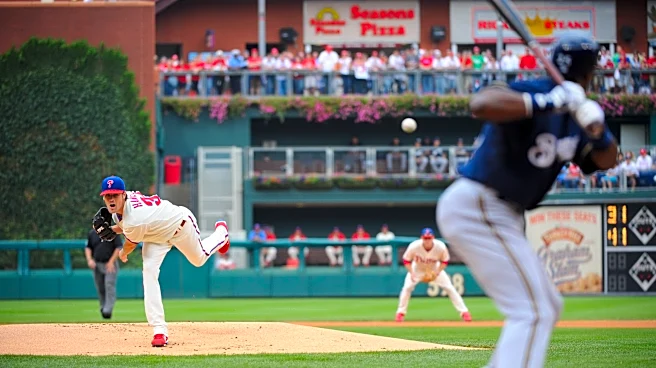
Cole Hamels
If you’re a FanGraphs person, you may not have much patience for a Hamels case. He’s got just 51.6 career fWAR compared to 57.9 bWAR, and that’s probably a big enough difference to sway a borderline case like this.
But I’m impressed by Hamels’ career. He was effective right away—an All-Star in his first full season—and was basically never bad over the next 14 years. And though he didn’t really ascend to a Cy Young level, he did stay relevant in a major way; Hamels had at least three bWAR every year from 2007 through 2018 except for one (and at least 4.0 in nine of those years), and though that might be a low-ish bar, that really adds up. And while, no, he wasn’t at a league-best level, he was basically perpetually at an All-Star level, even if he only made four All-Star games.
Hamels also has a legendary postseason run to his name. In 2008, the 24-year-old Hamels was the leader of the Phillies pitching staff—remember, that’s before they acquired Roy Halladay, Cliff Lee, or Roy Oswalt. After leading the league in WHIP during the regular season, Hamels pitched eight shutout innings in a start against the Brewers in the NLDS, then went 2-0 with a 1.93 ERA in two starts in the NLCS (winning NLCS MVP honors), and had a 2.77 ERA in 13 innings in the World Series en route to a World Series MVP. In total in the 2008 postseason, Hamels allowed seven runs in 35 innings for a 1.80 ERA.
Hamels’ career 123 ERA+ is in elite company. Only 42 pitchers have ever thrown 2500 innings with an ERA+ of 123 or higher:
- 29 are in the Hall of Fame.
- Three more will be soon (Clayton Kershaw, Justin Verlander, Max Scherzer).
- Four others have non-baseball complications, whether that’s steroid suspicions (Roger Clemens, Kevin Brown), personality issues (Curt Schilling), or gambling bans (Eddie Cicotte).
- One, Dizzy Trout, was what I call a “baseball war profiteer,” a good player who put up crazy numbers when most of the league was in the armed services during World War II.
- Get rid of those guys, and the only players remaining are Hamels, two pre-war pitchers who were quite good but aren’t in the Hall of Fame (Urban Shocker, Tommy Bridges), a Dead Ball guy who had a short career given his time (Ed Reulbach), the best pitcher of the 1870s who is in the Hall as a pioneer but not as a player (Al Spalding), and Bret Saberhagen… who I think should be in the Hall of Fame!
Review that list: there are 42 pitchers with 2500 innings and an ERA+ of 123 or better. Every single one of them whose career started after 1930 and has no other extenuating circumstances is in the Hall of Fame except for Hamels and Saberhagen.
Félix Hernández
Hamels’ case is quite different from that of Félix Hernández. Hernández has an edge in fWAR compared to bWAR. Hernández was, at his best, considered to be the best pitcher in the league, or something close to it. Hamels was consistently good over a long period of time, while Hernández was a bit more of a roller coaster; Hernández had two seasons with an ERA+ of at least 170, far better than any single season of Hamels’ career, but Hernandez’ career ERA+ of 117 is noticeably lower than Hamels’ 123.
Hernández won a Cy Young and finished as the runner-up twice (conclusions I agreed with when I retroactively “voted” for MVPs and Cy Youngs). Hernández had more “black ink” than Hamels, too, as he led the league in hits per nine three times, homers per nine once, WHIP once, FIP once, and ERA twice.
But while it’s not really his fault, Hernández never pitched in the postseason, and Hamels has that legendary 2008 playoff run to his name. They’re quite different pitchers even though they’re very close contemporaries, and it’s interesting to compare them. They’re close to equal in my mind—Hernández was better at his peak, but Hamels was also quite underrated.
Bobby Abreu
Speaking of underrated Phillies, how about Abreu? His counting stats are pretty wild, and I always like to highlight the seven-year run from 1998-2004 in which he averaged 156 games, 5.9 WAR, 41 doubles, six triples, 23 homers, 92 RBI, 29 stolen bases, and 106 walks per season while hitting .308/.416/.525. Crazy good numbers; that’s a seven-year OPS+ of 143.
Abreu finished his career with 574 doubles, 288 homers, and 400 stolen bases. Here’s the complete list of players to hit all three of those marks:
- Abreu
- Barry Bonds (601 doubles, 762 homers, 514 stolen bases)
- Craig Biggio (668 doubles, 291 homers, 414 stolen bases)
That’s it!
Abreu made only two All-Star teams, never finished higher than 12th in MVP voting, won only one Gold Glove and only one Silver Slugger, and he played at a time when insane numbers were being put up all over the place (Abreu’s best season came in 2004, the same year that Bonds hit .362, walked 232 times, and homered 45 times in just 373 official at-bats). Abreu’s Phillies weren’t any good, and by the time he was playing for good teams, he was already past his prime. There just wasn’t a lot of shine on Abreu, and it definitely hurt him in Hall of Fame voting.
I would also vote for…
Alex Rodriguez
It’s totally fine if you would not. But Rodriguez is almost certainly one of the top 25 players of all time, if you’re basing it purely on his on-field accomplishments, and I’m just not really in favor of keeping a guy like that out, no matter how weird and cheatery he is.
Worthy of real consideration but don’t make the cut
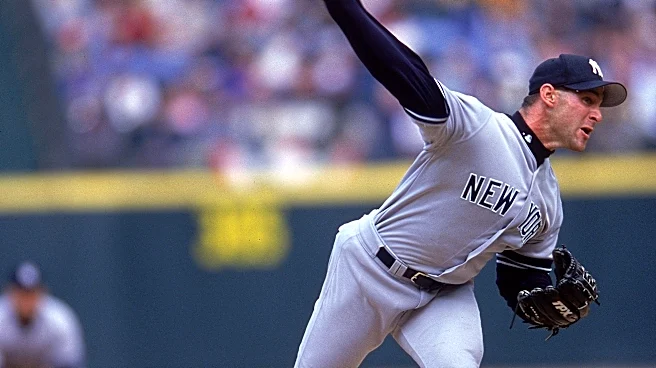
Andy Pettitte
Let’s ignore the HGH stuff for a minute. For me, without that, he’s about as close to the line as you can get. I think most people would say he’s a no brainer if there were no steroids involved, but I don’t think that’s the case. Pettitte doesn’t do very well on my “Peak Score” measurement—he really only had a couple of seasons that were anywhere near Cy Young level, and they were kind of spread out. He did pitch for a long time, but he pitched exclusively for good teams, which is also the reason why he has the postseason records that he does (Pettitte has more innings pitched and postseason wins than anyone else—mostly because he’s started seven more playoff games than anyone else and played for five teams that won the World Series).
Toss in the HGH thing, and I’m fine not voting for him. I’m not a steroid hardliner, obviously, but I do let it serve as a tiebreaker in borderline cases, and this case is borderline for me. Without the HGH, I probably could’ve been talked into it, but I’m at peace with this decision.
Mark Buehrle
I love Buehrle as a pitcher and he’s got some real fun stuff in his career—most notably the thing that probably no one will ever do again, that he went 15 straight years with at least 198 innings pitched. Buehrle was also the best pitcher on a World Series winner, threw a perfect game, won over 200 games in the 21st century, and he’s got 60 career bWAR.
But Buehrle, like Pettitte, just wasn’t quite good enough in his best seasons. Buehrle got Cy Young votes only once in his career, when he finished fifth in 2005. He’s only got two seasons above 5.0 bWAR and none over 6.1, and if you’re a FanGraphs person it’s worse—he has one season of 5.9 fWAR and no others over 4.5.
I love Buehrle’s case, I think it’s great and he’s a real unicorn of a player in modern baseball, but there’s just not quite enough at the top end for me.
Jon Lester
Lester, based on regular season stats, isn’t close. Sure, he’s got 200 wins and three top-four Cy Young finishes. But he was somewhat inconsistent over the course of his career and his regular season WAR totals aren’t good for a Hall of Famer, especially a starting pitcher—he’s got just 43.5 bWAR and 46.2 fWAR. If your WAR totals are that low, I need you to have, like, three seasons where you were one of the two best pitchers in the league, and Lester definitely does not have that.
So if there’s any case here, it’s based on his postseason prowess. Honestly, I could see people buying the narrative and him getting a lot of support, and I’m not trying to underplay his playoff numbers: he won three World Series, an NLCS MVP award, and pitched to a 2.51 ERA in 154 postseason innings, way better the 3.66 career ERA he had in the regular season. He had a 1.77 ERA in 35 2/3 World Series innings. He’s in postseason legend territory.
But baseball history is littered with good players who elevated their game in the playoffs, most of them just didn’t get a chance to perform in the playoffs as often as Lester did because there were a maximum of seven games in a given postseason for the first 60 postseasons. Lester is an important figure in 21st century baseball, but his regular season record isn’t good enough for him to get my vote.