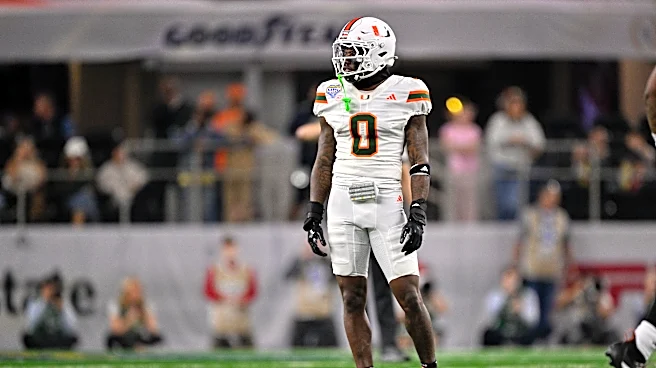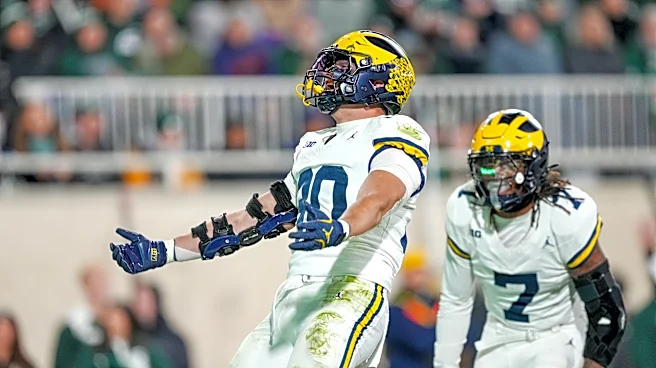



To start the final day of the 2026 NFL Draft, the Detroit Lions continued to draft local talent, taking Michigan linebacker Jimmy Rolder in the fourth round at pick 118. With the biggest needs addressed in the first two rounds, the Lions decided to focus on improving their defense and depth at linebacker.
There were questions at linebacker, as the only player under contract for 2027 is Derrick Barnes—although the team is expected to extend Jack Campbell this offseason. The team needs long-term options
at the position with the rest of the unit on one-year deals. Was this the right time to take a linebacker or should the Lions have picked elsewhere at this spot?
Roster impact
As I mentioned earlier, the linebacker depth on the Lions is thin. Behind the starters of Barnes and Campbell is a question mark. It’s unsure if the Lions will stick with three linebackers in their base, or convert to a two linebacker base defense. No matter what they do, the Lions have Malcom Rodriguez as the top candidate for LB3, but Rolder could compete for that job. There’s also Trevor Nowaske and Damone Clark, who don’t jump off the page to me as starter material. Rolder, at worst, is a serviceable backup for this team and gives them an option for a few years, but at best, could turn into an average starter for Detroit.
College career
Playing 42 games in his four seasons, Rolder got 11 starts and finished with 118 tackles, nine tackles for loss, two pass deflections, two sacks, one interception, and a fumble recovery. He was a depth piece and special teams players for the first two years of his career, before moving up to the backup role in 2024 and took over as a starter in 2025. In his one year as a starter, he landed on the All Big-Ten second team for coaches and media.
Strengths and weaknesses
According to PFF, he is one of the best tackling linebackers in college football. He ranked 15th in tackling (88.8 grade) and finished 2025 with a run defense grade of 80.0. He isn’t afraid to get violent and face the music, doesn’t let the play come to him, and he hunts it down to finish it. With his ability to finish the play, he does his best to shift through the play and get to the ballcarrier as soon as possible. He’s got plenty of athleticism, scoring a 9.52 RAS—although he did not run the 40-yard dash.
Where he could improve is his coverage game. He allowed 29 catches for 251 yards and a touchdown last season, earning a 61.1 PFF coverage grade. Since he didn’t start until 2025, he doesn’t have much starting experience, so he will need time to develop and adjust to the NFL. He isn’t great in pass rushing situations either, so sticking him in for run gaps and coverage would suit him better.
Overall
Overall, this was a good move by the Lions. For the first time in this draft, it didn’t feel like the team reached for someone. Not that I disagree with the earlier picks, this one just felt more natural for him and the team. The Lions need depth at linebacker, and Rolder is someone who could potentially start in the future if not this season. We know the Lions love to stop the run, and that makes Rolder a compelling pick.
Rolder should compete with Rodriguez for a starting linebacker job this season and if he can’t win that job, he’s got years of special teams experience that we know the team loves. He is a tough-nosed player that fits the gritty style this team looks for. While his defensive impact might not be felt this season, he could become a valuable role player in 2027.
Grade: B