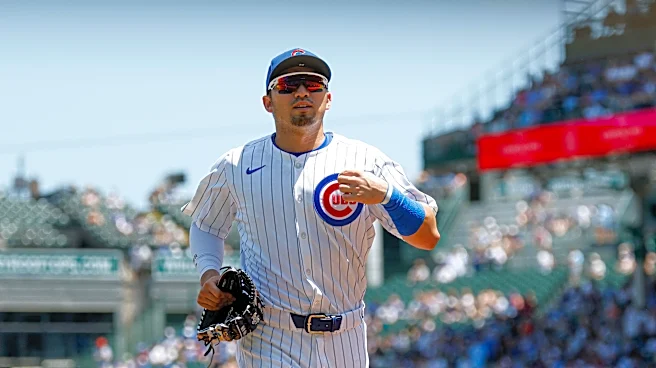


The Seattle Mariners were rumored by Ryan Divish and Adam Jude of the Seattle Times to be pursuing free agent OF Seiya Suzuki in their coverage of MLB’s GM meetings on Tuesday. Jerry Dipoto danced around the subject in the report, but reiterated the truth of Seattle’s history and capacity for appeal to players hailing from Japan. And yet, the top of the position player market is water Dipoto’s Mariners have not sailed in, and Suzuki is himself a rarity as a position playing free agent to reach true
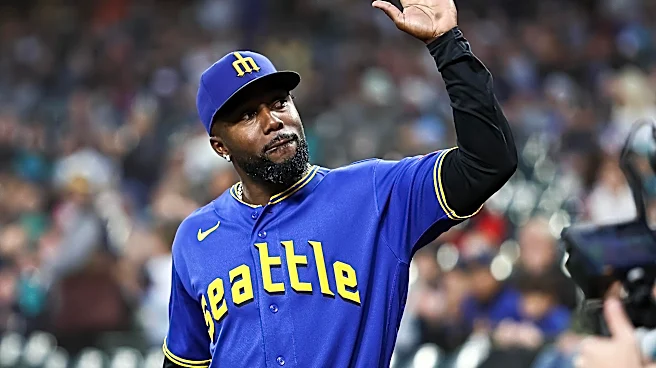
free agency, having completed his first contract signed in 2022 with the Chicago Cubs. Suzuki, much like Randy Arozarena, has a corner outfield profile with a history of big offensive production and some suspect glovework, and both will enter 2027 as their age 32 season.
So why Suzuki and not, as reported by Divish and Jude, a reunification effort with Arozarena? Seemingly, Arozarena is interested in other markets, and fair enough. Randy also will yield Seattle an extra draft pick when he signs, all but certainly in Competitive Balance Round A due to Seattle’s revenue-sharing recipient status in recent years, meaning a top-40 selection in the 2027 draft. The cost of signing Suzuki, beyond the financial which might push into nine figures, would be Seattle’s third-highest selection in the draft in kind. This would mean most likely for Seattle to sacrifice their third round pick, as compensation picks are (seemingly?) immune from the calculus for this effort.
And that cost is not necessarily going to be cheaper than what Randy would demand for retainer. Both Suzuki and Arozarena have been steady, right-handed bats, performing to a genuinely remarkable degree of synchronicity. For Randy in 4029 PA across 955 MLB games, and 2899 PAs over 675 games for Suzuki, they’ve both maintained a 128 wRC+ exactly. They’re within decimals on career walk and strikeout rates, and while Arozarena is more of an iron man, they’ve each amassed an average of over 140 games played per season over the last four campaigns.
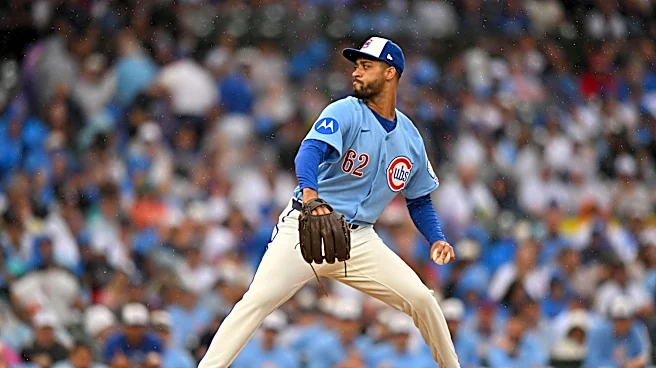
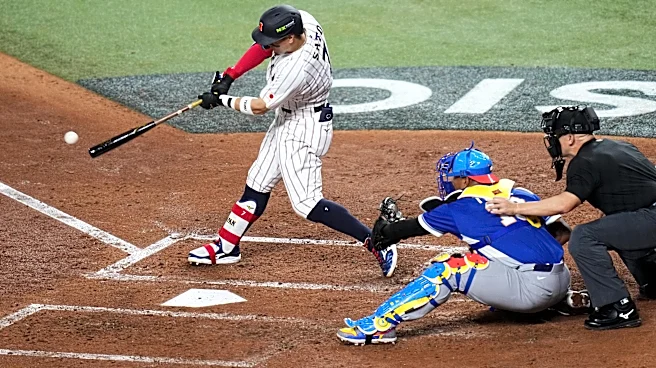
Suzuki has benefitted from a ballpark less vicious to right-handed hitters than Arozarena in recent years (which is literally every other park, bless you Randy), good for a .269/.351/.472 mark for his career, and while he runs reasonably, he’s put a halt on his base stealing in the past few seasons, while Arozarena has notched six straight 20-20 campaigns. But what Suzuki managed in 2026 may be setting him above Seattle’s estimation of their erstwhile left fielder. Seiya’s skill with the glove took a major step forward in 2026. After a season spent in the corners and at DH, Suzuki was expected to handle center field duties in the World Baseball Classic for Team Japan this past spring. The Tokyo native still runs at an above-average level, and has a strong enough arm for any outfield position, but where he shone was in his improved tracking of the ball and range in Wrigley’s corner spots. Of course, Suzuki benefitted from the best defensive center fielder in baseball with Pete Crow-Armstrong ranging in Andruw Jones-esque capacities this past summer, but in Seattle the longer trend of Julio Rodríguez still suggests a fielder far above average to flank his compatriots.
The counters here are curious. For one, defensive metrics have a taller task of capturing process and cause/effect than hitting or baserunning, in many ways. Can one count on Suzuki’s glovework maintaining any more than they could on Julio’s failing to bounce back? And on the other side, many of Suzuki’s offensive peripherals took some hits. Though still a strong performer when it comes to maximizing contact, Suzuki’s hard hit rates and expected outcomes took a step downward from the past three seasons. Given his numbers didn’t dip, and in fact took a positive step on the back of an elevated walk rate, this may not be troubling the M’s.
But Suzuki is likely to get four or five years on his contract, something this front office has only ever offered hitters in their 20s. MLB Trade Rumors estimated 4/$105m for Suzuki, while FanGraphs writer Ben Clemens suggested a similar 4/$108m, and the crowdsourced rankings from the site came in with a median 4/$96m. All are plausible ranges, and all would be surprising to see the low-investment Mariners ownership group commit to.
And yet, filling the hole of Arozarena is a real challenge. As Ryan Blake noted at the end of the season, Seattle faces a gap between 2025 and 2026 that can largely be made up in 2027 by positive regression from existing players. But what they cannot expect to replicate is the greatest season by a Mariners left fielder in franchise history that Arozarena put up, with his 5.5 fWAR, .281/.381/.484 line and 151 wRC+ from a guy who could be relied upon to be healthy enough to play at a high level daily for 2.5 years.
Suzuki is the only player in this free agent class likely to meet the M’s desire to improve defensively and have a strong shot at holding serve offensively in Arozarena’s stead. He’s right-handed, something nobody but Julio from the expected Opening Day lineup can claim. His offensive profile has power, but is not purely reliant upon it, and he’s got what continues to be above-average athleticism that may age more gracefully than his contemporaries already starting from a lesser point of ability.
If Seattle were to invest in a new free agent this winter, Suzuki would be the most likely to have a positive and fitting impact, with his track record as a corner outfielder and hitter. Seattle should be in on this type of player at this stage, particularly with a balance sheet recently glutted by the 7th-best attendance in MLB this year, the most attendees since 2004 for the franchise. To maintain and reclaim the enthusiasm and the justifiable expectations following their lost 2026 season, would be a very appropriate player to bring into the fold for the franchise’s 51st season.