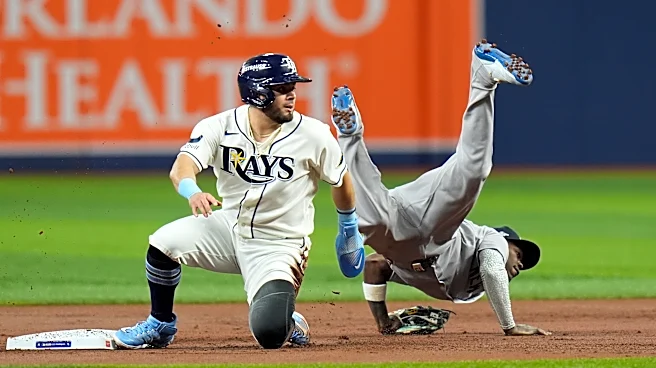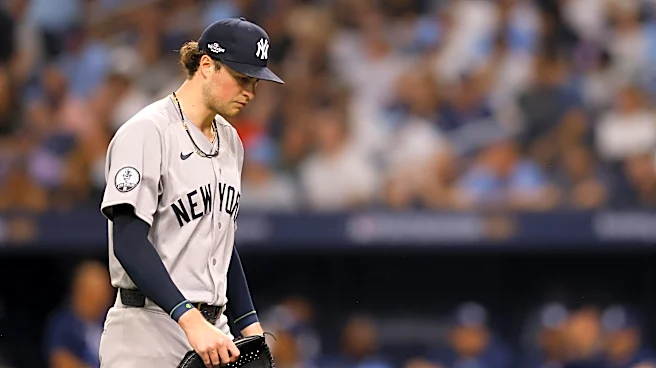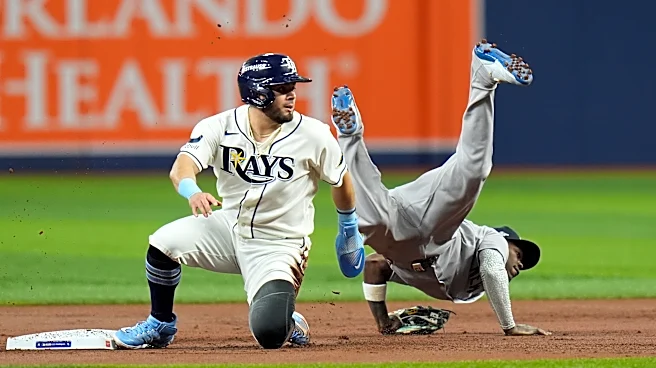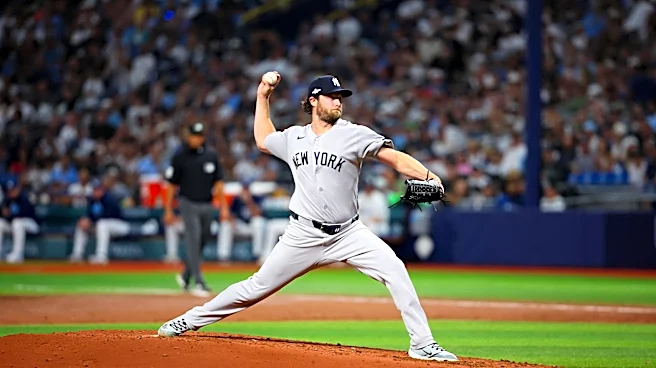


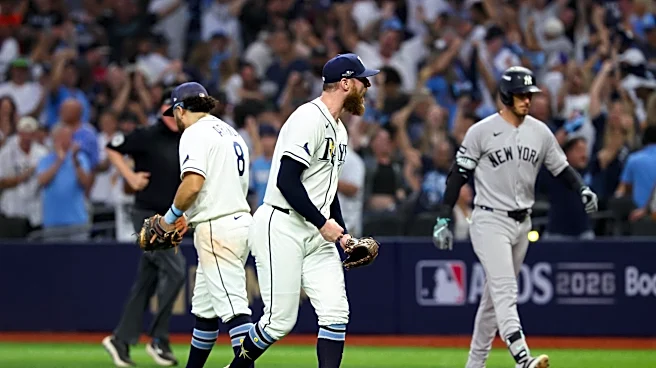
With dormant bats, porous gloves, and dulled concentration, the Yankees at no point showed they deserved to advance beyond the Rays out of the ALDS. The one area you could not fault in the first two games is starting pitching, both Gerrit Cole and Cam Schlittler let down by the Yankees’ seemingly unprepared position player contingent. We draw our second Sequence of the Week of the postseason from Cole’s start in Game 1 at the Trop.
We join Cole with one out in the bottom of the first inning of Game
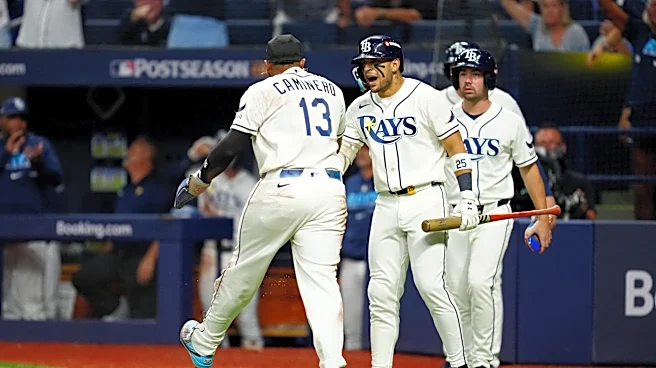
1. There are runners on first and second after Yandy Díaz led off with a single and Junior Caminero drew a one-out walk. That brings Liam Hicks to the plate, the lefty-hitting backstop posting the ninth-highest wRC+ (130) of any catcher after moving from Miami to Tampa at the deadline.
Cole lost the feel for his four-seamer in the previous PA, resulting in the walk of Caminero after getting to an 0-2 count. One of the best ways to get your alignment and release point back is with a get-me-over breaking ball.
That’s exactly what Cole achieves, dropping in this lollipop knuckle curve for called strike one. Despite this pitch landing over the heart of the plate, you can see how Hicks would take it for a strike. For a hitter expecting a fastball first pitch — which Cole has thrown to the first three batters he faced — this pitch looks like a ball up and away out of the pitcher’s hand. It would be easy to give up early on a pitch like that after watching Cole spray several fastballs wide of the mark to Caminero.
The beauty of landing your curveball in the zone for a called strike is it opens up opportunity for chase against the four-seamer above the zone. If you can aim your fastball down a similar elevated tunnel as the release point of the curve, it can fool the hitter into reading another get-me-over breaker.
This four-seamer catches a healthy chunk of the zone up and in, but the 13 mph change of speeds and elite induced vertical break of the pitch has Hicks late and underneath with his barrel. All he can manage is a can of corn to left center, which Cody Bellinger squeezes for out number two.
Here’s the full sequence:

Cole is one out away from escaping the early jam, but now he has to contend with the dangerous Chandler Simpson. The Rays’ speedster led MLB with 46 steals, also finishing with the second-lowest strikeout rate (7.8-percent) and fourth-highest batting average (.306) of any qualified hitter. Thus, he poses a particular threat in this situation. A strikeout is the ideal outcome to end the inning, but Simpson is the least likely Rays hitter to do so, while his speed means that any ball in play will put an enormous amount of pressure on the defense.
Having reacquired the release point on his four-seamer with that up-and-in pitch to Hicks, Cole is able to go back to his first pitch fastball approach.
Austin Wells sets a low target and Cole nails his spot just off the outside corner with a 98 mph heater. Simpson doesn’t decide to swing until the pitch is practically by him, resulting in a weak half swing — or as the Pitching Ninja has popularized, a “sword.”
With the hitter showing the willingness to swing at an outside fastball, it opens a lane for Cole to pursue a chase against the changeup off the plate low and away. He just has to make it look like the previous fastball at release.
As he is wont to do, Cole tugs this changeup and leaves it middle-middle. However, the 13 mph change of speed and late fading and dropping movement has Simpson way out in front whiffing well over the top of the pitch as he incorrectly assumes it is an elevated fastball — another example of how effective sequencing can overcome poor execution.
Just like against Caminero, Cole has quickly jumped ahead, 0-2. He just needs to execute one more pitch and he’ll be back in the dugout with no damage done. After eliciting a late, weak hack on an in-zone changeup, a good choice would be to tunnel a four-seamer down the same aiming point up and in with the idea of gassing the heater past Simpson’s now slowed-down bat.
It’s a sound strategy but without the execution to match. I don’t think Cole is intending an old-fashioned brush back heater that puts Simpson on the seat of his pants. That being said, this up and in fastball can be used to set up a future inside pitch.
Indeed, Cole immediately attempts to leverage the hesitancy that brush back pitch planted in Simpson’s head with another inside heater.
Cole freezes Simpson with this 97 mph four-seamer on the corner in and at the knees. The umpire initially calls it a ball before a successful ABS challenge by Wells overturns it for the inning-ending strike three called to strand the pair of runners. Cole made his best pitch of the inning when he needed it most, reaffirming the trust the Yankees placed in him as Game 1 starter.
Here’s the full sequence:

Despite the home run issues that plagues his final starts of the regular season, Cole proved why he was the right choice to start the ALDS opener. The pitching staff as a whole did their job in limiting the Rays to just one run. Unfortunately, their offense could not hold up their end of the bargain. No matter how lockdown your pitchers are, you are not going to win a playoff game with one hit in nine innings.