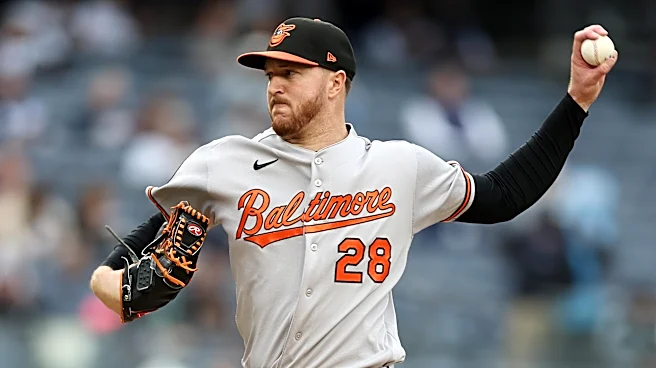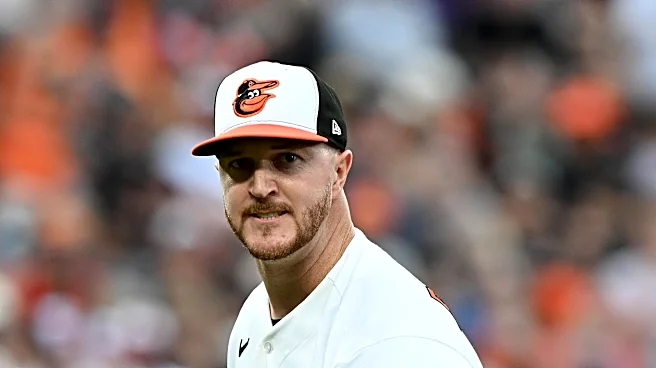

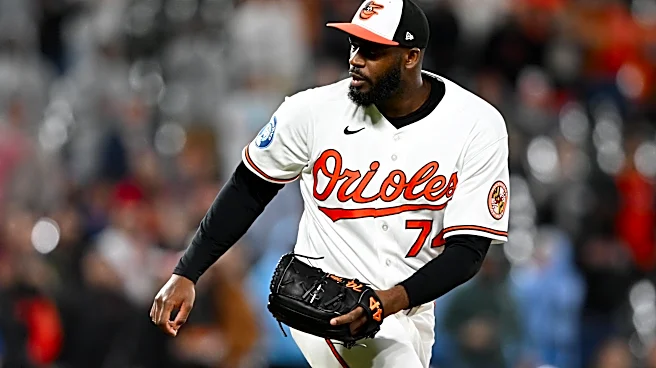
The run-up to the lockout is starting to make for a more eventful November, as had been speculated ahead of time. The big-ticket signing of Tarik Skubal to the Mets was followed shortly after with news that many Orioles fans had been dreading since the season ended: Trevor Rogers has signed a deal with somebody else. He is off the board and won’t be coming back. With him gone, where can, should, and will the Orioles turn to improve their starting rotation?
Rogers has an agreement with the Cubs, still
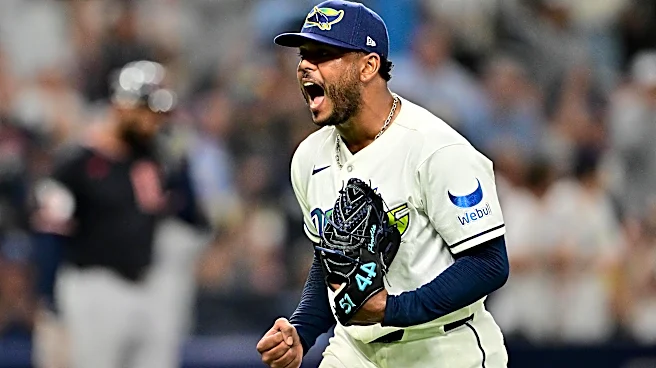
pending the physical as of this writing, that goes for five years for a total of $120 million. There are reportedly some deferrals in the contract, though the exact amount there and its present day value are not yet known. Even not counting the deferrals, that’s $24 million per year for five years. It feels like an offer that the Orioles should have been able to beat. It’s frustrating that they didn’t. I would not be surprised if we eventually learn that the Orioles offered something like 4/108, a higher AAV but without the fifth year so for a lower total guarantee.
Then again, $24 million per year is a lot of money to give to a guy who just had an ERA of about 4 in the most recent season, whose only career season with 30 or more starts was this past season, and has never had two good seasons in a row. It is likely that few Orioles fans would want him if he had put up a 1.81 ERA in 18 starts for any other team in 2025, or be as inclined to only judge his 2026 season on the 2.90 ERA he had from June 1 to the end of the season. Mike Elias certainly isn’t the kind of guy to get swept up in that sentiment.
Now, Elias has to solve his starting rotation problem with the knowledge that bringing back his “ace, but only for two-thirds of the season” pitcher from each of the past two seasons is not an option. What is he going to do about it? His rotation is Shane Baz, Kyle Bradish, Brandon Young, Cade Povich, and Trey Gibson. It should be taken as a given that there needs to be one addition aimed at being at least a #2 starting pitcher in a real rotation. Some kind of short-term reinforcement at the back end may also not be amiss.
Free agent choices remaining to the Orioles who might fill the aspirational front end need are Freddy Peralta, Michael King, and Kaima Taira. To the maximum extent possible, I am trying to emotionally steel myself for the Orioles getting none of the above. Elias has still never given multiple guaranteed years to a free agent starting pitcher, no matter how essential it has seemed to be in a given offseason that the Orioles improve their starting rotation.
There are occasionally reports that he came close on this guy or that, but Elias does not pony up the extra bit to make a difference and get a good pitcher. In this case, perhaps with Rogers, he should have just gone 5/125 even if he has a model that suggests Rogers should not get above 4/100. The results of the Orioles rotation over the last three seasons speak for themselves in this regard, and what they speak is not positive about Elias’s roster construction philosophy.
Camden Chat colleague John Beers looked at the case for Peralta just earlier today. Following a brilliant 2025, Peralta’s 2026 season was also kind of a mess, as he finished with a 4.42 ERA. He is, however, also expected to command roughly Rogers-level salary as a free agent on the strength of what he did with the Rays after being traded from the Mets ahead of the deadline. The big red flag on Peralta for me is how much his strikeout rate declined this year; I’d have rather rolled the dice on Rogers than have a big expenditure on Peralta with that question lingering. Peralta will not cost a draft pick to sign since he was traded mid-season.
There was some rumored interest by the Orioles in Peralta that floated up yesterday. I don’t put too much stock into anything that doesn’t rise to the level of MLB Trade Rumors writes about it. About the Orioles and Peralta, they didn’t. It could happen anyway! Baseball rumors sometimes come along from strange places and sometimes that strange information turns out to be true. MLBTR had projected 5/110 for Peralta.
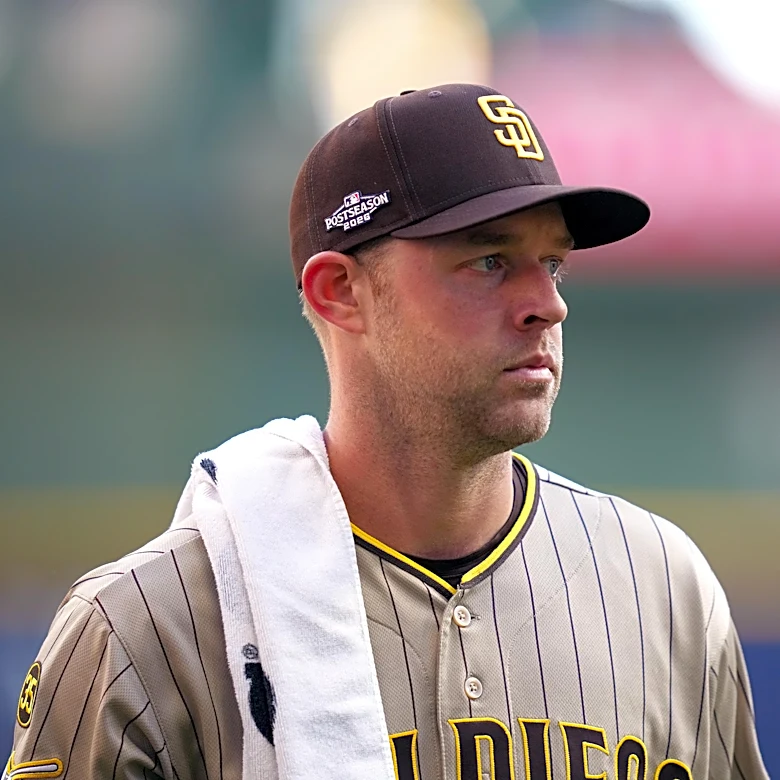
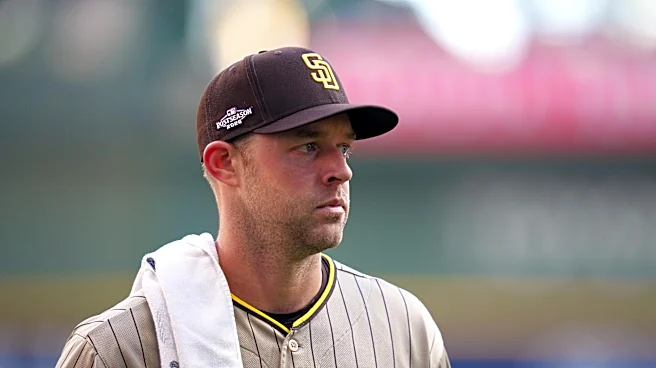
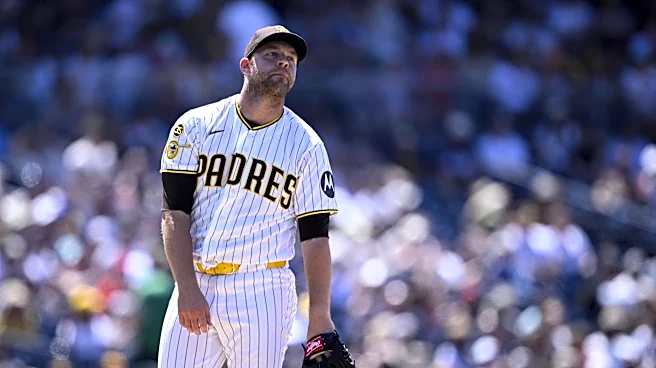
Fellow Camden Chatter Alex Church argued for King in an article last week. At age 32 for next season, King is the oldest of this high-end bunch. He’s spent the past three seasons in the Padres rotation and has been putting up consistently good ERA numbers. The worst year of the three was a 3.44 ERA from 2025, a season where King only made 15 starts. Other than that, he started 30 or more in 2024 and 2026.
Like Peralta, King has the question of a declining strikeout rate working against him. In the 2024 season, when King got some down-ballot Cy Young votes while posting a 2.95 ERA for the season, he had a 10.4 K/9. That declined to 9.3 a year ago and 7.7 just this past season. That’s a lot of contact that he’s getting that he wasn’t before. In 2026, he seemed to be having good batted ball luck, as batters hit just .259 when putting the ball in play against him. I would not count on that carrying over into the 2027-2030 Orioles.
King’s projection from MLBTR is 4/92. That’s a $23 million per year deal. He will cost a draft pick. I would also wonder why, if the Orioles somehow ended up signing King, they didn’t go for Rogers.
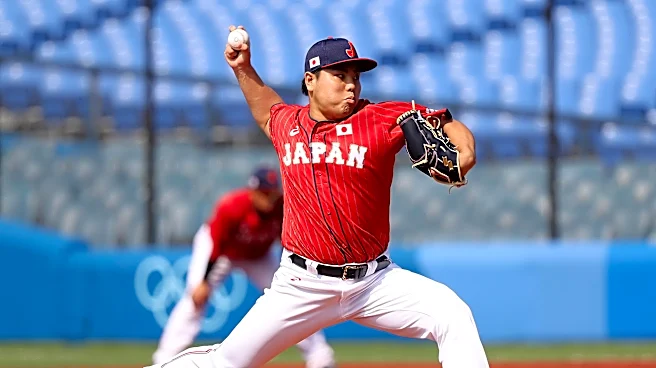
I wrote last week about my annual interest in the Orioles signing a high-profile Japanese player. That was about third baseman/possible outfielder Teruaki Sato, but it certainly also applies to Taira, who’s been posted to MLB this season. Dubbed “Fire Hydrant” because of a short (for an MLB pitcher) but stocky build, Taira is a young, hard thrower who shredded Japanese competition this past year.
Taira’s projected deal by MLBTR was for four years and $72 million, likely to include at least one opt-out. Their reasoning for that projection is that Taira will want to be able to exit the deal if he quickly answers the question marks about any Japanese pitcher coming over to MLB. Last winter, another decently well-regarded pitcher came over from Japan, Tatsuya Imai, and he had to settle for a light contract with opt-outs. Imai’s initial MLB season was a bust.
The Elias track record points to the trade market being a decent guess for where he might try to improve the rotation. When he went out and got Corbin Burnes, that was a short-term addition of a pitcher who everybody figured would get traded, even if nobody knew where. The pre-2026 addition of Shane Baz was a more medium-term addition – that the Orioles made long-term by signing him to a contract extension before he ever threw a regular season pitch here – of a player who was not anticipated as available in trade.
Burnes lived up to hopes in his lone year as an Oriole. Baz did not get results commensurate with the trade package the Orioles gave up for him, nor with the lofty salaries that will come in years 4 and 5 of his contract. Elias has to hope that better than this is coming.
One guy who’s got that “everyone assumes he’s going to be traded” feel to him this offseason is Angels pitcher Reid Detmers. It’s been something of a rollercoaster career for Detmers since being drafted in the first round in 2020. The Angels raced him to MLB before the end of the 2021 season. He was decent enough as a rookie in 2022, took a step back in 2023, then fell apart so bad in 2024 that the Angels had him in the bullpen in 2025. Back into the rotation for 2026, he did very well for himself, posting a 3.36 ERA with a 1.038 WHIP in 32 games while averaging nearly 6 innings per start.
I list all of the above while expecting Elias to get exactly none of these guys. He has demonstrated that he is just the sort of guy to think he’s got a better plan than “spend money on starting pitching” even though his better plan keeps failing. The Orioles must do something to make up for losing Rogers! Yet I am skeptical they actually will. To me, it seems like the surest bet in their range was Rogers. They missed out on him and it won’t be a surprise to see them do basically nothing in response.