

As training camp breaks and the Kansas City Chiefs begin eyeing the regular-season opener against the Denver Broncos on September 14, the team finds itself in the familiar position of being tight against the NFL’s salary cap.
At Arrowhead Pride, we estimate that Kansas City is currently about $4.1 million under the limit. However, most of that cushion will disappear after the roster is finalized on August 30. At that point, the team will need to account for all 53 active-roster salaries, as well as any
players who open the season on injury lists.
Speaking after the penultimate training camp practice at Missouri Western State University, Chiefs assistant general manager Chris Shea seemed unconcerned about the team’s finances. Shea is widely considered the front office’s cap guru.
He believes he is on the same page about cap management and player acquisition with team Chairman and CEO Clark Hunt, general manager Brett Veach and head coach Andy Reid.
“We feel good about where we’re at,” remarked Shea. “Obviously, the rules change a little bit when the season starts. Certain things come onto the cap that aren’t there now. We have a plan to create ample space for us to be able to operate with those charges that come on and create some flexibility. We have lots of avenues to create more flexibility and more cap space. We may take advantage of some or all in the next few weeks, but we certainly have the ability and likely will create some cap space to get us into the regular season.”
As teams trim their rosters in less than two weeks, that cap room could be needed to pursue surprising players who become available.
Every year, Shea finds himself surprised by some of the players who do not make other teams.
“Having done this for a long time, I think more than you’d think,” he confirmed. “So, retaining flexibility to be able to entertain the unforeseen is an important aspect of how we try to structure our cap management philosophy. We really want to present Coach and Brett with the flexibility to entertain smart roster moves that are independent of cap constraints that we may have.
“We certainly have some of them, but we don’t have a perfect crystal ball — none of us in the front office — and opportunities present themselves that are unforeseen. So, we plan to be flexible. There are limits to that given that we have a lot of good players under contract, but we try to present Brett and Coach with opportunities through our cap management.”

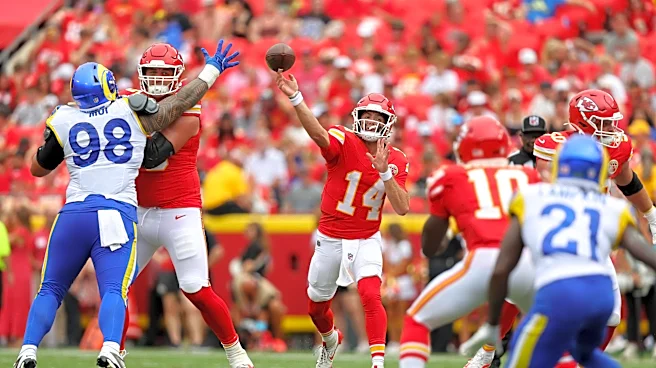
For the foreseeable future, Shea knows he will be working around quarterback Patrick Mahomes’ record-setting new contract. In June, Mahomes and the Chiefs agreed to an extension that will pay him over a half billion dollars through 2033.
The eye-popping numbers come with the territory of having the league’s best quarterback. The contract already being in place will also help the front office plan future moves.
“I think as Clark and Coach and Brett alluded to when we did the contract extension in June,” Shea explained, “he’s an elite player and an even better person. We were delighted to be able to, once again, extend him here, and we have a special relationship with him. Obviously, he is the highest-paid player in the league. He’s earned that, and we have a plan to manage around it. The fact that we have certainty around the quarterback allows us to plan how to allocate the rest of our resources in a way that gives us a lot of stability and ability to predict how we can move in the future.”
The Chiefs opened the season with a surprising contract structure for veteran tight end Travis Kelce. Kelce will make about $13.4 million in his 14th — and expected final — season. The bulk of that will come from a $10.7 million signing bonus, likely split between the 2027 and 2028 salary caps.
Kelce will play with a 2027 cap number of under $5 million. However, he will likely leave behind dead money charges of about $3.6 million in each of the next two seasons.

While teams like the Philadelphia Eagles have made similar contract structures almost routine in personnel signings, expect the Chiefs to treat Kelce’s effective void years as a unique situation to accommodate a franchise great.
“Different teams have different philosophies about how to structure contracts,” Shea added, “and generally we’ve been a team that has pretty simple, straightforward deals. In Travis’s case — with him wanting to come back and we’re delighted that he did — we used some tools that are in the toolbox that maybe we don’t dust off very often to be able to spread his cap hits over multiple years. And Clark Hunt was allowing us to do that in this special instance with his special legacy and role on the team. Any time that you spread cap hits out into the future years, you’re kind of borrowing [like] using a credit card. So, we don’t do a lot of that, but, with Travis [and] with him wanting to come back, we used some things that we wouldn’t normally otherwise think about.”