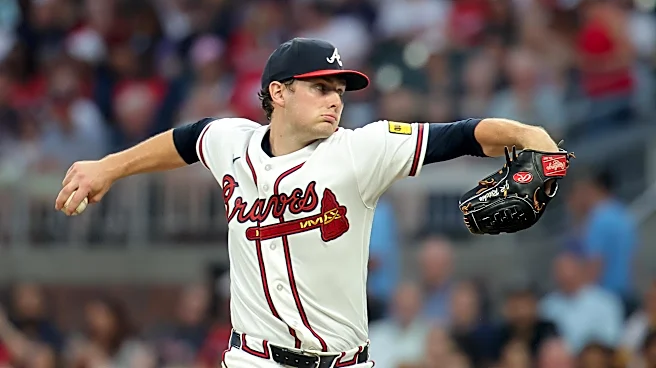

There was some hope that JR Ritchie
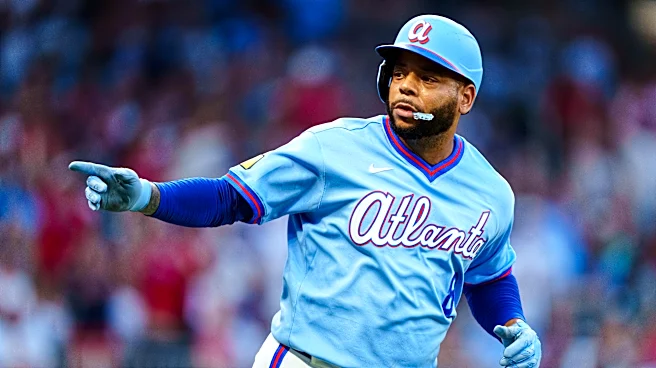
could serve as a key member of the rotation for the Atlanta Braves this season. While many thought the rotation was going to be a problem area for the Braves, it turned out that the Braves did okay in that regard. Unfortunately, JR Ritchie didn’t really have much to do with that, as he largely struggled across 17 appearances (11 starts), with the team going 7-10 in those games.How Acquired
JR Ritchie a homegrown prospect, drafted thirty-fifth overall in the 2022 draft. (He’s
from Bainbridge Island, Washington, but development-wise, he’s Braves all the way.) He spent parts of five seasons in the minors before he made his MLB debut in April this year. He peaked as the 84th ranked prospect by Baseball America and 69th by FanGraphs.
What were the expectations?
Ritchie was somewhere around a 45-50 FV in the run-up to the season, and had pitched well before hitting Triple-A in 2025, though he stumbled a bit at the highest level of the minors. After a poor first start in Triple-A in 2026, Ritchie reeled off a dominant four-start stretch where it looked like he had nothing left to learn at Gwinnett, leading to his promotion.
Even before all that, though, Ritchie was getting the standard prospect projection of a fourth starter (somewhere between 1.5 and 2.0 WAR on a rate basis). As with every pitcher getting similar projections (which is most prospect pitchers), it was up to Ritchie to prove he could do better (or worse) than that.
2026 Results
Unfortunately for Ritchie and the Braves, he mostly proved the latter. At the top line, Ritchie made 11 starts and six relief appearances, earning -0.3 fWAR with a 117 ERA-, 134 FIP-, and 112 xFIP-. His value was depressed by a high HR/FB (above 18 percent), but even without that, he pitched like a not particularly effective fifth starter.
Ritchie’s season was one of repeated chances and not doing much with them. His first rotation stint was five starts, in which things were a mixed bag at best. After another month in the minors, he then became one of the Braves’ yo-yo guys, making three starts and six relief appearances across four different call-ups in the span of about two months. The performance wasn’t much better. He made three starts to close out the season, and to the extent he had improved at all over the course of the year, it was hard to tell because teams blasted him for four homers in 15 1/3 innings in those final appearances.
Ritchie was not rostered for the Wild Card round; he made the NLDS roster, but did not appear.
What went right?
It’s not that Ritchie didn’t have success. It’s just that that success was limited to individual outings.
His MLB debut was exciting, as he went seven frames with a 7/2 K/BB ratio against a high-powered Nationals offense, giving up two solo homers in what was a very close game until the Braves pulled away before his final inning of work. It wasn’t entirely downhill from there, but his poor performances did dampen the excitement a bit. Still, plenty of stuff went right, just… intermittently.
For example, he had a couple of successful relief appearances against the Mets, totaling eight innings with a 9/3 K/BB ratio. He also had a nice innings-eating stint relief appearance against the Cardinals where he pitched 4 1/3 innings in a close game and was charged with a single run with a 2/2 K/BB ratio — it was his highest WPA game over the year and set up the Braves prevailing by scoring a run in the top of the ninth. He followed that up with a crisp one-inning relief appearance against the Rangers, giving some credence to the idea that he could be an effective relief pitcher. (It didn’t really last, though, as his xFIP was only slightly better as a reliever, though he did allow way fewer homers in shorter stints.) He also had one nice start against the Reds as the Braves ran down the clock on the season, with an 8/3 K/BB ratio — but this too was marred by a homer, as well as the fact that his other two starts around this one were horrible.
All in all, across his 17 appearances, Ritchie had five (two starts and three relief appearances) with an FIP- of 80 or lower, and four (two starts and two relief appearances) with an xFIP- of 80 or below. So, it wasn’t entirely hopeless… just mostly a bummer.
Pitch-wise, his curve was effective with an xwOBA-against under .300 and a whiff rate of nearly 30 percent. Its success wasn’t surprising, as it has many of the makings of a great pitch: he throws it harder than a normal curve, but is able to keep a reasonable depth on it while also adding some horizontal break, giving it two-plane movement of the sort batters don’t tend to expect, while mirroring its spin against his other offerings.
What went wrong?
At the top line, none of his results or metrics suggested any degree of effectiveness, which means he had a bunch of problematic outings. Even his xERA was really bad, which suggests a lack of contact management beyond problems in the “traditional” pitching assessments. He struck out fewer batters than league average, had an egregiously high walk rate (especially considering his lack of strikeouts), suffered from harder-than-average contact, and made it easy for batters to pull the ball in the air. Really, he pretty much struggled across the board in terms of his pitching approach: he didn’t pound the zone, he didn’t get whiffs in the zone, he didn’t get chase, he didn’t put pitches on the corner, he didn’t get ahead with strike one, and he didn’t avoid meatballs.
On a game level, he was a disaster for the team’s win expectancy in six of his 11 starts. The worst was him getting shelled for three homers in two innings against the Giants: the Braves were down 5-0 after he faced 11 batters, and lost 7-5. But, he also struggled at times in relief, like an outing where he had a 1/2 K/BB ratio while on the mound for four outs with a slim lead against the Pirates, though the Braves gutted that one out. And, it’s not like all of this meant he didn’t just get BABIPed among shoddy pitching in other outings, like his start in September against the Cubs (5/2 K/BB ratio but two homers and six runs charged in 4 2/3 innings) or his final start of his first stint against the Marlins, where he had a 5/3 K/BB ratio and didn’t get tagged for a homer, but got BABIPed for six runs charged anyway. And then there was the outing where he put together a pathetic 2/6 K/BB ratio against the Mariners in Seattle, which was one of those “Braves decided to stop managing aggressively” disasters that stuck with them through the season.
If you look at his actual pitch metrics, the high degree of struggle wasn’t surprising. Ritchie lacked command of any of his pitches, working more like a junkballer attempting to get by on the element of surprise. Unfortunately, the lack of command meant that many of his pitches missed badly in the zone where they were hittable (especially his curve and four-seamer), while he also had a tendency for bad, nowhere-near misses with those pitches and his changeup. On top of that, only his curve had good shape — the natural sink on his four-seamer made it somewhat problematic that he tried to execute it at the top of the zone; meanwhile, his sinker, which he threw more than his four-seamer, had a lot of drop but was thrown “high” and ended up letter high way too often.
There are things to work with in Ritchie’s profile, but the lack of command and the fact that he tries to go fastball up, changeup down when all of those pitches have a downward movement profile is a disaster. He needs to clean up his mechanics to allow his curve to eviscerate hitters, but in concert with that, he needs to actually have a pitching plan that takes advantage of his pitch shape, instead of working against it.
2027 Outlook
JR Ritchie was a rookie in 2026 and unless something drastic happens, he is still in the plans to develop into a starter for the Braves for now and the future. Odds are that the Front Office has not given up on him and depending on which players the Braves acquire in the offseason, we could see him in both the rotation and the bullpen at the MLB level in 2027. It may not be the most exciting news based on his 2026 results, but the odds lean that way for the moment.
Given that his types of struggles aren’t unusual for rookie arms, Ritchie’s projections haven’t taken a big hit. Steamer’s early release has him as an 0.8 WAR guy in 99 innings as a swingman, which is still in that fourth starter tier. Once again, it’s up to Ritchie to prove he can do better… and avoid doing the opposite, like he did in 2026.