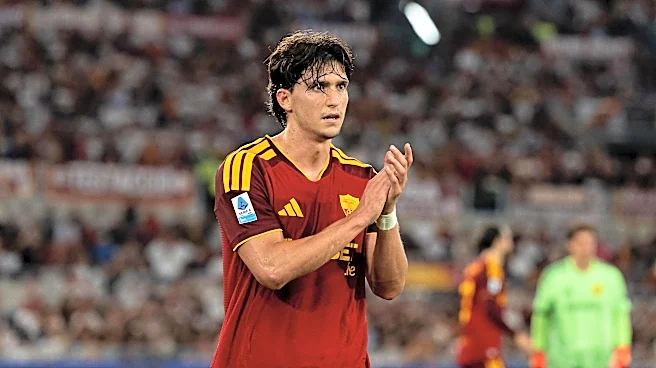


Last season was billed as a transition year under Gian Piero Gasperini, a time to adjust to a new style of play and new expectations. But a funny thing happened on the way to the Forum: Roma exceeded expectations. While they lacked the sizzle of Gasperini’s Atalanta sides, the Giallorossi found their stride in the spring, pairing Donyell Malen’s incredible scoring touch with a stout defense to lift the capital club to third place, erasing their Champions League drought in the process.
Roma’s cupboard
was hardly bare, but there was a notable vacancy on the left wing, a potent and pacy complement to Malen and Paulo Dybala in attack. While Sporting Director Tony D’Amico tried his best to land this white whale, he was left frustrated by the exorbitant demands of a transfer market where even a modest winger starts at €40 million.
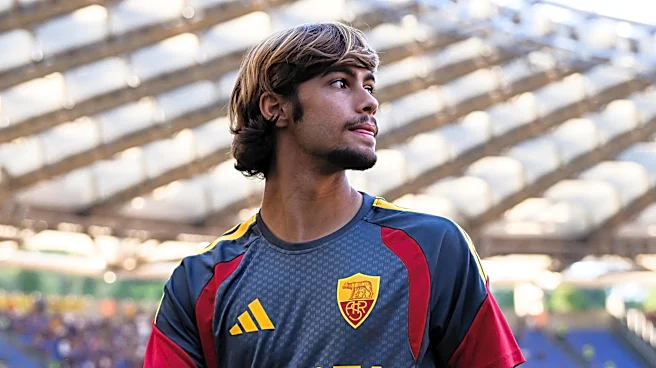
However, rather than dwelling on missed opportunities, D’Amico and the Giallorossi took a different route. Instead of signing Gasperini’s fourth- or fifth-choice winger, Roma took a wild left turn, signing Rodrigo Mora, who was neither a winger nor particularly cheap. A 19-year-old attacking midfielder who could potentially cost the club a record €52 million (but only €25 to €27 million up front), Mora’s signing marked a shift in approach for the club, on the pitch and on the balance sheets.
While the final price tag may be a tad high and the short-term fit a bit awkward, Mora’s potential was simply too great to ignore. The Portuguese wonderkid will soon be front and center in Rome, but how is the club’s #86 settling into life in Serie A?
Key Stats & Current Role
Rather than easing him into the swing of things, Gasperini threw the mop-topped Mora right into the fray, starting him in week one against Fiorentina. While he didn’t factor into the scoreline, Mora’s first taste of Serie A was certainly encouraging. Supporting Malen and starting alongside Dybala in a 3-4-2-1, Mora showed little hesitation, reeling off two shots and chipping in one key pass despite taking only 24 touches.
While that 54-minute run remains Mora’s high-water mark, he’s settled into a job-share role with Matías Soulé, frequently swapping spots on the pitch/bench with his 23-year-old counterpart. Whether he starts or comes off the bench, Mora’s primary function is to mirror Dybala’s role on the right: serve as the primary facilitator and secondary attacker in the left half-spaces, pressuring the defense between the lines rather than out wide.
It’s still early days, of course, but we’ve already seen glimpses of Mora’s potential as a force multiplier in Gasperini’s attack, working the half-spaces, driving at the defense, and combining with Malen and Dybala to create chances in the final third. He has also pushed up next to Malen and operated as a second striker, while his off-the-ball movement has created lanes for the wing-backs to charge forward.
This is a more passive role than he’ll likely assume in the future, but for now, he provides Gasperini optionality in attack.
What to Expect This Season
In two or three years, Roma may very well become Mora’s team, but for now, the teenage sensation remains a piece of the puzzle; an intriguing one, to be sure, but still a complementary part. After featuring in the first five matches of the season, Mora remained on the bench for Roma’s top-of-the-table clash against Inter Milan before the break, hinting that he may not quite be ready for prime time.
However, if the first month of the season is any indication, Mora should remain in the attacking midfield rotation alongside Dybala and Soulé. Whether he starts from the jump or comes off the bench, Mora should be in line for roughly 25 to 30 appearances this season. It’s too soon to speculate on his final numbers, but as the third option in attack behind Malen and Dybala, Mora’s standing in the club should increase as he grows more comfortable with his new surroundings.
Signing Rodrigo Mora didn’t necessarily solve any immediate riddles for Roma, but he promises to be at the center of nearly any decision they make in the future.