

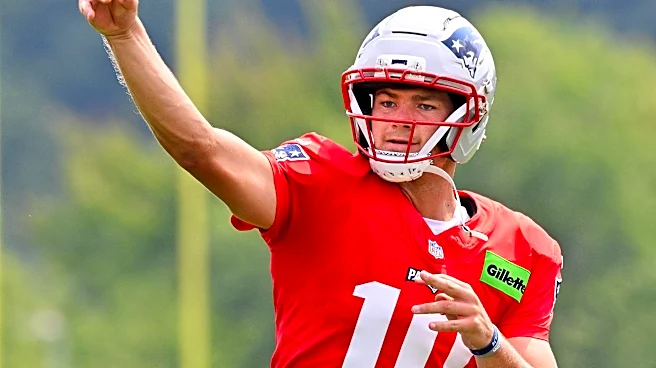
The 2024 season left the New England Patriots in a bleak spot.
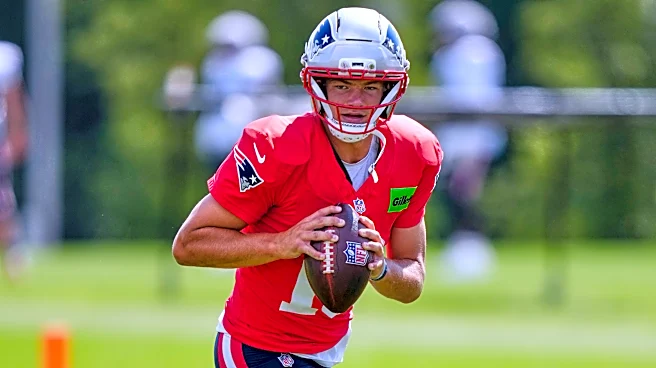
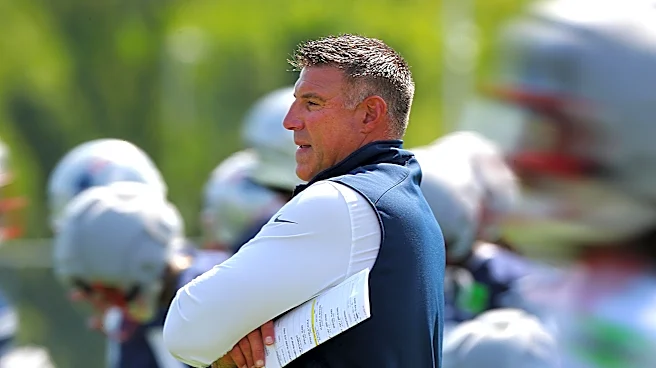
New England finished the season with a 4-13 record and moved on from Jerod Mayo as head coach after just one season. The only factors offering the fan base hope were 2024 third overall pick Drake Maye making a potential leap and new head coach Mike Vrabel building a competitive culture and foundation in year one.
But none of that was guaranteed.
Still, everything seemed to go right for the Patriots. They made the Super Bowl last season as champions
of the AFC, which was a surprise to a majority of NFL fans and media, who had lower expectations.
Maye also became an MVP finalist while Vrabel put together one of the most well-rounded coaching staffs in the league, raising the floor of the team and elevating the franchise’s player development pipeline.
As a result, expectations entering training camp have changed from a year ago.
Eyeing cohesiveness over individual player development
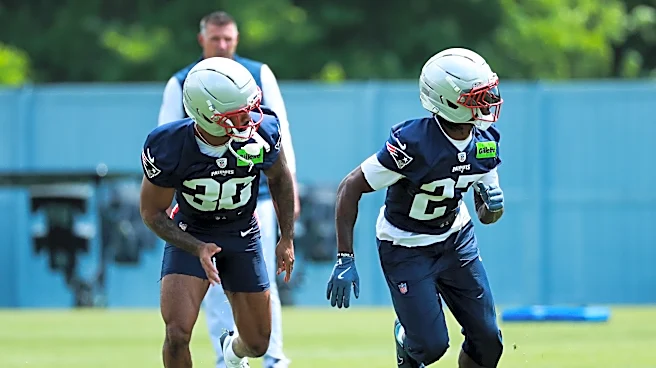
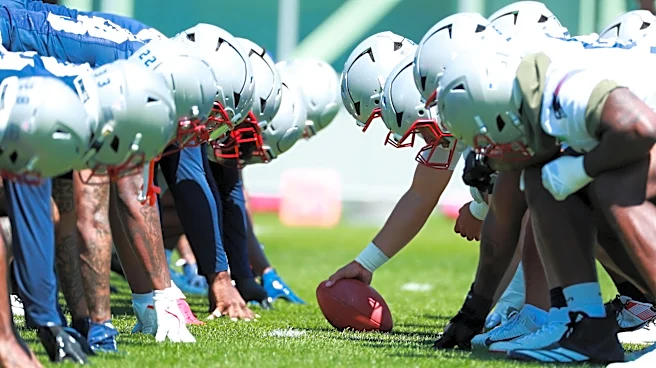
In 2025, Vrabel’s goals for his players heading into the summer sessions were built on creating a foundation: building a team, earning a role and preparing to win.
“We have to start coming together as a football team,” Vrabel said ahead of last summer’s first practice. “The other thing is [the players] have to earn a role, and that’s a great time for them to personally earn a role through training camp, what they can do for the team, how they can help us and how they can help themselves.”
Leading into 2026, however, that approach has changed in Vrabel’s second season with New England, wanting to expand on the team’s season success as starters established themselves.
“The expectations always get higher … Our job is to recreate the things that we did really well last year, the culture, the ability to win different ways, to find ways to win, understand how to win and how to prepare,” Vrabel said before practice on July 25. “We’re going to have a more difficult journey.”
From an evaluation standpoint, the emphasis last year was centered on tracking the progression of young talent and identifying potential long-term starters. Maye was the focal point, with each practice offering another opportunity to evaluate his development and ability to lead the first-team offense.
But through a championship-level lens, the attention has now shifted to how well each unit orchestrates as a collective group; it’s about how Maye is meshing with the new offensive pieces as they get acclimated to a new scheme.
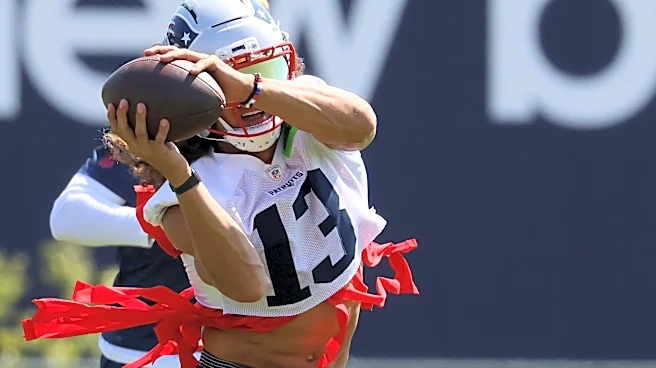
One of the biggest storylines of camp, for instance, is his connection with A.J. Brown, which progressed from an out-of-rhythm start to four completions on Thursday and a 50-yard touchdown the following practice.
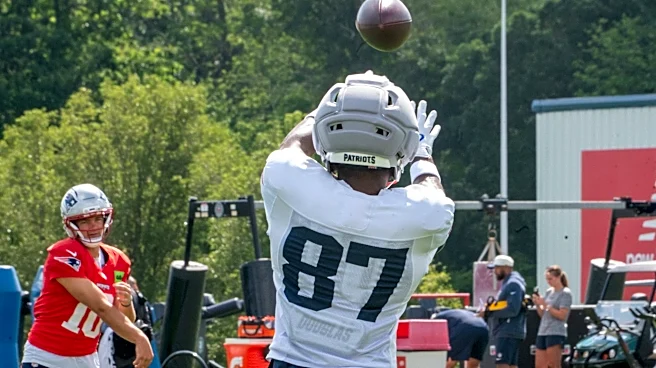
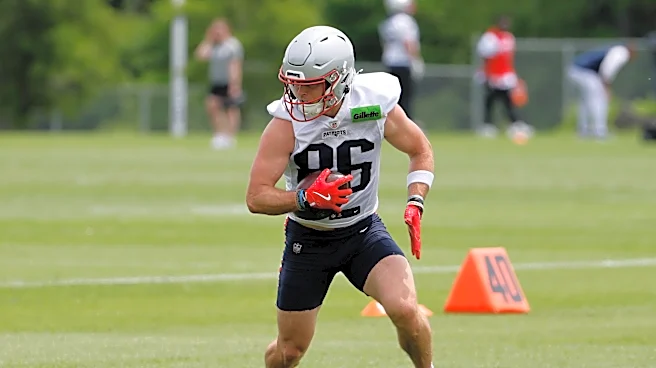
We’re nitpicking the details that could determine whether they can raise banner No. 7, like the tight end room’s needed young talent and Cory Durden’s transition to becoming the starting nose tackle.
Schematic expansion and fine-tuning schemes
En route to building one cohesive group at each unit, part of the change this summer is conducted within the playbooks.
In the spring, quarterbacks coach Ashton Grant mentioned the coaching staff trying to “weaponize” the quarterbacks’ minds. And of course, as the starter, much of that responsibility to improve mental processing falls on Maye.
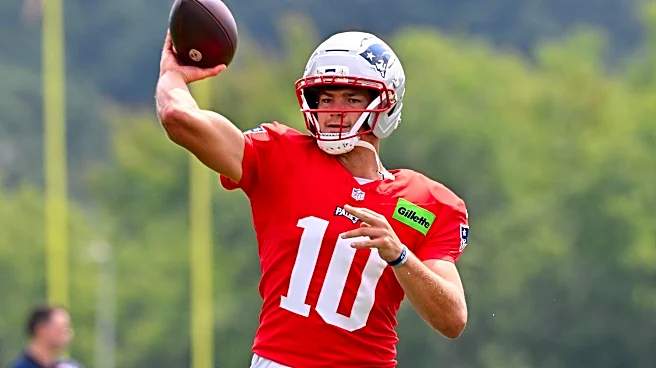
Rather than proving he can lead the offense, training camp is now about determining how much more responsibility Maye can handle making adjustments at the line of scrimmage as offensive coordinator Josh McDaniels expands on his scheme.
The same principle applies to Zak Kuhr’s defense as well. Back in February, Vrabel called for his staff at all three units to bring him “fresh ideas” for 2026.
Both staffs identified over the offseason what worked last year and what didn’t, correspondingly adding pieces throughout the calendar break to fine-tune areas of the roster they felt needed change.
Left guard Alijah Vera-Tucker was signed to bolster the point of attack for both Maye and the ground game. Meanwhile, second-round pick Gabe Jacas and free-agency signing Dre’Mont Jones were brought in on the defensive edge to help turn pressures into sacks — the primary shortcoming of a largely successful defense in 2025.
Veterans sustaining the team culture
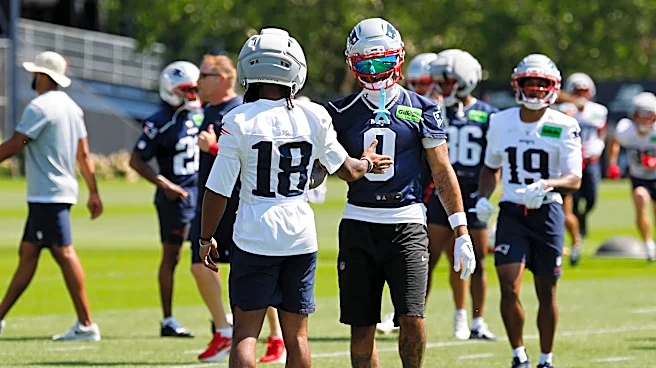
The team culture Vrabel guided his players into cementing last year was a driving variable for why outside talent came to Foxboro in free agency.
“I think it comes down to Vrabel coming in and establishing that culture where everybody has real love for each other, wants to play for each other, and wants to do everything they can on that field,” Vera-Tucker said earlier this offseason. “All those factors came into play in the decision to come here.”
Vrabel overhauled the Patriots’ roster entering 2025, resetting around 50% of the roster he originally inherited from the season prior. Currently, a large majority of 2025’s active roster is intact as the franchise selectively upgraded.
Instead of Vrabel building the culture from scratch, returning players and New England’s veterans are now tasked with establishing that camaraderie with those new additions.