


Shoutout to Texanstros.
This article was their idea. Perhaps the best idea I’ve had during my time with The Dream Shake was to solicit the comments section for article ideas. I’ll be using a few of your suggestions.
Stros (can I call you Stros?) suggested a piece on how badly the Rockets might miss Jalen Green and Dillon Brooks. This is a modified version of that idea. Why? Because this Dream Shaker doesn’t really miss Green:
But he badly misses Brooks.
Rockets (may have?) missed Brooks last year
It’s a bit difficult to make the statistical argument
that the Rockets missed Brooks last year.
In 2024-25, they had a 110.3 Defensive Rating, which was fifth in the NBA. Last season, they were 112.1, which was sixth.
That’s not an entirely inconsequential differential, but it’s not a gulf either. Besides, it’s hard to make the causal link directly to Brooks. His absence was likely a variable (more on that later), but who can say for sure?
Per CleaningTheGlass, each of the Rockets’ top-5 lineups in 2024-25 featured Brooks. That could be something – except four of them featured Jalen Green as well (although, for what it’s worth, the best one did not).
Per databalllr, the Rockets were +4.2 when Brooks was on, and +7.6 when he was off. That’s no help.
Are we sure Brooks even made the Rockets better?
Brooks’ impact was intangible
Brooks is your prototypical “the stats don’t capture his impact” guy.
It’s an issue when you’re routinely tasked with guarding the other team’s best player. The numbers will say you’re not a good defender, because the league’s best players can’t be defended. If Shai Gilgeous-Alexander drops 40 on Brooks, he would have dropped 48 on a lesser man on the same night, and nobody cares.
Which may explain why Amen Thompson’s Defensive Box Plus/Minus (DBPM) dropped from 2.6 in 2024-25 to 1.0 last season. In Brooks’ absence, he was responsible for guarding star players far more often:
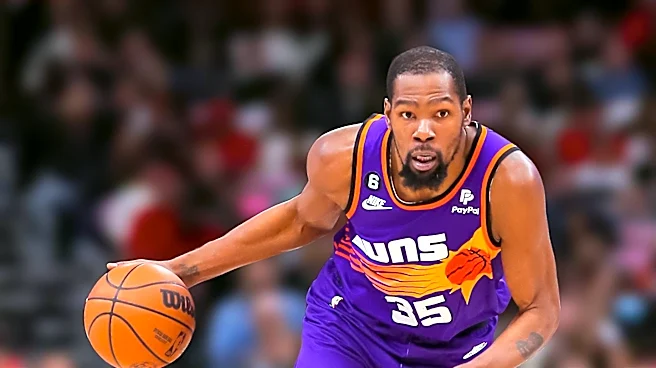
What, you thought Kevin Durant would do it?
When Thompson is guarding the SGAs of the world, he’s less available to play passing lanes and hunt weakside blocks. He’s at his best when he can operate as a free safety. Hopefully, the addition of Marcus Smart will lessen some of his on-ball defensive burden in 2026-27.
That’s just one way that Brooks was an adhesive for this team. After years of watching P.J. Tucker and Trevor Ariza camp out in the corner like they were waiting for Wrestlemania tickets, it was almost jarring to watch Brooks’ forray into shot creation. Yet, that multiplicity of skills was part of his value. Brooks’ ability to function as a “break in case of emergency” bucket getter had extra value when he was such a strong three-and-D wing otherwise.
Finally, there’s the “je ne sais quoi”. In 2024-25, Brooks, Ime Udoka, and Fred VanVleet were a three-headed monster. VanVleet actualized Udoka’s vision of low-risk, low-reward offense that only works (?) if you defend harder and play meaner than everyone else. Brooks actualized the defending harder and playing meaner part.
Again, there’s hope that Smart can fill that void. It should be noted that Brooks has changed since leaving Houston. During his last season with the Rockets, he averaged 14.0 points per game while shooting 39.7% from three-point land. Last year with the Suns, he hit a career-high 20.2 points per game, but the shooting slipped to 34.4%. He just signed an extension with a $24.3 million Average Annual Value (AAV), which is probably too much money for Dillon Brooks.
The Rockets miss the old Dillon Brooks, straight from the go Dillon Brooks, etc.
Unless you think he’s a viable 20-a-night guy. From this vantage point, that looks like something a team whose first-round picks it would be nice to own in 2027 and 2029. Perhaps Brooks is still helping the Rockets, along with Green.
But as a 14-point scorer, three-and-D, occasional creator, spiritual leader? Brooks was worth his weight in gold:
No matter what the numbers say.