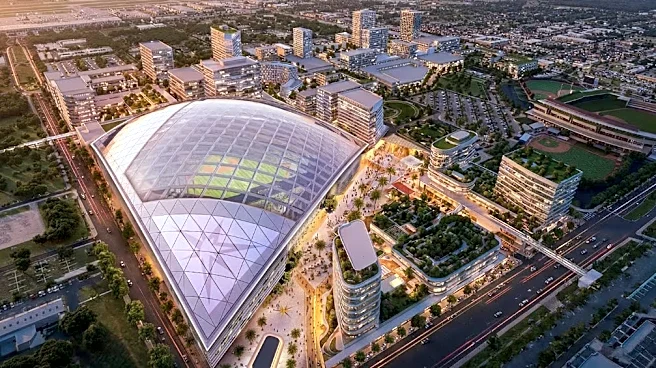







Yesterday evening the Ken Babby, Rays CEO, presented the Rays stadium/entertainment district plans at a Tampa City Council workshop. Workshops, you may recall from earlier reporting on the Hillsborough County Commission, are not decision-making sessions; no votes are taken. They are opportunities for elected officials, who thanks to Sunshine Laws can only meet in public, to gather information on a complex topic.
The Rays financial ask of the city is only much less than that from the county (approx.
$750M to $250M), but the city has a smaller budget and fewer available revenue sources, so the significance of the the city’s contribution is still significant. Of the revenue sources under discussion for the public contribution, both the Community Investment Tax (CIT) and the Drew Park Community Redevelopment Area funding (CRA) are partly or largely under the city’s control.
Yesterday the Council heard from Ken Babby, from City of Tampa staff, from other so-called “stakeholders” — groups that might have some involvement in planning and building the stadium area. These included the state transportation department (FDOT), the police and fire fighters’ unions, and Hillsborough College, whose president spoke at length about the benefits (internships, partnerships, campus improvements) he anticipated as a partner in the Rays redevelopment plans.
I’m not going to try to cover the entire meeting here — For a more comprehensive overview of the workshop, you can read the Tampa Bay Times coverage — rather, I think it’s fitting to highlight a few points that arose largely through the questions from council members. Accordingly, I’ll highlight the five points that are the most significant and yet unresolved problem areas.
- Money money money. Babby noted that their $2.3 billion estimated stadium construction cost was consistent with recent stadium developments around the country. The final cost could indeed be higher — but, he said, the city need not worry about that because the Rays’ current plan is to cover all cost overruns. In a few instances council members asked for more detail, but in nearly every case Babby responded that these details had yet to be negotiated.
- Opportunity Costs. Members of the council seemed, for good reason, to be concerned about whether commitments they might make with CRA or CIT funds would impact other items on their priority investment lists. Babby noted that one of the key principles underlying negotiations is that neither city nor state would be asked to put up funds that would impact first responders (i.e. police, fire), but to my mind that hardly answers the question. For the most part the funds at issue can’t be used for services, they are intended for capital and infrastructure improvements. Fire and police services are important but they are already, comparatively speaking, very well funded, whereas transportation, parks, schools, and social services fight over the crumbs. It’s still not clear what the opportunity costs are if the city uses CIT and CRA money for the stadium, e.g. what priority city projects would NOT be funded as stadium needs crowd out other spending?
- Risk Management. Members were also concerned, for good reason, about risk. The way the project is conceived is that the city would borrow money and give that upfront to the Rays for construction costs. They would pay off the bonds from the revenues that come in from the CIT (which is a sales tax) and the CRA (which is a property tax). But what happens if for some reason the collections on those taxes fall below expectations? Would the city then have to dip into general funds — which DO fund crucial services – to meet their debt service obligations? In just the last few years we’ve reasons why revenues could fall dramatically — pandemic, hurricane. We can anticipate threats on the horizon that could also impact this project and broader municipal financial health — potential MLB lock out, state threats to reduce local property taxes.
- Community Redevelopment Areas. One thing I found confusing was the discussion about the Drew Park CRA. In a nutshell, CRA’s have special taxing provisions where the difference between property values in the year the CRA was created and property taxes in subsequent years doesn’t go into the city/county general fund, but gets reinvested into the district. The Drew Park CRA has been one of the least productive in Tampa – not much has happened in the area between Raymond James stadium and the airport. Babby was promoting the Rays project as a way to improve the performance of the CRA, since all the newly planned multi-use development near the stadium would pay property taxes that could fund the CRA. But….the plan calls for the city to borrow against a great deal of the anticipated revenue increases in the Drew Park area. So I fail to see how this is a net benefit to anyone but the Rays! And in fact, the city will have to upfront the construction money, while the private sector development that will be taxed is years down the road. So this discussion of the benefits accruing to the wider Drew Park area via the CRA seemed off the mark to me.
- Transportation. A “you have to laugh to keep from crying” moment — Councilmember Lynn Hurtak was the only member who asked about investments in transit because bringing 20,000 people to the same place at the same time only works if you have a transit plan in place. The representative of Florida’s transportation department responded, and his answer talked about widening roads and about having a better drop off point for taxis and ride hailing drivers. He also made the very bizarre claim that the problems with current transit availability was not the service but rather access, e.g. having safe and convenient sites for bus stops. His claim that HART service is currently adequate is clearly a “tell me you have never used the bus without telling me you have never used the bus” moment. Friends, I’ll speak plainly: if this plan does not include smart, robust, convenient bus rapid transit and regular bus service then this plan does not deserve our attention.