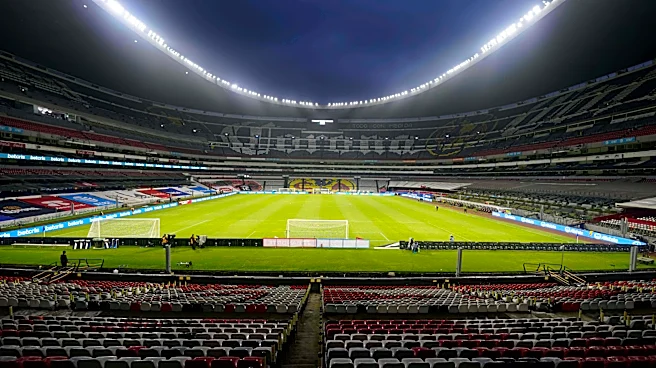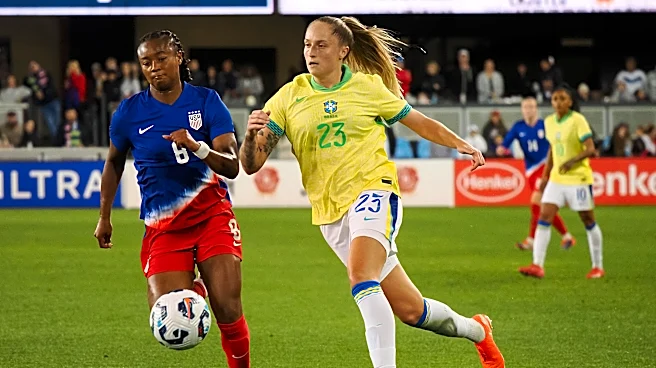







The United States Women’s National Team is back in action as the year continues to build toward the CONCACAF W Championship, which will serve as qualification for the 2027 World Cup. Next on the schedule is a pair of friendlies against Brazil, the nine-time and reigning Copa América champions. Playing on the road in a “difficult environment” should provide a test to Emma Hayes’ squad, in potentially unfamiliar and antagonistic confines. The first match is set for the Arena Corinthians, a 48,905-seat
venue located in São Paulo; Fortaleza’s Arena Castelão – a 57,867-seat facility – hosts the second fixture.
These are the 44th and 45th all-time meetings between the two nations, with the USWNT holding a 34-4-5 advantage but dropping the most recent match (1-2) in 2025. Ranked sixth internationally by FIFA, Brazil is the reigning Copa América champion, claiming the title last summer with a shootout victory over Colombia (4-4 [5-4]). The Seleção (The National Squad), as hosts of the upcoming World Cup, took on an aggressive slate in 2026 that includes a victory over Costa Rica (5-2), defeats to Venezuela (1-2) and Mexico (1-0), and a title at the FIFA Series with wins against South Korea (5-1), Zambia (6-1), and Canada (1-0).
Arthur Elias was appointed to head the program in September of 2023, replacing Pia Sundhage. The 44-year-old Brazilian manager was highly successful with domestic side Corinthians and is “honored” to lead the host nation at the upcoming World Cup, feeling a “responsibility to leave a lasting legacy both on and off the pitch.” He has described his squad as a “fighting team” with “a lot of individual quality and strong connection on the field.”
Elias named a 26-player roster for the pair of friendlies. The domestic Campeonato Brasileiro de Futebol is home to eight of the call-ups, while nine compete in the National Women’s Soccer League, six are on the books of European clubs, and three are with Liga MX sides. Notable absences include Fe Palermo, Bruninha, Jheniffer, Maiara Niehues, Luany, Ana Vitória, and Geyse.
***
GOALKEEPERS (3): Lorena (Kansas City Current), Letícia Izidoro (Corinthians), Kemelli (Fluminense)
DEFENDERS (9): Rafaelle Souza (Orlando Pride), Lauren (Atlético Madrid), Tarciane (Lyon), Thaís Ferreira (Corinthians), Isa Haas (América), Mariza (UANL), Aline Gomes (Pachuca), Isabela Chagas (Paris Saint-Germain), Raíssa Bahia (Palmeiras)
MIDFIELDERS (5): Ary Borges (Angel City FC), Duda Sampaio (Corinthians), Angelina (Orlando Pride), Vitória Yaya (Paris Saint-Germain), Kaylane (Flamengo)
FORWARDS (9): Marta (Orlando Pride), Bia Zaneratto (Palmeiras), Ludmila (San Diego Wave), Kerolin (Manchester City), Gabi Portilho (San Diego Wave), Gio Queiroz (Atlético Madrid), Dudinha (San Diego Wave), Amanda Gutierres (Boston Legacy), Taina Maranhão (Palmeiras)
***
Elias will typically deploy his squad in a 3-4-3 formation but occasionally utilizes the 4-2-3-1 set-up. The “arrows” (wingers) are expected to break behind the opponent’s lines, playing an “aggressive game” that “abuses the speed and the attack” in the “famous Brazilian way.” Despite the desire to push the tempo and play with “high and relentless pressure,” the team possesses the versatility to be methodical and deliberate during the build-up, with a willingness to wait for the right moment before springing forward.

Letícia “Lelê” Izidoro put in a star turn at the FIFA Series with several “key saves” against Canada, looking to make a serious charge at being the number one when her nation hosts the World Cup. The 31-year-old Corinthians goalkeeper is a ready and willing box controller and projects a calm figure when coming off her line to cut down the angle for a stop and stepping into an advanced area for distribution. Despite missing the past few windows, the reigning NWSL Goalkeeper of the Year Lorena should also have a claim, possessing an impressive six-foot frame that enables her to span the frame. She is quick to chase the ball and can easily dominate in the aerial game while also displaying deft footwork and a surprising agility when getting to the ground for shots.
Isa Haas has emerged as one of the most regular and reliable figures on the back line with an imposing frame and the physical nature to match, bodying opponents and seeking out contact. The 25-year-old América centre-back can also take charge during the possession build-up with a keen vision and the ability to spring the transition with her long distribution to both wings. Corinthians’ Thaís has the versatility for the inside and the outside, providing “good handling on the ball, a clean start from the defensive zone, and a precise hit” as well as an “expeditious and forceful nature.” She is strong in the air with “good technique and speed,” having picked up experience at various clubs, including a brief stint in Spain, and brings a veteran presence to the squad. Tarciane of Lyon covers large swaths of ground with her six-foot stride and clogs the box with her heading and reaching tackles, whether galloping into nature or poking the ball away. Total Football Analysis praises her “speed, strength, and length” that makes her a dominant presence in the one-on-one along with mastering coverage and exhibiting “excellent recovery speed.” Mariza went abroad for the first time in her career, joining Tigres UANL in January, taking her excellent range of passing and intuitive read on the play to Mexico. Her feel for the game is on display when stepping away from pressure with a smart touch or making a crucial interception before the attacker has the chance to react. Lauren has been a high flyer for Atlético Madrid and leads the pass-heavy style at all ranges while also being a hardy battler in duels and eager to push into the final third. The Votorantinense is a “rock” and showcases “leadership abilities, skill, and maturity,” with a penchant for finding herself in the right place at the right time to steer home a goal.
Isabela Chagas of Paris Saint-Germain is an older part of Brazil’s youth movement, having made her senior international debut in 2025 and adding dynamism and an active presence in the build-up. The defender sometimes known as Belinha is similarly quick to step into the attack, wields a creative influence, and makes a living at the back post by racing onto through balls or rising into the air for headers. Pachuca’s Aline Gomes covers the full length of the field and operates on the front foot, often lining up as a winger at the club level, which sees her leading the counter-attack. She can still make an impact in the one-on-one and pressing game by making smart choices but is mostly relied upon for her tenacious progressions and early distribution. Raíssa Bahia of Palmeiras is fresh on the scene and joined the squad for the first time in April, providing an assist in the 5-1 victory over South Korea and a goal in the 6-1 win against Zambia. The 22-year-old fullback can also deploy in the midfield and charges into the final third with intent, capable of hitting shots at difficult angles or stepping into a creative role.
New Jersey-born Angelina prowls the area in front of the back line and assumes all inherent responsibilities, from stopping inroads to swarming lanes for interceptions, and jump-starting possession whilst under pressure. Capable in the air despite standing at five feet, three inches tall, her long-range distribution tends to go out to the wings after reclaiming possession, whether swinging to the fullback or hitting a winger in transition. Duda Sampaio has enjoyed a long affiliation with the manager beginning in the club ranks and can pull the strings with long-range distribution and quick connections with her teammates. The 25-year-old Corinthians midfielder is always looking to play a vertical game and spring the counter and covers the width of the pitch, making herself constantly available to receive and alleviate pressure. Angel City FC’s Ary Borges is a “dynamic and creative” box-to-box presence who “always wants the ball and to control games while also being relentless in defending and not giving her opponents a rest.” She is a reliable source of highlight-reel moves and finishes with a perspicacious read of the play and the ambition to attempt utterly audacious touches and attempts, even if just executing a hitherto unthinkable layoff. Kerolin of Manchester City is one of the chief scoring options, with her contributions frequently coming off the bench, as long solo runs taking advantage of tired legs. The Bauruense typically plays off the striker with quick combinations and angled distribution after drawing multiple markers, but her composed finishing is also enough to trouble goalkeepers. Beatriz “Bia” Zaneratto is back with Palmeiras following a stretch with the Kansas City Current, sometimes lining up as a forward and darting through the half-spaces or pouncing on opportunities in the box. Her field vision and ability to contribute from deeper areas has seen her occasionally pushed back in the formation, but her five-foot-nine size and desire to progress places her around the goal.
Taina Maranhão is one of the squad’s top young players, made her senior international debut in 2025, and already has three goals for Brazil in 2026, owning the outside with a plethora of fluidity and tricky moves. The manager praises her speed and work without the ball along with the abilities to “generate problems for the opponent, make goals, give assistance, [retain possession], lose very few balls, and help a lot in marking.” Dudinha contributed five finishes for Brazil in 2025 and was one of the top newcomers in the NWSL after joining in July, absorbing contact and rampaging through lines with endless cuts. The 20-year-old San Diego Wave attacker is “technical, pacy, diligent, and daring” with the ability to play either “the protagonist or a supporting role,” thriving in holistic team set-ups. Gabi Portilho plays a very high line and can pull the ball out of the air with the most delicate of settles before driving toward the net, oftentimes lining up ahead of the striker. In addition to her defensive work, the Brasiliense is incredibly useful when operating on the counter, driving into the space behind the back line and taking early shots, including a delightful looping chip.
Ludmila is more productive at the club level than as an international, but her “versatility, creativity, and movement” enable her to “break down defenses” and find the empty pockets of space. The 31-year-old San Diego Wave forward can set up her own shot with tight dribbles around challenges, knock in service with minimal touches, or surpass parked buses with long-range shots. Atlético Madrid’s Gio Queiroz can be difficult to stop after building up a full head of steam, with aggressive pressure to force turnovers, charging runs, and excellent vision for last-second layoffs. The former United States youth international has already passed through several European clubs and constantly rebuilt her confidence through a series of injuries, displaying the necessary speed and athleticism to terrorize opponents. Amanda Gutierres of Boston Legacy had a massive 2025 for Brazil as the top scorer at the Copa América, operating as a fox in the box with intelligent interpretation of space and a lethality in a single touch. Her headers are utterly sublime, with supreme body control and solid tracking that enables her to redirect into the net nearly anything served up by her teammates.
Due to a shallower pool of elite programs, the USWNT will often compete against the same opponent multiple times in a window. Even when favored, this will often lead to somewhat unexpected results, as consecutive victories can be a challenge when lineups shift and new tactics get tested. Two wins should be expected, but a loss or a draw would be far from a surprise.
The first match is scheduled for Saturday, June 6 at 5:30 p.m. Eastern, 2:30 p.m. Pacific. Viewing options include TBS, HBO Max, Telemundo, Universo, Peacock, and FuboTV (free trial).
The second match is scheduled for Tuesday, June 9 at 8:30 p.m. Eastern, 5:30 p.m. Pacific. Viewing options include TNT, HBO Max, Peacock, and FuboTV (free trial).