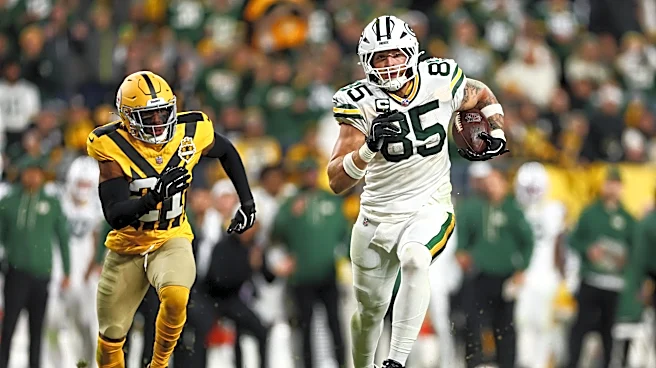



We’ve made it to July, the last month before football finally returns to the field and our televisions. The Steelers are set to report to Latrobe in just over three weeks, on July 28, with the first open practice the following day. In just 42 days, they’ll suit up for their first preseason action on August 13, when Pittsburgh will play host to the Green Bay Packers.
In many ways, it’s an appropriate start to this new era of Steelers football. Both the Black and Gold’s quarterback and new head coach
are likely to be remembered most for their time in Green Bay, and, at least for the 2026 season, both will be trying to recapture some of the magic they once shared there. Sure, Rodgers isn’t likely to play much, if at all, and McCarthy won’t be showing too many of the offense’s cards in a preseason tilt, but it will be our first look at a team that has, at least on paper, undergone its biggest change in nearly two decades.
The defense still might determine the team’s competitive floor — even with its own set of expected updates under this new staff — but how far this team can go will hang on McCarthy’s ability to get more out of what has been a middling offense at best over the past five seasons.
There was a mixed reaction to the initial announcement of McCarthy’s hire. On the one hand, McCarthy provides a lot of experience with 18 NFL seasons as a head coach on his resume, and his offenses have typically ranked well. While he can’t boast that he’s never had a losing season like his predecessor, McCarthy has 12 seasons with a winning record, a playoff appearance in each of those seasons, and did win a Super Bowl, as Steelers fans will remember all too well.
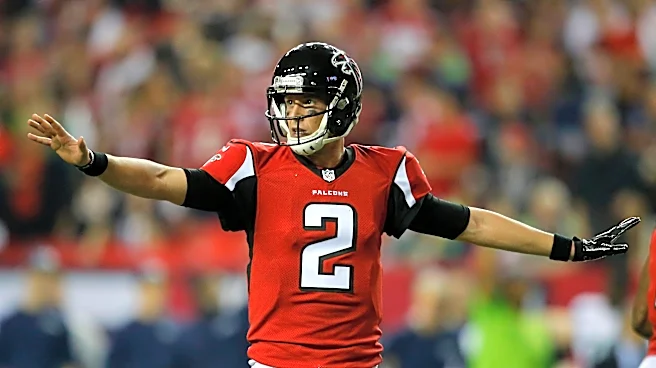
On the other hand, McCarthy will be the third-oldest active coach in the NFL this season. Should he complete his full contract, he’ll be as old then as Andy Reid is now. And while his offenses continue to perform well statistically, it’s been a long time since any of his teams made noise in the playoffs. The last time a McCarthy team made it out of the Wild Card round was 2022, when his Cowboys lost in the divisional round. McCarthy missed the playoffs during his final two years with the Packers, as well as his first and final seasons with the Cowboys. The last time a McCarthy team appeared in a conference championship game was during the 2016 season, when they lost 44-21 to a Falcons team that would infamously blow a 28-3 lead in the Super Bowl.
How you feel about McCarthy’s hire is its own Rorschach test. I find myself going back and forth between optimism and pessimism about the move. I have doubts about the Steelers ever winning it all with McCarthy, but if he can turn this offense around — especially if they can find and develop a young quarterback in the next handful of seasons — I do think there is an opportunity that when he passes the torch, he could leave the team better off than how he found it.
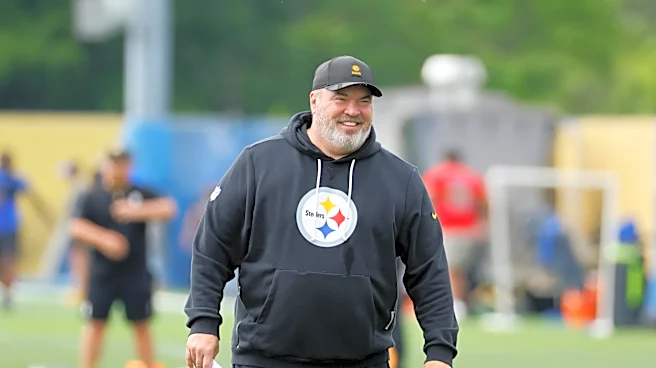
All this leads me to the purpose of this article and this series. McCarthy’s hire was sold to the fanbase primarily on the basis of McCarthy’s offensive prowess. But what exactly is the Mike McCarthy offense?
To get a full understanding, we’ll need to break it down into more digestible chunks. What this series will aim to do over the coming days and weeks is to look at McCarthy’s two most recent seasons to get an idea of where his offense might be now. We’ll look at two seasons because the Cowboys’ 2024 season was plagued by injuries, and starting quarterback Dak Prescott only played in the first eight games of that year. Since the Cooper Rush and Trey Lance-led offenses will obviously present a less-than-optimal read on McCarthy as a playcaller, we’ll also look at the 2023 Cowboys, who ranked first in the NFL in scoring. In those upcoming articles, we’ll look at the film and try to identify concepts and themes we might expect from a McCarthy offense this season.
But today, let’s parse over some data.
McCarthy by the numbers

Before we dive too deep in, I’ll point out again that the numbers we’re about to examine only tell part of the story. They give an overview of the results without explaining what led to them. Explaining the “how” will be what my charting and analysis in upcoming articles will aim to uncover. Today we’ll be looking at the raw output and try to make some sense of the numbers.
While our next article will dive into the specifics of McCarthy’s offense and what it has evolved from, for our purposes today, it will be helpful to know that he is a West Coast offense disciple. To the uninitiated, that means a lot of passing, mostly with short, timing-based concepts that simplify reads for the quarterback and put the burden of creating explosive plays onto the pass catchers’ ability to create yards after the catch. McCarthy’s offense isn’t a pure West Coast scheme — in reality, modern offenses are all hybrids that pull from a variety of sources — but its influence informs a lot of his philosophy.
For the most part, McCarthy has been wildly successful with his version of this offense. Here are some of the numbers that best represent his NFL journey.
18 & 288
The number of seasons and regular season games McCarthy has been a head coach in his career.
26.2
McCarthy’s average points per game. In his career, McCarthy-led offenses have finished top 10 in scoring 12 times, in the top five 10 times, and as the number one scoring offense on four separate occasions, most recently in 2023. They also very rarely bottom out, only falling out of the top half of the league four times, with his first season as a head coach representing the worst his offense has ever ranked in scoring (22nd).
253 and 112
McCarthy offenses’ average yards passing and rushing per game. Coaching prime Rodgers and 2023 Prescott do a lot to raise those numbers, but they still bode as a good sign for Pittsburgh. While much of the passing output will still rely on a Rodgers-powered passing attack that managed just 198.2 yards per game a year ago, there should be optimism that the combination of McCarthy’s playcalling and an improved collection of pass catchers can raise that figure. If passing numbers continue to trend down across the league, the Steelers should hopefully manage to improve past 2025’s league average (209.7 YPG).
McCarthy’s rushing attack, meanwhile, has received criticism for lacking creativity at times over the years, and his career average is below the NFL average in 2025 (116.9 YPG), his average still comes out ahead of what the Steelers managed last season under Arthur Smith (103.2). Smith and the Steelers managed more in 2024 (127.4 YPG), but that was buoyed by a pair of quarterbacks prone to scrambling in Justin Fields and Russell Wilson. Still, when McCarthy has had quality running backs paired with a quality offensive line, he’s found results. McCarthy offenses have eclipsed 2,000 yards rushing three times in his career, with two of those seasons coming during his time in Dallas. The Cowboys’ offensive line was still considered among the league’s best in 2021 and 2022, but those being the years McCarthy’s team eclipsed the 2,000-yard mark is more impressive when you consider Ezekiel Elliott was beginning the downswing of his career. With Pittsburgh’s offensive line seemingly on an upward trajectory, and Jaylen Waddle and Rico Dowdle arguably forming a comparable duo to Tony Pollard and late-stage Elliott, there’s a decent shot the Steelers can best McCarthy’s career average this season.
64.8
The average number of offensive plays McCarthy teams run per game. For comparison, the 2025 Steelers averaged 58.1 plays a game. The Steelers have attempted to focus on ball control and time of possession over the past several years, to mixed results. While taking more time and running the ball theoretically reduces the amount of time your opponent has the ball, that backfires when your offense is unable to sustain drives. Generally speaking, running more plays tends to correlate with your offense getting more chances to score points. McCarthy’s 2021 Cowboys team accomplished the second-highest average of plays run per game (67.8) in his career, and led the league in scoring with the second-highest points total (530) of any of his teams. His highest scoring team, the 2011 Packers, however, averaged fewer plays (61.7) but topped the 2021 Cowboys by roughly four touchdowns (560), depending on how you execute the extra points.
28.8 & 27.3
McCarthy offenses’ average time in seconds between plays with Aaron Rodgers as quarterback, all other quarterbacks. For comparison, the Steelers averaged 29.4 seconds in 2025 (their first with Rodgers) and 29.2 seconds in the four seasons since Ben Roethlisberger retired. As we alluded to with the previous stat, the Steelers have played a relatively sluggish brand of football in recent years. While the difference of a few fractions of a second doesn’t seem like much on the surface, tempo will impact the number of plays an offense runs over the course of a season. Marrying these two stats together helps give you context, but doesn’t necessarily indicate whether an offense is overall good or bad. McCarthy’s 2020 Cowboys had the quickest tempo (24.5 seconds) of all his teams, but was his sixth-lowest scoring* (395 points, 24.6 PPG). However, the 2010 Packers had his slowest tempo (30.9 seconds) and scored even less (388 points, 24.3 PPG). What does this mean for 2026? Don’t be surprised if the Steelers tempo picks up some and the team is able to run more plays. That said, I expect an even larger leap once Rodgers — known for reading defenses and making adjustments pre-snap — moves on in 2027.
* I’m excluding the 2018 season where McCarthy was fired after 12 games.
48.1%
Successful challenge rate. True, this one isn’t limited to only offense, but after going down this rabbit hole I felt like including it. McCarthy isn’t exactly a coach with a sterling reputation on challenges, but challenges were also a commonly critiqued area of game management for Tomlin. Sure, past outcomes don’t guarantee future results, but it does give us a clear picture. For reference, here is how McCarthy stacks up against some other notable coaches:
- Kyle Shanahan (51.1% success rate)
- Andy Reid (50%)
- Mike McCarthy (48.1%)
- Mike Tomlin (43.6%)
- Bill Belichick (40.4%)
Conclusions
If you’re feeling optimistic about the Steelers offense this year, I certainly get it. At the end of the Roethlisberger era, the Steelers stopped hiring coaches for their abilities and rather for their agreeableness with their aging quarterback. Once Big Ben retired, the Matt Canada years sent the dark ages with an offense that tried to mimic recent trends without any understanding of how they functioned. The Arthur Smith years felt better by comparison, but were still only good enough to be a middling offense. McCarthy, for all his warts, has put good offenses on the field.
If you’re feeling pessimistic, I get that too. Rodgers was not what I would consider an inspiring passer in 2025, and here he is another year older. There are legitimate reasons to doubt that he’ll be able to maximize this offense, regardless of what plays and schemes McCarthy cooks up. The 2026 Steelers don’t have a Dak Prescott, and it’s fair to wonder if DK Metcalf is anywhere close to what Ceedee Lamb was and is for the Cowboys at the height of his powers.
If I had a scale, I’d put my confidence level in the offense improving somewhere around 70% optimistic, 30% pessimistic. I’m greatly encouraged by the development of the offensive line. Adding an offensive line coach with a solid track record like James Campen helps in that regard, and drafting a rookie I was high on in Max Iheanachor only adds to my excitement. The Steelers also rounded out the receiver room by adding a glue-guy type of receiver (Michael Pittman Jr.) and drafted another rookie I thought would be an ideal fit (Germie Bernard). While I still have questions about the ceiling McCarthy can bring to the Steelers, I have few worries about the team’s floor with him, nor his ability to develop young offensive players.
I don’t expect the Steelers to vault into the top 10 offenses in 2026, but adding all those factor together, I do think the offense will be greater than the sum of its parts. With McCarthy’s track record and the additions on offense, I’m comfortable predicting the Steelers to score more than the 22.4 PPG they managed in 2025.
If you enjoyed this article, keep your eyes peeled for the next article where we will discuss some of the fundamentals of the West Coast offense, and McCarthy’s execution of it.
Let us know what you think in the comments. Be sure to bookmark Behind the Steel Curtain for all the latest news, breakdowns, and more!
- Pittsburgh Steelers 2026 53-man roster projection
- One random Steelers play: Missed throws and opportunities
- Trust the Board — Episode 15: Joey Porter Jr. contract talks, AFC West Review, & the Sorsby Saga
- Steelers given shockingly bad grade after big offseason
- Former Steelers RB Najee Harris linked to AFC North rival