
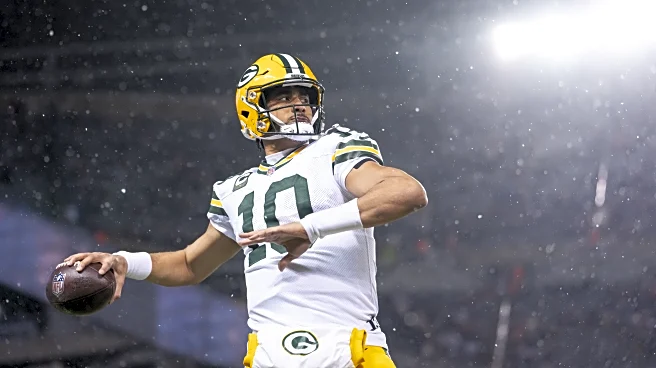
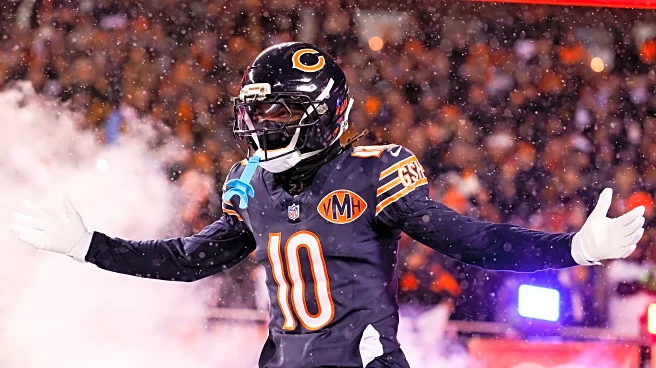
One year after entering the playoffs as the best division in football, the NFC North simultaneously took a step back and also wrote its place in history during the 2025 season. Despite only sending two teams to the playoffs and only one with 10-plus wins, all four teams finished above .500, which is almost unheard of.
Although disappointment was a shared sentiment among three of the four teams, the Chicago Bears were one of two NFL franchises that went from worst to first in 2025. It’s been a long
road back to the top of the division for the Bears. In fact, the last time they won the North was in 2018. Outside of their lone playoff trip since that point, they’ve finished in the basement three straight seasons. The Packers, despite entering the regular season as Super Bowl favorites, struggled in the second half and ended their campaign on a season-high five-game losing streak. Injuries played their part, but so did their lack of poise. The Vikings, who always seem to be in transition, had the worst quarterback play in the division, and it showed. This was supposed to be J.J. McCarthy’s time to shine, but following a highly inconsistent and overall disappointing product, they’re left with more questions than answers heading into the offseason. Finally, the Lions, who lost both coordinators and a handful of assistants, were not able to overcome their losses. Injuries played their part on defense, but in total, there was just something off with them from their Week 1 blowout loss through the majority of the final 17 weeks.
It’s not often that you’ll see a team finish in last place at 9-8, but that’s precisely where the NFC North finished out the regular season. With Detroit and Minnesota looking to find their way back to the playoffs in 2026, and the Packers searching for answers, we’ll take a deeper dive into the season with what went right and what went wrong for each of their four teams.
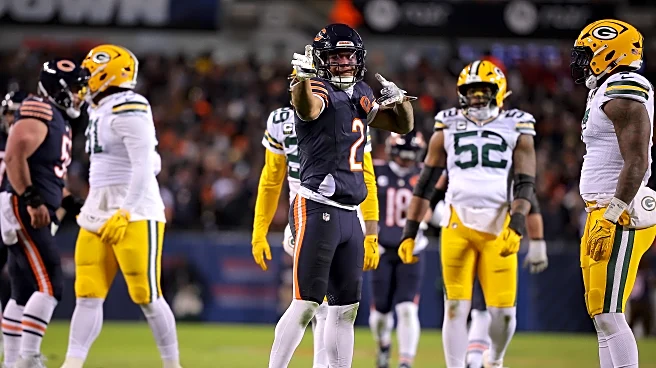
1. Chicago Bears (11-6)
The Bears were one of two teams to go from worst to first in 2025. It’s been a long time down at the bottom for Chicago, and even longer since their last playoff appearance. The hiring of head coach Ben Johnson was just the beginning of sweeping changes that the organization saw this season. While most fans would have been happy with eight or nine wins, the team’s first-year head coach remained steady in his messaging, insisting they had a roster ready to win now. It turns out not only was he right, but his team also took the NFC North with a 2-4 divisional record.
It wasn’t always pretty for the Bears in 2025, though. They started the season 0-2, with both losses coming within the division. In the days leading up to Week 3, Johnson challenged his team by saying their practice habits were not those of a championship-caliber team. Over the next 13 games, Chicago went on an 11-2 run and ultimately locked down the division. Although the end of their regular season wasn’t ideal, losing two straight, this feels like just the beginning for a young team that has shown plenty of growth in just one season.
What Went Right:
- We’ll start with their 7-4 record in one-score games. Heading into Week 17, that mark was even better at 7-2, but losing their final two games in the final seconds didn’t help their final record in those situations. That said, it might be a good thing that there was some regression to the mean. Teams that are strong in one-score games don’t typically roll that “luck” over into the following year. While I would argue some of those close games were their own doing, they also had their fair share of good fortune in winning them.
- Caleb Williams’ overall development was a big storyline coming into the season. While some expect linear growth throughout the season, that was simply not the case. Johnson runs a complex offense, and there were plenty of new additions learning it alongside returning players from 2024. Williams’ completion percentage took a dip, but most other statistical categories took meteoric leaps from what they were a year ago. His turnover percentage was the lowest in the league, and he cut his sacks down by close to 70%, which is almost unheard of, especially as a second-year quarterback. His consistency throughout games needs improvement, but his ability to play at his best when the game is on the line is undeniable. He tied Peyton Manning’s single-season record for six-game winning drives, which is a trait that is almost impossible to teach. His deep ball accuracy improved as the season went on, as did his overall accuracy and ball placement.
- Speaking of sacks, the drastic improvement in offensive line play was greater than anyone could have ever expected. One year after not being able to run the ball or protect the quarterback consistently, this group finished third in both overall sacks allowed (24) and rushing yards per game. On top of that, their starting three interior offensive linemen started all 17 games, while right tackle Darnell Wright missed just one game. Following an uninspiring training camp battle at left tackle, it was their second-round pick, Ozzy Trapilo, who took the bull by the horns after earning the starting job mid-season.
- Takeaways, takeaways, and more takeaways. The Bears not only led the league in that department (33), but they also were first in giveaways with just 11 over a 17-game regular season. The defense as a whole struggled for most of the season, but its ability to take the ball away from opposing offenses kept them afloat.
- Of all the positive developments in 2025, hitting on multiple players in their eight-man rookie class might be the most important in the long term. It seemed like no secret that the Bears wanted to draft an offensive lineman in the first round. Unfortunately for them, three went before their pick at No. 10, so they pivoted to tight end Colston Loveland. The pick was met with some criticism by those who had Tyler Warren graded out higher. On Day 2, they missed both running back targets and had to pivot once again. This time, they went to Luther Burden III, who, by all accounts, was a first-round talent. At the time, many called both selections “luxury picks”, but as the season went on, it became clear why Johnson loved both players so much. Loveland is already in the conversation as being a Top 5 tight end, while Burden’s explosiveness in the open field should fast-track him into a considerably bigger role in 2026. In addition to those two, Trapilo played well enough at left tackle to go into the offseason as the team’s starting option. Seventh-round pick Kyle Monangai carved out a role early as the RB2 and played well any time he was called upon. Finally, sixth-rounder Luke Newman did enough to make the 53-man roster and become the primary swing guard out of camp. Considering he was always seen as a developmental player, that’s a great sign in Year 1.
What Went Wrong:
- The defense. Sure, they took the ball away more than any other team in the league, but the sizable amount of explosive plays given up, on top of ranking at the bottom in defensive DVOA, yards, and points per game, makes this entire unit a concern moving into 2026. With so much already invested up front, general manager Ryan Poles and the defensive coaching staff have their work cut out for them in fixing this group.
- While it’s great any time a team wins the division, going 2-4 in the NFC North is rarely going to get it done. Their early-season woes against Minnesota and Detroit can be chalked up to a young team learning how to win, but five of their six divisional games were decided by one score. If they plan to repeat as division winners in 2026, this is one area that will need to improve drastically.
- Speaking of their defensive struggles, all three of their top offseason investments fell far short of expectations. Chicago gave edge rusher Dayo Odeyingbo a three-year, $48 million contract. Before tearing his Achilles midseason, he was one of the least effective pass rushers in the league. Similar to Odeyingbo’s pact, veteran Grady Jarrett signed a three-year, $42.75 million deal, with most of the guarantees (like Odeyingbo) coming in Year 2. Jarrett had an early-season knee issue, but he’s simply not an effective pass rusher anymore, which completely tanks his value compared to his contract. Finally, there was second-round defensive lineman Shemar Turner, who was a healthy scratch early in the season, never settled into one position, and was lost mid-year with a torn ACL. For as much as the Bears have invested along their defensive line, they find themselves in a spot where they’ll need at least two impact names heading into next season.
2025 Season Grade: A
How could it be anything but an A? From 2022 to 2024, this team won 15 games combined. Their highest win total came in 2023, where they went 7-10, but this group has been nowhere near a playoff berth since backing into the final Wild Card spot in 2020. Johnson and his star-studded coaching staff were able to come into Halas Hall and completely remake the culture in one season. It’s far from unheard of, but for a team like the Bears, this feels much more stable than a one-year wonder type of experience, as they had in 2018. The NFC North will remain one of the toughest divisions in football, but there’s reason to believe that with another strong offseason of patching holes, they’ll be right back in the mix next year.
2. Green Bay Packers (9-7-1)
Before the blockbuster trade for Micah Parsons on the eve of the regular season, it felt like the Packers were a good, but not great team. Once Parsons was added, and we saw what they were capable of in the first two games, optimism hit an all-time high. In the early going, this looked like a dominant team. Even after things leveled out, they still looked like one of the more dangerous teams in the league. Then injuries piled up. First, it was Elgton Jenkins, then Tucker Kraft, and finally, Micah Parsons. In the matter of a few weeks, the Packers went from Super Bowl contender to simply holding onto the seventh seed in the NFC. In the end, 2025 didn’t result in the type of success anyone in Green Bay had envisioned at the start, prompting plenty of questions about how much change was needed.
When zooming out, it’s been three straight years of relative disappointment, even with one of the youngest rosters in football. The acquisition of Parsons was supposed to put them over the top, and at least in Year 1, it didn’t. It did, however, give them considerably less cap flexibility and less draft capital over the next two seasons. Heading into the offseason, there are plenty of questions to be answered, but seeing what they lose in free agency and what the coaching staff looks like will be at the top of the list.
What Went Right:
- Jordan Love’s third year as a starting quarterback solidified him as a bona fide Top 10 player at the position. That was one of the bigger questions coming into the season, and he consistently answered those with an altogether impressive campaign. He completed a career-high 66.3% of his passes, averaging 7.7 yards per attempt, and threw for a career-low six interceptions. Some might see his numbers as underwhelming, but his consistency and overall poise throughout games have improved significantly. His 101.2 rating was also a career high. Quarterback is not a question for this team moving forward.
- When healthy, Micah Parsons was the exact difference-maker they were hoping for when they traded a pair of first-round selections to acquire him. To put it simply, the man was a flat-out game-wrecker. Defensive coordinator Jeff Hafley lined him up all over the field, and he was the primary key to a highly successful pass rush before being lost for the season. Assuming he can get back to full health in 2026, the defense’s floor is dangerously high.
- Christian Watson’s return, albeit not a full season, showed that he still can become a game-changing No. 1 option for the Packers’ offense. Coming back from a torn ACL is never easy, and it took Watson some time, but once he returned in late October, he hit the ground running. Despite playing in just 10 games this year, the former second-rounder would have been on pace to put up 60 receptions for 1,039 yards, 10 touchdowns, and a 17.5 average per catch. Health will continue to be a concern for Watson, but if healthy, he could quickly become one of the most dangerous pass catchers in the league.
- Injuries along the offensive line are rarely a good thing. Still, for a team like the Packers, which is constantly drafting and developing, there are always silver linings to these situations. For instance, because of their constant shuffling, key reserves like Jordan Morgan, Anthony Belton, and Sean Rhyan all saw at least 550 snaps during the regular season. With starting left tackle Rasheed Walker set to be a pending free agent, Green Bay will have two internal options (Morgan and Belton) to replace him with.
- For as bad as things got for the Packers at the end, they showed their floor is still a borderline playoff team. Now, don’t get me wrong. Any time a team goes into a season with Super Bowl aspirations and comes out with less than 10 wins and no playoff success, it’s not a good thing. That said, injuries and plain misfortune played their roles, too. Although they won’t have a ton of cap flexibility this offseason, there’s reason to believe that with better health, this roster is still built to at least push for a playoff spot. The roster is young, and in some ways, time is still on their side.
What Went Wrong:
- Injuries, injuries, and more injuries. Especially down the stretch, that was a big key to the Packers’ storyline in a somewhat disappointing 2025 campaign. In the matter of about a month, Green Bay lost tight end Tucker Kraft, center Elgton Jenkins, and Parsons for the year with various season-ending injuries. On top of that, players like Jayden Reed, Christian Watson, Zach Tom, and even quarterback Jordan Love missed at least a game-plus with various ailments. Injuries can never be the only excuse, but losing three key starters for the year, on top of other week-to-week issues, derailed their season over the final month-plus.
- Another year and another postseason with an early exit. When LaFleur first took over as head coach in 2019, he had a quarterback in Aaron Rodgers who returned to MVP-level play. Any time you get that type of quarterback play, it’s easy to not only make the playoffs but also win a game or two along the way. Once the team moved on from Rodgers and settled in with Love, the regular season wins and postseason appearances have kept up, but their one-and-dones have become a concern, too. After acquiring Parsons, this felt like the year they were ready to contend for a Super Bowl, truly, and it simply didn’t happen. Finishing as a nine-win team is one thing. Giving up 25 points in the fourth quarter to your division rival to punch your ticket home is another.
- Special teams woes have continued, despite a new special teams coordinator, a new kicker, and plenty of new special teamers. Why? That’s the question to answer. When special teams coordinator Rich Bisaccia was hired after not landing the full-time head coach job in Vegas, it felt like the Packers were finally going to get their special teams issues figured out. A few years later, little has changed. In his second season with the team, kicker Brandon McManus struggled mightily. Although his season started strongly, he returned from injury and could not consistently find his accuracy. He played a significant role in their Wild Card loss, and it’s worth wondering if a second-year exit from his recently signed extension is on the table heading into the offseason.
2025 Season Grade: C+
Making the playoffs once again is always a good feather in the cap to have, but considering their expectations, it’s hard to give Green Bay anything more than a barely passing grade. The core of talent is there, but even with the injuries, it felt like something was missing down the stretch. With a new defensive coordinator on the way, we’ll see how they plan to become more effective up front, with or without Parsons on the field. Offensively, the “bones” are there, as are the efficiency numbers, but again, something felt like it was missing. Now that LaFleur and general manager Brian Gutekunst have had their contracts extended, the Packers are tied to this regime and roster, for better or worse.
3. Minnesota Vikings (9-8)
If you went into the regular season without many expectations for the Vikings, you weren’t alone. In many ways, their 14-win performance in 2024 felt improbable, and frankly, their Wild Card Round loss last January felt predictable. From a talent perspective, there’s plenty to like about Minnesota. They have an outstanding coaching staff and are well-balanced on both sides of the ball. The biggest question heading into 2025 was surrounding the quarterback position. After missing his entire rookie season with a knee injury, former No. 11 overall pick J.J. McCarthy looked to prove that he was the Vikings’ long-term answer at quarterback. And, well… He didn’t. Frankly, it was about as disastrous as it could have been.
As the Vikings head into the offseason with no more answers at quarterback than they did to start the year, it’s fair to wonder what their ceiling next season will be. The defense is still really good. The offense still has plenty of weapons, but last offseason’s splurges on the offensive line did not go as planned. Combine that, and you get a lot of losses when things mattered, and a strong finish when they didn’t. There are plenty of questions to answer about the coaching staff and the multiple vacancies. Still, the combination of a lack of cap fluidity and a quarterback conundrum has their immediate future in flux.
What Went Right:
- Despite a slow start to the season and being the first team in the division to be eliminated from the playoffs, they finished strong. I’m not sure I’m a believer in season-to-season momentum, but after a trying season, a good finish is never a bad thing. It’s clear that head coach Kevin O’Connell and crew have the right culture and belief within the locker room, and there’s absolutely something to be said for that. Whether or not they can A. keep the roster together (under their current cap situation) and B. find more consistent quarterback play will be much bigger questions heading into next season. Continuity has long been a plus for this group, but that might be challenged a bit this offseason.
- The defense is still really, really good. We’ll see if that continues pending the status of defensive coordinator Brian Flores. Still, in 2025, they had no issue living up to their aggressive nature and keeping their offense in games, even with the quarterback situation less than ideal. Injuries did play their role this season, especially at pass rusher, with both Jonathan Greenard and Andrew Van Ginkel missing significant time with various injuries. Cornerback still isn’t great, but in their current scheme, they’ve made a living pressuring opposing offenses and keeping the score down.
- Even with horrible quarterback play, Justin Jefferson is still really good. Not that it’s overly surprising, but it was good to see him be able to post yet another 1,000-yard season. He had a team-high 141 targets, but had just 84 receptions, which speaks to how inefficient their quarterback play was in 2025. They’ll need to find different ways to get him into the end zone, but the key components for a good offense are still there, and most of that revolves around Jefferson being one of the league’s elites.
What Went Wrong:
- The transition to J.J. McCarthy did not go as planned. That’s putting it lightly, too. For the better part of his first season starting, the second-year quarterback looked like the worst starter in the league. Turnovers were aplenty, and consistency was almost non-existent. Even when he was able to piece together a few solid games down the stretch, injuries were a factor. We’ll see what they choose to do in the offseason, but if O’Connell has any plans of returning to the playoffs, they’ll need veteran competition at the very least. McCarthy was always regarded as a project, but five different injuries in two years will stunt anyone’s development. Without a big offseason program and preseason, he should not be guaranteed a starting job heading into 2026.
- Overall Offensive Efficiency was down, beyond just the passing game. Running back Aaron Jones is on the wrong side of 30, and Jordan Mason’s usage wasn’t high enough. Call it a hunch, but that should change in 2026, and it shouldn’t be a surprise if Jones is no longer around. That said, Kevin O’Connell’s unit needs a boost in a big way, which is something they’ll look to get with their new offensive line coach next season.
- The rebuilt offensive line did not deliver, either in production or in overall health. When healthy, T.J. Darrisaw is one of the better left tackles in the league. This issue is that for a second-straight season, he wasn’t able to stay healthy. On the interior, they spent plenty of resources on a group that simply did not perform as well as expected. It’s hard to envision a scenario where center Ryan Kelly should extend his NFL career, especially considering his concussion history. Will Fries was healthy, but after a shortened 2024 season with the Colts, he did not live up to his contract. Aside from a new coach, this unit will need plenty of attention during the offseason.
2025 Season Grade: C-
McCarthy’s first season as the unquestioned starting quarterback was always going to be an adventure. Still, any time a 14-win team gets eliminated from playoff contention in the early stages of December, it’s safe to assume that something went wrong. The quarterback play was their most significant issue, but other factors dragged them down along the way. The offense as a whole did not look the same, and there are plenty of questions that need to be answered in the coming months. Defensively, they’ve got plenty of talent, but it’s also fair to wonder how much longer they can keep their core pieces together, especially on the defensive line. Their cap situation isn’t great, and that’s worth keeping in mind, but as we’ve learned with this team, one off-year doesn’t always equate to the “beginning of the end”. No matter how you cut it, 2025 did not go as planned, but there’s still hope moving into 2026.
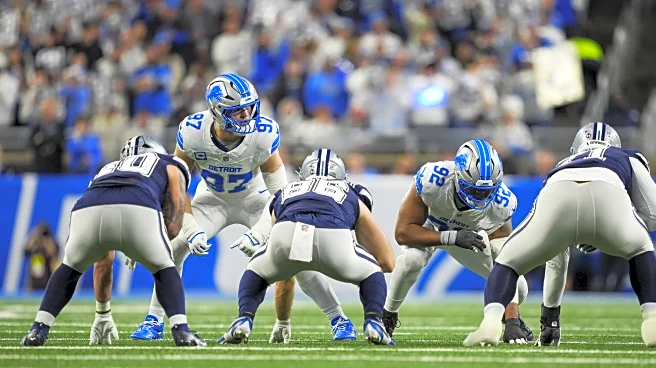
4. Detroit Lions (9-8)
Coming off a 15-win campaign during the 2024 regular season, the Lions came into 2025 with plenty of reasons for optimism. Losing both coordinators (and a handful of assistant coaches) is always tough to overcome, and, in some ways, it proved too much for Detroit in one year. How their season ended in the divisional round last January was tough, but not many people would have bet on them to finish in last place, even if that were by virtue of a tie-breaker to the Vikings.
There were still plenty that went right for the Lions this season, but anytime a perennial contender misses the playoffs, it’s always cause for concern. Injuries played their part, but starting the season by getting blown out and never really getting their footing is something head coach Dan Campbell will need to figure out over the next few months. With so many questions along the offensive line and multiple free agents on the defensive side, fans can expect another trench-heavy offseason. However, they won’t have many free-agent resources to fill those needs. 2026 feels like a big year, but that’s not the point of this review, so let’s keep it focused on the season at hand.
What Went Right:
- The offense is still outstanding. Despite making the wrong hire at offensive coordinator, even with the offensive line issues, this unit still ranked 7th in offensive DVOA. That’s a testament to the weapons that they’ve drafted over the past few years, and frankly, the foundation that both head coach Dan Campbell and former offensive coordinator Ben Johnson instilled. It’s worth wondering if they’ll ever reach their ceiling again and what changes will be made under a new play caller, but the bones of this group are still more than good enough to make them a dangerous team. New offensive coordinator Drew Petzing has much more talent than he did in Arizona, but if this doesn’t work, this might be the end of the road for him as a play-caller for a long time.
- Speaking of the offense, the development of Jameson Williams had to be the single-most-welcome happening on the offensive side of the ball. Sure, this was Williams’ second-straight 1,000-yard season, but the leaps and bounds he made as a complete receiver should scare the rest of the league. Since being drafted out of Alabama in the first round, he’s always been a home run threat. Between injury and some other non-football issues, the 24-year-old has been somewhat of a “late bloomer”, especially considering draft status. This year, they asked him to become a more complete receiver, and he delivered in a big way. Watching his progression from the start of the season to the end was a transformation. His route running was crisp, and his ability to block and be a complete receiver was on full display. Williams turning into more than just a home run threat is enormous, especially when considering that they already have a do-it-all threat in Amon Ra St. Brown. That extension is already looking like a significant investment.
- The defensive line and pass rushers came to play, despite not adding any new pass-rushing threats to the room. Aidan Hutchinson is a stud. We already knew this, and I’ll continue to say that he should have been the No. 1 overall pick the year he left college. That said, there were big question marks at the three remaining spots and where they would get a consistent pass rush. In the end, this defense ranked tied for fourth in sacks with 49 on the year. That’s a massive credit to first-year defensive coordinator Kelvin Sheppard, who I thought did a phenomenal job, considering the circumstances. Not only did Hutchinson finish with a career-high 14.5 sacks, but veteran journeyman Al-Quadin Muhammad shattered his career best with 11 sacks. On top of that, first-round pick Tyleik Williams developed well, and Roy Lopez continues to be one of the more underrated defensive tackles in the league.
- Despite all of the bad, they still finished above .500. Let that settle in for a minute. This was the same team that once became the first NFL team to finish 0-16. Their stretch from the 1990s through the early 2020s was among the worst in the NFL. No matter how disappointing things might have turned out, they were one win away from a Wild Card spot and still have the majority of their core under contract for the foreseeable future. There were plenty of positive developments, including Jack Campbell’s career-high 176 tackles, which ranked second in the league. Their pair of 2023 first-rounders looks like home runs, and that’s a credit to their front office, because on paper, it looked like two poorly-made picks in the moment.
What Went Wrong:
- Replacing Ben Johnson with John Morton did not go as hoped, even though it was somewhat predictable from the outside. Morton might have helped build the original offense under Johnson, but nothing in his 18-year coaching career should have led Campbell to believe he was a capable play-caller. It’s not often that coaches in their mid-50s fail at a role during two previous stops and get another chance, yet that’s exactly what the Lions did, and it backfired. Some might look at the overall numbers and hesitate to call it an outright failure, but any time a play-caller is replaced mid-season, it’s a failure. Campbell showed better chops than expected, but it’s clear that he’s much more comfortable as the team’s field CEO.
- Injuries, especially on the defensive side of the ball. For as good a job as Sheppard did in his first year, it could have been even better. He’s faced plenty of criticism along the way, but it’s hard to lose so many key players in the secondary and play at a high level. Terrion Arnold was lost for a second-straight season. Safeties Brian Branch and Kerby Joseph both missed big chunks of the season. The secondary was a mess, and it showed. Anytime a team gets after the quarterback as much as the Lions did and still comes away with below-average numbers, the secondary is an easy place to point the finger. Offensively, the loss of tight end Sam LaPorta was a big one. There has to be a long-term concern given the severity of his back issue. We’ll dive more into the offensive line in a bit, but both sides of the ball suffered too many injuries in total.
- The regression of the offensive line was one of the bigger surprises, at least for me, in 2025. Losing All-Pro center Frank Ragnow to retirement was never going to be easy. That said, the entire interior was a mess for most of the season. One year ago, they had no weaknesses. This year, they didn’t have one player who ranked in Pro Football Focus’ Top 20 on the interior. Rookie Tate Ratledge did well to hold down a guard spot, but Christian Mahogany and Graham Glasnow were both disappointing and not overly healthy. With rumors of left tackle Taylor Decker leaning toward retirement, the focus might be back on the trenches this offseason.
- The team’s overall feel did not match that of the previous three seasons. Anyone who watched the Lions this year probably felt the same way. They didn’t have the same confidence, nor the same explosiveness. I’m not sure exactly how to describe it, but that 15-win team from a year ago that looked damn-near unstoppable just wasn’t there in 2025. Some of that could be attributed to the loss of so many coaches, but the edge that the Lions have become known for simply looked absent far too many times for anyone’s liking. We’ll see what 2026 looks like, but Campbell has plenty of work ahead of him this offseason to figure out what went wrong.
2025 Season Grade: D+
From a 15-win top seed in the NFC to a nine-win, last-place team a year later. Sure, finishing above .500 was an accomplishment, but considering the Lions are supposed to be in the heart of the Super Bowl window, this was a completely lost season in many ways. The talent is there, and there are plenty of valid reasons to trust Campbell and his core coaching staff. So, there’s that. Even so, they lacked the same “juice” we’ve seen since they turned things around late in 2022. Maybe it was the fatigue of a disappointing end of last season, combined with the loss of so many coaches. Or perhaps the core they have built really isn’t as cohesive as they’d hoped. Building perennial contenders is difficult; maintaining a high-level roster is even tougher.