




The marathon is almost over, Steelers fans. After another long cycle, the anticipation that’s been building since the NFL announced Pittsburgh would host the 2026 NFL Draft will finally be relieved tomorrow night.
Once again, both of us have been grinding to bring you all the info you’ll need to be prepared for draft weekend. And to neatly wrap things up, we’ve brought back the second annual NFL Draft’s Eve Extravaganza. This column is our way of getting the last of our draft takes out into the world,
and to do one final review of what we know about the Steelers’ process this year.
We’ll be averaging our rankings all 33 of Pittsburgh’s pre-draft visitors, and then shouting out our “My Guys” for each position group. This will be a meaty one, so let’s not waste any more time.
Steelers pre-draft visit big board

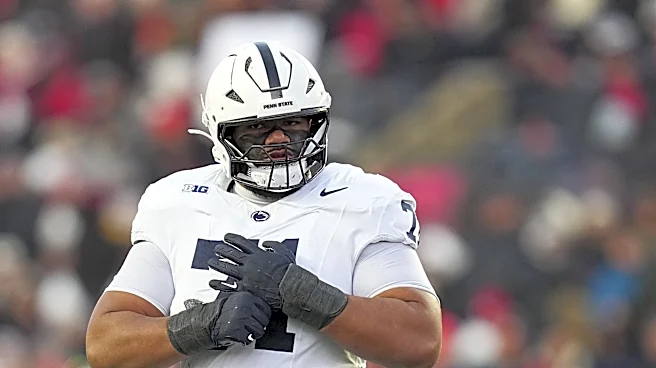
1. OG Olaivavega Ioane, Penn State (RP: 1, RB: 2)
RB: Ioane is a pro-ready guard who isn’t the greatest athlete for his position, but still easily a first-round talent. He’s powerful with great pad level and heavy hands. An instant fix for the Steelers’ hole at left guard — and likely some Pro Bowls down the road.
2. WR Makai Lemon, USC (RP: 3, RB: 1)
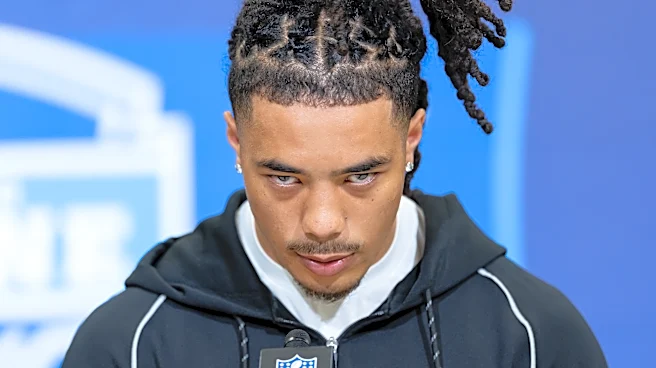
RP: The first profile I wrote this draft season, Makai Lemon is one of the most interesting characters of this draft class. Beyond giving a master class on the Kubrick Stare at the NFL Combine podium, Lemon has been subject to questions about what his fit in the NFL will be. Watch his tape, and you see that Lemon is a gritty pass catcher with sure hands and a knack for generating yards after catch despite relatively average long speed. He was the heartbeat of the USC offense this year. But there are questions about whether he will be a slot-only player, and how valuable that is. After all, Lemon is commonly compared to Amon-Ra St. Brown, a fourth-round pick. The Steelers praised Lemon pretty openly at a recent press conference, but Mike McCarthy has also preached the importance of having players who can play multiple positions and fill multiple roles. If the Steelers draft him, they must believe he can play outside and hold his own as a blocker.
3. OT Spencer Fano, USC (RP: 2, RB: 3)
RB: Fano’s just-over-32-inch arms likely forecast a move to guard in the NFL, but many still have him as the top overall lineman in this class. His game is built on athleticism, footwork, and strong technique, even if he’s not quite the mauler Ioane is. I like Fano the most in a zone-based offense, but his overall scheme and position versatility make him a promising option for most teams in need of offensive line help.
T-4. S Emmanuel McNeil-Warren, Toledo (RP: 4, RB: 5)
RP: We’ve covered Emmanuel McNeil-Warren pretty extensively in the past couple of weeks, so I’m sure most of you are familiar with the selling point. McNeil-Warren looks like a Madden-created player, standing 6’3 and 201 with a 781/4” wingspan. A three-year starter, McNeil-Warren created 16 turnovers (11 forced fumbles, five interceptions) during his college career. His best role is as a robber in Cover-2, where he can play enforcer over the middle of the field, but he’s an impact player from the slot and playing the post. There’s debate about whether a safety is worth a first-round pick, but McNeil-Warren’s tape is brimming with big hits and big plays, and I, for one, think Steelers fans will warm to him quickly the first time he lays a lick on a crossing receiver.
T-4. CB Chris Johnson, San Diego State (RP: 5, RB: 4)

RB: In a lesser cornerback class — and maybe if he didn’t play at San Diego State — Chris Johnson would be getting a lot more hype. I look for fluidity and quickness first when watching corners, and Johnson has both in spades. He’s ridiculously talented in coverage with great athleticism (9.82 RAS) and boundary/slot versatility. He should be in the first-round conversation more.
6. WR Denzel Boston, Washington (RP: 6, RB: 6)
RP: I got to watch Denzel Boston in person a few times this year, and each time I came away believing I had just watched an NFL-level talent. Boston is not a burner, which makes him less sexy in the eyes of a lot of fans, but Boston is a better player than many of his detractors are giving him credit for. I think he’s a better separator than he gets credit for. I think Boston has a knack for getting open late in a route, and the quarterback play at Washington did him no favors. Boston would often pop open only for Demond Williams Jr. to throw the ball back into coverage with an errant throw. And to Boston’s credit, he was a masterful contested catch winner who won with strong hands through the catch point. He also adds something as a blocker, which would allow the Steelers to field a hard-nosed 11 personnel grouping of DK Metcalf, Michael Pittman Jr., and Boston.
7. OG Keylan Rutledge, Georgia Tech (RP: 7, RB: 7)
RB: Rutledge was one of my earliest “my guys” in this class. He’s a mauling guard with plus athleticism who’s at his best as a puller in a gap scheme. His anchor is impressive in pass protection, and he’s shown some great ability sealing off lanes on zone runs. He could still improve his footwork and balance a bit, but he has more upside than most give him credit for.
T-8. CB Treydan Stukes, Arizona (RP: 8, RB: 9)
RP: Stukes is an older prospect (he’ll turn 25), but he’s one of the most electric defensive playmakers in the draft. Some teams will want him to play nickel corner — where he had most of his snaps in college — but others will like him more at safety. He missed 2024 because of a knee injury, but then had arguably one of his best seasons in his college career after returning a few games into the 2025 season.
T-8. WR Germie Bernard, Alabama (RP: 9, RB: 8)

RB: Bernard is the classic high-floor, not-great ceiling receiver in this year’s class. He’s a multi-level threat as a route runner, and after the catch he’s surprisingly productive with great contact balance. His average long speed and uninspiring contested catch ability limit his big-play ability, but Bernard looks like an immediate WR3 and a long term WR2.
10. LB Jacob Rodriguez, Texas Tech (RP: 10, RB: 10)
RP: A fan favorite and one of the most magnetic players at this year’s Senior Bowl, Rodriguez is a slightly undersized linebacker who has a nose for the ball. The green dot for the dangerous Texas Tech defense, Rodriguez created 18 turnovers (12 forced fumbles, six interceptions) during his college career, including seven forced fumbles and four interceptions in 2025. He’ll need to shore up his run fits as a pro, but he’s flashed a ton of potential in pass coverage.
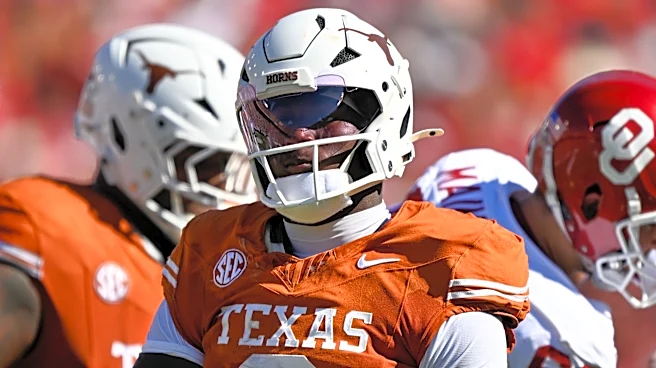
11. CB Malik Muhammad, Texas (RP: 12, RB: 11)
RB: Another underrated cornerback in this year’s class, Muhammad is surprisingly fluid despite his lanky build with good eyes in zone and strong matching ability in man. His slender build does lead to some questions as Muhammad was often pushed around in run support. That physicality will also get called into question against big NFL receivers. But he’s surprisingly sound as a cover corner despite his mid-to-late Day 2 ranking on boards.
12. OT Travis Burke, Memphis (RP: 13, RB: 13)
RP: Burke is a monster of a man, standing 6’9 and 332 pounds with over 34” arms and an 833/8” wingspan. One of the most requested players for pre-draft visits this cycle, the appeal is easy to see with the Memphis product. Burke has a mean streak and relishes any opportunity to knock a defender to the ground, and he’s a better mover than you’d expect for someone as massive as he is. Players of his height will always have pad level and leverage concerns, and while he showed he can climb in the running game, his form and footwork are better before he gets too far out into space. He’s not a fully finished product, but the right staff could mold him into a starter.
13. OT Markel Bell, Miami (RP: 14, RB: 12)
RB: We hand-wring plenty about offensive tackle arm length this time of year, and then there’s Markel Bell, built like a Pacific Rim Jaeger at 6’9 and 346 pounds with 36-inch (!!!) arms. The problem is that due to his height he’s often quite literally playing down to his competition, and his agility isn’t the best. Still, Bell is well-built for his size and a massive, powerful presence who can really push a pile. Bendier rushers are always going to be a problem, but the colossal Bell checks the most important box for an offensive tackle: he’s hard to run around.
14. LB Kyle Louis, Pitt (RP: 11, RB: 17)
RP: A name that should be familiar to Pittsburgh residents, Louis was an Energizer Bunny on defense for the Pitt Panthers. A linebacker in college, a lot of teams will have Louis projected as a slot defender/safety at the NFL level. Louis is undersized for a linebacker, but he’s shown tremendous upside in the slot against the run, as a blitzer, and in providing coverage against tight ends and slot receivers.
15. OG Beau Stephens, Iowa (RP: 17, RB: 15)
RB: The knock on Stephens is that he lacks elite traits, with his length (just-over-31-inch arms) being the most worrisome. But he still checks a lot of boxes for a consensus mid-rounder. His technique is excellent, with fantastic posture and pad level with excellent drive and over-the-top effort in the run game. Stephens isn’t a great athlete, but he’s mobile enough to be highly effective working to the second level on zone runs. He also has a real mean streak finishing blocks. There are some definite caps to Stephens’ ceiling, but he’s the classic fourth-rounder to long term starter at guard.
16. DL Darrell Jackson Jr., Florida State (RP: 19, RB: 14)

RP: A run stuffer with a still-developing pass rush skillset, Jackson’s nearly 35” arms and 86” wingspan are his calling cards. Jackson has had to overcome adversity in recent years as he was forced to miss all but one game in 2023 after the NCAA ruled him ineligible following a transfer to Florida State from Miami to be closer to his mother, who was battling a serious illness. Despite this, Dane Brugler reported that scouts said Jackson was a “positive influence” in a locker room that has been going through some challenging seasons as of late. Learning behind Sebastian Joseph-Day and Cam Heyward for a year would be like getting a post-grad degree in stopping the run professionally, and could have Jackson ready to be an impact player in 2027.
17. WR Skyler Bell, UConn (RP: 20, RB: 16)
RB: Skyler Bell is still a confusing player to project. He was uber-productive in 2025 and tested with a 9.71 RAS pre-draft. But he’s also an older prospect (will be 25 this summer) and played a much easier schedule than other top receivers in the class. His change of direction while route running and short-area burst pop on tape even if I’m not sure he plays as fast as his 4.4-second 40-yard dash. Bell had drop issues in the past but became a bit of a contested catch threat his final college season, but his physicality as a route runner still leaves something to be desired. I like other receivers in his range a lot more when it comes to their NFL fits, but Bell comes with some undeniable upside.
18. QB Drew Allar, Penn State (RP: 18, RB: 19)
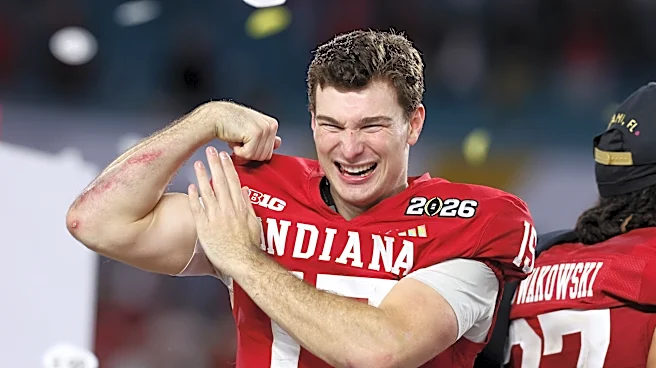
RP: An All Off The Bus All Star, Allar’s natural physical gifts are his greatest selling point at this point in his career. At 6’5 and 228 pounds, Allar looks the part of an AFC North quarterback, even if his play has left plenty of questions about whether he’s a future NFL starter. Allar has a cannon for an arm and enough functional mobility that some coaching staff will believe they’ll be able to fix him and pull out his unrealized potential. Allar fans will undoubtedly evoke Josh Allen as an example of how a physically gifted but raw passer can be developed if given enough patience. I don’t personally think Allar is nearly as gifted as Allen, but I’ll concede that football has a way of making us look foolish when we’re convinced we have it figured out. If Allar develops into a star, he’ll be one of the greater recent success stories.
19. QB Taylen Green, Arkansas (RP: 16, RB: 23)
RB: As I’ve written a few times now this draft cycle, I had a great time watching Taylen Green in my draft prep this year. He has a special arm and maxed-out confidence as a passer, squeezing in several tight-window throws per game with enough velocity to zip by closing defenders. Of course, it didn’t always work out that well, with Green also sporting a penchant for truly head-scratching interceptions. At his best, he’s making high-end NFL throws, but he’s still a long way out in his development despite his extensive college experience — bringing into question how much more he can really improve. What helps out Green is his 4.36-second 40-yard dash at 225 pounds. He’s a long strider who isn’t the twitchiest in the open field, but still a rare running talent for the quarterback position. So many traits.
20. QB Cole Payton, North Dakota State (RP: 15, RP: 22)
RP: Our third quarterback in a row, and one that I have ranked higher than the previous two. While I don’t expect any one of this trio of passers to be an NFL starter, Payton is the one I’d want to see if I could develop. Allar started 35 games in college and Green started 46. Allar showed some progression in 2024 but then took a step back before getting injured in 2025. Green got incrementally better each year, but still struggles with accuracy and with making reckless decisions that result in turnovers and sacks. Both worry me that they’ve already reached their ceilings. Payton is a one-year starter whom I could talk myself into believing has more room to develop. He completed 71.2% of his passes and threw 16 touchdowns against just four interceptions, while adding 894 yards and 13 touchdowns on the ground. While neither Allar nor Green has a receiver drawing any hype in this class, Payton helped popular sleeper pick Bryce Lance set a career high in yards (1,079).
21. LB Jack Kelly, BYU (RP: 21, RB: 21)

RB: Kelly is an early Day 3 thumper who separates himself from the pack with his pass rushing ability. He had a whopping 10 sacks last year for the Cougars, with 28 over his college career. He’s a surprisingly good athlete as well, with a 9.71 RAS and closing speed that shows on tape. Still, his instincts and missed tackle rate could use some work. Kelly probably won’t be an immediate contributor on defense, but his blitzing prowess makes him an attractive fit for Patrick Graham’s heavy usage of sim pressures. With his athleticism and speed to power, he can fill in on the edge a bit as well.
22. CB Tacario Davis, Washington (RP: 26, RB: 18)
RP: Tall, long, and with amazing straight-line speed for his size, Davis is a former four-star recruit who drew a lot of draft buzz after his first year as a starter in 2023, but who has seen his star significantly dim in the years since. He missed six games in 2025 with first a rib injury and then, later, a severe hamstring pull that made him miss the final three games of the season. Davis had the longest wingspan among defensive backs measured at the Combine in this class (807/8”), and when he’s at his best, he uses them to break up passes. However, he’s prone to missteps in coverage, and his lateral agility doesn’t compare to his 4.41 40-time, which can lead to twitchier, slipperier receivers giving him trouble. Davis also has a knack for nearly making an interception, which is still a positive, but leaves his turnover production less than it could be.
T-23. TE Will Kacmarek, Ohio State (RP: 22, RB: 26)
RB: A punishing down blocker with a strong initial punch, the 6’5, 261-pound Kacmarek looks the part of a readymade NFL TE2 or 3. Like his teammate Max Klare, you could argue Kacmarek, who tested with a 7.92 RAS, was a bit underused in a star-studded Ohio State offense. He’s a linear athlete, but shows good breakaway speed against linebackers with the ability to play through contact. Blocking tight ends absolutely matter! And Kacmarek is one of the best in this class.
T-23. TE Marlin Klein, Michigan (RP: 23, RB: 25)

RP: Klein was underutilized as a pass catcher (38 receptions on just 64 career targets), but is hoping that, like his former teammate Colston Loveland, he can prove to NFL teams that there is more to his game than the Michigan offense allowed him to be. Klein, a German-born immigrant who moved to America during high school, tested well in the explosion metrics at the combine (4.61 40-time, 36” vertical jump) and has enough toughness on film as a blocker to warrant interest in developing him further at the NFL level.
T-23. CB Ephesians Prysock, Washington (RP: 28, RB: 20)
RB: A lengthy, smothering press corner, the 6’3 Prysock checks a lot of the boxes the Steelers usually look for in their cornerbacks. That said, his height definitely hurts his fluidity in transitions, even if he processes good long speed for a cornerback his size. I’d also like to see Prysock do a better job getting his head around when the ball is in the air. He projects as a boundary depth option who still has the reactive athleticism to start down the road.
T-23. LB Harold Perkins Jr., LSU (RP: 24, RB: 24)
RP: Perkins is a similar prospect to Kyle Louis, in terms of physical size (6’0, 223 pounds), but NFL teams seemingly have more doubts about what his NFL role will be. A three-and-a-half-year starter at LSU, Perkins was honored with the assignment as the “7” jersey this past season, which the school gives out to its best playmakers. He first burst onto the scene as an edge player as a freshman, but his size likely limits his opportunities to play that role as a pro. He also played as an off-ball linebacker and as a Star (slot) linebacker this past season. He’s a twitchy athlete, but he isn’t great at taking on blocks, and his coverage skills are a work in progress, though he had a career-high three interceptions this past season.
27. S Jakobe Thomas, Miami (RP: 27, RB: 27)
RB: Thomas is a box safety who filled up the stat sheet last year for Miami: 75 total tackles, 3.5 sacks, five interceptions, six passes defensed, and two forced fumbles. He’s a good not great athlete, but a downhill force who would work best as a cover-3 strong safety, much like DeShon Elliott’s role in Pittsburgh. He’s a hard hitter whose aggressive style of play in coverage and run support leads to boom or bust results, but it’s a lot of fun to watch him fly around the field.
28. TE Khalil Dinkins, Penn State (RP: 25, RB: 32)

RP: Another underutilized pass catcher who was stuck behind Brenton Strange and Tyler Warren for most of his college career. However, Dinkins is a tenacious blocker who stole reps from Strange as a blocker earlier in his career. And when Dinkins did catch the ball, it was often a high-impact play, with 19% of his receptions resulting in a touchdown. A Pittsburgh native, Dinkins also has NFL bloodlines. His father, Darnell Dinkins, had an eight-year career in the NFL as a tight end, playing for the Giants, Ravens, Browns, and Saints, winning a Super Bowl with New Orleans in his final season.
T-29. QB Carson Beck, Miami (RP: 30, RB: 30)
RB: Ryan and I are fairly low on Beck compared to the consensus, but also consider that this is a Steelers-centric exercise. Pittsburgh doesn’t really need a quarterback like Beck, in my opinion, whose profile looks similar to Will Howard’s with field general strengths and a lack of high-end athletic traits (and I’d argue Howard was a better runner with a better arm). Still, Beck’s continued success at the highest levels of college football makes me think he could be a solid long-term backup for a team that needs a competent spot starter. But his penchant for bizarro interceptions and some continued accuracy issues make me think his floor is a bit lower than many think, as well.
T-29. WR Kendrick Law, Kentucky (RP: 32, RB: 28)
RP: Law is more athlete than receiver, but he’s a twitched-up gadget player with kick return juice. A one-year starter who played 77% of his snaps from the slot, Law had 56.3% of his targets come behind the line, and 81.3% of his targets traveled less than 10 yards through the air. He doesn’t have a refined route tree yet in his development. However, Law is electric with the ball in his hands with 505 of his 540 receiving yards (94%) in 2025 coming after the catch. That might play with Aaron Rodgers’ preference for the quick, underneath passing game.
T-31. LB Jaden Dugger, Louisiana (RP: 29, RB: 33)

RB: Dugger is a former safety who still looks the part. With a 9.60 RAS and 35-inch arms, he’s an easy mover with rare length for the position. The issue is that he has a lean build that can lead to struggles taking on blocks — a challenge that will only become tougher with a move from the Ragin’ Cajuns to the NFL. Still, his extreme versatility (also some edge experience) and unique athletic profile will make him an intriguing Day 3 chess piece for a team to take a flyer on.
T-31. WR Jeff Caldwell, Cincinnati (RP: 31, RB: 31)
RP: Caldwell is another receiver who I’d classify as more athlete than football player at this juncture, but he comes at it from a completely different profile than Law. At 6’5 and 215 pounds with 4.31 speed, Caldwell took 91.8% of his snaps out wide. Caldwell spent just one year as a starter at the FBS level, totaling 32 receptions for 478 yards and six touchdowns. And unlike Law, he had more targets over 10 yards downfield (34) than targets under 10 yards (24). Caldwell isn’t a refined route runner, and he doesn’t play up to his size. A late-round bet on Caldwell is a move hoping for a similar outcome as another tall, unpolished vertical threat that came out of Cincinnati in 2022 (Alec Pierce).
T-31. DL James Thompson Jr., Illinois (RP: 33, RB: 29)
RB: Thompson is an older prospect as a sixth-year senior who projects as a solid depth chart filler on an NFL defensive line. He’s not particularly powerful or athletic, but put together good testing (8.83 RAS) and was surprisingly adept at splitting double teams thanks to his always hot motor and active hands. He doesn’t offer a ton of upside as a pass rusher, but played all over Illinois’ defensive line, making him a valuable utility player.
Who are your “My Guys” from this class?

Both of us have spent months hard at work studying this draft class. Spend enough time doing that, and you’re bound to develop some favorites. The following is a collection of players who aren’t necessarily the top-ranked players at their position — though they can be — but whose games we’ve come to admire.
Quarterback
RB: Garrett Nussmeier, Taylen Green
There are a few players in this class I like quite a bit despite understanding there are some definite major flaws in their games, and both Nussmeier and Green fall under that category. But they’re just good watches. Nussmeier’s game feel and gunslinger playing style is electric at his best, and I’m willing to chalk up some of his failed 2025 campaign to the nagging injuries. I think he has the upside of a Brock Purdy-type starter if his lack of size (203 pounds) isn’t too much of an issue. And Taylen Green, as I outlined above, is a human lottery ticket at the quarterback position.
RP: Cole Payton, Taylen Green
Listen, it isn’t pretty in the quarterback streets. I don’t ever really expect either of these guys to be more than a serviceable backup in their career. But the two best quarterbacks after Fernando Mendoza in this class (Garrett Nussmeier and Ty Simpson) both worry me with their durability. That’s not the case with either of Payton or Green. Payton rushed for 777 yards and 13 touchdowns, and added 16 more through the air while throwing for a little more than 2,700 yards in his lone season as a starter. Green, meanwhile, was a player featured in my summer QB Dating Game series. The most electric runner in the class and possessing a cannon for an arm, Green’s issue is that his accuracy in the short to intermediate areas isn’t always consistent, and his playmaking ability can also be his downfall, as he will often make risky throws or run himself into sacks while trying to make a big play. Both are fun watches at the college level, and if McCarthy is as good of a quarterback developer as he’s being sold to us, I like the tools these two bring over players like Beck and Allar.
Running back
RP: Mike Washington Jr., Demond Claiborne
Washington shared a backfield with the aforementioned Green. I like his combination of size, speed, and receiving ability. A former high school receiver, Washington has natural hands and above-average tracking ability with the ball in the air for a running back. This year’s class isn’t nearly as strong as last year’s class, but Washington is one of the more explosive runners this class has to offer. Demond Claiborne is a smaller back in the De’Von Achane mold. Claiborne is both quick and fast, and is a sparkplug on the field. He’s got slot versatility, though he isn’t quite the pass catcher Achane is at this stage of his development.
RB: Le’Veon Moss, Seth McGowan
I haven’t scouted the running back class much this year, so I wouldn’t consider this as strong of a “my guys” endorsement. But Moss, a fairly productive SEC runner with a string of injury issues, could be good value late on Day 3. He has good size and much better burst and decisiveness than he’s given credit for. McGowan comes with an even bigger red flag with a past larceny conviction, but turned his career around at Kentucky. He made some “wow” cuts behind the line of scrimmage while I was watching Kendrick Law earlier this year, and earned a mental note.
Wide receiver
RB: KC Concepcion, Ted Hurst
I’m solidly on board the “KC Concepcion is a first rounder” hype train. There’s definitely some boom or bust risk, but I’m a big fan of receivers who can separate as effectively as he can. Hurst is a lanky deep threat with game-changing upside.
RP: Omar Cooper Jr., De’Zhaun Stribling, Ted Hurst, Lewis Bond
Cooper Jr. is one of the more fun watches, and if he doesn’t end up in Pittsburgh, I just hope he lands on a team that can highlight his talents. He has some of the surest hands in the league and is one of the more electric playmakers after the catch. That he can also win contested balls and toe tap along the sideline and goalline is just the cherry on top. Stribling is built like an X receiver, but has the skillset to be an impactful power slot in addition to lining up outside. Hurst has a game reminiscent of George Pickens without some of the antics. And Bond is a quick underneath option who runs crisp routes and has kick return versatility.
Tight end
RP: Max Klare, Oscar Delp, Carsen Ryan
Klare doesn’t offer much as a blocker, but watching him reminded me a lot of Trey McBride and tight ends of that mold. He could very easily end up with the most productive receiving career in this entire tight end class. Delp, tested out of the gym and was seemingly underutilized at Georgia as a playmaker. He reportedly models his game after Seahawks tight end AJ Barner. Trust me, as someone who lives in Seattle and sees a lot of Seahawks games, it would be fun to have a Barner-like player on our team. While the underwhelming production is a cause for concern, I also remember liking Ladd McConkey despite his limited college production, so I’m willing to keep an open mind for a tight end, a position that usually isn’t a huge producer in college anyway. And Ryan is a tight end who is solid as both a pass catcher and blocker. With a lot of tight end prospects, they’re usually strong in one area or the other, and Ryan offers a happy medium that I think will stick on an NFL roster.
RB: Max Klare, Will Kacmarek, Dae’Quan Wright
I’m a big fan of both Ohio State tight ends. As I mentioned in the BTSC offensive player rankings a few days ago, you have to watch Klare when he was at Purdue to truly appreciate his athletic upside. He’s a smooth-moving, big tight end who can serve as a bit of a downfield threat. Kacmarek fits the traditional Y tight end mold more, but is one of the safest picks in the draft, especially as every NFL roster needs tight ends with his skill set. Wright has been a “my guy” for a bit now — an excellent linear athlete with imposing size, some lineup versatility, and solid blocking chops. I think he’ll outperform his consensus ranking.
Offensive line
RB: Keylan Rutledge, Beau Stephens, Keagen Trost
Rutledge is now generally ranked right about where I’d place him, but I was early on him as a second-round prospect and will continue to be a fan. Stephens earned a late spot on this list — his consistency and knack for pancakes is just infectious. Trost isn’t the most exciting prospect, and being a seventh-year senior certainly tanks his draft stock, but he’s well built and a smooth, controlled blocker. He’s probably more of a guard than a tackle, but the versatility is a plus.
RP: Max Iheanachor, Emmanuel Pregnon, Sam Hecht, Jalen Farmer, Travis Burke
I’ve been on the Iheanachor hype train this whole cycle. He just has the combination of size and graceful movement (he was a former soccer player) that you can’t just teach. A Nigerian immigrant, he only began playing football in junior college, but quickly was recruited to Arizona State and then thrust into a starting role due to injuries to the players in front of him. He’s put out impressive tape, especially against presumptive top-five pick David Bailey, and is only 22 years old. Pregnon is an older prospect, but he is built like a brickhouse and is a strong presence as both a run blocker and pass protector. Hecht is my favorite center prospect in this class, with a wide body and plus movement skills. Farmer and Burke are both potential round-three prospects with bully mentalities I want in my offensive trenches.
Defensive line
RP: Chris McClellan, Tyler Onyedim
Chris McClellan is essentially a Keeanu Benton clone who can anchor down better against double teams. Tyler Onyedim is a penetrating 3-tech who looks like he’s going to decapitate the quarterback each time he gets a hit on the passer.
RB: Lee Hunter, Domonique Orange
I was on the Lee Hunter first-round hype train until his RAS score came back as a dismal 3.72. OK, maybe you guys were right about overvaluing nose tackles. Still, he’s a massive run-stuffer with better in-game quickness than the testing shows. Orange fits a similar mold but he has a cooler nickname.
Edge rushers
RB: R Mason Thomas, Jaishawn Barham
Thomas is under the same category as Nussmeier and Taylen Green for me — I get the concerns but I’m still a fan. Thomas is undersized, but he has a lot of juice as a pass rusher, and a nice bag of power and speed moves. Barham is more raw but much traitsy-er in the traditional sense. His explosion and aggressiveness pop off the screen.
RP: Gabe Jacas, Malachai Lawrence, Derrick Moore
I like my guys up front to be nasty and all three of these guys fit the build. Jacas has some of the more violent hands I’ve seen in this class, and he has a motor that never stops. Lawrence is a twitchy athlete who needs to get stronger against the run and refine his pass rush plan, but the flashes are tantalizing. Moore is another power-profiling rusher. He could stand to add some moves to his toolbag, but his power pops on tape, and I think that’s a skillset that translates.
Linebackers
RP: Jacob Rodriguez, Keyshaun Elliott
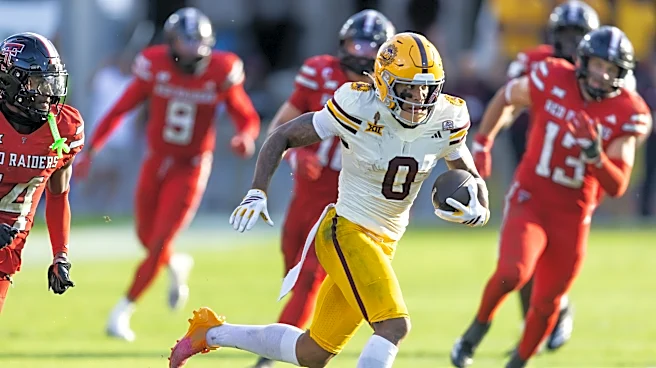
Rodriguez has a nose for the football and seems to always be around the ball when there’s an opportunity to create a turnover. Elliott wore the green dot at Arizona State and is a tireless worker. His ability to stuff the run should make him appealing to the Steelers.
RB: Kaleb Elarms-Orr, Bryce Boettcher
Elarms-Orr isn’t being talked about enough. He’s a physical run-stuffer who tested very well (9.55 RAS) with plenty of upside in coverage and as a blitzer. Boettcher doesn’t have quite the same ceiling, but he was always around the ball in the Oregon games I watched. A great presence in the middle of the defense.
Cornerbacks
RB: Chris Johnson, Hezekiah Masses, D’Angelo Ponds, Charles Demmings
Johnson is incredibly fluid and remains undervalued in the crop of first-round-caliber defensive backs. Masses’ ball skills stand out with unreal production in 2025 (five interceptions, 12 pass deflections), and he should provide good value as a zone corner despite disappointing testing numbers. It’s impossible to watch Ponds and not become a fan to some extent — I think he’ll find a role somewhere. Demmings is a small-school sleeper whose traits look like they’ll translate to the NFL level.
RP: Davison Igbinosun, Julian Neal, Keith Abney II
I like my cornerbacks to be pests and that’s what all three of these are. All three are capable press corners. Igbinosun is the most physical of the three as a tackler and against the run, and he’s got 4.45 speed to go with his 78” wingspan. Neal is also in the long, press corner mold, with a 79” wingspan and a knack for breaking up passes. Abney II has the best ball-hawking skills of the three, and he has both outside and slot versatility.
Safeties
RP: Emmanuel McNeil-Warren, VJ Payne, Kyle Louis
What’s not to like about 16 combined forced fumbles and interceptions? McNeil-Warren and a similar player in Payne would both give the Steelers some hard-hitting safeties that they haven’t had in a while. Both are height-speed-length nightmares for opposing offenses as well. Some will have Louis in with the linebackers, but his best role is as a slot defender who can carry tight ends and slot receivers in man, as well as stop the run and add some pass rush from the slot.
RB: A.J. Haulcy, Zakee Wheatley, Bud Clark, Skyler Thomas
What a great defensive back class. Haulcy’s instincts as a single-high roamer point to some great potential. I’ve cooled on Wheatley a bit but his aggressive style of play and ability to start at both safety spots is still a plus. Clark is an opportunistic ball hawk who I’d also like as a free safety option for Pittsburgh. Skyler Thomas is my obligatory Oregon State pick — he was a bright spot on a struggling Beaver team who should make an impact as a special teamer with underrated man coverage ability.
Positional tweeners
RP: Jack Kelly, Treydan Stukes, Jaishawn Barham, Kage Casey
Kelly can play sideline to sideline as an off-ball linebacker, but he was best as a pass rusher at BYU. He’s shorter than the typical edge rusher, but he was a ball of kinetic energy coming off the edge or blitzing up the middle in school. Likewise, Michigan’s Barham offers off-ball and edge rushing ability. Barham detonating blocks in the run game is a joy to watch, and he flashes real potential coming off the edge as a pass rusher. Stukes is primarily a nickel corner, but he has the versatility to play outside or from a safety role. He’s got field tilting speed. Lastly, Casey is a steady-Eddie type of lineman whose shorter arms might lead to a kick inside to guard.
Join in on Steelers R&R by sharing your takes on this week’s topics. Feel free to pitch future questions in the comment section or on Twitter/X: tag @_Ryland_B or @RyanParishMedia, or email us at steelersreadnreact@gmail.com.