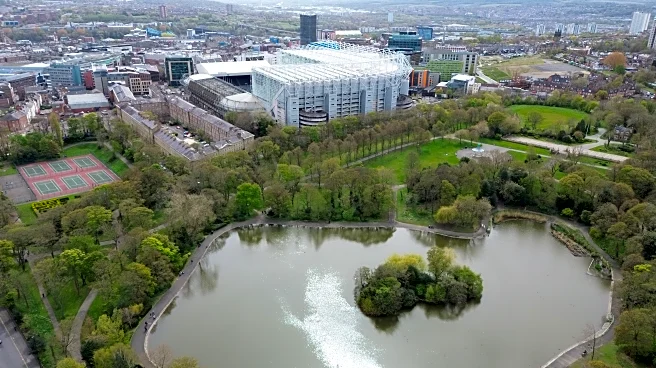

Newcastle United’s leadership continues to assess long-term infrastructure plans, including the future of St James’ Park, as the club weighs options during its broader organisational review.
Chief executive
David Hopkinson addressed supporters at a recent event, offering context on the ongoing evaluation without confirming a direction.
Hopkinson told attendees that discussions remain active across multiple scenarios as the club considers how best to support its wider ambitions. He noted that the work extends beyond on-pitch matters and forms part of a larger transformation plan delivered during his initial review period.
Hopkinson also referenced the need for clarity on long-term goals and reiterated his view that structural progress can be achieved with aligned planning. He linked the internal process to broader commercial growth and the club’s stated intention to strengthen its off-field operation.
When discussing the stadium issue directly, Hopkinson made clear the matter remains unresolved.
“We literally have not taken a decision on what we’re going to do,” Hopkinson said. He added that Newcastle are “modelling a multitude of different scenarios,” with no final call expected in the near future.
Hopkinson stressed that any major project would require substantial time.
“Even if we were to make a decision tomorrow, which we’re not going to do, it still takes years of permits, planning, finance, construction, etc,” Hopkinson said. “That’s the case whatever we choose.”
The CEO also said that even with an immediate commitment, the financial impact would not be felt quickly.
“Even if we could wave a wand right now and wake up tomorrow morning with a decision over a brand-new stadium, those revenues would still not show up for five years,” Hopkinson said.
Hopkinson acknowledged previous messaging that implied a quicker announcement, and he indicated that the club is now resetting expectations.
While St James’ Park remains an option, Hopkinson confirmed that short-term improvements are being explored.
“We’re going to be here, in something like the current format, for years,” Hopkinson said.
Hopkinson suggested the club is considering ways to “make tweaks and changes to improve the here and now.”
The CEO also underlined that decisions on matchday revenue growth must be balanced against other initiatives, noting the significance of global commercial opportunities.
“So much of this is self-help,” Hopkinson said, explaining that sponsorships and partnerships can be activated immediately, and that stadium revenues remain a long-term component rather than a short-term solution.
Hopkinson reiterated that the club must plan for both pre-2030 progress and longer-term positioning.
“What I’m focusing on is what we do need to change between now and 2030,” Hopkinson said, adding that future steps will also aim to ensure competitiveness beyond that window.