




Everyone loves an underdog. Everyone loves a good story.
The most satisfying thing about sports is when someone comes out of nowhere and becomes a folk legend.
Linsanity. David Freese for the 2011 Cardinals. Travis Ishikawa for the 2014 Giants. Miguel Rojas for the 2025 Dodgers. Big Shot Bob Horry for multiple NBA championship teams. Alec Martinez for the 2014 LA Kings (sigh).
Maybe Landry Shamet isn’t on their level… yet, but what I will promise is that he will go down in Knicks history, regardless
of how this season inevitably ends. That’s something that would’ve sounded unfathomable when he first put pen to paper two years ago.
After all, this was a journeyman. In six seasons, he played for five teams, bouncing from Philly to the Clippers to Brooklyn to Phoenix to Washington. While he carved out a nice bench role on multiple playoff teams, including the 2021 Suns team that made the NBA Finals, he was banished to the lowly Wizards in 2023 as part of the Bradley Beal trade.
As many players do, his performance suffered after joining a destitute Washington squad. The longtime three-point maestro shot a career-low 33.8% from deep in 46 games, and he was dangerously close to teetering on the line of being out of the NBA. After all, there are only so many spots for veterans in a league that caters to young players with upside towards the bottom of rosters.
He stayed unsigned for several months that offseason until the Knicks came calling, looking to fill the final roster spot ahead of the 2024-25 season. At the time, it was assumed that Villanova alum and OAKAAK Ryan Arcidiacono would be given the 15th roster spot to complete the Nova Quintet, but Leon Rose elected to sign Shamet along with Marcus Morris Sr. and Chuma Okeke in mid-September to compete for the final spot.
Then came the mega trade. Karl-Anthony Towns was in, Donte DiVincenzo and Julius Randle were out. Due to the complicated financials of the trade, the Knicks needed to clear space and elected to temporarily waive Morris instead of Shamet. That move showed early who the team entrusted more, but the Knicks planned to re-sign Morris after the trade became official in early October.
The only problem was that Morris wanted a guaranteed spot, so he opted not to re-sign in a move that was probably a bit shortsighted, considering he hasn’t been signed to any NBA contract since. His loss was Shamet’s gain, as the 27-year-old now had significantly less competition to make the roster.
Tom Thibodeau liked what he saw in Shamet’s shooting ability and defensive capability, and all signs pointed to him beating out Okeke and bubble legend TJ Warren for the final roster spot ahead of the team’s second-to-last preseason game against the Charlotte Hornets on October 15.
And then, this happened.
Shamet dislocated his right shoulder on a basic swipe of the ball on Moussa Diabate, putting him on the shelf for a number of months. With the cash-strapped and hard-capped Knicks stuck, they decided to waive Shamet to save whatever little bits of money they could instead of rostering a player that would miss the next several months with injury and paying him as such.
But they didn’t want to lose him. The organization believed that his injury would not keep him out for as long as Julius Randle’s had a few months earlier, and still wanted him in the fold. How could they do this when he isn’t two-way eligible? The G-League Draft, of course!
The Westchester Knicks made a pair of savvy moves, one that included trading away former second-rounder Trevor Keels, to get the No. 1 and No. 2 picks in the draft. This allowed them to select Shamet and Matt Ryan, keeping both in the organization. For Shamet in particular, he’d be able to practice and later rehab in Westchester, similar to an MLB rehab assignment. A team could poach him, but they’d need to give him a standard contract while he was rehabbing, which was never happening.
All told, it took just over two months for Shamet to make his debut in the orange and blue, signing a standard contract in late December and slowly working his way into the Knicks’ rotation in early January. The rust was evident on his jumper early, as he went just 4-for-20 from deep in his first 14 games. But as he found a more consistent role, his play dramatically improved.
He shot 43% from three over his last 19 games. In April alone, he made at least four on four different occasions, including seven in the season finale against the Nets. While Thibs’ rotations promised his role would decrease come playoff time, he seemed to have an inside track to a good role.
That didn’t happen. After playing 10 minutes in Game 1, Shamet was limited to just six total minutes in the next three games before being glued to the bench for the last two games of the Detroit series. Throughout the six-game Boston series and the first two games against Indiana, he played 11 garbage-time minutes. The rotation was reduced to the starting five along with Deuce McBride, Mitchell Robinson, and small stints for Cam Payne when Brunson sat.
But after the Pacers stole both games at the World’s Most Famous Arena to start the Eastern Conference Finals, the usually stubborn Thibodeau was forced to overhaul his process. Robinson replaced Josh Hart in the starting five, while he leaned more on the likes of Delon Wright and Shamet off the bench. At least in the short term, it gave them a spark. He was plus-12 in the comeback Game 3 win that gave us a bit of hope.
The adjustments would ultimately prove to be futile, as the Pacers closed out the Knicks in six games. Shamet was once again an unrestricted free agent, and it was clear that he wasn’t a priority for the Knicks in the offseason. They filled two roster spots with Guerschon Yabusele and Jordan Clarkson, and with just enough space to add one more player on a vet min, the Knicks took their time in considering options.
Shamet ultimately got another training camp invite in September after waiting for the Knicks to call him back, but with a new coaching staff in tow, he’d have no favoritism in a camp battle that included as many as six men, but was mostly between himself, Garrison Matthews, and Malcolm Brogdon.
Matthews was a taller version of Shamet, someone who could shoot the lights out and would add size to a smaller roster. Brogdon was a veteran presence with playoff experience that could serve as a traditional backup point guard on a team with only one suitable ballhandler. Tyler Kolek wasn’t going to be entrusted with a big role, so they needed someone to stabilize the offense in the non-Brunson minutes.
It always seemed like Brogdon had the edge because of it, with Shamet being close behind. They maybe could’ve figured something out to keep both, but the decision was made much easier when Brogdon up and retired after looking a step slow during the preseason.
That gave Shamet a roster spot, but it sure sounded like Mike Brown liked him even better than Thibs did. Early season injuries to Hart and McBride gave Shamet an increased role, which he took advantage of with some brilliant performances along the way.
But then came a late November game in Orlando, where he tried to fight over a Wendell Carter Jr. screen, banging up his right shoulder again and leaving the game in a similar fashion to the preseason game 13 months prior. Not again, not now.
This time, he showed enough importance that waiving his non-guaranteed contract was never considered by the Knicks’ brass. It also helped that he wouldn’t need surgery after an MRI revealed just a strain, rather than a dislocation. He’d miss two months, but would return towards the end of the three-week stretch of hell and would make an immediate impact upon return.
Whether starting in place of a banged-up Hart or Anunoby or coming off the bench, he would consistently come up big. For the second straight year, he went into the playoffs expected to be a key part of the bench.
And for the second straight year, things didn’t go as expected. He struggled in Game 1 and was part of some brutal lineups in Game 2 that helped blow the game. A small stint in Game 3 was all he got, as he was soon replaced in the rotation by Jose Alvarado. Just like that, he was once again on the outside looking in. But all Shamet knew in this moment was to stay ready, just like he had done throughout the season.
His number would eventually be called again, but his impact wouldn’t truly be shown until Game 3 in Philadelphia. Against the team that brought him into the league out of Wichita State, he sucked the life out of a desperate Sixers crowd in Game 3 before helping bury them under an avalanche of threes in Game 4.
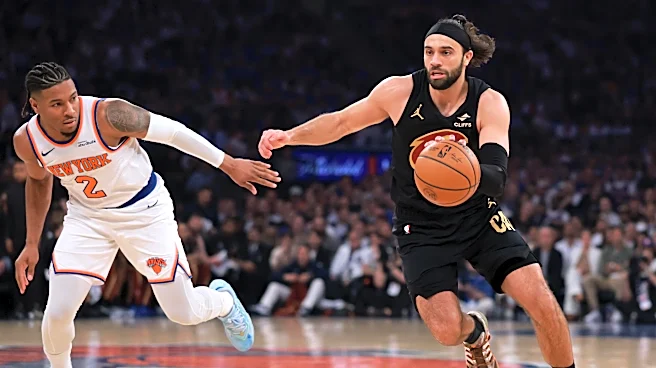
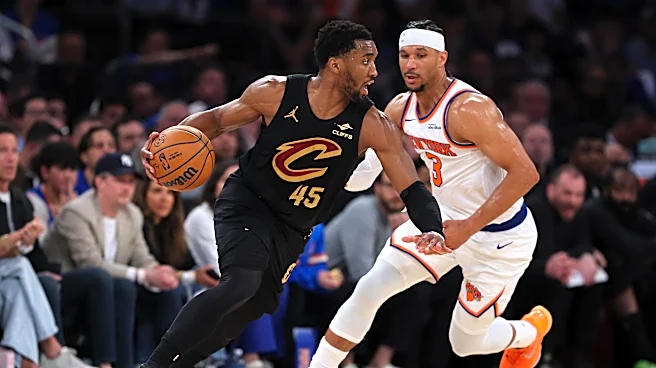
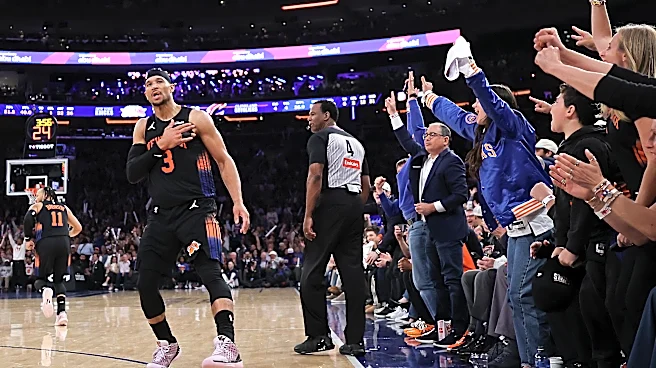
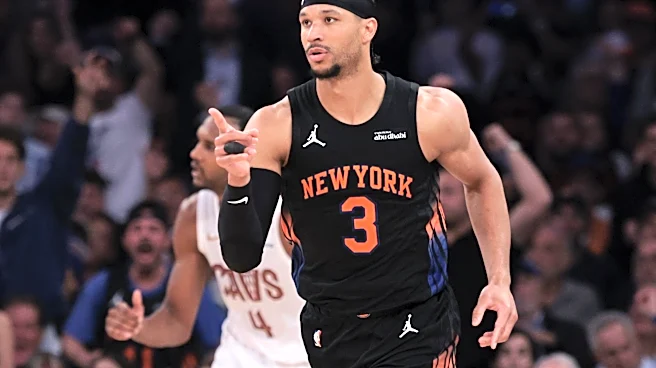
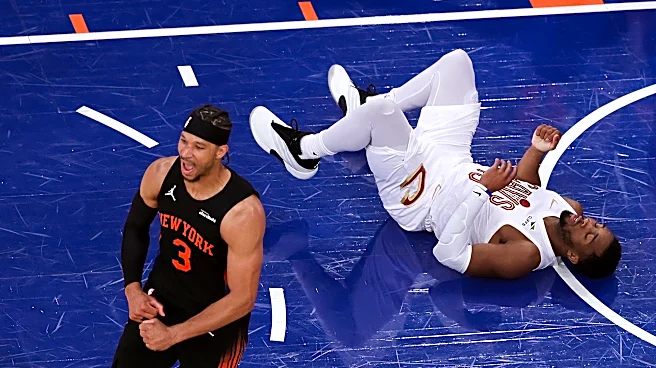
He didn’t play much in the first three quarters of Game 1 in Cleveland, but Mike Brown sent him out there to use a rare 5-out lineup with Hart struggling as the Knicks fell behind by as many as 22 points with under eight minutes to go. Suddenly, the game turned. Shamet was disrupting Donovan Mitchell’s rhythm. He made a three early that cut the lead a smidge before Brunson’s big run.
Then, after the captain brought them all the way back, Shamet finished it off with a game-tying corner three.
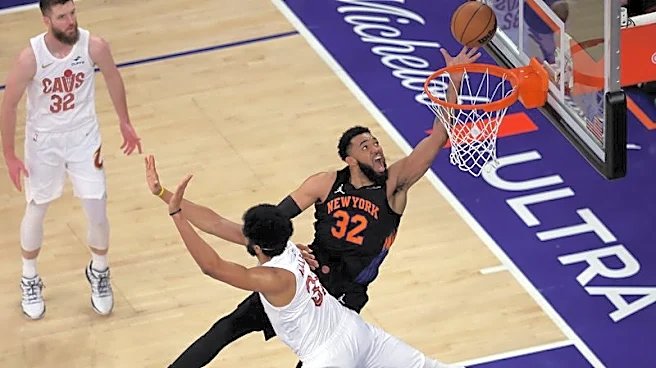
In overtime, with the stunned Cavs on the ropes, he hit the effective dagger to send MSG ablaze.
After being a gigantic part of saving the Knicks in Game 1, he was very quiet the following night after Hart went ballistic. Going into Game 3, the Knicks needed all hands on deck to take a stranglehold of this series, and they got that with more clutch shooting from Shamet.
Four more triples and a plus-five in 27 minutes further cemented himself in Knicks lore for his heroics. A guy that didn’t have a guaranteed roster spot during the preseason was now a big part of a team that’s one win away from the NBA Finals, for a franchise that’s gone 27 years without such an appearance.
Landry Shamet will go down in Knicks folklore, the only question now is just how rooted will he be.