


Welcome to the 2026 edition of Ranking theRockies, where we take a look back at every player to log playing time for theRockies in 2026. The purpose of this list is to provide a snapshot of the player in context. The “Ranking” is an organizing principle that’s drawn from Baseball Reference’s WAR (rWAR). It’s not something the staff debated. We’ll begin with the player with the lowest rWAR and end up with the player with the highest.
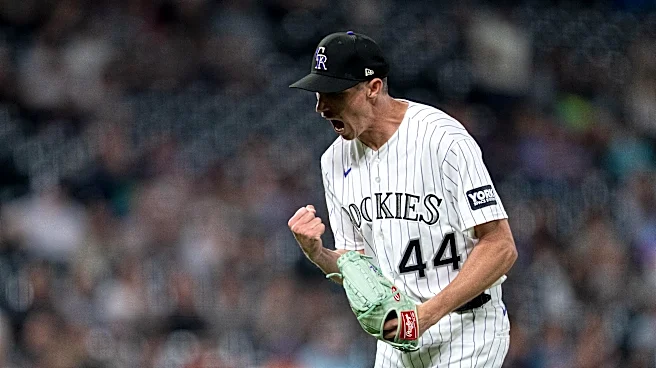
No. 26, Jimmy Herget (0.1 rWAR)
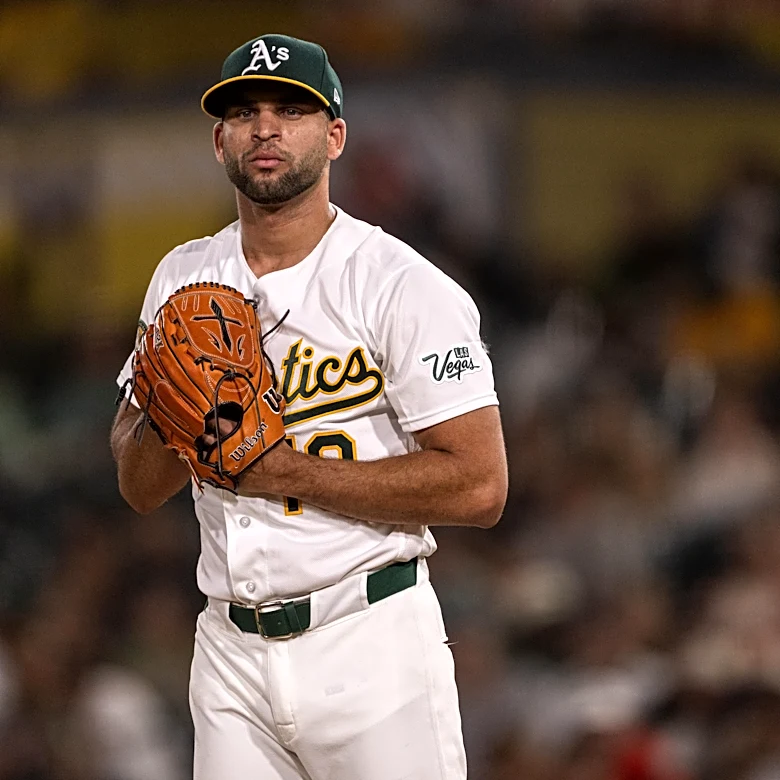
Jimmy Herget entered 2026 coming off one of the best seasons of his
career. The right-hander had posted a 2.48 ERA across 83.1 innings in 2025, giving the Rockies a dependable multi-inning reliever with a funky delivery and a varied repertoire.
A year later, Herget finished with a 0-6 record, a 5.70 ERA and a 1.53 WHIP across 51 appearances. He pitched well for extended periods, but two particularly difficult stretches did considerable damage to his final numbers.
There was plenty happening away from the mound, too. Herget became a dad, a major life adjustment on its own, before spending time on the bereavement list and dealing with a shoulder injury that landed him on the injured list. Between those interruptions, finding a consistent rhythm couldn’t have been easy.
Herget was also working with a new pitching coach and philosophy. He began the year with a revamped pitch mix that featured a new cutter. His slider, his second-most-used pitch in 2025, was nowhere to be found for much of the season before returning late in the year.
2026 Season Stats
Statistics via Baseball Reference.
How it played out
Herget appeared in the Rockies’ season opener against Miami, replacing Kyle Freeland in the fifth inning and providing 1.1 scoreless innings. He continued pitching well throughout April, allowing just two earned runs across his first 11 appearances and 12 innings, good for a 1.50 ERA.
That stretch culminated April 21 against San Diego, when Herget served as an opener for Chase Dollander. He struck out Ramón Laureano, Fernando Tatis Jr. and Jackson Merrill on just 14 pitches, throwing 10 strikes.
Dollander followed with six innings of one-run baseball and nine strikeouts, but the Rockies lost 1-0.
Two days later, Herget went on the paternity list.
He returned April 29 against Cincinnati and allowed two runs in the ninth inning of a 13-2 victory, including a home run by Will Benson.
Four days later against Atlanta, Herget surrendered three runs in the ninth, all scoring with two outs. On May 8 against Philadelphia, he inherited two runners with nobody out and Colorado leading 7-3. Bryson Stott doubled home both runners, and Justin Crawford followed with a two-run homer that tied the game.
Three appearances, three innings and seven earned runs.
Herget went on the bereavement list May 9 and returned three days later against Pittsburgh. He surrendered a leadoff double to Nick Gonzales and issued a walk but managed to escape the eighth inning without allowing a run, throwing 22 pitches and recording one strikeout.
Two days later, Herget landed on the injured list with a right shoulder impingement, keeping him out until June 17.
Including his May 12 appearance, Herget allowed just one earned run over 10 innings across 11 appearances through July 12, despite the extended interruption.
Then came his worst stretch of the season.
Between July 17 and August 1, Herget allowed at least one earned run in six consecutive appearances. He surrendered 13 earned runs in just 4.1 innings, walking seven hitters while striking out only four.
The struggles began July 17 against Cincinnati, when Herget inherited a runner with one out and promptly surrendered consecutive home runs to Spencer Steer and Eugenio Suárez.
On July 26 against Milwaukee, Herget entered with one out and a runner aboard before walking Gary Sánchez. Luis Lara followed with an RBI double, and Cooper Pratt and Joey Ortiz added consecutive doubles on sweepers that weren’t particularly well struck. By the time he escaped the inning, three earned runs had been charged to Herget, and the inherited runner had also scored.
Unlike his first difficult stretch, when he had struck out five hitters and walked just one, Herget was now struggling to keep runners off base while allowing damaging contact.
He began to settle down again in August. On August 4 and 7, Herget delivered consecutive scoreless, hitless innings, striking out two hitters in each appearance.
There were still rough outings, including three earned runs against Washington on August 27 and a difficult appearance against St. Louis on September 6. But the extended run of poor outings didn’t return.
Herget finished with 7.2 innings and two earned runs across his final four appearances, including three outings of at least two innings. On September 16 against San Diego, he worked two scoreless innings on just 22 pitches, retiring six consecutive hitters after allowing a leadoff single.
His final appearance came September 24 against Arizona. Herget entered in the fourth inning with two runners aboard and allowed an inherited runner to score before escaping the inning. He went on to pitch 2.2 innings, striking out four but allowing two earned runs, including a solo homer by James McCann.
An uneven season
Statistics via FanGraphs.
Herget’s 2026 season wasn’t consistently poor. Two particularly difficult stretches accounted for much of the damage.
Across those two stretches, totaling nine appearances and just 7.1 innings, Herget allowed 20 earned runs, producing a 24.55 ERA.
In his other 46.1 innings, he allowed just 14 earned runs, a 2.72 ERA.
Removing a reliever’s worst appearances will naturally improve his numbers, and Herget’s home run and control problems were genuine shortcomings, not simply unfortunate results we can remove from the equation.
But the difference between a 24.55 ERA and a 2.72 ERA helps explain how a pitcher who was frequently effective finished with a 5.70 ERA.
So, what changed between the pitcher who was so dependable in 2025 and the one who struggled so badly at times in 2026?
A different arsenal
Herget’s sweeper was his most-used pitch in 2025, and it remained a major part of his repertoire in 2026. But its effectiveness, particularly against left-handed hitters, declined considerably.
In 2025, lefties produced a .339 wOBA against the sweeper, with 11 strikeouts and one home run allowed across 177 pitches. In 2026, that wOBA ballooned to .526, with four home runs and zero strikeouts across 105 pitches. Its whiff rate dropped from 24.7% to just 8.3%.
Herget actually reduced his sweeper usage against lefties from 29% to 22%, while maintaining roughly 33% usage against right-handed hitters.
Herget threw 362 sliders in 2025, holding left-handed hitters to a .194 wOBA with the pitch. Yet Statcast didn’t classify a single pitch as a slider through July 2026.
Instead, he featured a new cutter with a different movement profile. The cutter averaged 86.2 mph with 7.6 inches of induced vertical break, compared with 85.5 mph and 3.9 inches for his 2025 slider.
The cutter worked, particularly against right-handed hitters, who produced just a .223 wOBA against it.
But with his sweeper struggling against lefties, why had the slider that worked so well against them in 2025 nearly disappeared?
On August 23, the slider finally returned.
It initially appeared only occasionally, but by September it had become a significant part of his repertoire again.
Percentage of pitches thrown, via Baseball Savant.
By September, Herget was throwing more sliders than cutters, 38 to 36. The slider’s movement was also similar to what it had been in 2025.
That gave Herget another option alongside his sweeper.
On September 6 against St. Louis, Herget showed how the two pitches could work together. He opened Thomas Saggese’s at-bat with an 84.8 mph slider for a called strike, then got him to swing through another slider that broke down and away. Saggese fouled off a sweeper, also away from the plate, before Herget went back to the sweeper for a called third strike.
Herget had already begun pitching more consistently before the slider returned, but he also avoided another prolonged stretch like the one that overwhelmed him in July.
Could bringing back the slider have helped him maintain consistency by giving hitters another pitch to account for?
Where does Herget stand heading into 2027?
It’s been quite a year for Jimmy Herget, both on and off the mound. And as the dust settles on 2026, the Rockies’ changing pitching philosophy adds another layer to his story.
Former pitching coach Alon Leichman emphasized repertoire diversification, but the Rockies eventually moved away from elements of his approach. Following his dismissal, Leichman described disagreements over pitching philosophy and suggested some pitchers had reverted to their previous approaches, as detailed in reporting on the Rockies’ competing pitching philosophies.
We don’t know whether Herget’s changing pitch mix reflected that philosophy, his own adjustments or some combination of the two. Was the cutter part of a new approach that eventually fell out of favor? Did the slider return because Herget needed another option, or because the organization’s thinking had changed? It’s difficult to say, but the timing is intriguing.
That makes it difficult to know what to expect from Herget in 2027. The Rockies could trade him, designate him for assignment or bring him back.
After everything that happened in 2026, his 5.70 ERA tells us how the season ended, but not necessarily what comes next.
Join the conversation!
Sign up for a user account and get:
- Fewer ads
- Create community posts
- Comment on articles, community posts
- Rec comments, community posts
- New, improved notifications system!
Download the SB Nation app on iOS or Android.
Please keep in mind ourPurple Row Community Guidelines when you’re commenting. Thanks!