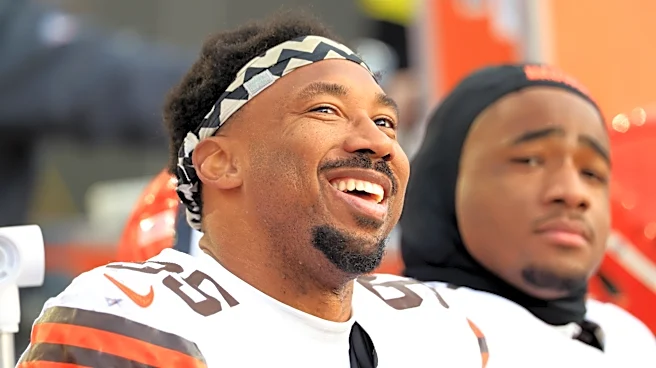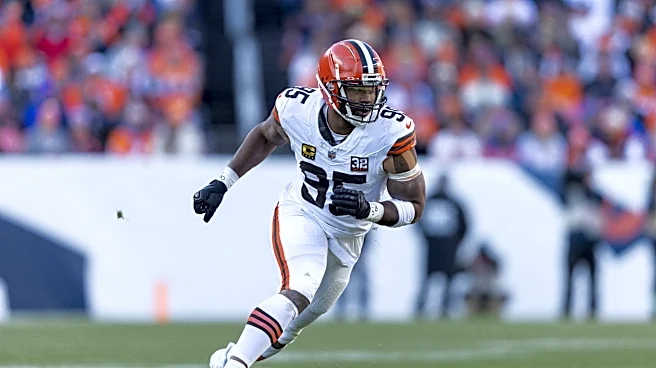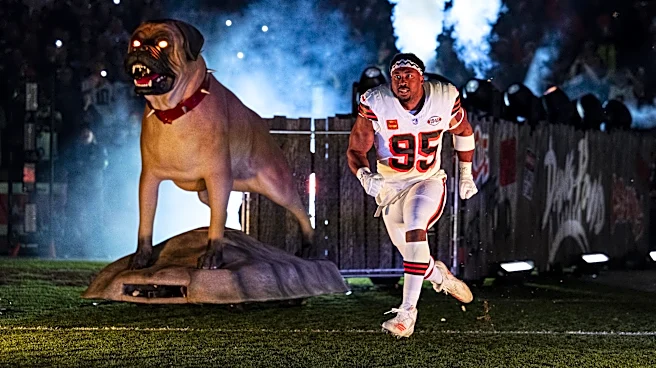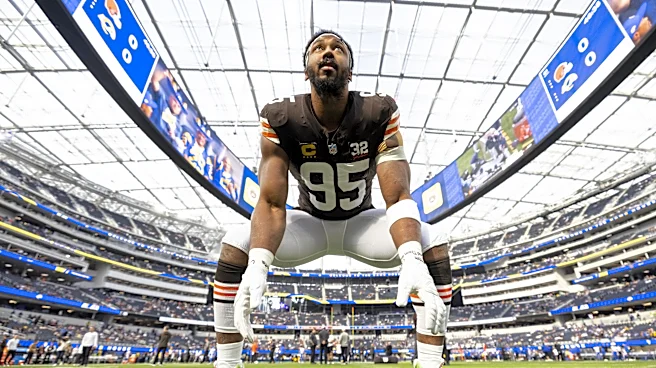




Spoiler alert: Yes, the Buffalo Bills missed the boat on Myles Garrett. However, whether or not they had the right luggage to pack for a trip aboard destination nowhere via the Cleveland Browns is uncertain. Simply put is the fact that acquiring Garrett is a massive undertaking.
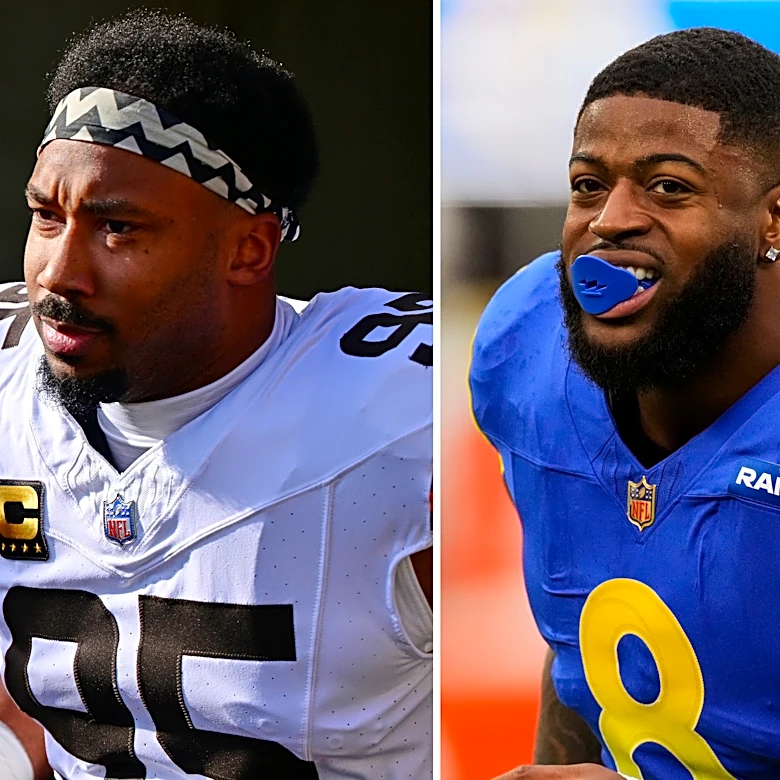
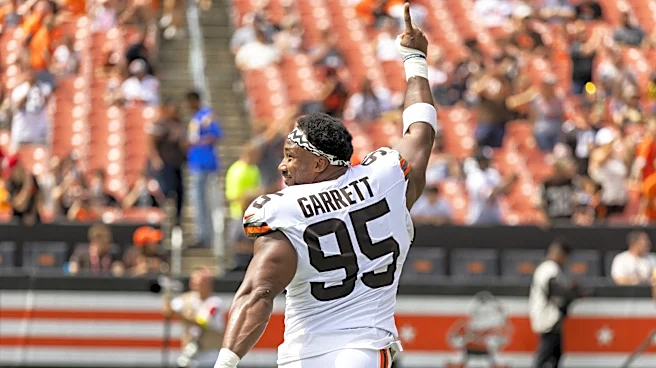
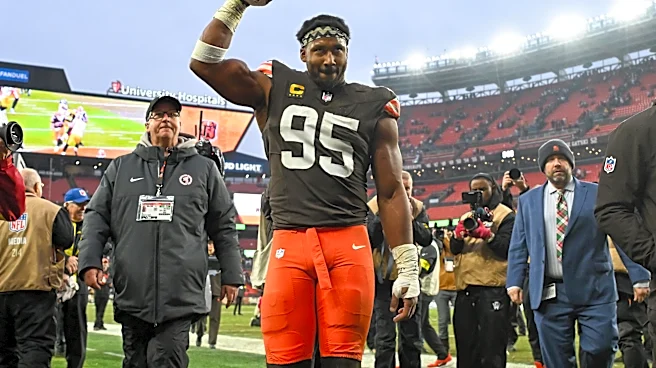
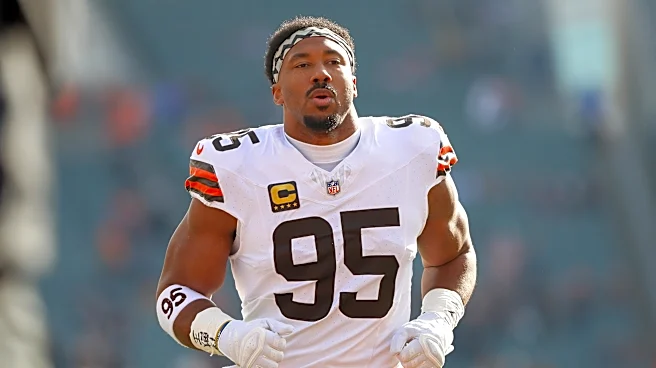
Earlier this offseason, Matt Warren wrote about the Browns’ move to rework Garrett’s contract, and what it most likely signaled. In the end, Garrett is heading to Hollywood where he’ll now play for the Los Angeles Rams. Per
ESPN sources shared with Adam Schefter, the Rams are sending “Jared Verse, a 2027 first-round pick, a 2028 2nd and a 2029 3rd.”
Given the parameters of the trade and what it would have taken for any team to land Garrett, then there are a few key points to debate as it relates to Buffalo. Was it too much for the Bills to even consider? Would you have been okay with Buffalo trading premium draft picks and Greg Rousseau to land Garrett?
When initially exploring the idea of adding Garrett to Buffalo’s roster, the belief was that it would take three first-round picks to land him. That was following the now-failed trade of edge rusher Maxx Crosby to the Baltimore Ravens for two first-round picks. In the end, it only took one first-round pick (rather than multiple firsts) from a Super Bowl-contending team to land the certain Hall of Famer.
Should the Bills have shown willing to pull of a trade for Garrett at all costs? Let’s explore things a bit…
The Bills, Brandon Beane, and draft picks
There may be no NFL team under further pressure to win a Super Bowl than the Bills. Never mind the four consecutive Super Bowl losses in the 90s, or the 17-year playoff drought. It’s quarterback Josh Allen who arguably gives the franchise its best shot ever at winning a championship — yes, even over those legendary SB rosters.
In ways, Buffalo is currently aligned similar to Los Angeles. Each team has an incredible, MVP-winning quarterback, and little trouble scoring at will while dominating the regular season. Both teams also seem to save their worst for the postseason (though not always, in LA’s case).
Unlike the Rams, the Bills appear unwilling to unload picks and players via trade in an effort to win at all costs. President of football operations/general manager Brandon Beane makes no secret his love for draft capital, and he loves stockpiling draft picks so he can move around the draft board in each and every round. How willing would Beane be to part with a first in 2027, a second in 2028, and a third in 2029?
The draft damage can be viewed as limited a bit since it’s a premium pick in each of the next three draft classes, but it still represents as many as three potential rookies with cost-controlled contracts, all who could make a significant impact on Buffalo’s roster.
It’s worth pointing out that Buffalo also hasn’t had the best draft position to land premium talent in most rounds of recent draft classes, apart from the 2026 NFL Draft where they had selections at or near the top for several rounds. After nine years in the same defensive system, One Bills Drive will employ a new 3-4 base scheme in an effort to introduce more explosion within an attack-style defense. Beane made a lot of moves in the latest draft to add defensive prospects en masse. The great unknown is whether any of player Buffalo picks in the next three drafts (or even those selected this past April) will have the same level of impact that Garrett brings to the game.
The big question is if Beane would be willing to abandon his draft penchant to instead land Garrett. Beane has said in the past that he’s always going to check in on talented players, which leads one to believe he did just that in terms of trading for Garrett.
The “scary” part may exist in Matt Warren had to say about teams looking to spread out “the pain” over five years, stating that “there is a real possibility a team trading for Garrett could still be giving up draft picks after he has retired form the NFL.”
How much salary cap space do the Bills have?
The real elephant in the room is the salary cap. Right now, Buffalo has roughly $10 million in available cap space on June 1. Simply put, the Bills could have afforded Garrett’s 2026 contract, which is a reasonably low $8.34 million.
As Matt Warren points out, the cash component is a different matter — where they’d have had to pay him $31.1 million. If there’s a positive in the financials of Garrett’s current contract it’s that the extension he signed with Cleveland this past March would have given Buffalo some time to get creative with numbers down the road. Beane and the front office would have to get really creative with contract extensions for other players just to kick the financial burden down the road a few additional years (think: New Orleans Saints).
That may have given One Bills Drive reason to pause, if for no other reason than to consider Garrett’s age and his fit long term. Garrett will turn 31 at the end of December, and it’s worth wondering if the best years are behind him. That may sound crazy when considering the type of player Garrett is, but the NFL is a ruthless business and the bill always comes due.
Jared Verse vs. Greg Rousseau
To land Garrett, the Rams had to be willing to part ways with edge rusher Jared Verse. In considering Garrett, it’s unlikely any player outside of the game’s top quarterbacks is off limits. Verse is a talented player who will turn 26 in November. However, NFL teams have shown caution with older college prospects — Verse was 23 entering his rookie year. For all of his potential, he is nowhere near the current level of Garrett.
Interestingly, Bills edge rusher Greg Rousseau just turned 26 this past April, while having three more NFL seasons under his belt as a relatively young rookie from the class of 2021. The similarities between Verse and Rousseau don’t end there.
Is Verse that much better a player than Rousseau? One might initially believe that’s the case, but let’s take a look at their production in each of the last two seasons:
Jared Verse (2024 through 2025)
•1,690 snaps
•12 sacks
•31 quarterback knockdowns
•69 pressures
•5 forced fumbles
•22 tackles for loss
Greg Rousseau (2024 through 2025)
•1,364 snaps
•15 sacks
•28 quarterback knockdowns
•64 pressures
•4 forced fumbles
•22 tackles for loss
A cursory glance reveals that Rousseau was actually more productive in less snaps. What he doesn’t carry is the same level of national recognition to that of Verse. Yes, NFL teams operate in a vacuum separate from the outside noise, but it’s not difficult to imagine the Browns wanting more from the Bills if the offer included Rousseau.
Does risk outweigh reward?
This isn’t a one-sided scenario, mind you. The chief concern will always come down to availability. Injuries are never something a team can count on, yet likely always a major facet in any deal. Is it worth giving up so much draft capital and a talented young defender for one albeit incredible player in return?
Is the move too risky when considering the potential for injury, like what happened with edge rusher Micah Parsons last season following his trade to the Green Bay Packers? Or is the bigger risk an unwillingness/inability to take the leap in an effort to improve the roster and Buffalo’s Super Bowl odds?
Of course, there’s also the idea that Cleveland wanted nothing to do with trading Garrett to another AFC team. While the Browns’ fumbles have rendered them playoff afterthoughts most of the 21st century, the goal is Super Bowl for every team. Letting a potential conference headache land your best player is not sound business.
It’s possible that the Bills were never in play to land Garrett simply because the Browns were unwilling to listen, regardless of offer.
It’s your turn to vote! Would you have been okay with the Bills leveraging a similar deal to land Myles Garrett?