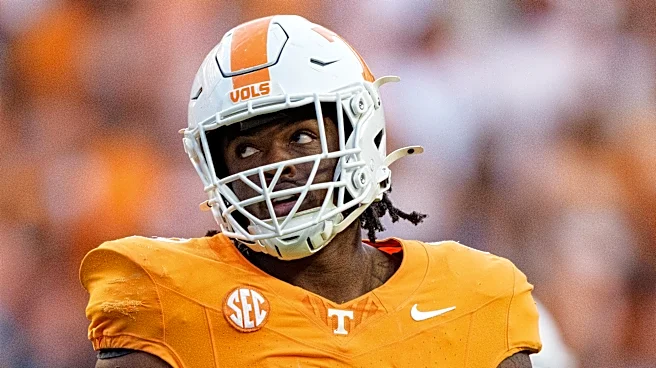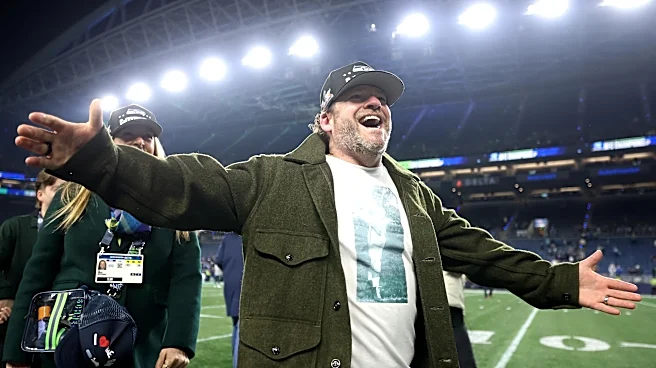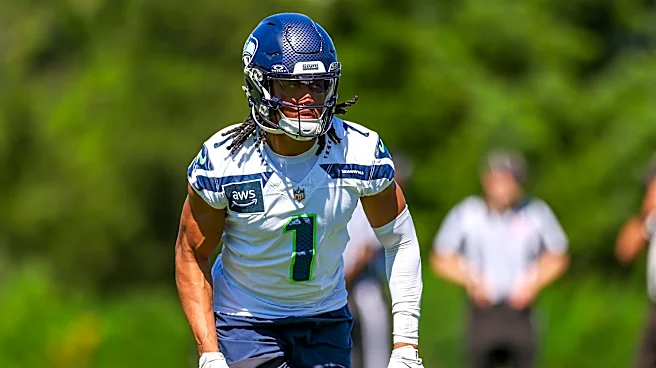


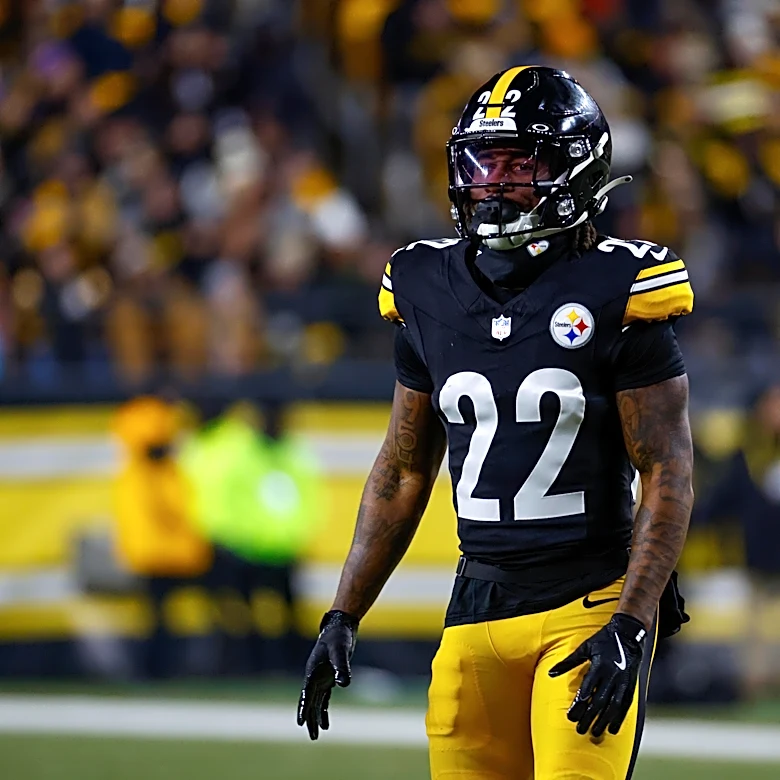
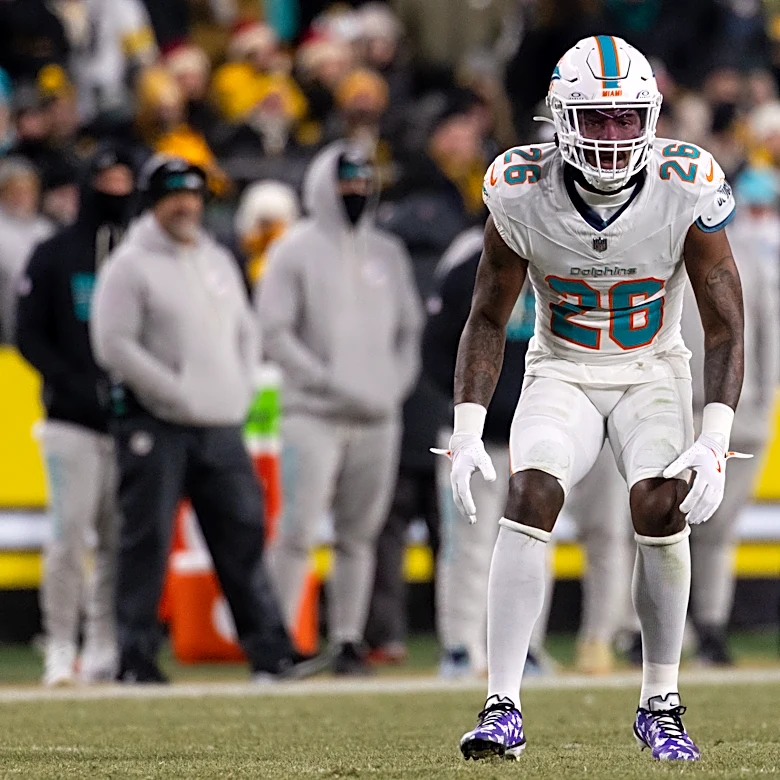

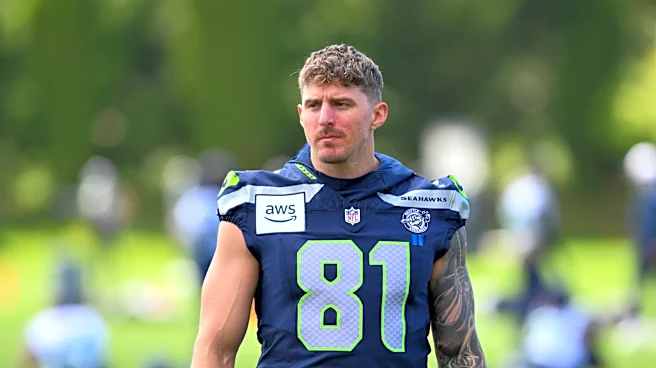
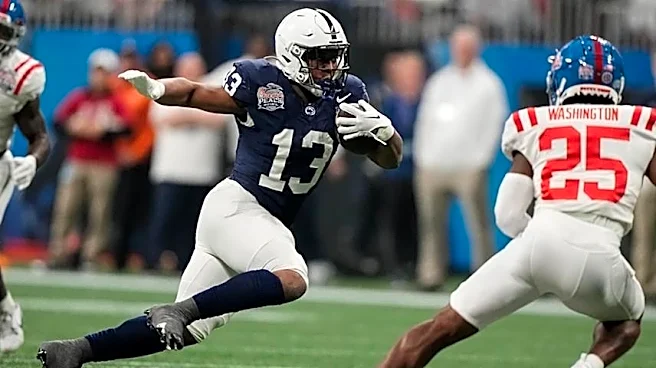


The Seattle Seahawks 2026 rookie class may not feature a long list of immediate starters, but that doesn’t mean this group won’t make an impact this season.
With Mike Macdonald entering his third year and the roster becoming increasingly competitive, earning playing time will be more difficult than it was for previous rookie classes. At the same time, several positions remain unsettled, creating opportunities for young players who can impress throughout training camp.
Some will have to fight for rotational
snaps, others will likely begin on special teams, and a few may simply be preparing for larger roles in 2027. But there are legitimate paths for multiple rookies to contribute sooner rather than later.
Jadarian Price isn’t guaranteed to be RB1… yet
The obvious headliner is first-round pick Jadarian Price, but his path to immediate starter status may not be quite as straightforward as many expected after draft weekend.
Throughout offseason practices, George Holani has surprisingly taken a significant number of first-team reps, while Zach Charbonnet has reportedly looked ahead of schedule in his recovery. That shouldn’t come as a complete surprise. Continuity matters, and Charbonnet now enters the season with a much better understanding of the run concepts, protections and play-action elements that define Seattle’s offense.
Even so, Charbonnet still appears to be the favorite to open the season as Seattle’s lead back if healthy (something that seems unlikely right now). Price’s explosiveness, fit with scheme and versatility should earn him touches immediately, but the Seahawks have historically preferred easing young running backs into larger workloads rather than forcing them into feature roles from Day 1.
By the end of the season, that balance could look very different.
Bud Clark walks into one of the roster’s biggest opportunities
Few rookies may benefit more from Seattle’s offseason departures than second-round safety Bud Clark.
Coby Bryant’s departure leaves behind meaningful snaps in Macdonald’s secondary. Ty Okada enters camp with a slight advantage simply because he spent last season in the active roster, while Rodney Thomas II arrived this offseason and quickly received positive reviews from the coaching staff.
Neither player, however, possesses Clark’s combination of versatility and long-term upside.
Macdonald has consistently valued defensive backs capable of filling multiple roles, disguising coverages and communicating across the secondary. Clark checks each of those boxes, giving him a legitimate chance to climb the depth chart quickly if his transition to the NFL goes smoothly.
Julian Neal has a realistic path to defensive snaps
The Seahawks’ cornerback room quietly has more uncertainty than many realize.
Josh Jobe is widely expected to be in the starting lineup opposite Devon Witherspoon after earning a new contract, but Woolen’s departure also leaves open rotational snaps that existed throughout last season, particularly in dime packages where Seattle frequently rotated outside corners.
At the moment, Nehemiah Pritchett has been working with those defensive units during offseason practices. Still, projecting him into a significant defensive role requires believing he has made a massive technical leap after three awful years.
That uncertainty creates an opportunity for Julian Neal.
Like most rookie cornerbacks, Neal will almost certainly have to earn his keep on special teams first. But if he develops quickly during camp, there is a very realistic chance he becomes part of Seattle’s defensive rotation before the end of his rookie season.
Beau Stephens looks more like Anthony Bradford’s insurance than his replacement
Some fans have already started wondering whether Beau Stephens could challenge Anthony Bradford for the starting right guard job.
That seems unlikely.
Bradford remains the clear favorite entering camp, and nothing from the offseason suggests Seattle is looking to replace him immediately. Instead, Stephens projects as exactly what the Seahawks have lacked in recent years: reliable interior offensive line depth.
That role could become even more valuable beyond 2026.
Bradford is scheduled to hit free agency after the season, and if Stephens proves capable of becoming a future starter, Seattle may avoid paying what could become an increasingly expensive market price for veteran guards.
For now, his biggest contribution would simply be giving the offensive line competent depth.
Emmanuel Henderson Jr.’s first battle is making the roster
Among Seattle’s draft picks, Emmanuel Henderson arguably faces one of the toughest climbs.
Before offensive packages even become part of the conversation, he must first survive a crowded competition for what is likely the WR6 spot. Cody White remains firmly in that battle, while Irv Charles also arrives with an excellent chance to stick thanks largely to his value on special teams.
If Henderson ultimately makes the 53-man roster, his rookie impact will almost certainly begin there as well.
His athleticism could eventually earn him situational offensive opportunities, but special teams will likely determine whether he reaches the regular season roster in the first place.
Andre Fuller enters camp with a real opportunity
As we’ve discussed previously, the Seahawks’ cornerback depth behind the projected starters remains far from settled. Players like Nehemiah Pritchett and Noah Igbinoghene have yet to firmly establish themselves, while the room also lacks bigger outside corners capable of matching up against larger receivers.
That is exactly where Fuller becomes intriguing.
His size, combined with previous experience at both nickel and safety, gives him versatility that Macdonald has consistently prioritized. His immediate objective is simply making the roster, but if he accomplishes that, special teams could quickly become his avenue toward a larger defensive role.
Deven Eastern enters one of camp’s most open competitions
Nose tackle rarely generates headlines, but Seattle’s competition at the position may be one of the most wide-open battles on the roster.
Brandon Pili returns after spending last season with the organization, while fellow rookie UDFA Uso Seumalo joins veterans J.R. Singleton and Bubba Thomas in the fight for depth behind the starters.
None of those players enters camp with a secure position.
That gives Deven Eastern a genuine opportunity to carve out a rotational role if he can consistently hold up against the run and show enough disruption inside to separate himself from the rest of the group.
Michael Dansby’s roster hopes begin on special teams
Dansby probably has the narrowest margin for error among Seattle’s rookie defensive backs.
The lack of proven cornerback depth certainly works in his favor, but expecting immediate defensive snaps would be optimistic. Instead, like so many late-round defensive backs before him, his roster hopes will likely depend on becoming an impact special teamer.
If Dansby can establish himself there while continuing to refine his technique as an outside corner (a former WR), Seattle could spend the next year developing him into a legitimate defensive contributor.
That may ultimately be his clearest path toward sticking with the organization beyond his rookie season.
Final thoughts
Not every member of Seattle’s 2026 draft class needs to become an immediate starter for the group to be considered successful.
Jadarian Price should have an offensive role from the opening weeks, even if Zach Charbonnet appears positioned to begin the season atop the depth chart (when healthy). Bud Clark and Julian Neal both enter situations where defensive snaps are legitimately available, while Beau Stephens could become one of the roster’s most valuable depth pieces despite not opening the year as a starter.
The remaining rookies face steeper climbs, but none are without opportunity. For Emmanuel Henderson, Andre Fuller, Deven Eastern and Michael Dansby, special teams and training camp performance will likely determine how quickly they earn larger responsibilities.
If Seattle finishes the season with three or four rookies playing meaningful snaps and other with a lot of potential, John Schneider and Mike Macdonald will have another draft class capable of strengthening both the present roster and the franchise’s long-term foundation.