

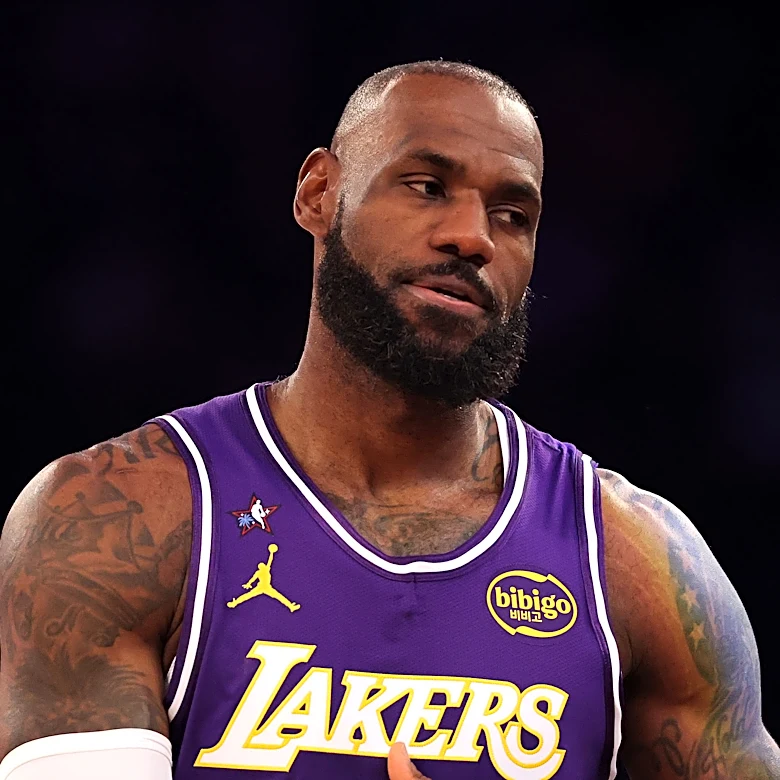

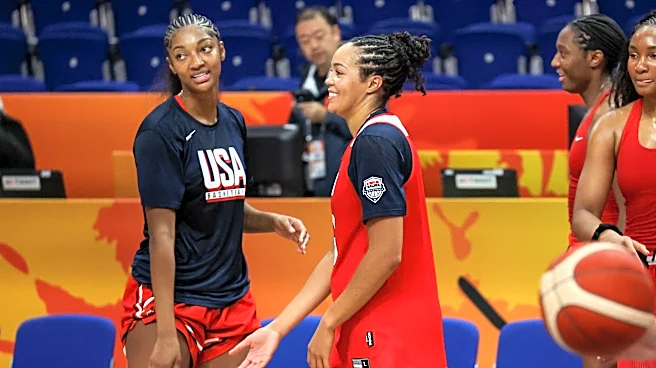
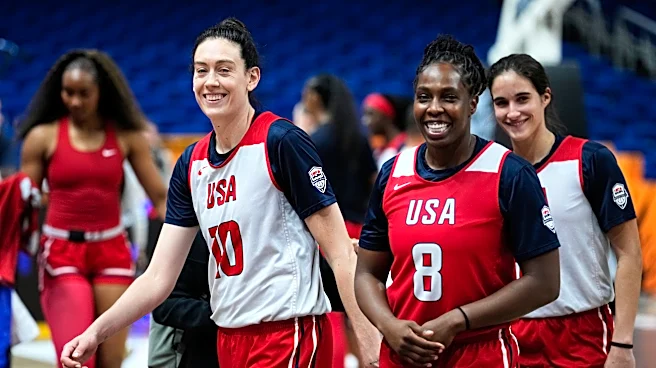
The fourth window of 2027 FIBA World Cup qualifying ran from August 24 to September 1, and seven former Zags suited up for six different countries across four regions. Qualifying works in six windows spread over fifteen months. Eighty national teams entered in November 2025, drawn into groups of four playing home-and-away. Windows one through three made up the First Round, which wrapped in early July. Records carried over between windows. Rosters did not, and every country named a fresh twelve-man
squad each time out. The Second Round opened on August 26, and that’s what just wrapped up.
32 teams reach Qatar next August. Europe gets twelve berths, Asia and Oceania get seven plus the automatic bid Qatar already holds as host, the Americas get seven, and Africa gets five. Turkey became the first country to punch its ticket during this window (shouts out, Turkey). Everybody else has two windows left, in November and next February.
August is the last window that falls entirely in the NBA offseason, and the rosters reflected that. Canada brought two NBA players to Panama City and got two more back for the Argentina game four days later. Lithuania named a squad with none at all. France brought Victor Wembanyama and Rudy Gobert. Japan brought Rui Hachimura, and he was the best player on the floor in both of his home country’s games. The seven Zags who played were spread across the map: Hachimura in Jeddah and Tokyo, Kyle Wiltjer and Kelly Olynyk in Panama City and Quebec City, Joël Ayayi in Paris and Stockholm, Oumar Ballo in Dakar, Mario Saint Supery played somewhere, and Ángel Núñez in Brasília and Santo Domingo. Here’s how each of them fared.
Rui Hachimura, Japan
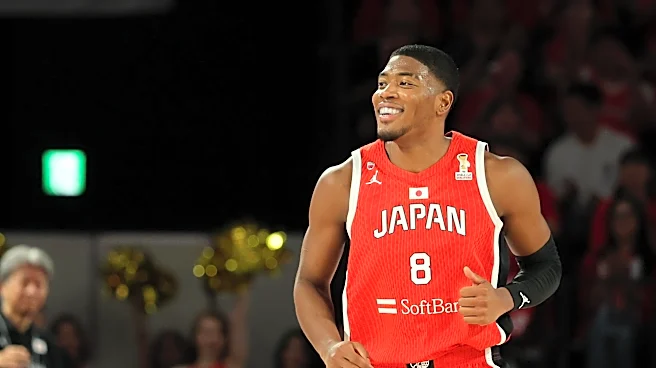
Hachimura went 20-of-29 from the floor across two games and led the entire Asian qualifiers in scoring at 29.5 a night. In Jeddah on August 27 he put up 29 on 11-of-14 shooting in 28 minutes, with four rebounds, three steals, a block, zero turnovers and zero fouls. Japan won 106-78 and outscored Saudi Arabia by 23 while he was on the floor. Four days later in Tokyo he answered with 30 against Qatar on six made threes, adding six rebounds, four assists, three steals and three blocks. Japan won that one 123-70.
He signed a two-year, $28 million deal with the Clippers in July after three and a half seasons with the Lakers. The Clippers front office has to be pleased with what August looked like for Rui. The dude shot 9-of-12 from three across the window and posted efficiency ratings of +36 and +39, the two highest marks of any player in either game. Japan sits 2-0 in the Second Round with four games left before Qatar.
Kyle Wiltjer, Canada
Wiltjer has now played in all eight of Canada’s qualifying games, which no other Canadian can say. He opened the window in Panama City with 16 points on 7-of-15 shooting in 20 minutes, adding five rebounds, a steal and a block in an 86-66 win. Four days later in Quebec City, with Nickeil Alexander-Walker and Lu Dort back in the lineup against Argentina, his role shrank to nine minutes and he finished with three points and a rebound. Canada won 97-92 anyway and moved to 8-0, the only undefeated team left in the Americas.
That’s the pattern for him across the whole cycle. When the NBA guys stay home, Wiltjer carries the offense, and when they show up, he gets whatever is left. He’s still averaging 13.4 points and 4.1 rebounds in 19.5 minutes for the tournament, and he turns 34 in October. He plays his club ball for Umana Reyer Venezia, where he’s been for three seasons.
Kelly Olynyk, Canada
The last time Olynyk pulled on a Canada jersey was Paris in the summer of 2024, where he captained the team and averaged 1.5 points in four games. He’s 35 now, he wrapped his 13th NBA season in June as a reserve behind Victor Wembanyama on a Spurs team that lost the Finals in five, and he was unsigned when Canada Basketball named him to the August roster.
Against Panama he was the only active NBA player Canada had on the floor, and he finished with eight points and five rebounds in the 86-66 win. The Argentina game was tighter and he was more useful in it. The Canadian Press credited his work under the basket as the difference in a third quarter Canada won 25-16, and he finished with 11 points in the 97-92 victory. He also led the whole team in steals for the window at three a game, which is not a stat anybody has ever associated with Kelly Olynyk.
Joël Ayayi, France
Ayayi wasn’t supposed to be on this roster. France called him up on August 11 to replace Élie Okobo, and he found himself in a locker room with Wembanyama, Gobert and Evan Fournier.
He got eight minutes in the opener at the Accor Arena, a 92-67 dismantling of a Doncic-less Slovenia in front of 15,831 people, and finished with two points and three rebounds. Stockholm three days later was the harder night. Sweden hung around for three quarters, Gobert was scratched before tip with a muscle issue, and France shot 3-of-19 from three in the first half. Ayayi played 16 minutes off the bench, scored seven on 3-of-5 shooting with two steals. France won 84-69 and went 4-0 for the summer.
He’s 26 and playing for Paris Basketball in the EuroLeague, his third French club in four years since the Washington Wizards and the G League. Not a bad two weeks for a guy who got the phone call in mid-August.
Oumar Ballo, Mali
The African qualifiers don’t do home-and-away. All twelve teams flew to Dakar and played a compressed tournament, three games in four days, and Mali got Côte d’Ivoire, DR Congo and Senegal in that order.
Ballo opened with 29 minutes against Côte d’Ivoire and finished with nine points on 4-of-11 shooting, nine rebounds, a steal and a block. Two days later against DR Congo he played 17 minutes, scored four, grabbed four boards and was a plus-15 in a game Mali controlled. Then Senegal, the host, and Ballo never checked in. FIBA’s box score logs him with no minutes at all. Mali is 6-3 and holding on in Group F.
That’s a step down from July, when he went for 20.0 and 9.7 and looked like the best big man in the field. He still ranks ninth in the qualifiers in rebounding at 8.5 a game. He also has a new address. FIBA now lists his club as Galatasaray, which signed him out of Cantù this summer, so he’ll spend his season in Istanbul (shouts out, Turkey) rather than Italy’s Serie A.
Ángel Núñez, Dominican Republic
Núñez is 34 and has been in and out of this program for a decade. He’s played in all eight of the Dominican Republic’s qualifying games, which is more than can be said for Karl-Anthony Towns or Al Horford, and his role is to give somebody a breather and hit an open three.
He got two minutes in Brasília on August 27, recorded an assist, and that was the night. The Chile game on September 1 in Santo Domingo went better: 12 minutes, eight points on 2-of-4 from deep and a pair of free throws. For the cycle he’s at 5.8 points and 1.9 rebounds in 14 minutes a night, shooting 45 percent from three.
He came to Spokane from Louisville, averaged 2.7 points over two seasons, and left for South Florida. Ten years later he’s still getting paid to play, currently with Śląsk Wrocław in Poland, and still getting called up to represent the DR.
Mario Saint-Supéry, Spain
Two games. 37 minutes. 21 points on 36% shooting. Five rebounds, six assists, four turnovers, five fouls.
Spain lost both games, dropping the opener at home to Portugal 95-89 and then giving away a 108-106 overtime loss in Athens. They entered the window leading Group I at 5-1 and left it 5-3 and looking up at Ukraine.
Spain is now 4-0 in qualifying games Mario Saint-Supéry has not played in. They are 1-3 in the ones he has.
Who Wasn’t There
Andrew and Ryan Nembhard both played in July and neither made Canada’s 15-man camp roster for August. Canada brought four NBA players total across the two games and the Nembhards weren’t among them, which is a scheduling decision more than a basketball one with training camp weeks away. Expect them back in November.
Domantas Sabonis was left off a Lithuanian squad that carried no NBA players at all and only two EuroLeague players. Lithuania sits fourth in Group J. Killian Tillie didn’t make France’s twelve, which continues a pattern: France called him up for the two November games and hasn’t since, even while he leads the ACB in three-point percentage for Unicaja.
Filip Petrušev was publicly ruled out of Serbia’s August roster on August 6, alongside Bogdan Bogdanović and Nikola Topić. FIBA’s career page shows him with zero appearances in this entire qualifying cycle. He’s coming off a EuroBasket summer and a move to Dubai Basketball, and Serbia has enough frontcourt bodies that they haven’t needed him. Jokić played anyway and put up a triple-double in July, because of course he did.
Ryan Woolridge got three and a half minutes for Team USA in the very first game of the cycle back in November and hasn’t been on a roster since.
And Izan Almansa, who started for Spain against Denmark in July and put up 12 points on 4-of-5 shooting, wasn’t called in for August. He’s still waiting on the NCAA to process his eligibility waiver, which means the Spanish national team remains the only place anyone has seen him play, and he hasn’t played there since July 5.