
The 1995-1996 offseason saw the Yankees and Orioles in an arms race — quite literally. The two teams, who had finished second and third in the AL East, respectively, had competed hard for David Cone, who ultimately
opted to re-sign with the Bombers four days before Christmas. The Orioles then swung a trade with the Cincinnati Reds for David Wells, a pitcher who George Steinbrenner had coveted (and who will, as such, appear in this series in the next few days). In response, Steinbrenner then met with Scott Boras and Randy Hendricks, the agents for free agent lefties Kenny Rogers and Chuck Finley, desperate to counter Baltimore’s move with the addition of a southpaw starter of his own.
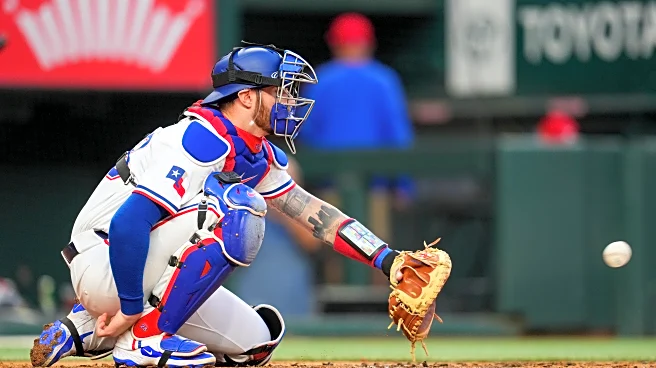
After much deliberation — the front office debated between Rogers’ track record and Finley’s cheaper pricetag — the Yankees opted to pony up for “the Gambler,“ offering him a four-year deal with the potential for five in an offseason in which no other starting pitcher received more than three years. Now, the 31-year-old southpaw, who had spent the first seven years of his career in Arlington, slotted in as the No. 2 starter behind Cone, giving the Yankees — at least on paper — a veteran 1-2 punch atop their rotation to start Opening Day.
Kenny Rogers
Signing Date: December 30, 1995
Contract: four years, $19.5 million, with fifth year vesting option
The beginning of Kenny Rogers’ career followed what I like to call the Michael King trajectory. Taken in the 39th round of the 1982 amateur draft, he made his Major League debut seven years later, on April 6, 1989. He quickly established himself as a dominant reliever, posting a 2.93 ERA as a setup man in front of closer Jeff Russell. Rogers spent his first four seasons in the bullpen, making only a handful of spot starts, with an ERA+ of 125 or above in three of those four seasons (the 1991 campaign, which was the first time the Rangers attempted to make him a starter, was a disaster, but even then his ERA out of the bullpen was only 4.05).
Starting in 1993, he made the move to the rotation once more, this time successfully, culminating in an All-Star 1995 campaign in which he went 17-7 and was worth 5.8 bWAR. It was during this three-year stretch that Rogers etched his name in baseball immortality, spinning the 14th perfect game in Major League history on July 28, 1994.
It was on the back of this strong platform that Rogers’ agent Boras was able to strongarm Steinbrenner into giving the veteran lefty four guaranteed years despite the superior pitcher in Cone only getting three; one of Steinbrenner’s advisors, speaking to Murray Chass of the New York Times, even acknowledged that the Yankees’ owner gave in to Boras’s demand for four years with a fifth-year option too quickly.
But when Cone suffered an aneurysm in his pitching arm that sidelined him for much of the season, that desperation seemed to have paid dividends. Rogers began the season on a heater, posting a 3.47 ERA across his first nine starts, with the Yankees winning seven. After an eight-run meltdown against the Detroit Tigers on June 8th, however, he turned into a Jekyll-and-Hyde type of pitcher. In his final 21 starts of the season, he surrendered two runs or fewer in eight starts (three of which were scoreless, including a complete game shutout on August 11th against those same Tigers), and five runs or more five times.
Like Cone, Rogers was slotted into the postseason rotation that year. Unlike his free agent counterpart, though, Rogers did not exactly contribute to the World Series run. He walked the only batter he faced in Game 2 of the ALDS (against his former team, the Rangers), was pulled after just two innings in Game 4 of that same series, and surrendered four runs in three innings of Game 4 of the ALCS against Baltimore and five runs in two innings in Game 4 of the World Series against Atlanta. Rogers was the reason why the Yankees needed to make that memorable 6-0 comeback in the first place.

Unfortunately for Rogers, his struggles would continue on into the 1997 season, as he would have an ERA upwards of six across his first 14 starts before being relegated to the bullpen in mid-June. Just a few weeks later, the Yankees agreed to a deal with the San Diego Padres for power-hitting lefty outfielder Greg Vaughn, in a six-player swap in which both squads unloaded players in the midst of underwhelming seasons. The trade, however, would ultimately be called off, as Vaughn failed the team physical. Rogers would finish the year bouncing between the rotation and the bullpen, ending up with a 5.65 ERA (80 ERA+) in 145 innings across 31 appearances (22 starts).
Desperate to get something of value from the deal and in need of a third baseman due to the departure of Wade Boggs, the Yankees ate half of the remaining money in order to send him to the Oakland Athletics for the worst hitter in the league, Scott Brosius — a player to be named later would go on to become the 1998 World Series MVP and end up ranked 93rd in the PSA Top 100 Yankees series.
For his part, the disastrous end to Rogers’ tenure as a Yankee did not end his career — far from it, in fact. Indeed, despite entering his age-33 season in 1998, he pitched another 10 seasons, earning three All-Star nods, four Gold Gloves, a top-five finish in the 2006 Cy Young race, and a misdemeanor assault charge against a cameraman as he spent time with the A’s, Mets, Twins, Rangers, and Tigers. During his last stop, he infuriated Yankees fans even further by shaking off his then-8.85 lifetime playoff ERA to blank “Murderers’ Row and Canó” in Game 3 of the 2006 ALDS in Detroit en route to the pennant. It’s perhaps altogether unsurprising, then, that Rogers’ time in pinstripes wound up little more than a forgettable footnote to his career.
Sources
Chass, Murray. “Yankees make Pitch to Finley and Rogers: Yanks make Personal Pitch to Free-Agent Left-Handers.” New York Times, Dec 30, 1995.
Chass, Murray. “Yanks Give Rogers Rich Deal for 4 Years.” New York Times, Dec 31, 1995.
Curry, Jack. “Yankees Take $5 Million Hit to Deal Rogers: Yanks Send Rogers to A’s and Take a $5 Million Hit.” New York Times. Nov 8, 1997.
Diamos, Jason. “6-Player Swap Gets Yankees A Power Hitter: In 6-Man Trade, Yanks Get a Slugger in Vaughn.” New York Times. July 5, 1997.
“Kenny Rogers.” BR Bullpen.
“Kenny Rogers.” Baseball-Reference.
See more of the “50 Most Notable Yankees Free Agent Signings in 50 Years” series here.