
It’s not uncommon for Real Madrid to be in this position: Through to the Champions League knockout phase, about to face Europe’s elite, and needing to improve, badly. It’s a recurring phrase: ‘If Real Madrid play like this against a better team than Benfica / Getafe / Celta Vigo, they’re going to get obliterated’. All that’s needed is a merciless team that can run in behind, play through a disjointed defensive structure, and, even with a transcendent Thibaut Courtois left to beat, the damn will break
enough times to expose the inevitable: This team is not ready to be among the world’s elite.
To be fair to Real Madrid, they do seem to have gears, but those gears seem to only come about in desperate circumstances — and even then, the gears lack efficiency. Against Benfica, they slept-walked, conceded a goal half-awake, then retaliated. Against Getafe, they increased the intensity in the second half, but looked unimaginative breaking down the defensive wall. Once you get to this stage of the season, the margins are too fine to risk playing that way. You don’t need to go full throttle and attack relentlessly for two legs, but you do need to be compact and alert when you do go into a defensive block; and when you attack, there has to be purpose.
Real Madrid were good enough to get themselves this far in the Champions League, but how good they really are — we’ll find out real quick.
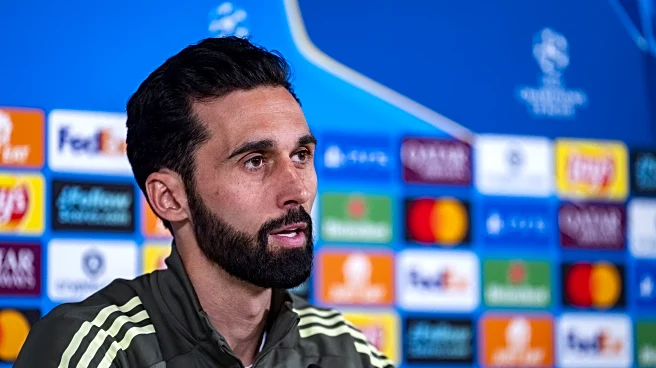
I always say that it’s important to win (even if it’s ugly) and buy yourself time — buy enough time for players to come back, for some luck to fall your way, and for players to wake up just in time for the traditional Real Madrid Spring Renaissance™. Cruelly, maybe that luck hasn’t fallen Alvaro Arbeloa’s way. Kylian Mbappe is injured, and even if he’s rushed back, he’ll likely play through pain. Jude Bellingham is still out. Ditto Eder Militao and Alvaro Carreras. Rodrygo’s ACL injury is devastating, especially before what was supposed to be his annual Manchester City uppercut.
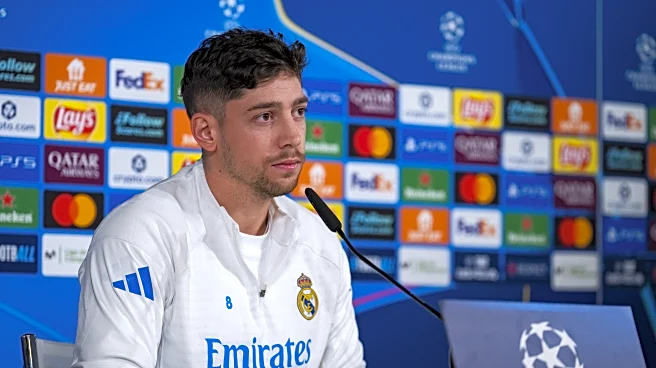
“The result the other day really boosted our morale,” Fede Valverde said in today’s pre-game press conference, while fully acknowledging the win was ugly. “We needed it. We must continue to improve both our play and our personal development; we’re winning matches, but not playing our best. But we needed to win to come into this match with renewed energy. It’s been a tough few months; we’re aware of that, and we’ve worked hard to turn things around this season. We need to stay focused on what we have to do. Let’s get behind the team.”
Valverde has been one of the better performers under Arbeloa’s brief reign, but, many of remaining non-injured pieces haven’t stepped up.
Save the obituary’s, for now — even if the doom seems inevitable. Vinicius looks better this calendar year, and Arbeloa has figured out how to best use Fede Valverde and Aurelien Tchouameni. Camavinga, before his tooth ailment, was starting to form good chemistry with Alvaro Carreras on the left. Ferland Mendy is back (for how long, I’m not sure — but he is a historically-important Manchester City stopper). Trent’s return was desperately needed, but a lot rides on Valverde’s shoulders to prevent his defensive frailties from getting exposed, especially against Jeremy Doku and / or Antoine Semenyo. Trent’s addition will be welcome, though, against City’s press, and their high line which invites balls over the top. Trent will need to be on his best sniping from long range.
If Real Madrid are to start scoring more reliably, they need much better from Gonzalo Garcia in the absence of Mbappe. Gonzalo does provide healthy minutes in terms of defensive work rate and commanding attention from defenders in the box, but he’s struggled to get going, and Arbeloa hasn’t been able to get the best out of Gonzalo’s strengths, and has him do too much outside the box at times. Some of Gonzalo’s struggles come down to having so many opposing shirts surrounding him (Getafe), and service that’s not quick enough from the wings. Against City, he will have to prove he can be quick and efficient in transition as well — something he’s struggled with this season.
There are still (big) question marks about the center-backs, and the defense as a whole. There is no shortage of depth in the defensive line, but there is a shortage of reliable depth. Between Raul Asencio, Dean Huijsen, Eder Militao, Antonio Rüdiger, and David Alaba, only one of them — Militao — is arguably at his peak, and he’s injured. The rest are either past their best, or far from the finished product. The ideal partnerships are rarely, if ever, present.
SUBSCRIBE ON YOUTUBE: Managing Madrid Podcast.
Usually at this stage of the season, we examine the good and bad of Real Madrid, and see if we can extrapolate the good and apply it to the remainder of the season. Are there enough impressive spells in this team to give confidence heading into games against Europe’s best? Do we see enough glimmers of hope? A reminder: Europe’s best haven’t arrived yet, and will only arrive if Real Madrid advance past Manchester City.
Any optimism stems from the individual brilliance that may or may not step up from game to game. Any version of Real Madrid that succeeds this season will need the stars at their best. Under Arbeloa, Vinicius has more shots per game and has increased his production to nearly one G+A per game — almost quadruple his production under Alonso. Valverde is back to being a two-way murderer that hunts opponents and steals souls.
Vinicius relishes these situations. No one — and I mean no one — in the past five years is as dominant as him in the Champions League knockouts. In the past half-decade, no one has had as many ‘I got this’ moments when the European season is on the line.
But going through him prolifically has its perils. Feeding him the ball and asking him to beat multiple defenders over and over again is a live-and-die strategy. Against Getafe, he lost possession 25 times. Against City, with more space, it may work better. Against Celta, he said he was fatigued — but there is no margin to rest him with so many players out injured. Also, who is he supposed to combine with against City in transition without Mbappe, Rodrygo, and Bellingham?
His usual partners are injured, and the remaining attacking pieces haven’t been at their best, and some of the frail members of the rotation — Franco Mastantuono, Brahim Diaz — just don’t inspire confidence. The ones who do — Cesar Palacios, Thiago Pitarch — are kids. Are they ready for the Champions League knockouts?
Of course, Real Madrid have a history of winning against the odds anyway. The more unlikely it is, the more likely it is for them. You have to give them the benefit of the doubt. But the upcoming tests are about as difficult as they come with the amount of wounded players the team has.
The sample size has not been kind against elite teams. Average teams exploit Real Madrid often enough but don’t have the talent to punish them. Teams like Manchester City, even if they’re not as great as they were three-to-four years ago, have the talent and know-how.
City also have their own flaws. They are vulnerable protecting their space between the defensive line — hedged high — and Gianluigi Donnarumma. Güler needs to be at his best in playing that final ball quickly. Valverde will need to carry the ball in transition and provide support. Trent has the onus on him to hit those balls over the top.
BONUS REAL MADRID CONTENT: Sign up as a Managing Madrid Member.
Arbeloa has to play the remaining players into the ground. The medical situation at Real Madrid has been a mess for years — key players are always injured, and the rest have to play themselves into the ground to compensate.
City’s fitness isn’t perfect either, but it’s infinitely better.
(Womp womp, this is where you shed tears for a team that’s spent over 1 billion dollars in the past five years on bolstering their depth).
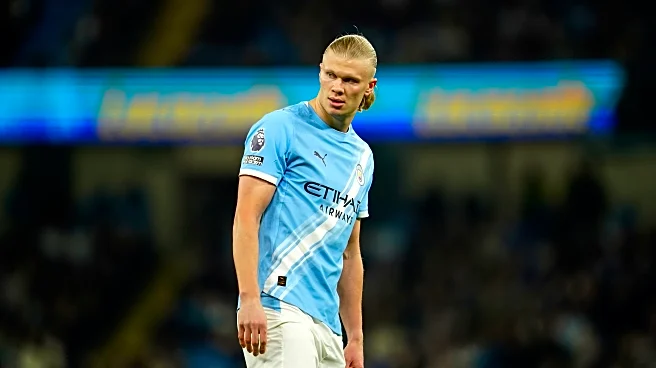
They were able to rest some players in the FA Cup win over Newcastle over the weekend: Ruben Dias, Marc Guehi, Rodri, Bernardo Silva. Rayan Cherki, Antoine Semenyo, and Phil Foden came in off the bench. Erling Haaland sat out due to some mild discomfort but is back training now. Ditto Rico Lewis. Josko Gvardiol has been, and will continue to be out, due to a broken leg. Mateo Kovacic still hasn’t returned since having surgery.
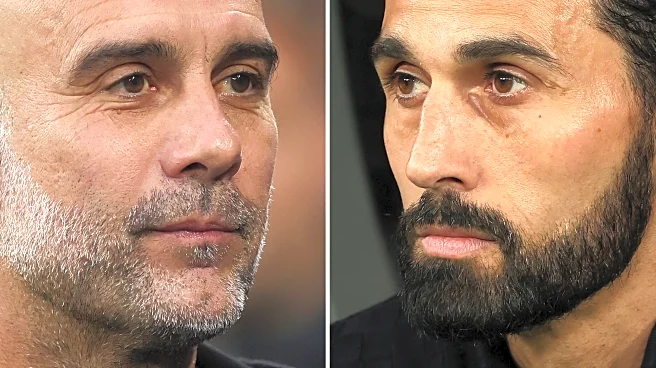
Haaland will play, though his status as a starter is questionable, and Guardiola may save him for the second half while going with a different look without a pure number nine to start.
Real Madrid’s situation could also potentially worsen for the second leg, as Vinicius, Tchouameni, and Huijsen are one yellow card away from suspension. For City, that list is limited to Nico O’Reilly and Savinho.
City are heavily favoured, not only to win the overall tie, but to also win at the Bernabeu in the first leg. It is very uncommon for Real Madrid to be underdogs, according to bookies, at their own home in their own competition, and though these things don’t matter much, it is in indication of how gloomy things are right now with all the injuries and uninspiring performances. Morale is low. Shockingly, despite the pleas from Alvaro Arbeloa in today’s pre-game press conference for fan support, the match is not sold out. It’s a stark shift in fan enthusiasm from the last City game in December when Xabi Alonso’s job was on the line. That match sold out easily, despite it being just a group stage game.
Mbappe will be a big miss. This season alone, he’s scored 13 goals in the Champions League from an xG of 8.2. You saw the struggles Real Madrid had without him in their match-up against City back in December. Chances were created, but chances weren’t converted. This problem has been hovering around Real Madrid for the past two seasons, but compounds without Mbappe, who is a high volume shooter and high volume scorer.
It can’t be reiterated enough: Without Mbappe, Real Madrid need the best of Gonzalo Garcia and Arda Güler — both in transition, and during slower build-up sequences. Those are the two most likely to start in attack alongside Vinicius.
There is no doubt that Dias (or possibly Kusanov) will shift to the right to help Matheus Nunes guard Vinicius without having to worry about where Mbappe is. The success of Vinicius in that situation is on him to find the escape-valve to the open man quickly, but responsibility also rests on the shoulders of Gonzalo to make the right runs into the box. Expect Tchouameni to take up advanced positions as well, playing both as a target and a rabid counter-presser in situations where City are pinned deep.
REP YOUR FAVOURITE REAL MADRID PODCAST: Get your Managing Madrid hoodies here.
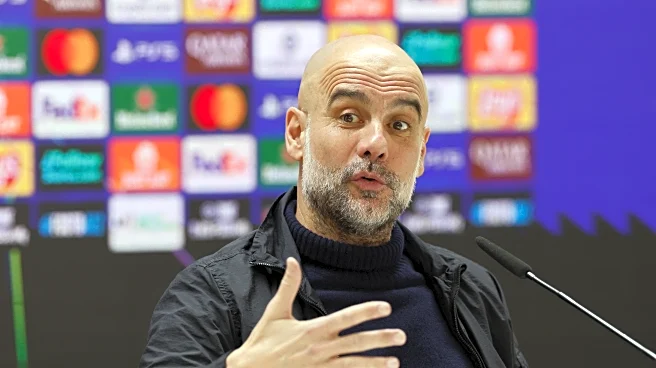
Arbeloa has a lot of big tactical decisions to make. He has so far erred on the side of playing high line while committing bodies forward. Running it similar on Wednesday would prevent the team from getting pinned deep, treading water looking for a way to escape pressure. Guardiola knows that one of Real Madrid’s biggest weaknesses is how uncomfortable and confused they are finding the right passes and movements when the waves of pressure hit. Daring Thibaut Courtois to hit long range passes is exactly what Guardiola wants, and even worse for Real is having their center-backs try to escape danger. The post-Kroos era is riddled with problematic sequences like this.
Sitting deep has many perils when you don’t have Bellingham, Rodrygo, and Mbappe running in transition. Gonzalo, Mastantuono, and Güler are slower. If Arbeloa sits into a deeper block, is there enough collective fighting spirit and perseverance to endure draining defensive shifts?
Two years ago at the Etihad, when Real Madrid eliminated Manchester City in a penalty shootout en route to winning the Champions League for the 15th time, they had two very obvious things which they no longer have now. For one, they had an incredible cohesive defensive understanding which formed one singular united unit. Everyone fought, everyone channelled their inner-hero. Secondly, they had, in the midst of relentless pressure, Toni Kroos, levitating unbothered by the magnitude of the stage. His cold blood brought calm to the team. No such leader exists in midfield now. The team lacks experience. The team lacks leadership.
Arbeloa can go the other route: do the thing that stifles high-pressing teams and fight fire with fire — take the game to them, give them little room to breathe and make them uncomfortable with a man-to-man high press.
But that’s risky for several reasons. The man-to-man high press has looked extremely vulnerable under Arbeloa. Even when players stay with their man, they lose them easily. Against Benfica, all it took was one shoulder drop or dribble past one of the midfielders and all hell would break loose. All of a sudden, Benfica went from 11v11 to 8v5 — threatening into the final third with numerical superiority.
City also are good at staying comfortable while baiting a press, and have multiple tactical wrinkles prepared for multiple different looks.
More recently, they’ve bypassed teams who press high on goal kicks by sending the center-backs — Guehi, Dias — out wide, while the full-backs push forward in attack. The central midfielders, often Bernardo Silva and Rodri, drop into the center-back position. They manoeuvre their way out of pressure through sleek off-ball movement and quick decision making. Silva and Rodri are both brilliant at caressing the ball unharmed and finding verticality when verticality is not an obvious option:
Real Madrid can’t afford such loose defensive sequences. Once Rodri clears the first line of press, he has open water to run through with little-to-no resistance. From there, it’s simple math: City will have numerical superiority and an open man all the way through.
The defense is one major concern, naturally, but there is also plenty of room for improvement from the last time Real lost to City from an offensive stand point.
Back in December, Alonso’s men couldn’t figure out when to accelerate and decelerate. City will lose the ball often enough — those are the moments where you have to hit them hard. In December, the transition attacks were not quick enough, and City were able to reset their defense. On rare occasions where Real did attack ferociously, they lacked efficiency in front of goal.
It’s hard to extract many positives from that game. So much has changed since then. There is a different coach, for one. Vinicius has elevated his game, but two of the best performers from that night — Rodrygo, Bellingham — are out. (Many will only remember Bellingham’s miss point blank, but not remember how dominant he was in midfield with his ball carrying, final pass, and defense.)
It’s ok to be pessimistic if you’re a Madridista, because reading the reality of the team and realizing its flaws going up against a City team that has improved since the new year only makes you astute in your analysis. Real Madrid are not the better team right now, and they’re up against it. This is going to be a tall task. Winning, at any cost, even if ugly, is something every Real Madrid fan would take right now.