




First Quarter: The Statement Drive
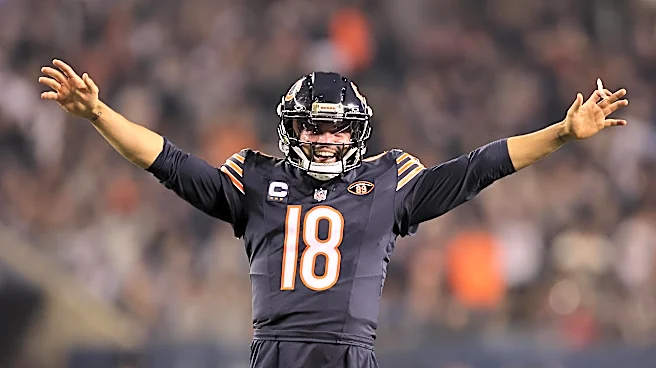
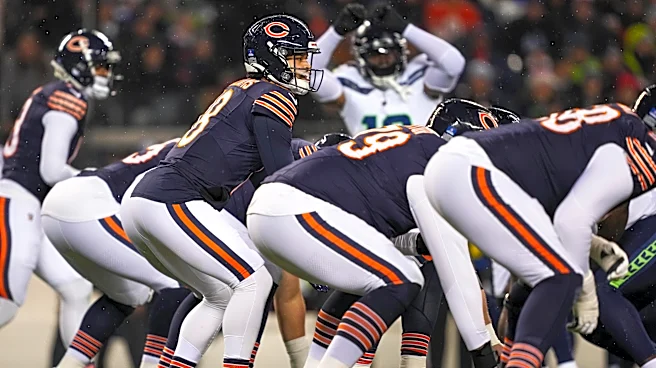
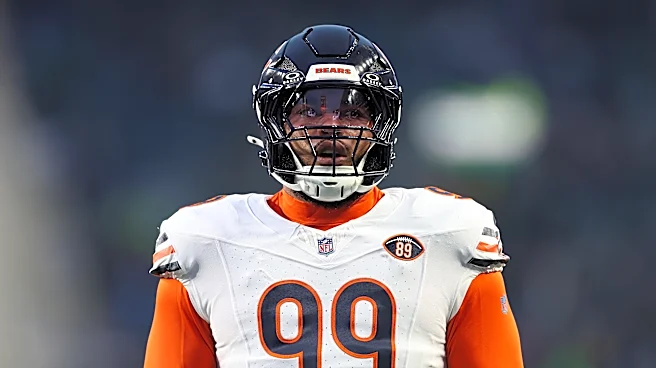
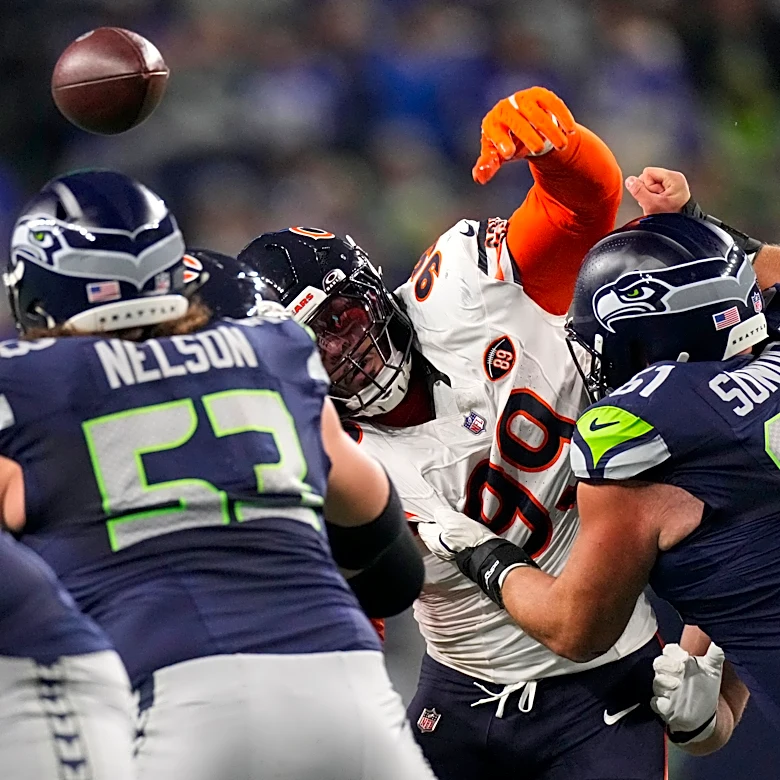
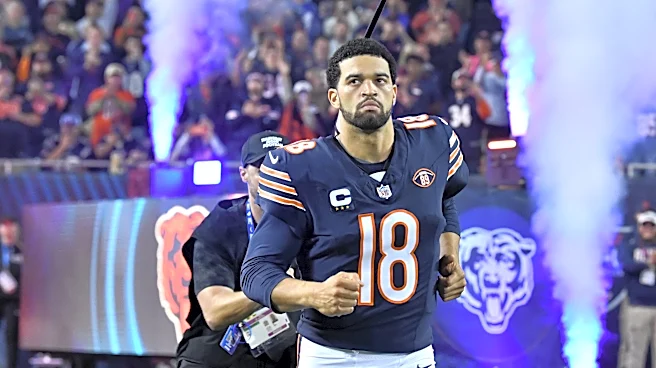
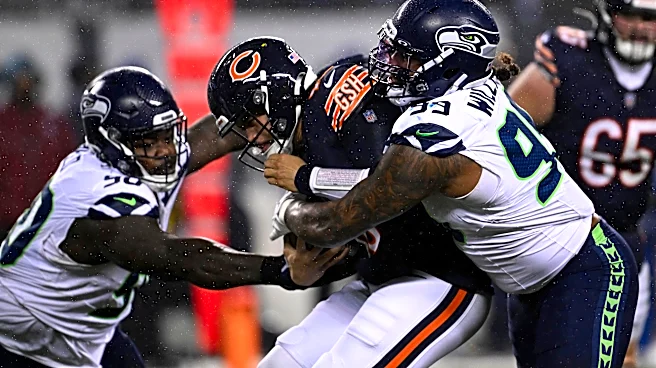
Chicago opened with a grinding 17-play, 80-yard drive that consumed 8 minutes and 32 seconds and ended with Caleb Williams’ 1-yard touchdown pass to Luther Burden. It was the first time in 27 games that an opponent had scored on the Seahawks on the opening possession. Jeffery Simmons made an immediate impact in his Bears debut with a sack of Sam Darnold.
Observation: The Bears set the tone early by sustaining drives and staying physical against a defense that had been difficult to score on. Gooch
Hot Take: That opening drive wasn’t flashy—it was the kind of ugly, clock-eating football that tells a contender “we can hang with you for four quarters.” Simmons already looks like the interior disruptor the Bears paid two firsts for. But let’s be clear – that first touchdown drive was EVERYTHING the Bears want to be.
Second Quarter: Field Goals and a Late Spark
Seattle got on the board with a Jason Myers field goal. Chicago answered with Cairo Santos field goals from 44 and 38 yards to push the lead to 13-3. With 30 seconds left, Jaxon Smith-Njigba beat coverage for a 43-yard touchdown from Darnold (extra point missed), cutting the deficit to 13-9 at the half.
Observation: The Bears were efficient enough in the red zone area to take points when available. JSN remains the one consistent explosive piece for Seattle.
Upon Further Review preview: We’re going to talk about the QB slide this week. Nothing Bush could do – literally flying through the air with his back turned – on that late Darnold slide. The TV crew thought it was a clear penalty – and maybe it was on the rules – the rules need to change. It’s just ridiculous – and it isn’t protecting quarter backs.
It isn’t even that it produces dumb penalties – bc of course you cannot ask defenders to stop in midair. It is the fact that it encourages QBs to slide – which is an uber-dangerous play for them. When QBs become runners – they should just be runners.
Gooch Hot Take: Santos quietly outkicked Myers when it mattered. The Seattle punter kind of rocks – respect given. But the other Hawks kicker – the missed extra point on the JSN score was the difference between a one-score game and a more comfortable margin heading into the locker room.
Halftime Thoughts
That opening 17-play drive was the statement of the half. It wasn’t explosive, but it was the kind of grinding, clock-eating football that shows Chicago can match Seattle’s physicality for a full game.
Simmons is already justifying the early returns on the trade. One sack and consistent pressure in his first half as a Bear is exactly the multiplier the defensive line needed.
JSN remains Seattle’s entire explosive element. When he’s bottled up, the rest of the offense looks ordinary. The missed extra point on his score was a quiet but meaningful swing.
Santos is quietly having a strong night. Two clean field goals kept the Bears in control when the red-zone finishing wasn’t perfect.
If Chicago continues to control the line of scrimmage and limit big plays outside of JSN, this is a very manageable second half. Seattle will need more than one or two explosive plays to flip the script on the road.
The Bears REALLY need to solve the final drive of the half. This is the second week in a row they’ve allowed a soft touchdown heading into halftime.
Third Quarter: Swift Extends the Lead
Chicago answered the half-ending JSN score by controlling the third period and pushing the lead to two possessions. The Seahawks were held scoreless as the Bears continued to win the physical battle and sustain drives.
Key Sequence
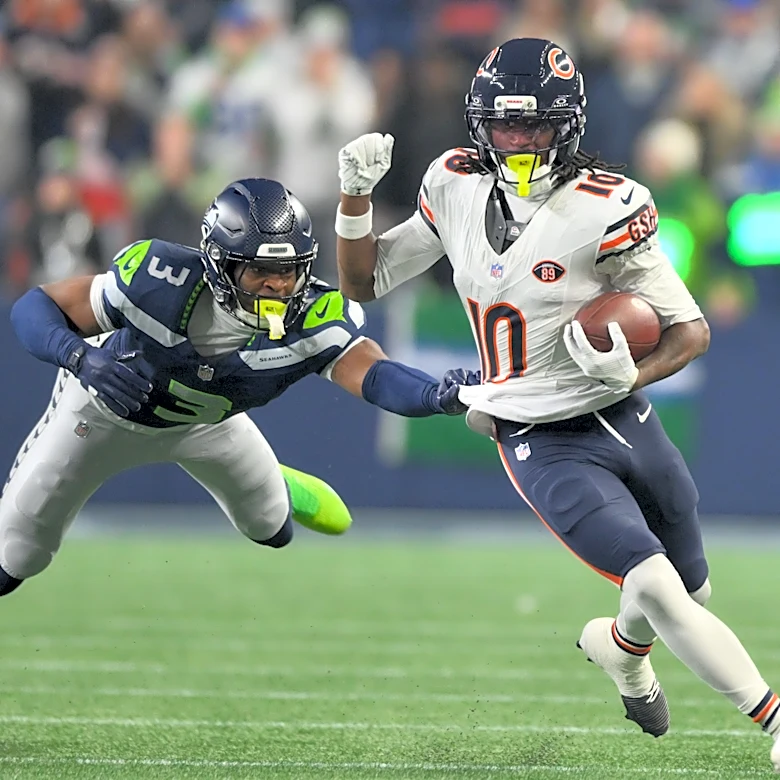
The Bears opened the half with the ball and marched 69 yards in 10 plays over 6 minutes and 19 seconds. The drive featured a 22-yard completion from Caleb Williams to Rome Odunze and a 9-yard pass to Kalif Raymond that set up short-yardage situations. D’Andre Swift finished it with a 1-yard touchdown run, and Cairo Santos’ extra point made it 20-9.
Seattle’s best chance late in the quarter was erased by offensive pass interference on Jaxon Smith-Njigba, wiping out a gain that would have put them near the goal line and leaving them with second-and-long instead.
Observations
- Chicago’s second drive of six-plus minutes ended in a touchdown, matching the pattern from the opening series. They are controlling the clock and the line of scrimmage against a Seahawks defense that has been hard to move.
- Williams continues to deliver timely completions under pressure. The connection to Odunze on the drive was another example of him extending plays and finding open receivers.
- Seattle’s offense remains limited outside of isolated JSN moments. The OPI call was a tough break, but the Bears’ defense is generating pressure and forcing incomplete or short gains.
- Jeffery Simmons continues to show up as a disruptor in his debut, contributing to the interior pressure that has helped limit Darnold.
Gooch Hot Takes
- Swift’s short-yardage score was the perfect complement to the long opening drive. Chicago is winning with sustained, physical football rather than relying on explosives, and that is the harder style for Seattle to counter.
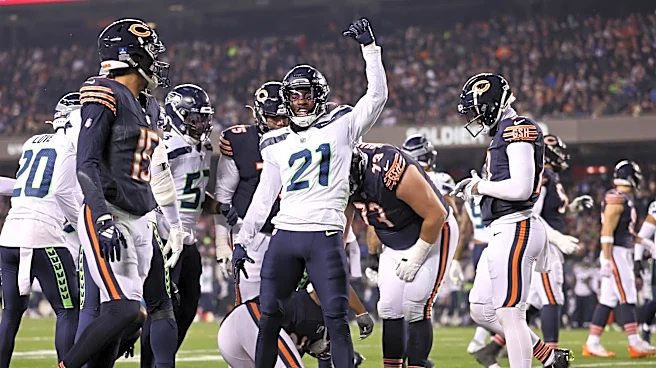
- The OPI wipeout of JSN’s potential scoring chance was a quiet but significant swing. Seattle is not generating enough consistent offense to overcome those kinds of setbacks right now. I thought it was the right call – JSN clearly pushed off. The only surprise is that the refs actually called it.
- If the Bears keep stacking six-minute drives and finishing them in the end zone, this game is going to get out of reach even if JSN makes another big play. The Seahawks need a quick answer early in the fourth or the physical edge Chicago has established will decide the night.
Fourth Quarter: Controversial Calls, Turnover, and Swift Finishes It
The final period featured the night’s most debated moments and Seattle’s closest push. Early in the quarter, Austin Booker blocked a Jason Myers field-goal attempt, preserving Chicago’s two-score lead. On the ensuing possession, Colston Loveland caught a short pass, then fumbled after a hit from DeMarcus Lawrence, who recovered at the Chicago 25. Seattle converted the turnover with a 7-yard touchdown pass from Darnold to Cooper Kupp and a successful two-point conversion to Tory Horton, cutting the lead to 20-17.
Chicago answered with two more Swift rushing touchdowns (5 yards each), the second set up in part by a Kalif Raymond screen, to push the final margin to 34-17. A late interception sealed the outcome.
Controversial calls and plays:
- The late-third-quarter OPI on JSN that wiped out a near-goal-line opportunity remained a point of contention. It was the kind of contact that draws flags inconsistently depending on the crew and the moment.
- The Loveland fumble was forced cleanly by Lawrence, but the timing—right after the blocked kick—flipped field position and briefly brought Seattle back within one score.
- Earlier in the game, a potential late hit on Darnold by Devin Bush drew criticism as a no-call; the broadcast and social reaction suggested it met the criteria for unnecessary roughness on a sliding quarterback, though no flag was thrown. I don’t agree, even if it is technically a foul, we need to get the game back to reflecting reall football.
- Delay-of-game timing on Chicago snaps and a post-play flag that forced a replay of a down also drew complaints about consistency.
Observations and Gooch Hot Takes:
- Even with the turnover and the OPI debate, Chicago’s response was decisive. Swift’s three rushing touchdowns closed the game after Seattle got within three.
- Simmons’ early sack and continued interior presence set a defensive tone that limited Seattle outside of the one JSN score and the short Kupp touchdown.
- The blocked field goal and the subsequent fumble were the swing plays of the fourth. Seattle capitalized on the turnover, but Chicago’s ability to answer immediately with sustained scoring drives showed the difference in control.
- This was the most complete performance of the season so far from Chicago. They won the physical battle against the team that had been the gold standard on that side of the ball.
Final takeaway: Chicago didn’t just survive Seattle. They out-physicaled them, controlled the tempo, weathered the controversial moments and the one turnover, and let Swift finish the job. That’s the profile of a team that expects to be playing in January.
But what did you think about the Bears win over the Seattle Seahawks? How did you feel about Big Jeff’s performance in his first game as a Chicago Bear? Tell us in the comments below!