


Is it already time to panic about the 2026 Steelers?
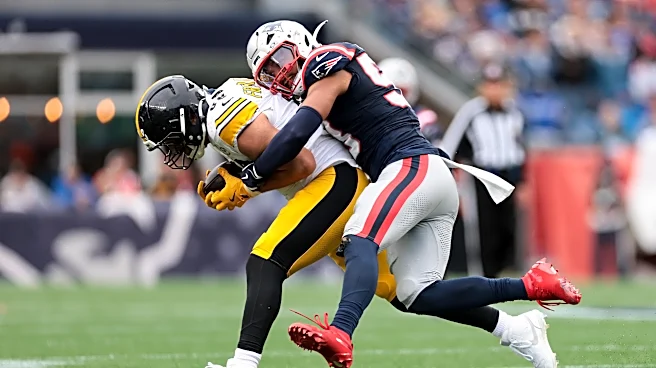
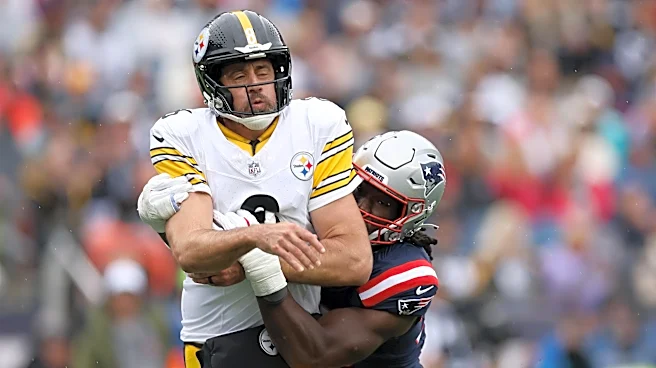
Most football watchers would tell you Week 2 is far too early in the season to overreact. But after a 20-3 loss to the New England Patriots last Sunday — a clear blowout by NFL standards — there are definitely some reasons to worry.
This week, Steelers Read & React attempts to pinpoint what’s really wrong with the Steelers, if it’s fixable, and who is to blame.
The Steelers offense is a mess, but is it fixable?

RB: The Steelers’ offense, in a three-point effort against the Patriots, was unsurprisingly
very bad. Watching the all-22 of this particular performance was essentially a sampler platter of everything you never want to see on offense: mental mistakes, a lack of physicality, questionable play design, looking slow – you name it, there’s a Steelers play from Sunday that exemplifies it.
Still, we can distill things down into a few themes:
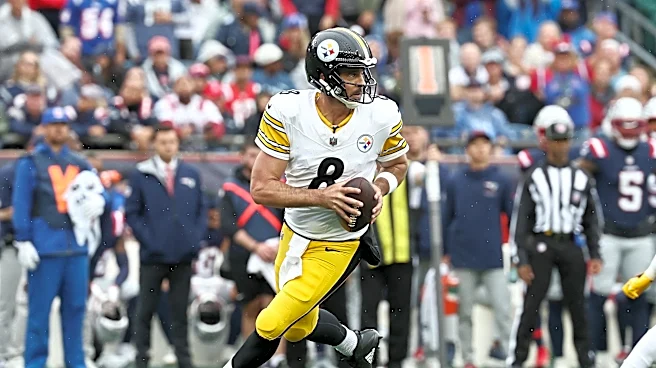
- Aaron Rodgers is not the Aaron Rodgers of old. I don’t even mean this in a critical way – he’s 42! It’s hard to hold it against him, but there were some high-level plays left on the table Sunday that a more mobile or accurate-under-pressure passer might’ve made. That said, I would not call Rodgers the main problem in this offense through two weeks.
- Especially on scramble drills, I’m not sure if Rodgers and his receivers are on the same page much. Rodgers needs a go-to, Davante Adams type, and the Steelers don’t have anyone particularly close.
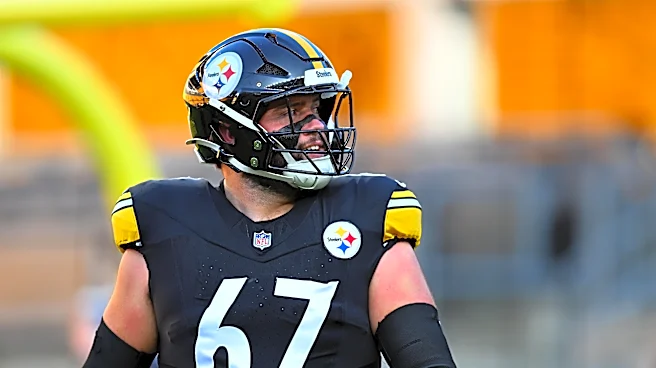
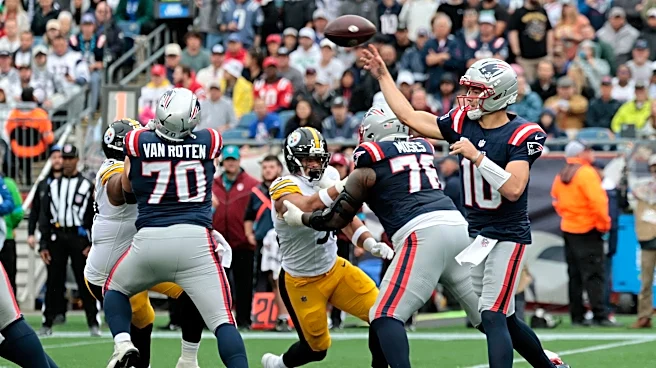
- The offensive line, even Zach Frazier, got outmuscled at times on Sunday. When they weren’t getting driven back, the offensive line struggled mightily with the Patriots’ blitzes, simulated pressures and stunts.
- The Steelers’ line allowed a number of free rushers on Sunday – but without being in the team’s meeting rooms, it’s hard to diagnose which mistakes fall on the quarterback, the pass protectors and/or the coaching staff.
- On some plays, the Steelers’ pass catchers just weren’t getting open. Some of that falls on play design, but there’s also not a lot of “snap,” for lack of a better word, in the routes.
- As a caveat to all of the above points, the Patriots defense looked excellent on Sunday. New England has one of the league’s best secondaries, and the front seven has some great players. Similarly to how the Pittsburgh offense looked promising at times following a win over the terrible Atlanta Falcons, it’s important to adjust analysis based on the opponent.
- Despite how much went wrong on Sunday, Pittsburgh did have some opportunities on offense. The road back to competence is a long one, but it’s not impossible.
Let’s take a brief look at the film to illustrate those points:
What stood out to me first was just how much the Patriots’ defensive line dominated the Steelers up front. Right tackle Dylan Cook and right guard Spencer Anderson took most of the criticism after the loss, but everyone up front, including highly-regarded center Zach Frazier, put out some bad reps.
The numbers below correlate with the plays in the above clip:
- Here I’m not sure if it’s weird play design or if Pat Freiermuth should’ve stayed in to block given there’s a free rusher right in Rodgers’ face. Either way, a dump-off to DK Metcalf in motion would’ve been an acceptable outlet here had the receiver not run straight into a bull-rushed Frazier.
- Troy Fautanu and Mason McCormick do a great job climbing to the second level, but the Steelers trust Freiermuth to one-on-one block a defensive end (it doesn’t end well) and Frazier again gets pushed backwards into the play. Not much Rico Dowdle can do here.
- This time it’s McCormick getting shoved back, and Darnell Washington runs into him trying to get to a split zone block. As a result, Dowdle hits the hole late.
- A younger Rodgers probably evades this sack, but instead, Spencer Anderson gets driven right into his lap.
- Failure on multiple fronts on this sack; Anderson gets turned around, the left side of the line fails a stunt pick-up and Frazier gets bull-rushed (and anchors too late), preventing Rodgers from stepping up.
That lack of anchor across the board is one of the more worrying cutups. Less worrying, in a weird way, were the reps where a lineman failed to block anyone at all. That feels more like a coaching/communication issue, that should be easier to patch up in-season.
I won’t bother giving play-by-play commentary to the below cut-up as it’s fairly obvious. But what bears repeating is that these sim pressures and ambiguous defensive fronts continue to be all the rage in the NFL, and the Steelers continue to struggle against these concepts. Rodgers has long liked to dice up defenses based on pre-snap alignments, but the league has moved past that in many ways.
Again, though, I don’t want to over-criticize Rodgers here, who didn’t have a lot going for him all game against a ferocious pass rush and clamping secondary.
In reference to the clips above:
- Rodgers does a great job stepping up here, but who is open? Metcalf is not separating at all. Maybe Freiermuth is an option late, but he turns upfield instead of crossing Rodgers’ line of sight.
- The quick out to Roman Wilson could’ve been an immediate option here, but the play looks like it was supposed to develop further. Rodgers gets flushed right and there’s nothing available, but he does draw a pass interference on a scrambling toss to Freiermuth.
- Add this to the list of “Should Roman Wilson have not drifted so far upfield?” plays. Freiermuth might’ve been available here cutting inside had he not fallen down when Rodgers looked to throw.
- This looks like an inaccurate ball from Rodgers, but there’s instant pressure and no one creates any separation at their breaks.
Finally, while there were enough horrible plays to lead to dramatic conclusions along the lines of “no one is ever open,” I’d argue that wasn’t always the case.
In reference to the clips above:
- Even though there’s a safety trying to split the difference between Germie Bernard and Freiermuth here, I think the latter would’ve been open downfield regardless. Pressure forced Rodgers to complete the shorter pass to Bernard, which still went for a solid gain.
- This is a potential tight-window touchdown to Bernard if the ball is thrown towards the corner of the end zone. Instead, pressure in Rodgers’ face has him completing the shorter pass, which still falls incomplete.
- Rodgers gets thrown off by interior pressure on what’s clearly supposed to be a quick pass play. Metcalf and Wilson are both open immediately after they turn around, but the rhythm isn’t there and scramble drill afterwards is a mess.
- While not a part of Rodgers’ initial progression, Metcalf does get a step ahead of the cornerback on a boundary go route. Rodgers tries to throw Bernard open on a fade from the slot, but the rookie turns the opposite way of the ball.
- This should be a routine pitch and catch for a first down.
- Same as No. 5.
Summing everything up, after a performance so poor against the Patriots, it’s reasonable to expect the Steelers not to have anywhere to go but up. The question is just how much more the team can improve.
Theoretically, the communication- and chemistry-related issues should improve with time. But with more changes potentially coming down the pipe for an already young offensive line, more growing pains might come instead even if the long-term outlook might not be as dire as it looks at the moment.
And with those same issues in the wide receiver room, Bernard is a rookie, Wilson and Metcalf have long struggled with reliability, and Michael Pittman Jr. is still dealing with a foot injury. Beyond that, this is a group that has struggled to create separation against man coverage this season — and Rodgers is not at a point in his career where his play can compensate for so many flaws on offense.
To head coach Mike McCarthy’s credit, he attempted to shoulder the blame for the Steelers’ offensive struggles following the Patriots loss. While some of that was the expected coach-speak, he did mention that the Steelers needed to turn down the “volume” in practice, saying the team had been trying to do too much and needed to focus on the basics instead.
Given the number of problems the Steelers offense had on Sunday, that approach makes sense. But it also isn’t an easy button or immediate answer.
Pittsburgh has lost ugly in the past; the team is rarely as bad as they look in those games. Some issues will definitely get cleaned up with time, but for now, it’s hard to see this offense turning into a team strength anytime soon.
Who is to blame? Everybody.

RP: Ryland just did an eloquent job of laying out some of the problems plaguing the Steelers’ offense. Your mileage on whether or not you believe those are issues that can be fixed during the 2026 season may vary — for my part, check yes for the offensive line, no for the offense as a whole until they find their next franchise quarterback — but we can all acknowledge there was no escaping the overwhelming tidal wave of bad vibes that has poured forth from the fanbase in the hours and days since Sunday’s game.
Sadly, this has become all too familiar a scene for the Black and Gold faithful. I can’t speak for every fan’s experience, but for much of the past decade, being a Steelers fan has often felt like a slog. The team has a record of 101–62–2 since 2016, good enough for the league’s fourth-best winning percentage in that timeframe, trailing only the Chiefs, Bills, and those dastardly Ravens. And yet, ask most Pittsburgh fans, and they’d tell you the sting of those 64 non-victories far outdwarfs any of the joy that’s come from those 101 wins.
And we all know why.
The Steelers are a proud organization and fanbase. The team is still tied for the most Super Bowl victories, but has lost in seven straight playoff appearances dating back nine seasons. Only five teams — the Dolphins (25), Raiders (23), Jets (15), Cardinals (10), and Panthers (10) — have seen more seasons pass without a playoff victory. For fans of a team that’s spent nearly two decades now constructing its “Stairway to Seven,” it’s becoming an increasingly bitter pill to swallow, as they watch teams that have spent much of the 21st century serving as punchlines — teams like the Lions (2023), Browns (2020), Jaguars (2022), Commanders (2024), and Falcons (2017) — all find playoff success more recently than our beloved Steelers.
Some of us handle this frustration better than others.
Increasingly, game days have felt like a communal holding of breath more than a joyful experience. Victories come with a wary exhale, couched in qualifiers. Wins too often feel like getting away with something. There go the Steelers, winning another ugly game they shouldn’t have. Just you wait until they play a real team. Then the other shoe’ll drop, you’ll see.
And when they lose? Stop, drop, and roll. Duck and cover, baby, we’re firing everybody. Players. Coaches. General managers. Art Rooney II. The Accrisure Stadium grounds crew. Members of the media. Renegade. Hell, can anybody check if we’re still able to fire Mike Tomlin?
It’s an exhausting way to go about fandom. But it’s also impossible to blame anyone who has been dissatisfied with the past decade of Steelers football. The Steelers have earned scorn from their fans, even if you can point to plenty of instances of bad luck during this drought.
A combination of injuries, uneven roster building, questionable officiating, and self-inflicted mistakes (the 2017 Jaguars game) prevented the Killer B’s era from ever reaching its full potential. The 2020 team that lost to the Browns wasn’t on the same level as the 2017 team, but a disastrous first half of football handed the Steelers another embarrassing loss, despite scoring 37 points in that game.
Naturally, when a team has been stuck spinning its tires for as long as the Steelers have, the fanbase finds someone to blame. This past weekend, general manager Omar Khan was pretty high up on the list for many fans. So was owner/president Art Rooney II. And a week after getting his first win in Pittsburgh, all the people who were skeptical about the McCarthy hire had fresh ammunition for their arguments.
At this point you might be asking, “Ok then, Ryan, who should we really be mad at?”
And the truth is, I don’t think the blame falls at the feet of just one person. That may be a dissatisfying answer, but it’s one I’ve consistently made since I started writing for Behind the Steel Curtain. I’ve argued for years now that the Steelers’ fatal flaw as an organization has been its unwillingness to be honest with itself about its roster construction and how truly “competitive” their window has been in the post-Roethlisberger era. This has led to years of reactionary moves that make sense in the context of the moment, but create a fuzzy picture when looking at the multiyear plan for this roster.
Every team likes to tell its fanbase that its front office and coaching staff work simpatico with each other; the Steelers truly do, for better and for worse. Because of this, trying to untangle the decisions of the general manager from the head coach is difficult to parse out when looking to assign credit or blame.
Whether you want to blame Tomlin or former general manager Kevin Colbert for the haphazard succession plan for Big Ben, which one of them was more responsible is ultimately inconsequential. The process behind selecting Kenny Pickett was poor, and predictably so, but I can empathize with the team’s attempt to find a quick answer on offense at the time. During the final few years of Roethlisberger’s prime, the defense was the weak spot of the team. That their quarterback’s career-altering injury coincided with the defense finally acquiring the pieces to turn the corner was a cruel twist of fate. With Cam Heyward still playing well, Minkah Fitzpatrick making such a splash after being brought into the fold, and T.J. Watt entering the heart of his prime, I can understand why the Steelers took a swing at a quarterback, even if I was protesting the process they used to get there. Where they truly messed up was not blowing it all up when it became obvious that the gamble on Pickett was a swing and a miss.
That brings us to Khan. Ask certain segments of the fanbase, and they’ll tell you he’s public enemy number one and lousy at his job. I’m not going to argue Khan is the best general manager in the NFL, or that he should be free from all blame, but I do have trouble pinning the Steelers’ struggles entirely on him. Let’s take a look at what fans are calling his two most major offenses:
- The DK Metcalf trade (and trading away of George Pickens). This is the perfect transaction to make my case that the Steelers’ dysfunction has truly been a shared effort. George Pickens is a talented receiver, unquestionably. But he’s also reportedly someone coaches found difficult to work with, and who put plenty of tape out there where he didn’t appear to be giving his full effort, a trait that’s followed himto Dallas. So was trading him Khan’s effort, or one he made based on the desires of Tomlin? That compounds with the Metcalf trade. If they don’t trade Pickens, the Metcalf trade is less likely. And while it’s safe to say the Metcalf trade and extension are looking foolish now, I still find that hard to put solely on Khan. For starters, what other receivers with a resume as accomplished as Metcalf’s were traded or available in free agency? On top of it, the pairing of Rodgers and Metcalf never made sense stylistically. Rodgers likes precision, and that’s never been Metcalf’s game. Likewise, both Arthur Smith and now McCarthy have repeatedly tried to increase targets to Metcalf in the quick game by getting him screens and quick hitches, in part because Rodgers no longer likes to hang in the pocket long enough for the type of vertical routes Metcalf has always been better suited for. He doesn’t have the type of speed that can stop and start again on a dime. Metcalf isn’t helping matters with his drops. While he’s always been prone to the occasional drop, he’s nearly matched his drop total for all of last year (4) in just two weeks, and is on pace for a laughable 26-drop season should his struggles continue at the same rate. Does Khan deserve blame in this? Certainly some, especially for the extension — which has somehow played into the Joey Porter Jr. debacle — but it was also a move made out of necessity that I don’t place squarely on him either.
- Khan isn’t a good drafter. I honestly just find this laughable. Sure, he has misses, but every team does. Are we to believe his misses outweigh finding players like Porter, Zach Frazier, Nick Herbig, Keeanu Benton, Derrick Harmon, Mason McCormick, Troy Fautanu, and Darnell Washington in his first two drafts? And I’m unwilling to write off anyone from this draft class after just two games, where few of them have yet to crack the starting lineup. Compare Khan’s drafts to the picks Colbert made between 2016-2022; I’ll wait. Then, of course, there is the tricky part of separating who is more responsible for player evaluation: Khan or assistant general manager Andy Weidl. It’s been discussed among the fanbase for years now that Khan was the “numbers” and contract guy, whereas Weidl is more of the personnel man. Regardless of how you want to divvy that up, I think the player identification process has been above league average, and the Steelers front office also works closely with the team’s head coach. The players they bring will also reflect their head coach; they have enough of a track record that I don’t find that to be disputable.
If there is one thing I’m holding onto for a possible Khan takedown in the future, it’s his relationship with McCarthy and how that played into the decision to hire him. The two worked together on the Saints in 2000 and 2001, and it’s hard not to believe that factored into the decision in some capacity. And while I was skeptical of the decision and warned against the hire, I can’t realistically judge McCarthy after two games. Hiring McCarthy might have had a little to do with the misguided notion of bringing Rodgers back for another year, but the hire was always more about developing the next quarterback. To pull the rip cord this early would be foolish, unless McCarthy proves to be completely dysfunctional in an irreparable way.
Things may seem bleak right now. I’m certainly not going to tell any fans how to process their emotions and frustrations with this team. But I also think this roster is one in transition, much more than how the organization has sold it to fans. For all the bluster about bringing back Rodgers and competing now, the Steelers have also been a team straddling a fine line between that conceit and building for the future. I was one of the few voices saying that the team would likely use most of the draft picks it accumulated for the 2026 draft. That all of the rookie class, plus undrafted free agent Kevin Jobity Jr., made the 53-man roster further solidified my case that the Steelers are closer to a roster reset than they’ve been letting on. Already, they have eight picks secured for the 2027 draft.
If that makes you uneasy with this leadership group, I get it. But the Steelers have cast their chips in on Khan and McCarthy. As frustrating as this team might wind up being this season, I do see potential for growth, even if it isn’t going to happen overnight. The Steelers are not as talent-depleted as some of the true bottom-of-the-league rosters.
But they need to get the next couple of offseasons right, and McCarthy needs to be the offensive developer that was promised, if they are to stop being the NFL’s Sisyphus.
Join in on Steelers R&R by sharing your takes on this week’s topics. Feel free to pitch future questions in the comment section or on Twitter/X: tag @_Ryland_B or @ArmchairScout21, or email us at steelersreadnreact@gmail.com.