


Who is he and where did he come from?
He’s Ranger Suarez, and he comes to Boston via major league free agency. He signed for five years and $130 million. He did have a qualifying offer attached, so the Red Sox will forfeit two draft picks and $1 million in international bonus pool money. Suarez signed with the Phillies for $25,000 in 2012 and spent his entire career with the organization before leaving in free agency. According to Wikipedia, some of his minor league teammates called him “Power Ranger”, though a quick search shows that
name never really caught on.
Is he any good?
He was an All-Star in 2024 and was even better in 2025. In terms of Red Sox pitching acquisitions, he breaks the mold of what Craig Breslow has targeted over his tenure. He’s only 6’1” with 6.2 feet of extension. His fastball sits between 90-91 mph, considerably below most of the pitchers Breslow has acquired. It’s not necessarily a bad thing, though. While the lack of overpowering velocity limits his strikeout upside, it should help him age gracefully.
Against lefties, Suarez is dominant. He throws about 45% sinkers and gets strikes at a huge rate. Hitters aren’t whiffing against the pitch, but he consistently throws it inside for called strikes and weak contact. In 2025, lefties hit .232 with a 60% groundball rate against it. Once he’s ahead, he goes to a slider and curveball to put hitters away. Suarez uses each of them down and away to great effect. Of the two, lefties were more likely to lay off the slider, which limited the strike rate to 54%, but a 60% whiff rate on swings made it an excellent two-strike offering. The curveball, on the other hand, had a huge 48% chase rate, but hitters were able to connect more often. Fortunately, much of the contact was on pitches in poor hitting locations, leading to a 75% groundball rate. Suarez also featured a four-seam fastball about 11% of the time with poor contact quality metrics. It’s easy to point to that pitch as a place to cut usage, but it did steal strikes at a high rate, and having something to change hitters’ eye level is important for his arsenal. It’s also of note that Suarez used a changeup against lefties 8% of the time. It was a very effective pitch for him (72% strike rate, 27.5% swinging strike rate), but same-handed changeups are something the Red Sox have avoided. Among starters, only Lucas Giolito threw a changeup to same-handed hitters more than 10% of the time, and the shape of his slow ball allows it to work in those matchups.
As you’d expect, righties had more success against Suarez. His mix against them is more balanced, using his sinker 24% of the time, his changeup 22%, and introducing a cutter that accounts for about 21%. It’s a true “kitchen sink” approach where he’ll throw any pitch in any count.

The sinker is thrown low and away, while the cutter is up and in. Each pitch gets strikes at a high rate, but they’ve both been hit around at times. Righties hit .347 against it, but that included a .435 BABIP and groundball rate near 70%, which suggests the average should decrease. The cutter also returned a .305 batting average against, but didn’t have alarming contact quality stats. While he throws anything in any count, he backs off the sinker and cutter with two-strikes. His changeup is his best weapon against righties. Righties best approach against the pitch was to not swing. When they did, they whiffed 32% of the time; when they made contact, only 23% of the contact was hard. It was only in the zone about a quarter of the time, but opponents chased 44% of the time. It’s one of the best changeups in baseball. The curveball is okay, but nothing special. The fastball is the same pitch it is against lefties. The results aren’t great, but it’s something to change the eye level.
I wrote earlier this offseason about the power of pitching from ahead and making hitters swing at pitches on the edges. Suarez won’t overpower hitters, but his deception and pitchability help him get ahead and limit hard contact as well as anyone. Long story short, he’s different than your typical “ace”, but that doesn’t mean he’s not good.
Is there room for improvement?
If I were looking for Suarez to improve, I’d look to the approach against right-handed hitters. In 2024, he used his four-seam fastball more often, and it wasn’t hit nearly as hard. He threw a little bit harder in 2025, but that wouldn’t explain the barrel rate increase of 8%. He didn’t pitch inside to righties as frequently with either his sinker or his four-seam. Declining velocity may have scared Suarez off from pitching inside, but I’d be interested to see him try to work both sides of the plate against righties.
Tl;dr, just give me his 2025 stats.
26 starts, 157 1/3 innings, 3.20 ERA, 23.2% K%, 5.8% BB%, 17 QS
Show me a cool highlight.
Here he is striking out 12 Mets in 6 innings. He got Juan Soto swinging three times. Soto has punched out three times in 28 of his 1096 career games. Not bad, Ranger.
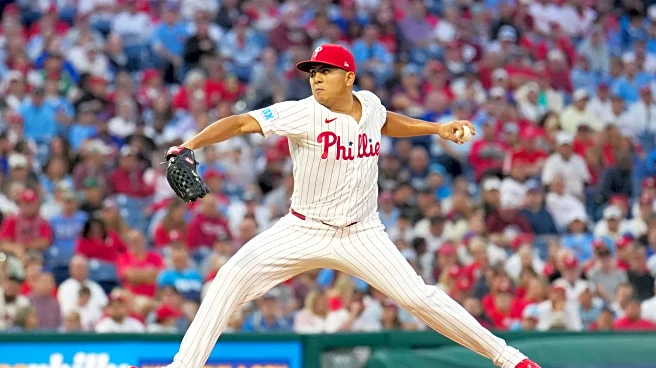
What’s he doing in his picture up there?
He’s throwing a changeup. I don’t want to admit how many pictures I clicked through to find a changeup grip. I love changeups, though.
What’s his role on the 2026 Red Sox?
He’ll be the second or third starting pitcher in the rotation. Personally, I think labeling him a number two or a number three is a silly exercise, because they’re made-up labels that don’t translate to real production. Don’t freak out if he pitches on the third day of the season instead of the second; his role on the Red Sox is to contribute to the strategy of pitching opponents to death, six innings at a time.