


This article was prompted by discussion in the various articles I’ve posted recently about position players pitching.
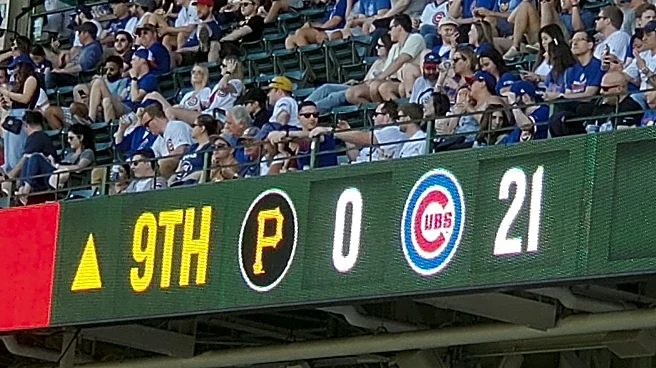
Basically, if you have put a position player in to pitch, you have essentially given up playing baseball and are just filling the time until nine innings have been completed. Often, the position player gives up multiple runs and the final score is worse than it otherwise would have been.
By MLB rules adopted in 2023, one of these three criteria must be met before a position player can
pitch:
• Game is in extra innings
• Team trailing by at least eight runs at any point
• Team winning by at least 10 runs in ninth inning
This is an update to an article I wrote on this topic here three years ago, suggesting the concept of a mercy rule in MLB games. It’s got some updated statistics since that time.
I believe that if a team is hopelessly trailing late in the game, that team’s manager should have the option to simply say, “We’re done here,” and the game would end. My suggestion: If a team is trailing by 10 or more runs after seven innings, they should be permitted this option. This is done by rule in international play — you might very well see it in the early rounds of this spring’s World Baseball Classic.
Last year, there were 106 games that were decided by 10 or more runs. That’s about 4.4 percent of all games played in 2025. So we’re talking about a fairly small sample size here. Of those 106 games, 53 — exactly half — had a 10-run (or larger) deficit after seven innings, broken down this way:
17 games with a 10 run deficit
11 games with an 11 run deficit
5 games with a 12 run deficit
8 games with a 13 run deficit
12 games with a 14+ run deficit
Three of the 12 games with a 14+ run deficit had deficits of 17 or more runs after seven innings.
And in some of the games decided by 10 or more runs, the deficit was less than 10 after seven innings, but became larger after… because position players were giving up runs.
Back to the 2025 numbers: 53 games is about 2.2 percent of all games. So if you’re concerned about fans missing out on a couple of innings in a blowout — when many such fans would have left anyway — or advertisers losing out on TV money for a game many would have turned off, we’re not talking about a large number of games here.
Further, the chance that a team is going to come back and win after being down by 10 or more runs is vanishingly small. The major-league record for biggest comeback is from 12 runs down. It’s been done three times since 1901, most recently August 5, 2001 by the Mariners (and before that, in 1925 and 1911). This article lists 15 other games where a deficit of 10 or more runs was overcome, so that’s 18 such games in the last 125 seasons.
There have been 211,995 Major League games played since 1901 (including the Federal League). Eighteen is about one eight-thousandth of one percent of all games.
Point: If a mercy rule were introduced, the idea that you’d be taking away a team’s chance to come back from a 10-run (or larger) deficit is pretty much meaningless, given how many times it’s happened.
In modern baseball, pitching staffs often get overworked. A mercy rule would help lessen that overwork, and it wouldn’t happen very often, either. I’m not going to go into the “how many of these teams were leading by 10+ after seven innings” thing for all these years, but here are the number of games decided by 10+ runs every year since 2010 (excluding the shortened pandemic season of 2020):
2025: 106
2024: 92
2023: 106
2022: 93
2021: 101
2019: 110
2018: 90
2017: 113
2016: 85
2015: 83
2014: 63
2013: 74
2012: 61
2011: 72
2010: 84
The average number of such games since 2010 is 89. The number has edged up slightly over the last few years, and without checking I’d guess the number of games in which a team was ahead by 10+ runs after seven innings is probably close to the same, about half of the total, so we’re likely talking somewhere around two percent of all games, which would amount to maybe three games per team per year.
Again, this is a vanishingly small number of games.
There are forfeit rules on the books now. From the official MLB rules (pdf), specifically Rule 7.03 (b):
A game shall be forfeited to the opposing team when a team is unable or refuses to place nine players on the field.
So, theoretically, under that rule the manager of a team trailing by 10+ runs could simply refuse to take the field and the game would be forfeited. But there are better ways to specifically codify the mercy rule and publicize it so that fans and TV viewers would understand that the game could possibly be called after seven if it got to be a 10+ run blowout.
MLB would also have to decide whether the same courtesy could be given a team if they were down by fewer than 10 after seven innings, but gave up runs and trailed by 10 or more after the eighth. (I’d say yes to this.) I’d also say that the manager of a team leading by 10+ runs shouldn’t be permitted to just say “We’re done here” after seven, just declaring victory. It should be up to the manager of the team that’s trailing.
If MLB is serious about reducing wear and tear on pitching staffs and limiting the number of position players pitching, they really ought to institute a mercy rule like this. Of course, they don’t do it in the WBC championship game and this wouldn’t be in effect during MLB’s postseason, just like the placed runner rule isn’t in effect for playoff games.
Get it done, Rob Manfred and the Competition Committee.