



The Washington Mystics clinched a spot in the 2026 WNBA Playoffs over a month ago.
But that didn’t curb their competitiveness during the final stretch of the season.
They fought for the best seed possible. Washington grinded out six wins in their final seven games and found external fortune in the Indiana Fever dropping key games, propelling the Mystics into the No. 5 seed.
That very No. 5 seed was a colorful target for Sydney Johnson’s team: They had a losing record against each of the top three teams—the
Lynx, Golden State Valkyries and Las Vegas Aces—but won their season series against the No. 4-seed Atlanta Dream.
But after scrapping weeks for a seed, Washington fell 15 points short to the Dream on Sunday in Game 1. For a team that hadn’t lost a game by more than 10 points since July 18, such a poor playoff debut was alarming.
What went wrong? One state explains much of the Mystics’ issues.
Too many turnovers turned a close game into a 15-point loss for the Mystics

Most mediums of the sport would have suggested that Washington and Atlanta finished their first game neck and neck.
Washington made six 3s, Atlanta made five. Atlanta made 10 more free-throws, and Washington shot fairly poor from the charity stripe, but Washington made three more field-goals. Washington even out rebounded the Dream 50-31, an impressive feat given that Atlanta finished second in the WNBA in total rebounding.
The straw that broke the camels back was turnovers.
Turnovers have been a major issue for Johnson’s team throughout the season, and are an expected bug for a team with such a young core. Washington led the league in turnovers at almost 15 per game. They gave away possession 22 times on Sunday, while Atlanta only turned the ball over seven times. A -15 turnover margin is almost insurmountable without absurd shot-making, which the Mystics are not known for.
Between the missed free throws and turnovers, Washington deprived themselves of a real chance to steal Game 1 Atlanta.
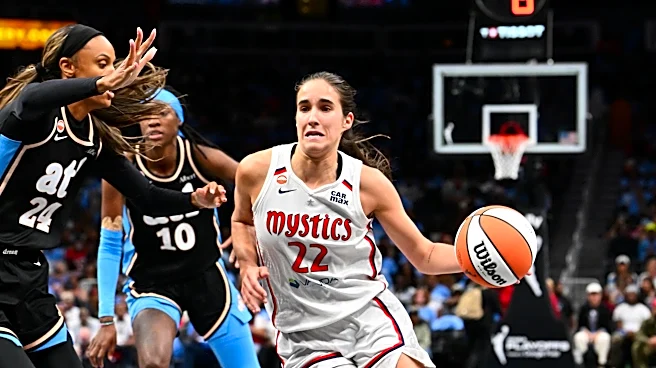
The game was by no means a blowout for the vast majority of its length, but the Mystics weren’t able to stay close enough to make any big plays down the stretch of the fourth quarter. Georgia Amoore, Shakira Austin and Michaela Onyenwere all had four turnovers. Sonia Citron and Kiki Iriafen had three each. That’s careless, immature basketball that can’t progress through a playoff run.
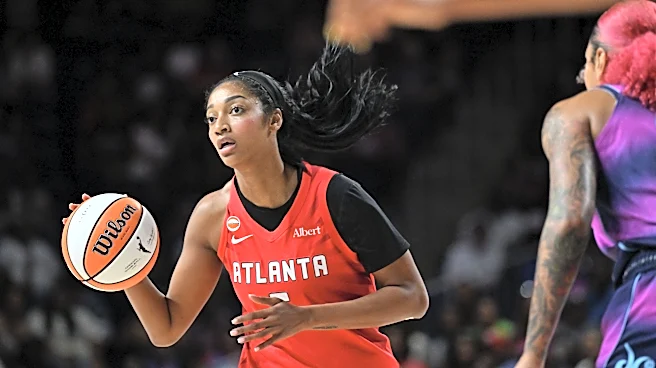
Atlanta isn’t the league’s best scoring defense, but they did force opponent turnovers at the highest rate in the WNBA. Washington is fortunate to have enough size to cancel out Angel Reese’s rebounding dominance, but the turnover battle now takes the spotlight as the on-court storyline to watch.
Does Washington have a ball security solution?

The Mystics have enough connectivity to mend some of their turnover issues, but their lack of experience at the guard position won’t fully cease to manifest.
Georgia Amoore has struggled to find the playmaking consistency that she championed in college. She hasn’t had an egregious turnover problem, but she is a step below most WNBA guards from a physicality/athletic perspective and she isn’t an above-average advantage creator. Being unable to create advantages over stronger, quicker guards has minimized her assist output. You want more than three assists per game from your point guard who has the ball for 45 percent of the time she’s on the court. Shooting has been one of the saving graces of Amoore’s minutes, and I’m not trying to claim that she’s a net negative player. But point guard is certainly the position where Washington shows their inexperience the most.
Amoore also was not the biggest culprit in the team’s playoff debut.
Iriafen and Austin are far too reckless with their decision making at times, and with Onyenwere in the mix, you really don’t want your three forwards combining for 11 turnovers. Unfortunately, Washington’s inability to find advantage creation from the guard spot means that they have to rely on their bigs as decision makers. Neither Amoore or Citron are elite enough for Washington to sustain offense without consistent post touches.
Iriafen and Austin have to get the ball, and Washington will then live and die by their output.
Going forward however, I do think Citron should be seen as an even bigger focal point of Washington’s offense through the series. She did lead the team in attempts on Sunday, but she shot so much better than any other Mystic that it felt like they should have been putting her in ball-screens every time down the court. She also got to the line nine times, which is the most consistent form of offense in basketball.
Sydney Johnson clearly didn’t trust Alicia Florez to run the point for Washington in Game 1, as she only played one minute compared to her 12-minute season average. There’s a chance they look at her for more minutes in Game 2, but it’s hardly a guarantee that she won’t mirror the same turnover issues that the rest of the team had.
There’s also a chance that Washington shifts towards an even bigger lineup, moving Citron on the ball and slotting in either Cotie McMahon or Betnijah Laney-Hamilton has her backcourt mate rather than Amoore. That may ease some of their turnover issues, but it would put a lot of pressure on Citron as a creator and the team would still have to lean on their post players.
Without the presence of a playoff-experienced guard, Washington doesn’t have a clear route to fixing their turnover issues. They will remain a post-heavy team when it comes to creating offense, and they will have to clean up their team-wide decision making and slow down their pace. On the positive side, they saw great success in rebounding the basketball, and got to the line a decent amount. If they can trim the turnover margin down by around 30 percent, it will allow the other margins to shine through in their favor.
This series isn’t over, but the Mystics have one night to stay alive.