



The 2000 New York Yankees were not a team of destiny like in 1998, or the well-oiled machine that dropped but a single playoff game en route to a title in 1999. They were a squad that needed help. Jockeying for position with the Red Sox and Blue Jays in a crowded AL East, the Bombers sat only three games above .500 on June 28th when they executed a trade which would prove to be among the most impactful midseason deals in team history.
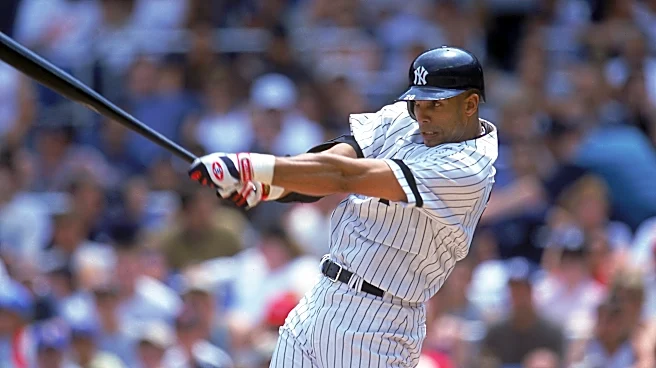
David Justice arrived in the Bronx and immediately became one of
their most fearsome bats. After the Yankees limped into the playoffs, the man who had been a postseason hero for the Atlanta Braves added to his sparkling playoff resumé by leading the way against the Mariners in the ALCS. The Yankees took down the crosstown rival Mets in the World Series to win their third consecutive title, and Justice earned his second championship ring.
David Christopher Justice
Born: April 14, 1966 (Cincinnati, OH)
Yankees Tenure: 2000-01
Justice did not come up through the ranks in a traditional baseball powerhouse. His high school, while proficient in athletics, lacked a baseball team—and as such he had to catch on through the travel circuit. Justice attended Thomas More College in Kentucky on a basketball scholarship, but became to this day the only attendee of the school to be selected by an MLB team when the Braves took him in the fourth round of the 1985 draft. He made his MLB debut for Atlanta four seasons later.
It wouldn’t take long for the lefty slugger to hit his stride. Justice’s brief 1989 cup of coffee was followed by a breakout campaign in 1990 in which he slugged 28 home runs and posted a .908 OPS (143 OPS+) en route to the National League Rookie of the Year award, albeit for a last-place club. The next season though, the Braves would find themselves in the Fall Classic. Atlanta fell to the Minnesota Twins in the seven-game World Series, a memorable matchup of worst-to-first teams widely considered to be among the greatest ever played. They returned in 1992, but lost again to Dave Winfield and the Toronto Blue Jays.
One of the dynastic baseball forces of the 1990s finally broke through in the strike-shortened 1995 season. Justice, who had made headlines for a marriage to Halle Berry and most recently criticizing Braves fans during their playoff run, etched himself into history with a home run in Game 6 of the World Series against Cleveland. Thanks to a masterclass of pitching from Tom Glavine, that solo shot proved to be the only run in a championship-clinching victory for the Braves, bringing the city of Atlanta their first MLB title.
Justice’s final year with the Braves was marred by a shoulder injury in May that ended his season early, meaning that he missed the World Series loss to the Yankees that October.
A trade just ahead of the 1997 campaign sent Justice to Cleveland, the team he had defeated with that homer. He returned to the World Series that year (helping dispatch the ’97 Yanks along the way in the ALDS), but the Florida Marlins took them down in another legendary seven-game Fall Classic. Cleveland lost to the Yankees and Red Sox the next two years before the 2000 season at last brought him to the Bronx.
Now in his age-34 season, Justice was still producing at the dish, with 21 home runs at the time of the trade on June 28th. The Yankees dangled a pair of young pitchers in Jake Westbrook and Zach Day, as well as the inimitable Ricky Ledée—and with that, the Bombers had a new weapon in their arsenal. Justice hit his first Yankee home run on July 6 in a 13-9 win over the Orioles. After stumbling to a 10-15 record in June, the Yankees caught fire with Justice in the mix, winning 18 of 26 in July.
The Yankees eked out another AL East title despite their pitching taking a nosedive in the final weeks of the year. Justice finished out the campaign with a .305/.391/.584 slashline in pinstripes, launching 20 more homes—including a walk-off shot against Oakland on August 8th—to give him a career-best 41 on the year. The Bombers went on to battle the A’s in a tightly-contested five-game ALDS. Justice had a rather quiet series, but did homer in Game 5 as the Yanks advanced to take on the Mariners.
Justice was mostly held in check for the first two games of the ALCS, but contributed a pair of run-scoring hits in a 8-2 Game 3 victory at Safeco Field. The following night New York took a commanding 3-1 series lead over the M’s with a 5-0 shutout victory in which Justice clubbed a two-run homer in the eighth inning to put the contest to bed. Seattle took Game 5 to force the series back to the Bronx, where Justice provided the coup de grace in Game 6. With the Yankees trailing 4-3 in the seventh, Justice belted an Arthur Rhodes fastball off the face of the upper deck to bestow New York a lead they would not relinquish. Justice was named ALCS MVP as the Yankees prepared to host the Mets in the World Series.
Justice’s hot hitting did not continue into the Fall Classic—he went just 3-for-19 with no homers and three RBI—but by that point, the Yankees’ playoff steamroller was fully operational. Every game of the tilt was decided by two runs or fewer, but the Bombers held off their crosstown rivals to complete the three-peat and raise championship banner number 26.
After winning his second title in his fifth World Series, Justice regressed with the Yankees in 2001 and a series of groin injuries limited him to just 49 games from July onward. There were occasional highlights, like a walk-off homer against the Red Sox in April and a crowning blow in Game 5 of the ALDS comeback against the A’s. But for the most part, it seemed like the end was getting closer for the veteran as he fell to a .712 OPS that postseason, which featured a heartbreaking loss to the Diamondbacks.
Justice was dealt to the Mets at season’s end for Robin Ventura, marking the second time a champion had traded Justice to a team he had defeated in a World Series. However, Justice’s Met tenure lasted one week in December, as they then flipped him to Oakland where he finished his career as a veteran presence for the Moneyball A’s. (Justice was played by Stephen Bishop in the eventual 2011 movie.) He retired at the end of the season after Oakland bowed out to the Twins, who fell to the Angels in the next round.
Without Justice’s arrival in New York, it’s hard to imagine the Bombers would have returned to the postseason, let alone three-peated as world champions. His stupendous half-season is a reminder that the baseball calendar is long. Nothing is set in stone, and narratives can change quickly. Maybe the Yankees have a David Justice-style reinforcement coming in 2026—maybe they don’t. But even the possibility is part of what makes baseball so exciting.
See more of the “Yankees Birthday of the Day” series here