



With the 2026 NFL Draft quickly approaching, the Detroit Lions find themselves in a different spot from years past. After drafting largely for depth and developmental players the last couple of years, the Lions are in need of immediate contributors, and those players can be most easily found with either of their first two picks—No. 17 and 50—on the first two days of the draft.
The Lions defensive backfield certainly has a lot of names, a mix of both veteran and younger players, but there are arguably
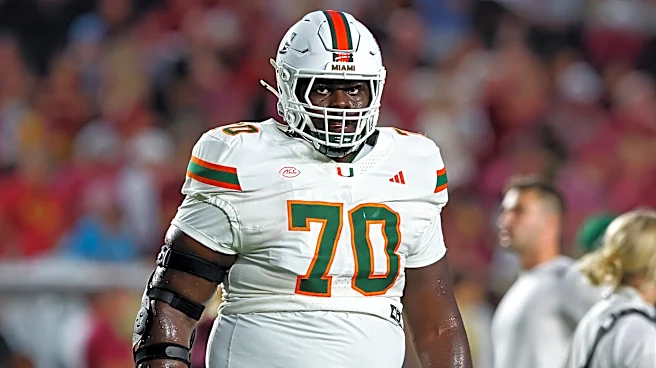
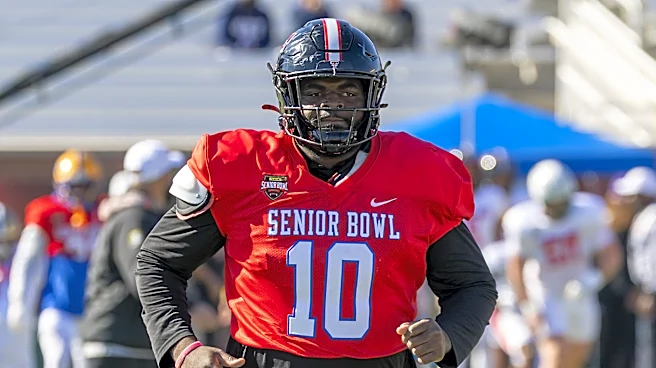
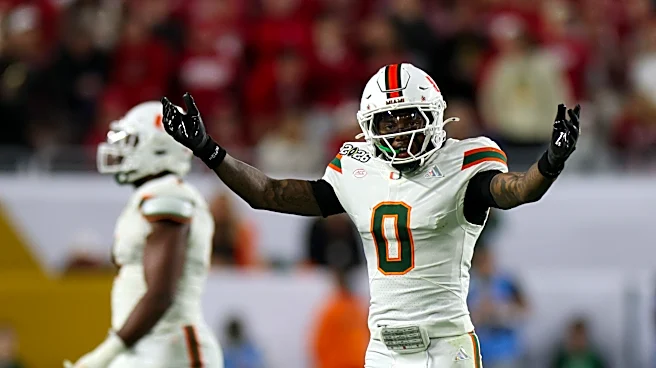
more long-term questions across this group than any other positions on the team. Miami defensive back Keionte Scott could provide Detroit’s defensive backfield with versatility, reliability, and flexibility for a group in flux. Here’s why Scott should be the pick at No. 50—or even sooner on Day 2 should the Lions make any moves.
Why the Detroit Lions should draft Miami DB Keionte Scott
Previously:
Character fit
Keionte Scott is the just the type of player who fits the identity the Detroit Lions have cultivated since the arrival of Dan Campbell and Brad Holmes. Most specifically, his long road to the NFL is one that speaks to his resiliency and perseverance, all while choosing football as his vehicle to succeed and achieve both on and off the field.
Scott was originally a no-star recruit, unranked by 247 Sports and without the academic transcript to make it into a D-I school. Snow College, a junior college in Ephraim, Utah, was the trailhead of Scott’s journey, and he’s credited his JUCO experience for shaping his mentality, explaining that route gave him “a different hunger and an all-around gratefulness for the game.” Scott went on to be a two-time JUCO All-American at cornerback, and played in the 2021 NJCAA national title game.
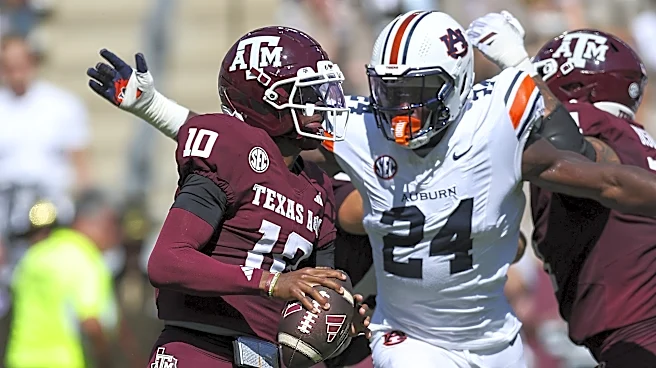
The hunger and gratefulness football provided for Scott at Snow carried into his time at Auburn, where he embraced both opportunity and adversity, and that included overcoming an ankle injury he suffered in 2023 that required tightrope surgery. Typically, athletes don’t return to competition for four to eight weeks, but Scott was sidelined for just three games before getting back on the field. Reflecting on that challenge, Scott noted that he learned to focus on growth rather than setbacks, and relied on his faith to keep him motivated.
“I just created a recipe throughout all my challenges,” Scott explained in regards to his process for working through adversity. “Instead of focusing on what is going on, I try to focus on the small things and what I can control. It’s not, ‘Why is this happening?’ It’s, ‘What can I learn from this?’ I’ve learned to focus on what I can do better, keep my faith in God and just trust Him.”
“That was a time when everything was on the line for me,” Scott recalled. “Being able to come back and accomplish what I accomplished at the end of last year was super big for me. I felt like it gave a lot of my teammates hope and a lot of people around me hope. Being able to go through that tough time and get back on the field and, honestly, look like nothing ever happened was something I’ll never forget.”
That sort of emotional maturity, growth mindset, and playing to inspire the guy next to you aligns with the kind of accountability valued by Detroit’s coaching staff. According to an NFL Scout in Dane Brugler’s The Beast, Scott’s “energy could power the building,” and that sort of energy would help jolt a Lions secondary that didn’t generate as many impactful plays that swung the momentum of games as they have previously.
Beyond the field, Scott was the first person in his family to graduate college, and his life is defined by gratitude, namely for Lakeisha Hayes, his mother, who he credited as the most influential person in his life.
“My mom taught me everything I know,” Scott reflected. “Everything I’ve seen her do, and go through and be strong about, I try to resemble.”
Scott’s combination of resilience, pride, and love for what possibilities football can provide reflects the culture and identity-driven nature built by this current regime.
Style fit
Some things were different for the Lions defense in Kelvin Sheppard’s first season as defensive coordinator, but nothing changed when it came to the kind of physical play they expect from their defensive backs. And if there’s one thing you can expect from Scott, it’s physical play.
Those impactful plays from the defensive backfield that seemed fewer in between last year—just 10 TFLs, 10 INTs in 2025 vs. 17 TFLs and 15 INTs in 2024—could use exactly the kind of playmaking Scott brings in the secondary. During Miami’s run to the National Championship Game last year, Scott recorded 13 TFLs, 5.0 sacks, two forced fumbles and two interceptions—both of which were returned for touchdowns.
The play speed, the instincts, the physicality in the run game (PFF’s highest-graded run defender [91.4] at CB last year), it’s clear how Scott’s attitude fits what Detroit’s defense prides itself on: stopping the run. He’s only 5-foot-10 and 193 pounds, but meets the line of scrimmage like a linebacker and is unafraid to take on players nearly twice his size. Add in a 9.71 RAS and a 44-inch vertical and you’re talking about an explosive player Detroit can count on to click-and-close from around the line of scrimmage.
Scheme fit
Across 756 snaps in 2025, Scott primarily lined up as a nickel corner (489 snaps, 65%) or a box safety (196, 26%) for the Hurricanes, and those alignment rates are interestingly similar to those of another fast-playing, instinctual defensive back Detroit drafted in 2023. Brian Branch played 736 total defensive snaps in his rookie season, 530 in the slot (72%) and 102 in the box (14%) per PFF.
The Lions added some veteran options during free agency to play nickel including Roger McCreary and Christian Izien, but both signings, much like the rest of Detroit’s free agency, were short-term, one-year deals. Scott could immediately compete with that group for defensive snaps, even if it’s in a more situational, blitzing role like the one Ifeatu Melifonwu was featured in during the 2023 season. And on top of that, Scott could help pitch in at safety—the position most draft analysts project him to play—to bridge the gap while Branch rehabs from his Achilles injury.
And beyond the subpackage roles for Scott, his experience on special teams will keep him on the field and contributing. He logged 280 special teams snaps, mostly on punt return coverage (166), during his four years at Auburn and Miami.
Weaknesses
Anywhere you go for scouting reports or draft profiles will be quick to mention Scott’s age—25 in August of this year—as a potential drawback. Overaged prospects is the new reality for the NFL Draft, and it’ll be interesting to see how teams view these experienced but older players. On one hand, some teams may wonder why these players took so long to put it all together, and the question of how to handle a potential second contract is something Holmes spoke to the media about earlier this week.
“You’ve got to be prepared for that because it’s real, man,” Holmes said in regards to potential contract extensions for older rookies. “I say it like, ‘Look, (a) guy’s 24 or 25 years old now, and he’s going to be looking at 30 by the time the second contract comes.’ Well okay, so how much longevity is it? Maybe he hasn’t played a long time and he doesn’t have much wear-and-tear, but Father Time is Father Time, too. You have to look at all of it, and it is case-by-case, but it is real, though.”
In the case of Scott, he was granted an exemption for eligibility for his JUCO years at Snow, but then played in the SEC at Auburn and was a key piece of a Hurricanes team that went to the National Championship. There’s not much, if any, doubt about his ability to matchup against top competition at the next level.
Scott is a bit on the smaller side at 5-foot-11, so covering bigger receiving threats who can leverage their height and length against him could be an issue, and while he has no fear in run defense, his play speed can cause him to miss tackles (15 in 2025).
Overall
No one knows what’s going to happen between picks 17 and 50 in the 2026 NFL Draft, but you can bet Keionte Scott will likely go somewhere in between those selections.
Given the unique injury situation for the starters in Detroit’s safety room, there’s a short-term and (potentially) long-term need at that spot beyond this season. The Lions have done an adequate job of shoring up the depth for 2026, but Scott’s positional versatility between safety and slot corner, and his fast, physical play style makes him a very appealing option for Detroit if he’s available at No. 50.