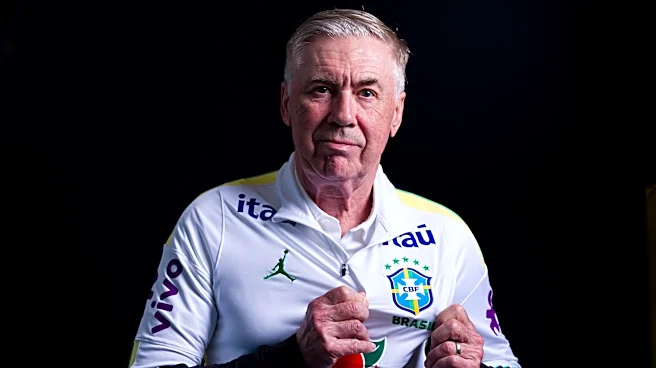




There are few managers in football history with a résumé as accomplished as Carlo Ancelotti. Calm, adaptable, and endlessly respected by players, Ancelotti has spent decades winning at the very highest level while avoiding much of the chaos that often follows elite management. Now, however, he faces one of the most fascinating challenges of his career: attempting to guide Brazil national football team back to World Cup glory.
Brazil is not just another footballing nation. It is a program defined by
expectation, emotion, and relentless pressure. Every World Cup is viewed through the lens of legacy, and every manager is judged almost exclusively on whether they can lift the trophy. Ancelotti arrives with unmatched credibility, but the question surrounding this partnership is intriguing: can his famously relaxed, player-friendly style succeed in the modern international game?
A proven track record
Ancelotti’s career has been built on sustained excellence across multiple generations of football. From AC Milan to Chelsea FC, Paris Saint-Germain, Bayern Munich, and especially Real Madrid, he has consistently managed superstar dressing rooms without allowing egos to overwhelm the collective.
That may be his greatest strength. While many elite coaches rely on intensity, confrontation, or rigid control, Ancelotti has always preferred trust and communication. Players often describe him as calm under pressure, approachable, and excellent at understanding personalities. In an era where elite squads can become fractured quickly, Ancelotti’s emotional intelligence has been one of the defining traits of his success.
Of course, the trophies speak for themselves as well. Multiple league titles in Europe’s top leagues and a record collection of Champions League triumphs have cemented his status as one of the greatest managers football has ever seen. Importantly, his teams have rarely looked trapped in one tactical identity. Ancelotti adapts to the talent available rather than forcing players into a system that does not fit.
That flexibility could be enormously valuable in international football, where managers have limited training time and must maximize talent quickly. Brazil does not need a complete rebuild of its football identity. It needs stability, confidence, and balance in the biggest moments.
A new challenge with Brazil
Even for a manager as decorated as Ancelotti, Brazil represents something entirely different. Coaching Brazil carries a level of cultural and emotional weight that few national team jobs can match.
Recent World Cups have left Brazilian supporters frustrated. Despite producing world-class talent year after year, the national team has repeatedly fallen short in decisive knockout moments. The pressure to restore Brazil to the top of international football will follow Ancelotti from the opening match onward.
The squad itself is fascinating. Brazil still possesses elite attacking talent, technical quality, and athleticism across the pitch. However, the team has sometimes lacked cohesion and emotional control under pressure. That is where Ancelotti’s experience managing superstar-heavy dressing rooms could become critical.
Unlike club football, international management requires managers to simplify without becoming predictable. There is little time for complicated tactical systems or constant adjustments. Ancelotti’s strength has never been tactical overcomplication anyway. His approach is often about creating balance, empowering key players, and ensuring stars understand their responsibilities within the collective.
The challenge will be blending Brazil’s traditional attacking freedom with the structure necessary to survive modern tournament football. Recent World Cups have shown that talent alone is rarely enough. Discipline, defensive organization, and emotional resilience matter just as much as flair.
Can the hands-off style work in today’s World Cup?
This is the central debate surrounding Ancelotti’s appointment. Modern football increasingly celebrates hyper-detailed, high-intensity managers who control every aspect of the game. Coaches like Pep Guardiola and Thomas Tuchel are often associated with constant tactical instruction and structural precision.
Ancelotti operates differently. His style is comparatively hands-off, particularly when it comes to man-management. He trusts experienced players to solve problems and often allows attacking talent freedom within the system. Critics sometimes interpret that calmness as a lack of tactical innovation, but his trophy collection makes that argument difficult to sustain.
In a World Cup environment, his personality may actually become an advantage. International tournaments are emotionally draining, and tension can overwhelm squads quickly. Ancelotti’s composure could help Brazil avoid the panic and pressure that have hurt previous teams in critical moments.
Still, football at the highest level is more tactically demanding than ever. Brazil will eventually face opponents with elite organization and structure deep in the tournament. At that stage, Ancelotti’s ability to balance freedom with discipline will define whether this partnership becomes legendary or merely another near miss.
Brazil did not hire Carlo Ancelotti simply to stabilize the program. They hired him to win the World Cup. The fascinating part is that he may attempt to do it not by controlling every detail, but by trusting world-class players to rise to the moment.
If you want more of this series, check out SBNation.com for the complete series.