


On the 22nd of July 2025, David Ornstein tweeted, “Granit Xhaka informs Bayer Leverkusen he only wants to join Sunderland,” and across Wearside, a collective “Really? Us?” was said. At that time, we didn’t quite know the extent of the club’s ambitions for the Premier League, and we certainly couldn’t have predicted the success our first campaign back would bring.
Xhaka was 32 and had come off captaining Leverkusen to their invincible Bundesliga title two seasons prior. Even before the ink had dried
on his contract, the Swiss International would be widely regarded as one of the most talented players to wear the red and white stripes. It wasn’t a signing, it was a statement of intent.
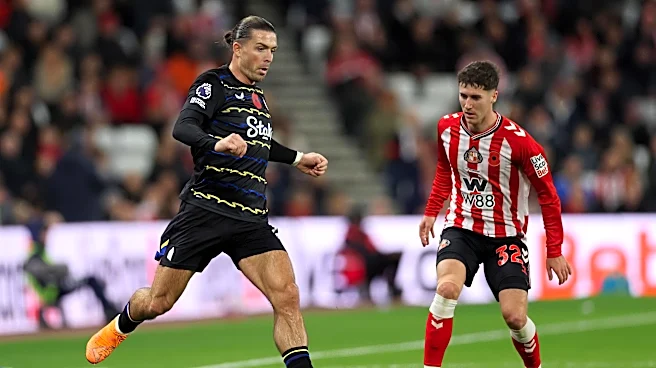
Just over a year later, David Ornstein has taken to X again to inform us that Sunderland have submitted a bid for Jack Grealish, the first Englishman to demand a transfer fee over £100m, a price point only 13 players in history have demanded.
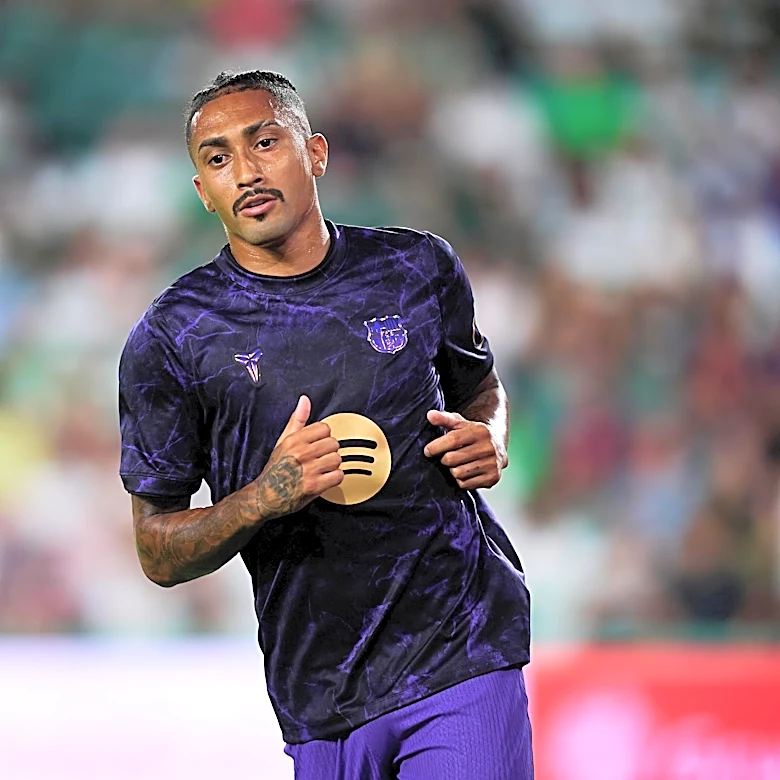
Ornstein has reported that this, alongside our pursuit of Marseille’s Igor Paixão, and after Everton did not exercise their £50m option to buy the Englishman, Manchester City were open to letting him leave on loan or permanently. City would also be covering part of his salary, and with Grealish’s contract expiring next summer, Sunderland would have the option to make the deal permanent following its conclusion.
Grealish’s last two years have not been as successful as Xhaka’s previous two were in Germany. His last full season at Manchester City saw him only be given 700 minutes, and last season a fractured foot ended his loan spell at Everton early. Regardless, this is another statement of intent by Sunderland’s owners.
Behind the delirium and excitement this offer has caused remain some real questions. Is Grealish still one of football’s few remaining mavericks, or are his best years now behind him? And is this something Sunderland really need?
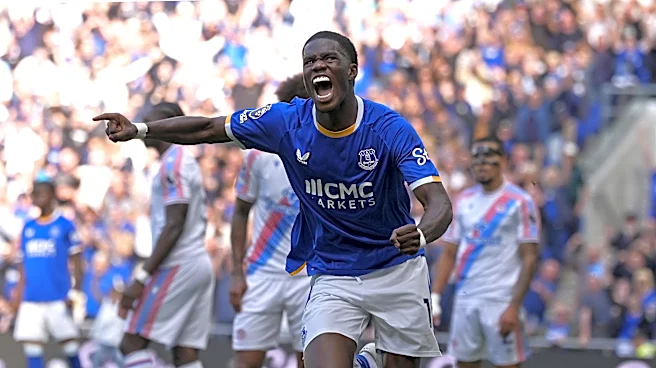
Well, to start with, there are the top-level numbers of Grealish’s period on Merseyside. 2 goals and 6 assists, in the league, is a perfectly respectable return, and no Sunderland player provided more assists than the Englishman in the league. But then you recall that his season ended on the 18th of January. For reference, Enzo Le Fée also managed 6 assists, but had 16 more appearances. Let’s say his injury didn’t occur; at the rate he was on, Grealish would’ve ended the season with around 14 goal contributions, something Sunderland’s attack could’ve certainly done with.

Under Guardiola, the narrative was that Grealish had the freedom taken out of his game, and as such his best qualities were never on show at the Etihad. Whilst he was certainly the central attacking threat at Aston Villa, I think that is a little reductive. He was given a far more specific role in a more rigid tactical structure, a role which ultimately gained the Birmingham native a treble.
Regardless, if we look at Grealish’s numbers from last season, you can see exactly why that narrative was formed. Grealish is not an inside forward in the mold of Salah or Son; his qualities are more in his chance-creation. At Everton, he ranked within the bottom quarter of similar players for his shot volume, and the bottom 30% for his non-penalty xG.
Where he shines is his facilitation for others, ranking in the top 12% for chance creation and the top 2% for winning fouls for his side. Grealish is a wide-creator who will seek the pass before the shot, will take a large number of touches inside the opposition’s box, and can relieve pressure or start attacks through winning a foul.
Regis Le Bris will require all members of his side to contribute defensively, and this is again where the free-spirit idea around Grealish proves to be a lazy one. He made around 7.5 defensive contributions per game last year; for reference, Chemsdine Talbi only made around 5. With pressing being such a prominent pillar of Guardiola’s game, he’s no stranger to it either, winning possession in the final 3rd just under once a game.
Yes, we haven’t seen him as the virtuoso Aston Villa had several years ago, but not only is he incredibly talented, he remains one of the most effective players in the league.

There then remains the question: do we need him?
With Igor Paixão’s arrival seemingly imminent, Romain Mundle’s contract renewal and Simon Adingra’s injury, Sunderland will likely have at least 5 left wingers at the end of the transfer window: Nilson Angulo, Simon Adingra, Igor Paixão and Romain Mundle. That is without including Chemsdine Talbi, who found his best form on the left, and the ever-reliable Enzo Le Fée.
This is also without mentioning the lack of depth on the right; Jocelin Ta Bi would likely be the only true option besides Talbi, or Trai Hume deputising there
Well, the obvious answer is that it’s Jack Grealish, and when a player of his quality comes around, you don’t say no.
But there is more to it than that. Adingra was likely on his way out before injuring himself; regardless, Le Bris never seemed convinced of the Ivorian. Talbi was originally signed with the idea of operating on the right, and could likely do so.
Wiser men than myself have noted that Grealish could perfectly fit in as the 10 behind a striker, and has occasionally done so during his career, particularly at Villa where he earned the deal to City.
His positional similarity to Enzo Le Fée fits nicely as they both like to operate in the left half-space behind a central forward. Should Grealish be placed out on the left, you could see an Amad-Roberts type relationship with the Frenchman where they can interchange positions and drag opposition defences out of position
This could provide valuable depth in that central position, and could even indicate Habib Diarra could operate slightly deeper, rather than be third in that pecking order.
There is the question remaining on the right flank; in Hume, Talbi and Ta Bi there are options there. Ta Bi is still raw and it would be a large ask for him to be the starter in that position. As well as he’s done, Hume isn’t a natural fit there, and an additional option at the right would free him up to compete with Meunier and provide depth at right-back.
A fact which also may be getting overlooked is that the Englishman will contribute to our Home-Grown numbers for the coming European campaign. I’m sure that was at the forefront of everyone’s mind.
One thing that this news has brought us is the reminder that things can change incredibly fast in the transfer market. Much of the attention of Sunderland fans has been occupied by the pursuit of Geny Catamo, and in a day both Grealish and Igor Paixão have become the focus of our attention.
In a piece around setting our expectations for the coming season, I really wanted to get across that the leadership and recruitment team have earned our trust and our patience. And whilst they have certainly tested the latter, they are clearly intelligent people.

There will be a reason for the pursuit of two left-sided attackers, and it will likely become clear by the end of the window. I can’t speak on the financial sides of this, but there is no reason why the arrival of Grealish would mean that a move for Catamo, Soulé or Hadj Moussa is now blocked.
Grealish is the wrong side of 30, he missed 16 games of league football last year, and even if he finishes the one-year deal, who knows if Sunderland can afford his wages. He also doesn’t play on the right, a position we could really do with upgrading. But it’s Jack Grealish. He gets people excited, can create moments of magic and would undoubtedly be a hero at the Stadium of Light.
Maybe he isn’t what we need, but sometimes there’s nothing wrong with admitting you really want something.
If you’re at an Italian restaurant, and the garlic mushrooms were great, you’ve had a slab of lasagna and a few slices of garlic bread. You probably will have a look at the dessert menu for the tiramisu. Even if you’re full, the right thing to do is to get the bill and leave.