

I know this concept is going to go over with fans like a lead balloon, but I feel convicted in my premise. So much so that I’m doing a complete rewrite of my article at 8:30 PM on Monday. I had an article all written and ready to go featuring 8 potential starting pitchers “who could be the next Dustin May.” Chaim Bloom might still opt to pursue that opportunity and there are some very interesting options that might exist in that space. If at any point he indicates a public desire to do so, I’ll run
the article anyway.
I’ve listened to Chaim’s end-of-season press conference 5 or 6 different times over the last week, trying to comb through what he said word for word in order to try and extract any context clues or breadcrumbs he might have laid towards offseason plans. What I’ve come away with from that is that they still have more they want to see from some of the ascending players through the minor league development system. I think one area they will exercise caution or restraint is the starting rotation.
Let’s start with the incumbents. Andre Pallante, Michael McGreevy, Kyle Leahy, Quinn Mathews, and Matthew Liberatore were the 5 names that ended the season in the starting rotation. That’s not exactly Ohtani, Skubal, Snell, Glasnow, and Yamamoto; I get that, but I still think those 5 make up a majority of the rotation heading into 2027.
Andre Pallante, what a bounce-back 2026 for him. Is he any fan’s idea of a top-of-the-rotation type arm? No, I don’t think so. But what he does provide is quality innings for a surplus-value rate, and the Cardinals are a team that is structured to maximize what he does best: get groundball outs. Every season since 2022, when he debuted, he has finished no lower than the 96th percentile in GB% and pitched to a 3.83 ERA in 162 IP this season. Pallante produced 2.7 fWAR, and Fangraphs valued his season performance at 21.6 million. MLBTR projects his arbitration raise to be in the 7.5 million range for 2027.
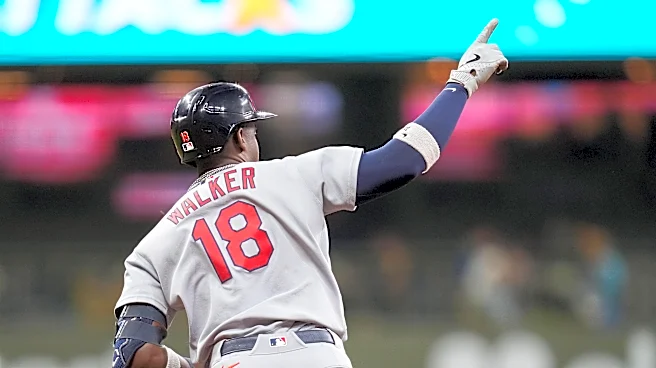
Michael McGreevy: The underlying data suggests that he is due for some serious regression, but that isn’t always a predictor of future performance. His Changeup was a great neutralizer of left-handed batters this season. That pitch graded out as a +7 in RV against LHB, and while he finished with a 3.95 ERA, he will have a lot to prove in terms of a full season of performance. Considering that in 13 starts post-All-Star break, he produced a 5.37 ERA and opponent OPS jumped from .665 to .829. For all of the talk that surrounded Jordan Walker’s post-ASB falloff, I don’t think enough people have talked about McGreevy’s. Being a pre-arb starter capable of pitching 180+ innings in a season and posting 1.9 fWAR, and credited with 15 million in performance value, his future for 2027 is likely safe… for now.
Kyle Leahy, I think this is one guy who fans are really selling short in this rotation. April and September were nothing to write home about. From May 1st to August 31st, Leahy pitched exactly 100 innings on the nose (wild) and produced a 2.43 ERA and a 2.99 FIP. Assuming Leahy is capable of doing THAT for an additional 60 innings in a season, you’re talking about a guy who could sniff around the Cy Young conversation. Will he? TBD. But when Chaim and Oli are both adamant that they think he can be an effective starter at the big-league level, that’s a really encouraging sample to point to in the affirmative. Leahy was credited with 2.6 fWAR and 20.5 million in performance value. MLBTR projects Leahy to make 2.8 million in his first trip through Arbitration.
Quinn Mathews, this feels like a really easy case to make, so I won’t commit very many lines to his blurb. Quinn was arguably the best starting pitcher in September, posting a 3.03 ERA in 29.2 IP, and that included 26 Ks and a .234/.308/.393 slash against. I think all Cardinals fans should be excited about what a full 2027 could look like from Quinn in St. Louis.
Matthew Liberatore, the man you’ve all been waiting for- well, not really, but there are still bits and pieces to what Libby does that are intriguing. That is by no means an endorsement to hand Liberatore a rotation spot, and I believe his spot in the rotation is the most fungible of the group. 155 IP with a 5.23 ERA is not good enough. His FIP was 4.62 this season, suggesting that there was SOME bad luck involved, -no kidding. The blow-up innings are a problem, and the fastballs are really bad (-11 RV). If he comes into 2027 completely changing those fastballs, a case can be made for him to get another shot, much to our chagrin.
I expect the conversation from the Cardinals’ side to include phrases like “coming to camp stretched out to be a starter,” “will be given every chance to win a job,” and “Andre Pallante was able to flip the script after a horrific 2025; why can’t Libby?” First of all, coming in stretched out to be a starter is just a practical preparation practice, as it’s easier for guys to throttle down than to quickly try to expedite a buildup, and he would provide depth if other starters that I’m going to mention should experience any type of injury. Second of all, just because Pallante was able to do so at various points in his past big-league career, flashing that he was capable of doing what he did in 2026, it’s not the same, but I understand where they’ll be coming from, even if I believe long-term Liberatore’s best role is as a bullpen arm.
Liberatore posted 1.1 fWAR and was credited with about 9 million in performance value, and MLBTR’s projection has him earning 3.6 million, far less of a bargain than others mentioned previously, but still a little wiggle room. If he doesn’t show it in 2027, whatever chance he might have, that will likely be the end of his starting opportunities, in St. Louis at least.
NOW, the Cardinals will enter 2027 with something they haven’t had in several seasons regarding the starting rotation. Depth. Cooper Hjerpe, the healthy returns of Richard Fitts and Tekoah Roby, Jurrangelo Cintje, and Mason Molina finished the season at AAA and appeared to be turning a corner after kind of expected struggles with their first taste of the big-league baseball, as most pitchers do. That’s 5 names on top of guys who COULD be ready as soon as midseason, with Liam Doyle, Tanner Franklin, Daniel Eagan, Yhoiker Fajardo, and the recently claimed Chase Hampton.
So, while it might make us all feel better if the Cardinals were to go out and bring in some expensive reclamation pitcher, much like Dustin May was for the Cardinals in 2026, they don’t really need to do that again in 2027, or commit financial resources that they could focus on other areas of the roster or commit to extending players they feel are worthy members of a long-term core. I still think they’ll look at a couple of veteran options in the bullpen and add some sort of left-handed depth infielder who can be a part of the 3rd base picture, but Chaim insisted they still have work to do and are really trying to avoid putting the cart before the horse.
I’m just as neurotic as the next fan about wanting the team to go out and throw its financial weight around and win ball games. I understand if your stance towards the organization will be “put your money where your mouth is” when they declare they’re ready to spend, and I will join in that chorus when they do so. I’m sorry if this isn’t the tone you were hoping for this offseason, but I feel like I have a greater responsibility to you, the reader, to properly set expectations, rather than chase clicks and just talk about the fun “what-ifs.”
-Thanks for reading